Mapa mental
Databases
Conteúdo do mapa
Databases
A Brief Description of the purposes of a Database
- A database is simply a place where data (information) can be easily stored securely. It can be organised and filtered down so that it is easy to access and retrieve. The data when inserted is processed and sorted methodically.
What data does the school store about me?
- The school stores all kinds of data about me, things such as my attendence, my medical history, my grades and where I have been and what time (through the register system). They also hold my contact details in case of an emergency, Not only my phone number but also my parents' and other relatives.
- They hold this kind of information so that they can inform people on how I am and if there is any danger.
- They also store data on me like my name, date of birth etc.
- The school stores all kinds of data about me, things such as my attendence, my medical history, my grades and where I have been and what time (through the register system). They also hold my contact details in case of an emergency, Not only my phone number but also my parents' and other relatives.
What other businesses store data about people ?
- Other businesses such as banks store data on people, names, dates of birth and obviously bank details.
- Another organisation that stores data is the United Kingdom's law enforcement, they store multiple different types of information about you, everything from bank details to places occupied by you.
- Other businesses such as banks store data on people, names, dates of birth and obviously bank details.
The advantages and disadvantages of paper based databases and computer based databases
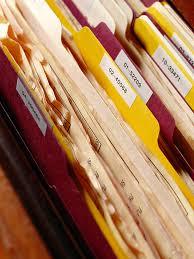
- Paper based databases
- The advantages of paper based databases are as follows; Paper-based databases are hard copies of data rather than computerized copies, meaning that they are not physically able to be hacked. Also they can be stored with physical security protection, providing general protection.
- Another advantage is that they can be copied, but have proof that files are genuine in a sense that they can be given a unique tag, (ultraviolet ink stamp etc)
- Disadvantages of paper-based databases are that without copying the files you can only have one file, this means that there is a danger that without physical security, during a fire you will not be able to regain that data.
- Another disadvantage is that the files will, unless organised to an extreme will very likely get lost within all of the other files, rather than self organising.
- The advantages of paper based databases are as follows; Paper-based databases are hard copies of data rather than computerized copies, meaning that they are not physically able to be hacked. Also they can be stored with physical security protection, providing general protection.
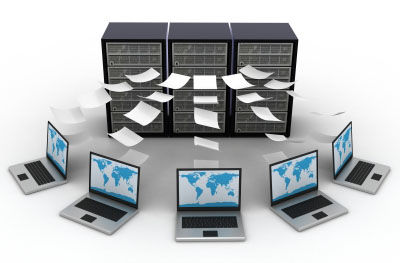
- computer based databases
- There are many advantages of having computer based databases are thye fact that there are not as many worries regarding physical security, however there will need to be some physical security.
- Another advantage to having computer based databases is the fact that the information/fields should be automatically organised, rather than having to physically organise files in cabinets.
- Disadvantages of computer based databases include things along the lines of the fact that there is no physical proof that information is stored and the software that it is stored on could be prone to cyber attack.
- A second disadvantage of having a database computerized is that the files can be easily accessed by anyone with the correct user-access levels, meaning that there are multiple access points, whereas a paper based database would have one point of access.
- Paper based databases