
Mapa mental
Kolhberg
Conteúdo do mapa
Kolhberg
Stages of Gender Development
- 1. Gender Identity
- Occurs during the the ages of 2 and 3
- Child understands that they are a boy or girl but believe that it can change later in life
- 2. Gender Stability
- Occurs during the ages of 3 to 5
- Child understands that gender is fixed but believe it can change over situations
- E.g. when wearing opposite gender clothes
- Self-actualisation- child actively seeks out same sex role model and imitates them
- 3. Gender Constancy
- Occurs during the ages of 5 to 7
- The child understands that gender is fixed over all situations
- Child now has developed gender appropriate schemas about; clothes, personalities, toys etc.
- 1. Gender Identity
Evaluation
- Strengths
- Acknowledges both nature and nurture
- Stages universal- stages are seen across cultures in the same order. Suggests a biological bases
- Takes into account environmental influences like observations and role models
- Acknowledges both nature and nurture
- Limitations
- Underestimates the cognitive ability of young children
- Strengths
Research
- Munroe
- Aim: Investigate the Stages of Development in different cultures
- Study: studied 6 different cultures
- Findings: All 6 cultures showed all 3 stages in the same order
- Evaluation
- Provides support for the theory
- 6 cultures are not representative of the world
- McConaghy
- Aim: Investigation into the Stages of Gender development
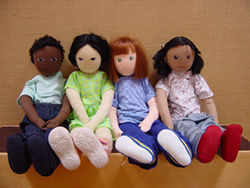
- Study: 3-4 year old children asked to identify the gender of a doll wearing transparent clothes, so based on genitals
- Findings: assumed gender based on clothes not genitals
- Evalutation:
- Provides support for the theory
- The findings are not absolute
- Munroe
Imagens e arquivos do mapa



Informações
- Descrição
- mind map on Kohlberg's theory of gender development.
- Criado por
- Goshe.K
- Visualizações
- 13
- Tags
- Avaliação