
Mapa mental
Disturbance
Conteúdo do mapa
Disturbance
White and Pickett, 1985 Sousa 1984/2001
- killing organisms or effects the abundance of other organisms - positively or negatively must remove biomass
Agents - these can be applied in a wider context it is more then just the occurence of the agent
- Abiotic - ice scour -strom-related water motion -boulders, logs and sand scour -aerial exposure -temperature extremes
- Biotic -Bulldozing -whiplashing -bioturbation - foraging by stingrays, dugongs
- all of these are naturally occuring or due to climate change anthropogenic - pollution -overfishing - mining,drilling dredging and climate change
- Ice scour - Brown et al 2004
- unlocks spece resource as ice removes whole communities from the substratum by either craping or growing on them and dragging them off the substrate
- banks showed how these two different occurence effect the substrate polar regions are really effected by distubance due to - slow growth -longer life spans - less reproductive out put
- bioturbation
- ray and whale feeding pits accumulate ditritus which becomes avaliable is used by amphipods that are scavengers
- trawling/ dredging
- these are anthropogenic impact it is used to keep shipping channels at low levels
- dredging is basically removing sediment, the top levels, removing main biota freeing up resources for less dominant organisms
- trawling is the removal recreational fish such as cod and haddock leaving behind lower biota on the sea floor and therefore lowers the diversity of the area
there are other routes that can cause the removal of biomass
- such as the removal of grazers/ predators this increases biomass
- increase mortality rate by changing the environment factors
- - removal of protecting organisms - removal of physical refugee - major ecosytem change = uplift
regimes of disturbance
- magnitude
- the intensity
- the higher the intensity the more biota that will be effected, the more biomass will be removed so there will be different changes to the ecosystem
- whats left behind
- will there be a: Primary succession where all biomass is removed meaning sucession has to start again secondary succession where some biota, micro-organisms or renements of species are left
- the intensity
- Patch size
- either will be one massive removal or small patches of bare substrate
- this depends on sort of magnitude that effects that area
- the sizes will have an effect on the resuccesion of the area, and the dominant organisms left there
- smaller patches are ore suscetible to whiplash and have a lot more grazers present this is to do with the edge effect so what is nieghbouring the patch and how much of the patch has been effected
- Kim & DeWreede 1996
- how patch size effected the recovery of algae on a shore
- shape
- location and type
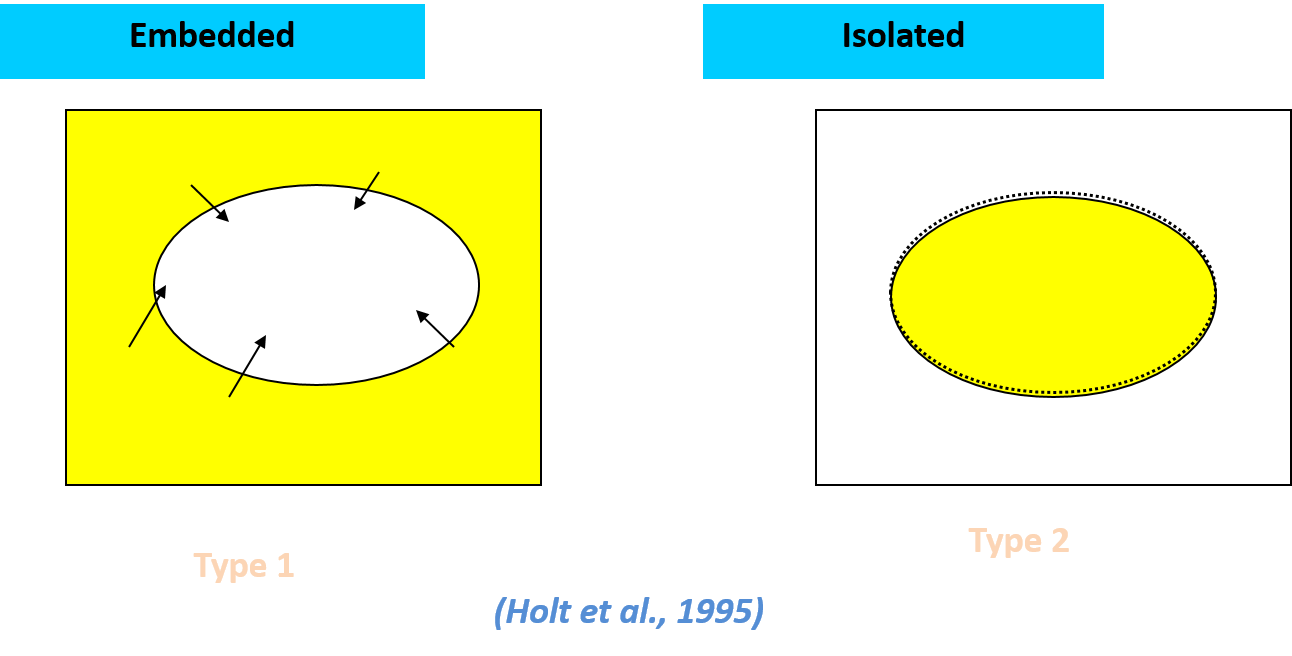
- embeded or isolated
- embedded aregoing to be recolonised quicker and easier due to the fact that nieghbouring animals can either move into this space or realase spawn
- it also means less distance to travel and therefore just higher chance of being recolonised but embedded will lower the spatial diversity compared to the isolated due to the same organisms will recolonise here
- location and time
- location is very important, itrelates to the embeded and isolated argument are they near any reproducing adults or larvea supply, are they easily accessible, whats the micro climate like and how high on the shore profile are there
- time does it occur near or just after a spawning event will the season allow for recolonisation
- embeded or isolated
- temporal aspects
- frequency
- is there a balance between the intensity and the reoccurence is there any recovery time - or is it more of a chronic disturbance
- connell et al 1997 steneck 1982
- corals in highly disturbed areas have developed layers so when high disturbance of damage occurs they are protected and less likely to be effected
- seasonality
- does the disturbance effect the area every so often or on the dot, or is it constant or random events this will majorly effect the ecosystem - this is mostly to do with storms and currents - this will also effect recruitment
- storms: Paine & Levine 1981, underwood 1981, Mcguiness 1987, cussen et al 2002, Dayton Et al 1992
- hydroxia and the effected on soft sediment communities
- Diaz & rosenberg 1995, Grantham et al 2004
- even natural occuring disturbances can be seasonal like bioturbation and foraging - changes due to seasonal changes of the organisms in questions
- Oliver & Slattery 1985, thrush et al, 1991, townsend & franseca 1985,
- duration between each disturbance or event
- the time between disturbances will effect the re-establishment of a community
- its effected by the recovery time of individuals and the areas vulnerability
- reproductive occurence within the break time and how successful these are
- the piont at which the community structure has achieved before the next community
- frequency
- magnitude
resistances to natural disturbance
- different morphologies and attributes of an organism will make it more or less susceptible to disturbance
- these include: - size - age - Reproductive status - Genetic composition
- Donne & Potts, 1992. studied this with corals
Succession
- succession is the temporal development of a cumminity from a pionneer species to a climax community and how it changes the environment around them
- much of what is left after a disturbance is secondary succession or recolonisation as nuitirents and some small oragnisms ie micro are left behind meaning it is easier to recolonise
intermediate disturbance hypothesis
- too much disturbance can cause perminant damage and too little disturbance wont effect the diversity enough so intermediate will mean the highest diversity
stability
- this is effected by: - an animals resistance to disturbance - resilience of a whole community elasticity and amplitude - altered species interations
Anthropogenic impacts
- Longer
- human impacts are notmally alot more chronic and over a bigger scale also due to this organisms are not well adapted to this change
- changes the natural order
- such as it effects already occuring disturbance and the resilience and regeneration of species
- basiclly we change the environment already there by adding pollents or new species
- selective
- we take what we need from the environment such as cod fishing - this is not natural and changes the ecosystem
- direct or indirect
- Longer
Imagens e arquivos do mapa
Informações
- Descrição
- what is disturbance and How it effects community structure and biodiversity
- Criado por
- chloe allen
- Visualizações
- 65
- Tags
- Avaliação