
Mapa mental
Unit 1 Psychology AOS 1: How does the brain function?
Conteúdo do mapa
Unit 1 Psychology AOS 1: How does the brain function?
The role of mental processes and behaviour
- Approaches over time to understanding the role of the brain, including phrenology, first brain experiments and neuroimaging techniques
- Development of psychology
- Phrenology - the relationship between features on the surface of a skull and a person’s characteristics.
- Franz Gall - different parts of brain have different functions
- localisation of brain function - the size of the area on the skull was how developed was also the amount of influence a characteristic is
- Spurzheim furthered his work by developed ‘faculties’. There were originally 27 but updated to 35.
- • Affective = Feelings (Destructiveness, hope, self-esteem) • Intellectual = Perceptive (Time, melody, language)
- Franz Gall - different parts of brain have different functions
- Phrenology - the relationship between features on the surface of a skull and a person’s characteristics.
- Brain Experiments
- Electrical stimulation of the brain = initiate or inhibit activity in the brain using an electrode
- Penfield mapped the cortex, using epilepsy patients using this
- Brain ablation = disabling/destroying/removing selected brain tissue and assessing behavioural changes
- • Flourens removed small bits of cortex to observe recovery, understanding of a holistic view of the brain
- Lashley theories
- Lashley = a healthy part of cortex can take over function of damaged area
- Lashley = Mass action theory that large areas of brain that can function in complex functions
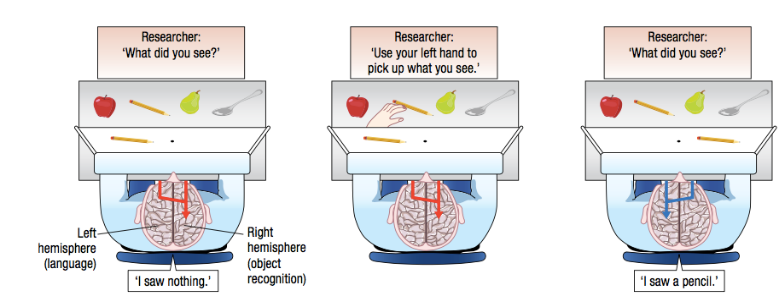
- Corpus callosum = a bundle of nerves that connects the left and right cerebral hemispheres and serves as the main communication pathway
- Hemispherical specialisation: Left controls language and logical thinking, right controls visual-spatial awareness
- Communicate through the corpus collosum to create a coordinated response
- Sperry and Gazzinga’s Split Brain Experiment
- Electrical stimulation of the brain = initiate or inhibit activity in the brain using an electrode
- Neuroimaging Techniques
- Structural = produces scans to look at the brain structure and anatomy
- Functional = analyse a function of the brain ‘at work’ and brain structure
- Development of psychology
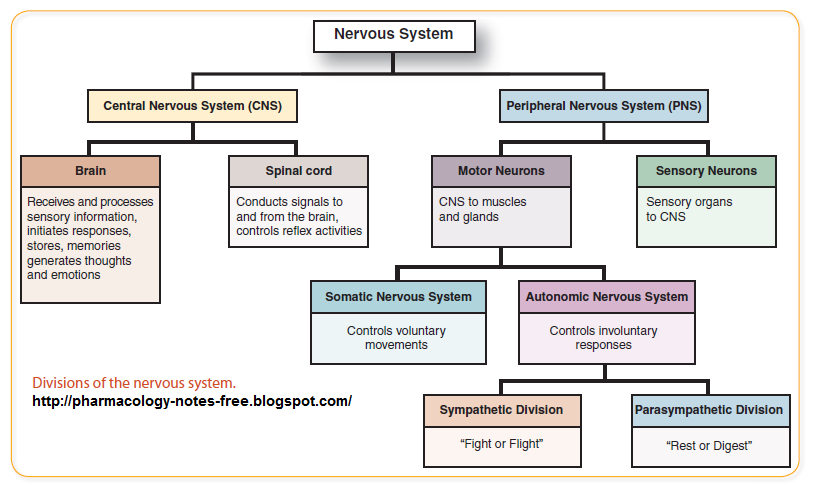
- The basic structure and function of the central and peripheral nervous systems and the body’s internal cells and organs
- Nervous system functions by receiving, processing and coordinating a response to information.
- CNS and PNS
- Central nervous system (CNS) consists of the brain and spinal cord.
- Peripheral nervous system (CNS) consists of the network of nerves outside CNS.
- Sympathetic and parasympathetic responses
- Sypathetic
- Pupils dilate, HR increase, Increase perspiration
- Parasympathetic
- Pupils contract, HR decrease, Decrease perspiration
- Sypathetic
- Sympathetic and parasympathetic responses
- CNS and PNS
- Nervous system functions by receiving, processing and coordinating a response to information.
- The role of the neuron, and the role of glial cells in supporting neuronal function
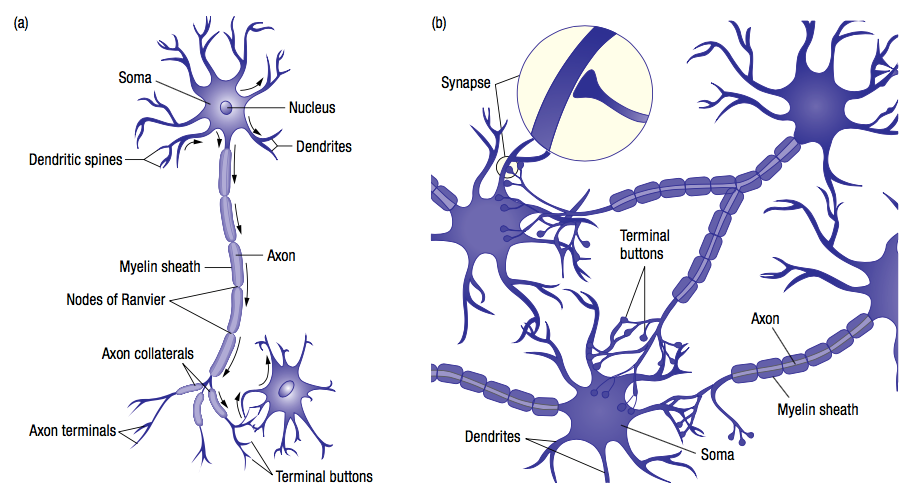
- Neuron is an individual nerve cell. Specialised to receive, process and/or transmit messages.
- Sensory neurons located in the PNS and send sensory information to the CNS. They are specialized to respond to a stimulation
- Motor neurons carry messages from CNS to cells in skeletal muscles/organs/glands
- Interneurons are connecting neurons and are in the CNS only.
- Parts of the Neuron
- Dendrite receives information from a nearby neuron.
- Soma is the cell body which combines information from the dendrites and sends it to the axon.
- Axon transmits information from the soma towards axon terminal.
- Axon terminal hold and release neurotransmitters substance.
- Axon terminal hold and release neurotransmitters substance.
- Myelin is the white and fatty substance that insulates an axon increasing speed of neural transmissions
- Myelin sheath protects against interference from nearby neurons. It is not continuous and is separated by small gaps called nodes of Ranvier.
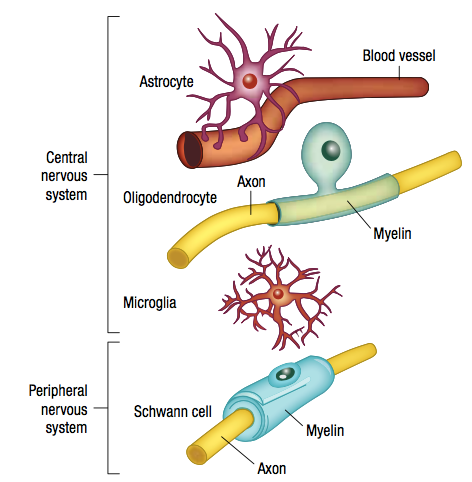
- Glial cells are specialised cells that are involved in insulation, nutrients, repair and eliminate waste in the nervous system.
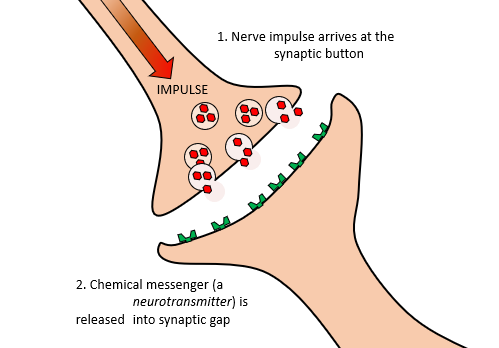
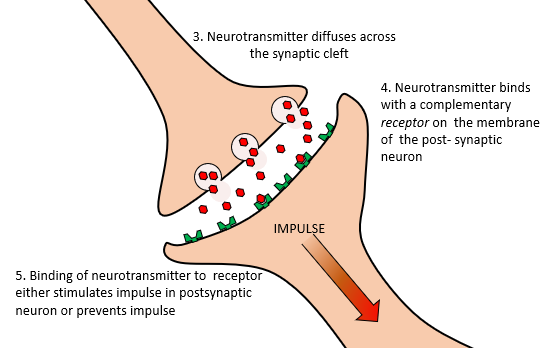
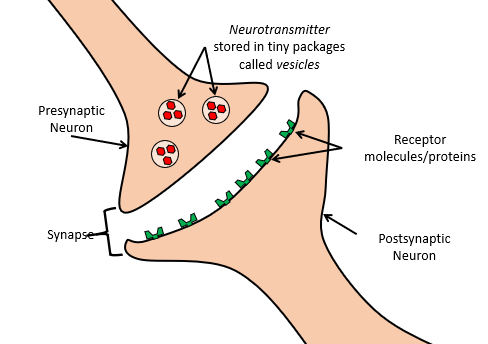
- Synaptic transmissions
- Neuron is an individual nerve cell. Specialised to receive, process and/or transmit messages.
- Structure and function of the brain
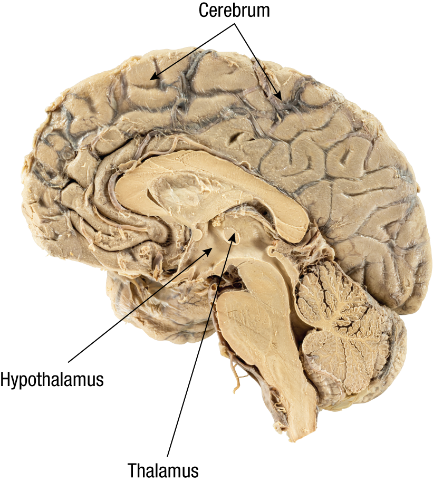
- Forebrain higher order thinking such as thinking, learning, memory, perception,
- Hypothalamus: maintains homeostasis and regulates pituitary gland (hormones)
- Thalamus: filters information from sense receptor sites (except the nose), and directs it to the appropriate lobes
- Cerebrum: made up of the four lobes
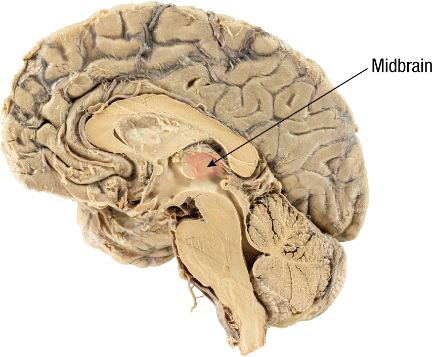
- Midbrain controls functions such as movement; processing of: visual, auditory information, sleep and arousal (‘alertness’)
- Reticular formation is a network of neurons that runs through the centre of the midbrain, hindbrain and brain stem towards the forebrain.
- Reticular activating system (RAS) screens incoming sensory information and regulates arousal
- Reticular formation is a network of neurons that runs through the centre of the midbrain, hindbrain and brain stem towards the forebrain.
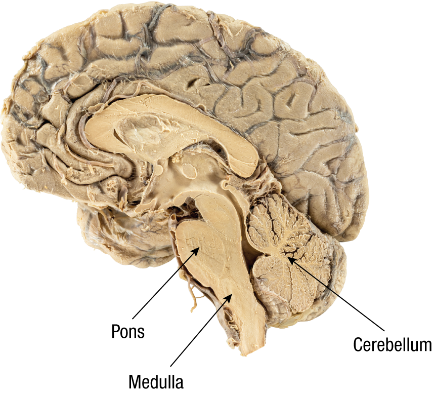
- Hindbrain controls motor function and vital and automatic responses such as breathing + heart rate + sleep + arousal
- Pons is involved with sleep, dreaming and arousal
- Medulla controls vital body functions
- Cerebrum coordinates movement, balance and precision
- Forebrain higher order thinking such as thinking, learning, memory, perception,
- The role of the cerebral cortex
- Cerebral cortex is divided into 4 lobes
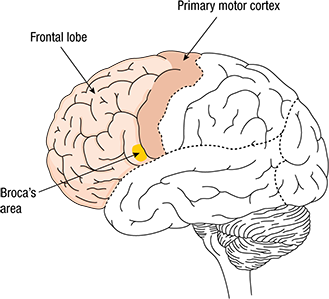
- Frontal Lobe function is to initiate and execute voluntary motor activity, planning and speech
- Primary motor cortex responsible for the planning, initiation and performance of specific movements
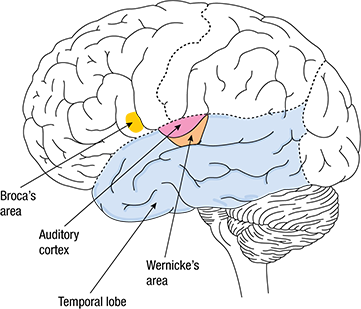
- Broca’s area responsible for articulate speech
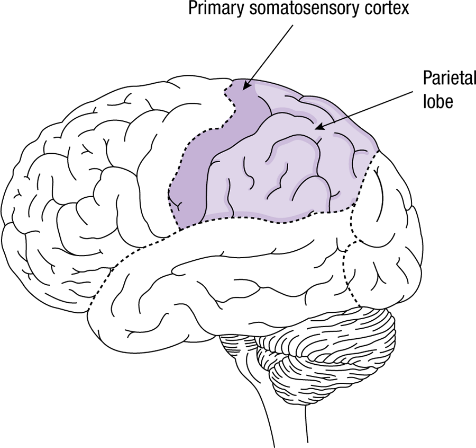
- Parietal Lobe receives and processes sensory information
- Primary somatosensory cortex receives and process sensory information from the skin and body parts.
- Temporal Lobe processes auditory perception and has a role in memory, visual perception including facial recognition and emotional responses to sensory information.
- Primary auditory cortex receives and processes sound from both ears
- Wernicke’s area is responsible for speech comprehension and interpreting the sounds of human speech
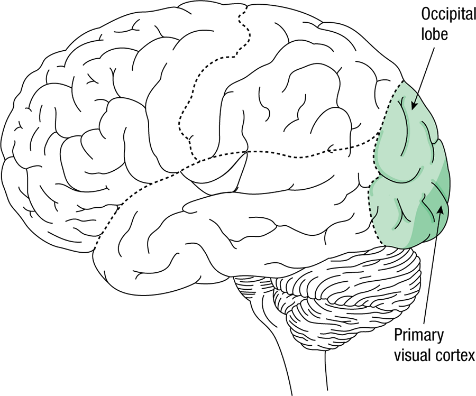
- Occipital Lobe receives and processes visual information
- Primary visual cortex is the largest area of the occipital lobe and responsible for processing visual information
- Frontal Lobe function is to initiate and execute voluntary motor activity, planning and speech
- Cerebral cortex is divided into 4 lobes
- Approaches over time to understanding the role of the brain, including phrenology, first brain experiments and neuroimaging techniques
Brain plasticity and brain damage
- Development and changes in brain structure and function
- Development
- Myelination is the growth and development of myelin
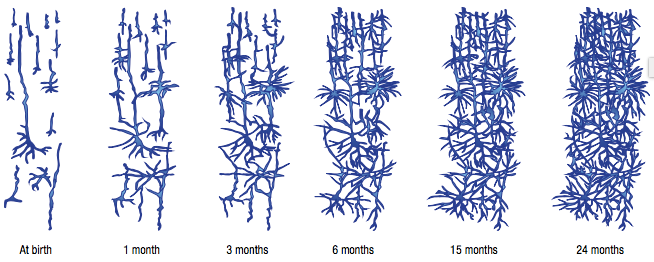
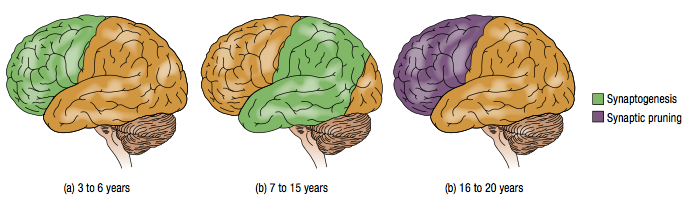
- Synaptogenesis is the formation of new synapses between the brain’s neurons.
- Synaptic pruning is a process where synaptic connections are eliminated which is designed to fine tune the neural connections
- Neural pathways and connections
- Frontal Lobe development
- Development
- Brain Plasticity = the ability for the brain to change in response to experience
- Adaptive plasticity is the ability of brain to compensate for loss of function or maximize the remaining functions
- Rerouting = undamaged neuron that has lost a connection will seek a new active neuron
- Sprouting = growth to form new connections. This process involves rerouting
- Adaptive plasticity is the ability of brain to compensate for loss of function or maximize the remaining functions
- Developmental plasticity is the development and consolidation of neural pathways in the foetal stage as well as in babies, children and adolescents
- 1. Proliferation = A foetus’s cells develop into neurons. Approx. 250,000/min
- 2. Migration = newly formed neurons move outward to their destination. The neuron’s role is determined by its location.
- 3. Circuit formation = axons of new neurons grow out to target cells and form synapses with them.
- 4. Circuit pruning = elimination of excess synapses and neurons
- 5. Myelination
- 4. Circuit pruning = elimination of excess synapses and neurons
- 3. Circuit formation = axons of new neurons grow out to target cells and form synapses with them.
- 2. Migration = newly formed neurons move outward to their destination. The neuron’s role is determined by its location.
- Sensitive period is a time when an organism is more responsive to certain stimulation
- Critical period is a narrow period where in development an animal is preprogrammed for learning to occur
- 1. Proliferation = A foetus’s cells develop into neurons. Approx. 250,000/min
- Brain injury is any brain damage that impairs/interferes with the normal functioning of the brain, either temporarily or permanently.
- Biopsychosocial changes
- Biological changes are primarily physical. E.g. prefrontal cortex injury would affect motor activities
- Psychological changes are primarily emotional, personality and cognition which in turn can impact on behaviour. Persistent apathy, inability to plan (severe cases)
- Social changes are a breakdown in relationships, difficult to establish new relationships. Due to the combined biological and psychological changes.
- Neurological disorders
- Spatial neglect is a neurological disorder where individuals are unable to notice anything on either their left or right side. Patients believe there is nothing wrong with them
- Parkinson’s disease is a progressive neurological disorder that has both motor and non-motor symptoms
- Motor Symptoms: Tremors, Muscle rigidity, Slowness of movement, Postural inability
- Non-motor symptoms: Speech, Anosmia, Slow cognitive processing, Mental Health problems
- Treatments - Two types of dopamine-based medication to help people manage: Medication that is converted to dopamine by the brain called L-dopa. Based on levodopa which is a chemical converted to dopamine by neurons (a pre-cursor). Effectively stimulate the reception site of dopamine
- Biopsychosocial changes
- Development and changes in brain structure and function
Imagens e arquivos do mapa
Informações
- Descrição
- Mindmap of VCE Psychology Unit AOS 1: How does the brain function?
- Criado por
- Catherine Heyburn
- Visualizações
- 405
- Tags
- Avaliação