
Mapa mental
P1
Conteúdo do mapa
P1
house heating
- Temperature is a measure of how hot something is
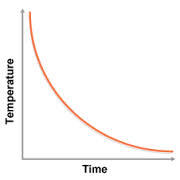
- An object that is 50c above room temperature cools quicker than an object 5c above room temperature
- Measured in degree celsius, heat is a measurement of energy. The unit of energy is he joule (j)
- Heat travels from a warmer body to a cooler body.
- The warmer body becomes cooler as energy is flowing away
- Thermograms measure temperature using colour as a scale
- The particles in a substance are constantly vibrating. temperature is a measurement of the average kinetic energy of the particles
- The amount of energy needed to heat a liquid depends on: The mass of the liquid being heated. The temperature increase. The type of object or liquid
- can be measured using an electrical immersion heater connected to a joulemeter
- Specific heat capacity
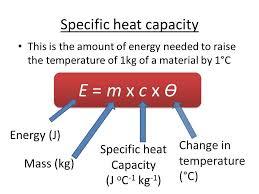
- All objects have a property called their SHC (the amount of energy needed to change the temperature of one kilogram of a substance by one degree celsius)
- SHC is joule per kilogram degree celsius (j/kgoC)
- Energy transferred= mass x shc x temperature change
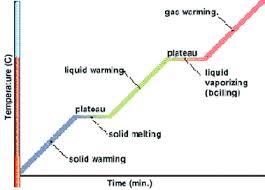
- If you heat a solid, its temperature rises until its melting where the temperature doesn't increase until all the solid has melted. The same occurs when changing to a gas state
- Heat is needed to melt an object at its melting point, heat is needed to make an object boil a its boiling point
- Latent heat is the heat needed to change state without changing temperature
- All substances have a property called Specific Latent heat (The amount of energy needed to change the state of one kilogram of a substance without a change in temperature)
- Joule per kilogram (J/kg)
- energy tranferred = Mass x SLH
- All substances have a property called Specific Latent heat (The amount of energy needed to change the state of one kilogram of a substance without a change in temperature)
- When a substance is changing state from solid to liquid or liquid to gas energy is needed to break bonds that hold the molecules together, that's why there is no temperature change
- Temperature is a measure of how hot something is
Keeping homes warm
- Energy transfer
- Insulation
- Air is a good insulator
- Conduction
- Whenever something is heated then the particles vibrate more quickly.
- Solids conduct better as they are more closely packed
- Gases are poor conductors as particles are distant from eachother. vacuums contain no particles so there is no conduction
- Metals are the best conductors. Delocalised Electrons in the metal can also transfer heat energy as they can increase the kinetic energy by colliding with other atoms (ions)
- Gases are poor conductors as particles are distant from eachother. vacuums contain no particles so there is no conduction
- Solids conduct better as they are more closely packed
- Whenever something is heated then the particles vibrate more quickly.
- Infrared radiation is absorbed by dull, rough black surfaces and reflected by shiny silver surfaces: why solar heaters are pained black
- Infrared is an EM wave so can transfer energy without material such as why it travels through the empty space and its emptyness
- Convection
- When a gas is heated its density decreases and it expands causing hot gas particles to rise. Density : g/cm3 or kg/m3
- Air is a good insulator but its also a good convector. air in a cavity forms a convection current. trapped air in the cavity insulation stops convection from occuring
- Only fluids can cause convection as they flow
- less dense gas particles rise and distribute energy then the cool particles drop down as they cool
- Only fluids can cause convection as they flow
- Air is a good insulator but its also a good convector. air in a cavity forms a convection current. trapped air in the cavity insulation stops convection from occuring
- When a gas is heated its density decreases and it expands causing hot gas particles to rise. Density : g/cm3 or kg/m3
- Insulation
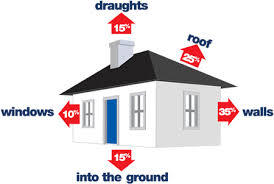
- house insulation.
- Double glazed windows have a space between the panes. the space is filled with air, argon or a vacuum
- Vacuum is the best insulator
- closing curtains also save energy transfer in the window
- Foam cavity wall insulation contains lots of trapped air. this reduces conduction
- Building blocks in new houses have foil wrapped either side of each block. so in the winter heat is reflected back and summer heat is reflected out
- Warm air rises so when it reaches he loft the heat is lost to conduction.
- If there is no insulation then convection currents can emerge in the roof. if there is insulation particles cant move around
- Double glazed windows have a space between the panes. the space is filled with air, argon or a vacuum
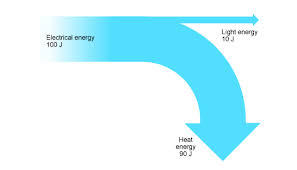
- Sankey diagrams
- Payback time: Cost/ Annual saving
- When energy is lost its known as a "Source" to "sink". The method are to prevent Convection, Conduction, and radiation
- Energy transfer
Spectrum of waves
- Transverse waves
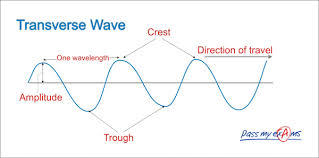
- All transverse waves share the same features
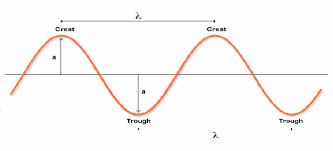
- Amplitude is the maximum disturbance cause by the wave at a trough or crest from the normal line.
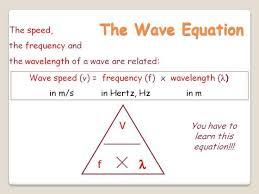
- Wavelength: is the distance between corresponding points on two successive disturbances (peak to peak)
- Frequency is the number of waves produced past a point in one second
- Wavelength: is the distance between corresponding points on two successive disturbances (peak to peak)
- Amplitude is the maximum disturbance cause by the wave at a trough or crest from the normal line.
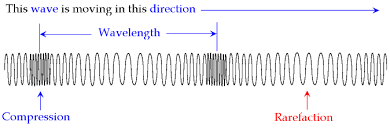
- Longitudinal
- All transverse waves share the same features
- EM spec
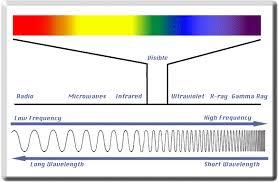
- All travel in straight lines at 300,000,000 m/s. all transverse wave with different frequencys and wave length
- The EM waves are used for communication and he size of the wavelength have to be similar to the reciever
- Sateliite dishes have small receivers to detect microwaves
- The EM waves are used for communication and he size of the wavelength have to be similar to the reciever
- Gate X Usually Lets In Most Radiation. Gamma X-ray UV Light Infrared Microwaves Radio waves
- Visible light and infrared use optical fibres to communicate
- Morse code: Communicating with light is by far the fastest way to. morse code is a series of dots and dashes to write a word. these messages were relayed by stations to increase distance
- Multiplexing: Optical fibres can have multiple messages sent through as the light can be sen in different wavelengths (colours)
- All travel in straight lines at 300,000,000 m/s. all transverse wave with different frequencys and wave length
- Transverse waves
Reflection
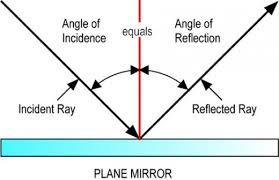
- When a ray of light hits a shiny surface it is reflected
- The Incident angle = Reflection angle
- Multiple reflections mean light can reflect off a series of surfaces
- The Incident angle = Reflection angle
- Refraction
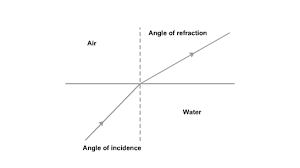
- Usually when a ray of light or infrared passes from one material into another and changes direction. this happens because the waves change speed
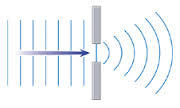
- Diffraction: is when a wave spreads after going through a narrow opening
- Can also occur when a wave passes an obstacle. if the obstacle is large then the wavelength has to be large otherwise here is no effect
- If the gap is a similiar size or smaller he diffraction if high but if i is much larger then it is no as noticable
- Wave based sensors such as telescopes or optical microscopes have issues with diffraction. two stars may diffract and act as one
- When a ray of light hits a shiny surface it is reflected
Imagens e arquivos do mapa

Informações
- Descrição
- Mapa Mental sobre P1, criado por Tapi Mandz em 21-03-2015.
- Criado por
- Tapi Mandz
- Visualizações
- 1
- Avaliação