
Mapa mental
Biology (B2)
Conteúdo do mapa
Biology (B2)
B2.1 - Cells, tissues and organs
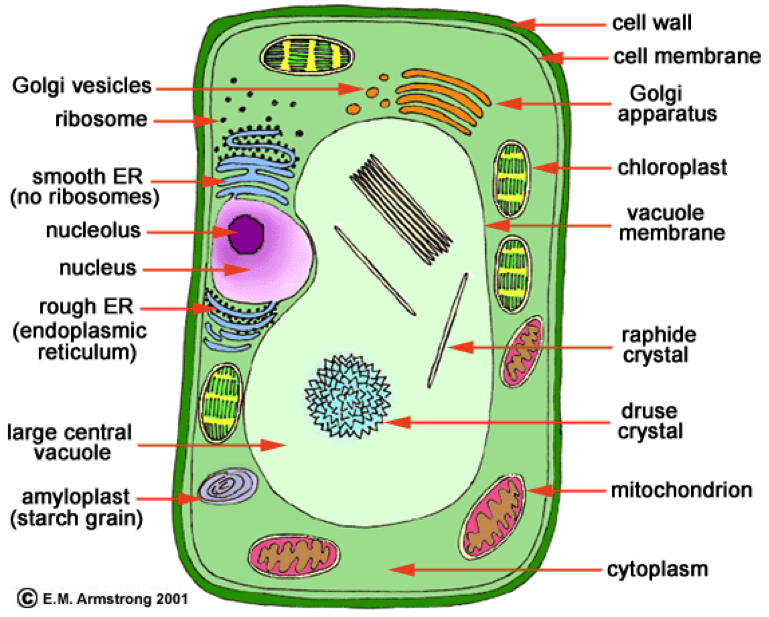
- Animal and plant cells
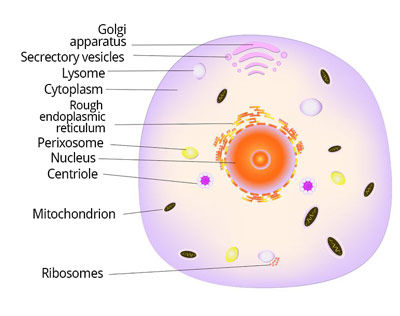
- Human cells
- Use this acronym to remember what is in a human cell: Nice Chicken Curry Mild Rice
- Nucleus
- Controls the cell's activities
- Cytoplasm
- Many chemical reactions take place.
- Cell membrane
- Controls the movement of materials in and out of cell.
- Mitochondria
- Energy is released during aerobic respiration
- Ribosomes
- Protein synthesis takes place
- Plant cells
- Contain all the things in a human cell, with these extra:
- Cell wall
- Made of cellulose for support
- Chloroplasts
- Contain chlorophyll for photosynthesis. The light energy is absorbed to make food.
- Permanent vacuole
- Contains cell sap
- Human cells
- Bacteria and yeast
- -Very small and can only be seen by a microscope.
- Bacteria
- Contains a cell membrane and cytoplasm surrounded by a cell wall.
- NO NUCLEUS - genetic material is in the cytoplasm
- Multiplied bacteria = bacterial colony
- Yeast
- -SINGLE-CELLED organism -Have a nucleus, cytoplasm and a membrane surrounded by a cell wall.
- Specialized cells
- -Cells are specialized to carry out a specific function. -The structure of the cell gives clues as to what it does.
- Muscle cells
- Many mitochondria to create a lot of energy.
- Gland cells
- Many ribosomes to create a lot of protein.
- Neurons
- Specialized to carry impulses from receptors to the CNS.
- Diffusion
- The spreading out of the particles of a gas, or of any substance in a solution.
- Concentration
- NET MOVEMENT into or out of cells depends on concentration on either side of cell membrane.
- Difference in concentration between two areas is: CONCENTRATION GRADIENT
- Increasing diffusion
- Rate is increased when: -Distance is decreased. -Surface area is increased. -Concentration gradient is increased.
- Examples
- Diffusion of oxygen into cells of body from the bloodstream. Due to respiration of cells.
- Diffusion of carbon dioxide into actively photosynthesizing plant cells.
- Diffusion of simple sugars and amino acids from gut through cell membranes.
- Tissues and organs
- Tissues
- A tissue is a group of cells with similar structure and function.
- Animal tissues
- Muscle tissue - Can contract to bring about movement.
- Glandular tissue - To produce substances such as enzymes or hormones.
- Epithelial tissue - Covers some parts of the body.
- Plant tissues
- Epidermal tissue - Covers the plant
- Mesophyll - Can photosynthesize
- Xylem and phloem - transport substances around the plant.
- Organs
- Organs are made of several tissue types.
- The stomach
- The stomach is an organ made up of: -Muscular tissue to churn the stomach contents. -Glandular tissue to produce DIGESTIVE JUICES. -Epithelial tissue to cover the outside and the inside of the stomach.
- Tissues
- Organ systems
- Groups of organs work together in an organ system.
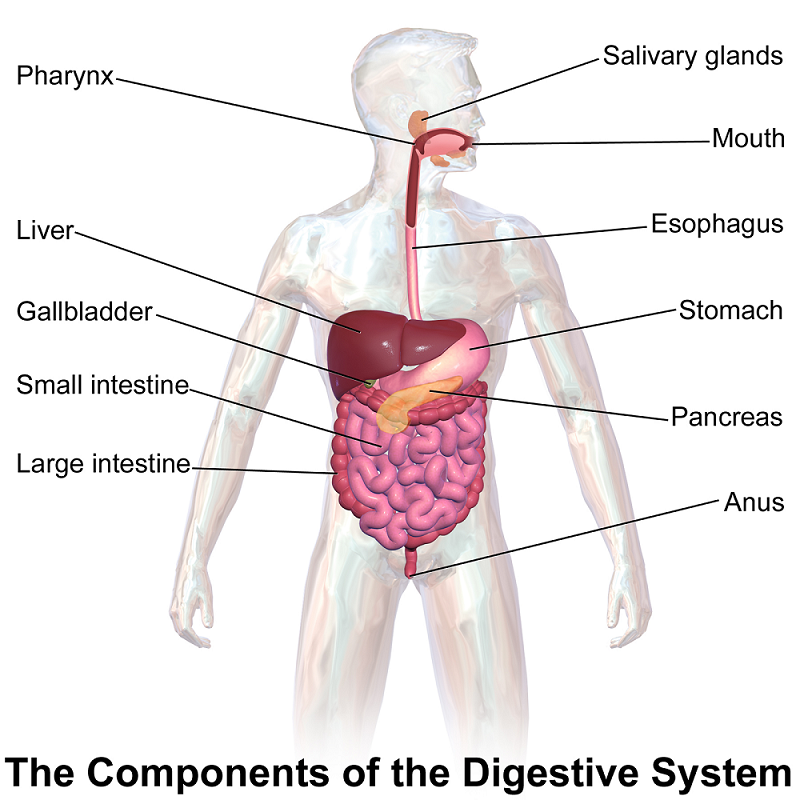
- The digestive system
- The digestive system in humans is adapted to exchange substances with the environment.
- It includes: -Glands, such as the pancreas and salivary glands which produce digestive juices. -Stomach and small intestine where digestion occurs. -Liver which produces bile. -Small intestine where the absorption of soluble food occurs. -The large intestine where water is absorbed from undigested food, producing faeces.
- Animal and plant cells
B2.2 - Organisms in the environment
- Photosynthesis
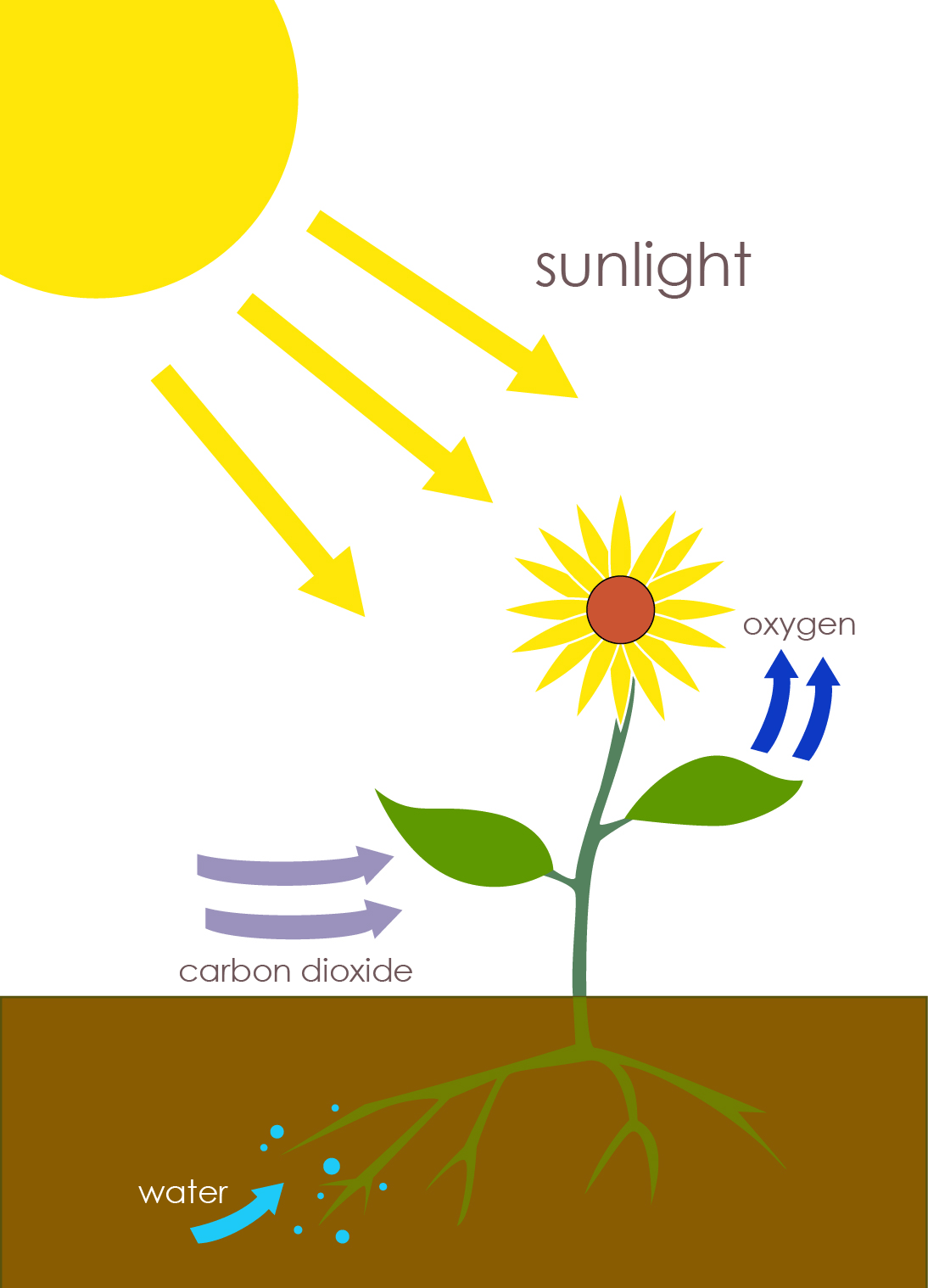
- During photosynthesis, light energy is transferred to chemical energy.
- Some of the glucose is converted into insoluble starch for storage.
- Equation
- Carbon Dioxide + Water → Glucose + Oxygen
- 6CO₂ + 6H₂O → C₆H₁₂O₆ + 6O₂
- Process
- 1. CO₂ taken in by leaves, water taken in by roots. 2. Chlorophyll traps light energy. 3. Energy is used to convert the CO₂ and H₂0 to C₆H₁₂O₆
- Testing
- -Testing leaves with iodine solution, to test for starch. -Green patches will turn solution blue-black to show starch has been made.
- Variegated leaves
- Different patches = difference in chlorophyll. Green = Chlorophyll White = No Chlorophyll
- Limiting factors
- 3 limiting factors: -Lack of light -Cold (enzymes slower) -Little carbon dioxide
- Experiments
- Independent variable: Concentration of Carbon Dioxide
- Dependent Variable: Volume of Oxygen produced.
- Control variables: Light, temperature, type of plant
- How plants use glucose
- -Converted into insoluble starch for storage. -Respiration -Converted into lipids and oils for storage. -Produce cellulose which strengthens cell walls. -Produce proteins.
- Ions
- Plant and algal cells need a supply of mineral ions such as: -Nitrate ions to produce protein. --Plants absorb nitrate ions from soil. --Algae absorb nitrate ions from the water in which they live.
- Making the most out of photosynthesis
- Plant growers can artificially control the environment to improve plant growth.
- To improve plant growth, the factors that need to be controlled are: -Light intensity -Temperature -Carbon dioxide levels
- Organisms in their environment
- The distribution of organisms is affected by environmental factors.
- -Temperature -Availability of nutrients -Amount of light -Availability of water -Availability of oxygen -Availability of carbon dioxide
- Measuring the distribution of organisms
- Quantitative data is used to describe how physical factors might be affecting the distribution of organisms in a habitat.
- There are two ways to obtain quantitative data: -Random quantitative sampling using a quadrat. -Sampling along a transect.
- Quadrat
- -A square from which may be subdivided into a grid. -Several quadrats are placed randomly and the thing being investigated is counted in each one. -It can be used to estimate the number of species or plant in a field.
- Transect
- -This is not random. A line is marked between two points, and a random quadrat placed every 5 metres along the line. -Supplies a lot of information about: --Habitat --Organisms in it.
- Sample size
- In a large field, enough random quadrats are needed so that the sample is representative of the entire field.
- Photosynthesis
B2.3 - Enzymes
- Proteins, catalysts and enzymes
- Proteins
- -Made up of long chains of amino acids. -Long chains are folded to produce specific shapes, which have a specific function.
- They can be: -Structural components of tissues -Hormones -Antibodies -Catalysts
- Enzymes
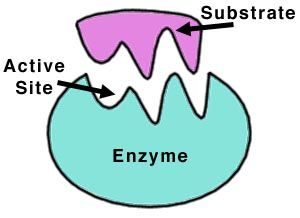
- -Biological catalysts -Large proteins and the shape is vital for its function. -The 'active site' is the area where other molecules can fit.
- In a reaction, the substrate can: -Be held in the active site. -Be connected to another molecule. -Be broken down.
- Enzymes can: -Build large molecules from smaller ones. --Starch from glucose molecules -Change one molecule into another -Break down large molecules into small ones.
- Proteins
- Factors affecting enzyme action
- -Reactions take place quicker if it is warmer. --At higher temperatures the molecules move around more quickly and so collide with each other more often, with more energy. (Learn this word for word)
- -Each enzyme works best at a particular pH value.
- Denaturing
- If the temperature gets too hot, the active site CHANGE SHAPE, causing the enzyme to stop working.
- If the pH is too acidic or too alkaline for the enzyme, the active site could change shape.
- Digestion
- -These enzymes are produced in the glands and in the lining of the gut. -Enzymes pass out of the cells and come into contact with food. -Digestion involves the breakdown of large, insoluble molecules into smaller soluble ones.
- Special enzymes
- Amylase
- Produced in the salivary glands, the pancreas and the small intestine.
- Catalyses the digestion of starch into sugar in mouth and small intestine.
- Work best when the conditions are slightly alkaline.
- Protease
- Produced by the stomach, pancreas and small intestine.
- Catalyses the breakdown of proteins into amino acids in the stomach and small intestine.
- Work best when the conditions are acidic.
- Lipase
- Produced by the pancreas and small intestine.
- Catalyses the breakdown of lipids to fatty acids and glycerol.
- Work best when the conditions are slightly alkaline.
- Amylase
- Bile
- -The liver produces bile. -Stored in the gall bladder before being released into the small intestine. -Bile neutralises the acid that was added to food in the stomach. -This provides alkaline conditions in which enzymes in the small intestine work most effectively.
- Uses
- Biological detergents
- -Contain proteases and lipases that digest food stains. -Work at lower temperatures than ordinary washing powders. -Saves energy and money spent on electricity.
- Baby foods
- Proteases are used to pre-digest proteins in some baby foods.
- Fructose syrup
- -Isomerase is used to convert glucose syrup into fructose syrup. -Fructose is MUCH SWEETER so less is needed in foods. -Foods are less fattening.
- Foods
- Carbohydrases are used to convert starch into sugar syrup for use in foods.
- Industry
- -Used to bring about reactions at normal temperatures and pressures. -Traditional chemical processes require: --Expensive equipment. --A lot of energy (to produce high temperatures and pressures)
- Biological detergents
- High-tech enzymes
- Advantages
- -Enzymes in biological washing powders are very effective at removing stains. -Biological washing powders can be used at lower temperatures. -Used in medicine to diagnose, control or cure disease. -Industry, costs of equipment and energy can be reduced.
- Disadvantages
- -Misuse of washing powders can cause allergic reactions on skin. -Enzymes may enter waterways via the sewage system. -Industrial enzymes are costly. -Enzymes denature at high temperatures needed to kill pathogens in the washing. -Fabrics such a wool are digested by proteases.
- Advantages
- Proteins, catalysts and enzymes
B2.4 - Energy from respiration
- Aerobic respiration
- -Takes place continually. -Chemical reactions take place in the mitochondria and are controlled by enzymes.
- Equation
- Glucose + oxygen → Carbon dioxide + water [+ energy]
- Uses
- Energy released used to: -Build larger molecules. -Enable muscle contraction. -Maintain a constant body temperature in colder surroundings. -Build sugars, nitrates and other nutrients into amino acids and then proteins in plants.
- Experiment
- -Measure volume of carbon dioxide produced.
- Effect of exercise on the body
- -During exercise muscles need more energy. -More glucose and oxygen need to be transported to the muscles.
- Heart rate
- Increase and the blood vessels dilate to allow more blood containing oxygen and glucose to reach the muscles.
- Breathing
- Increase in breathing rate and depth of each breath to allow a greater uptake of oxygen and release of carbon dioxide in the lungs.
- Glycogen
- Muscles store glucose at glycogen which can be converted back to glucose during exercise.
- Anaerobic respiration
- When muscles work hard for a long time, they may have too little oxygen and become fatigued.
- Muscles use anaerobic respiration if they are short of oxygen.
- Anaerobic respiration doesn't break down glucose fully, therefore less energy is released from the glucose.
- Equation
- glucose → lactic acid (+ energy released)
- Oxygen debt
- In anaerobic respiration, lactic acid replaces carbon dioxide and water as the waste product.
- When the exercise is complete, the lactic acid MUST be broken down.
- The extra oxygen you need to oxidize the lactic acid into carbon dioxide and water is called oxygen debt.
- Aerobic respiration
B2.5 - Simple inheritance in animals and plants
- Cell division
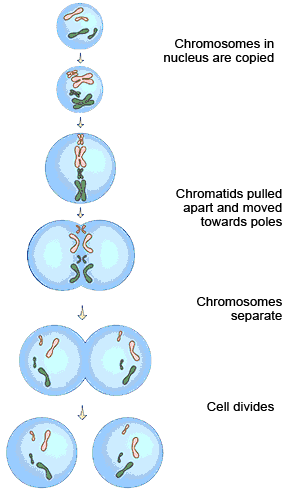
- Necessary for the growth of an organism, or for the repair of damaged tissues.
- Mitosis
- Two identical cells being produced from the original cell. Mitosis = Making Identical Two
- Two identical cells being produced from the original cell. 46 chromosomes (2 sets) Mitosis = Making Identical Two
- Chromosomes
- Found in pairs and contain genes (alleles) which must be passed onto each new cell.
- Process
- -Normal body cell has 46 chromosomes (23 pairs). -Copies of these pairs are made. -Then the cell divides once to form two genetically identical body cells.
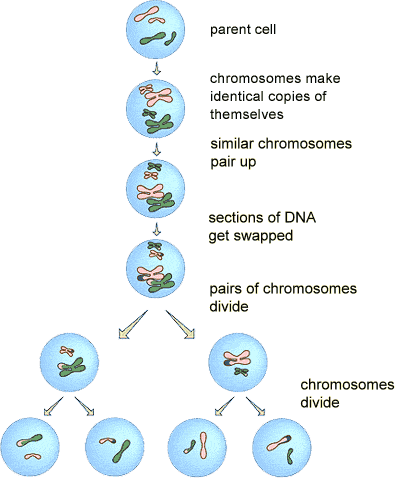
- Meiosis
- -Cells in reproductive organs divide by meiosis to form gametes. -23 chromosomes (one set) -Meiosis = Making Eggs
- Process
- -Before division, a copy of each chromosome is made. -The cell now divides twice to form four gametes. -Each gamete has a single set of chromosomes with a different combination of genes.
- Sexual reproduction
- -Results in variation as the gametes from each parent fuse. -Half genetic information from mother, half from father. -In fertilization, a single body cell with new pairs of chromosomes form. -Individual develops through mitosis.
- Differentiation
- Most animal cells differentiate early in development and cell division is mainly for: -Repair -Replacement
- Plant cells can differentiate throughout the life of the plant as it continues to grow.
- Asexual
- Asexual reproduction cells are produced by mitosis from the parent cell. They contain the SAME alleles as the parents.
- Stem cells
- -Unspecialised. -Found in human embryo and bone marrow. -Differentiate into different types of body cell. -Adult bone marrow stem cells - can differentiate into blood cells.-Hoped that stem cells could be used to cure diseases.
- Embryos
- Embryonic stem cells can be used in medical research and treatments.
- Found: -Spare embryos from IVF. -Created from adult cells. -Taken from the umbilical cord of newborn babies.
- Issues
- Economical
- Very expensive to carry out research using embryonic cells.
- Ethical
- -The research is experimental. -Embryos have potential to become a baby and are destroyed. -Embryo cannot give permission.
- Economical
- Embryo screening
- Involves tests to diagnose disorders before the baby is born.
- Results
- -Sometimes parents decide to terminate the pregnancy. -Others decide it isn't ethical and keep the baby.
- In IVF, only healthy embryos are implanted into the mother. Embryos carring FAULTY genes are destroyed, which isn't ethical.
- Mendel to DNA
- A monk who worked out how characteristics were inherited.
- Genes
- -Found on chromosomes. -Control our characteristics. -Short section of DNA.
- Genetic code
- Each genes codes for a particular combination of amino acids which make a specific protein.
- DNA
- -A very long molecule with a double helix structure (chromosomes). -Every individual (bar identical twins) has different DNA.
- DNA Fingerprint
- Unique DNA pattern which can be used to identify people.
- Inheritance
- Sex chromosomes
- Male
- An X and a Y chromosome (XY)
- Female
- Two X chromosomes (XX)
- Male
- Alleles
- Genes controlling the same characteristic.
- Dominent
- 'Masks' the effect of another allele.
- Recessive
- The dominant allele 'masks' this allele, so it has no effect.
- Genetic diagrams
- Biological models which can be constructed to predict and explain the inheritance of particular characteristics.
- Terminology
- Phenotype
- Physical appearance of the characteristic (dimples or no dimples)
- Genotype
- The genetic make-up, which alleles does the individual inherit. (DD, Dd, dd)
- Homozygous
- Both alleles are the same DD (homozygous dominant) or dd (homozygous recessive).
- Heterozygous
- The two alleles are different, Dd.
- Phenotype
- Genetic disorders
- If an allele is recessive, the person must inherit two recessive alleles to have the disorder.
- If the allele is dominant, the person has to inherit only one dominant allele to have the disorder.
- Polydactyly
- -Caused by a dominant allele. -Where a baby is born with extra fingers or toes.
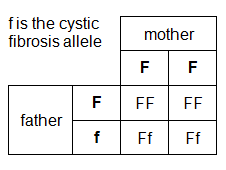
- Cystic fibrosis
- -Caused by a recessive allele. -Affects cell membranes and causes the production of thick sticky mucus.
- Carriers
- People who carry a recessive allele.
- Punnet squares
- Used to predict the chances of inheriting a disorder.
- Sex chromosomes
- Cell division
B2.6 - Old and new species
- The origins of life on Earth
- -Believed that the Earth is 4500 million years old and that life began about 3500 million years ago. -There is DEBATE as to whether first live developed due to conditions on Earth, or whether simple life forms arrived from another planet.
- Fossils
- -Fossils are remains of organisms from many years ago which are found in rocks. -We can learn from fossils how different organisms have changed as life developed on Earth.
- -The fossil record is INCOMPLETE.
- How they are formed
- -From hard parts of animals that do not decay easily (teeth, claws) -From parts of organisms that have not decayed because some of the conditions for decay are absent (ice preservation). -When parts of the organism are replaced by other materials, such as minerals, as they decay. -As preserved traces of organisms (footprints, burrows).
- Destruction
- Traces which were left are likely to have been destroyed by geological activity such as earthquakes.
- Soft-bodied
- Soft-bodied organisms didn't leave fossils.
- Exploring fossil evidence
- -The fossil record is incomplete. -We can learn a lot from fossils which exist. -Some organisms have changed a lot over time. -Other have changed very little. -Some have become extinct.
- Extinction
- A species which once existed has completely died out.
- Factors
- -A new disease may kill all members of a species. -Change in environment. -New diseases may be introduced. -A new predator may evolve or be introduced to an area that kills and eats all of a species. -A new competitor - original species may be left with little or nothing to eat. -A single catastrophic event may occur which destroys the habitat. -Natural changes in species occur over time.
- More about extinction
- The biggest influences on a species survival are changes in the environment.
- Climate change
- -A species which is very well adapted to a hot climate may become extinct in an Ice Age. -There could be insufficient food or it is too cold to breed.
- -Climate change may: --Make it too cold or hot. --Make it too wet or dry. --Reduce a species food supply.
- Fossil evidence
- -Shows that there have been mass extinctions on a global scale. -Many of the species died out over a period of several million years - a short time.
- -The habitat the species live in may be destroyed by catastrophic events such as a major volcanic eruption. -The environment can change dramatically following a collision between a giant asteroid and Earth.
- The dinosaurs
- No one knows why they have become extinct. Some ideas are: -The collision of a giant asteroid caused huge fires, earthquakes, landslides and tsunamis. The dust which rose blocked out the sun, lowering temperatures and causing darkness. Plants could not grow. -The extinction was a slower process due to sea ice melting and cooling the sea temperature by 9 degrees, therefore there was less plankton - less food available.
- Isolation and the evolution of new species
- New species can arise form existing species if a group becomes isolated from the rest.
- Geographical isolation
- -Could occur if an island separates from the mainland or if a new river separates two areas. -Mountain ranges and old craters can isolate organisms.
- Speciation
- Logical process: Isolation → Genetic variation → alleles selected → interbreeding no longer possible → new species (speciation).
- Isolation
- New species can occur following separation of two populations, as in geographical isolation.
- Genetic variation
- Each population has a wide range of alleles that control their characteristics.
- Natural selection
- -Occurs in both populations. -The alleles that control the characteristics which help the organism to survive are selected. -The organisms with these alleles will survive and breed.
- Evolution
- If the environment, competitors, food supply and predators are different for each population, they will evolve differently.
- Interbreeding
- SPECIATION has occurred when the two populations can no longer successfully interbreed.
- The origins of life on Earth
Imagens e arquivos do mapa
Informações
- Descrição
- A mindmap for Biology Unit 2 (B2) for AQA.
- Criado por
- Sian Griffiths
- Visualizações
- 3.038
- Tags
- Histórico
-
- Criado por Ben C · 6 mai 2015
- Copiado por anjumn10 · 6 mai 2015
- Copiado por Sian Griffiths · 6 mai 2015
- Avaliação