
Mapa mental
RECEPTORS
Conteúdo do mapa
RECEPTORS
Super Families of Receptor Proteins
- Plasma Membrane
- ligand gate ion channels
- eg nicotine and acetyl choline receptors
- G Protein coupled receptors
- aka signal proteins structure: 7 helices with N terminal on outside
- Binding site on inside usually closed, ligand binding causes conformational change to open this
- G protein (alpha beta & gamma) binds to inner bindng site
- Alpha usually has GDP (guanosine diphospate) which is then replaced GTP on activation
- Gamma and beta separate
- alpha inactivated when its own phosphoryating GTPase or protein phosphotase activity turn GDP to GTP
- G protein subunits recombine and attach to cell membrane
- alpha inactivated when its own phosphoryating GTPase or protein phosphotase activity turn GDP to GTP
- Gamma and beta separate
- Alpha usually has GDP (guanosine diphospate) which is then replaced GTP on activation
- alpha activates adenylate cyclase to produce cyclic AMP
- (secondary messenger) can go on to activate protein kinase A which activates phosphorylation of theorine and serine in other enzymes( glycogen to glucose)
- DRUGS
- Beta adrenergic receptors switched on by adrenaline
- B1 open calcium channels
- B2 close channels - asthma - relaxing smooth muscles
- Muscuranic receptors -cholinergic receptors on smooth muscles and cardiac tissue
- agonists switching on GI after surgery
- antagonists close GI after surgery
- shaking in parkisons
- Beta adrenergic receptors switched on by adrenaline
- tyrosine kinase receptors
- contain intra, extra & transcellular membrane
- ligand gate ion channels
- cytosolic intracellular
- nucleur hormone receptors
- involved in every major organ and metabolic system eg bone, muscle, hormone mediated cancer, homeostasis, sexual and embryonic development
- 2. binds receptor- conformational change
- 1. ligand crosses membrane
- 3. dimerisation
- 4. proteinsythesis
- 5. binds to coactivator protein
- 6. complex transloacates to nucleus and binds to specific region of DNA
- initiates transcription- directly involved in gene expression
- single protein steroid binding region near C terminal and DNA binding region near N terminal
- DNA binding region = zinc fingers 9 cysteine residues, 8 contain zinc to stabilise structure
- dimer- both need to be activated- identifies particular nucleuotide sequence
- DNA binding region = zinc fingers 9 cysteine residues, 8 contain zinc to stabilise structure
- for steroids and thryroid
- DRUGS
- Glucocorticoid receptor: using adrenal gland extracts (cortisone) for allergy treatment. Abused by athletes.
- Progesterone Receptor: control ovulation
- Oestrogen receptor: using oestradiol for fertility control and breast cancers
- oestrodiol = steroid effect growth and development
- H12 folds across binding site which then exposes Activation Function AF2 (hydrophobic) after step two
- Tamoxifen for breast cancer- prevents binding of oestrogen to its receptor
- oestrodiol = steroid effect growth and development
- nucleur hormone receptors
- can be classified based on pharmacological activity (drug/ligand) nature here classified by structural pathway
- Plasma Membrane
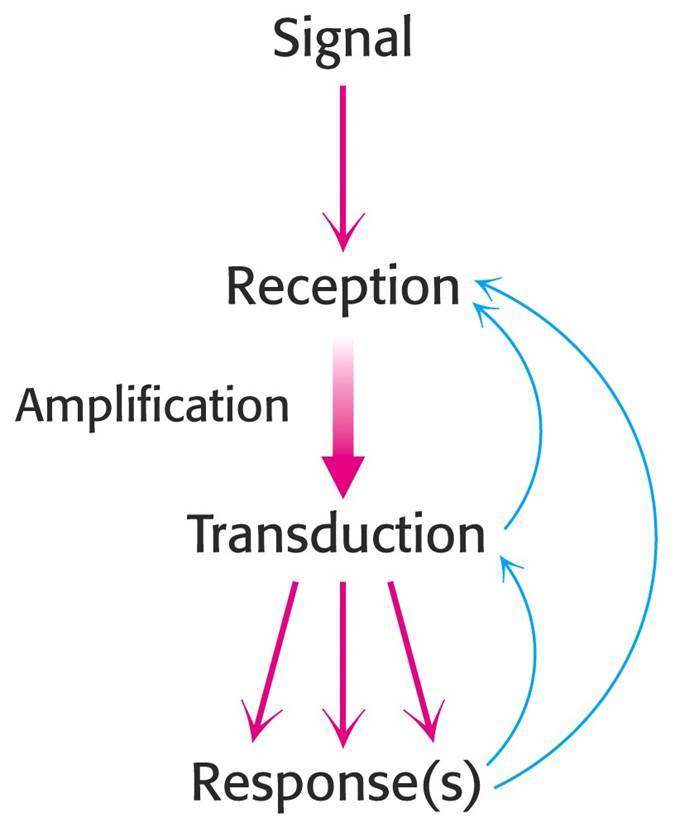
Signal transduction process
- Receptors = proteins receive endo/exodogenous signals
- including hormones, neurotransmitters, local chemical mediators eg prostaglandins
- Bind with high affinity, causing conformational change
- Chemical signal transferred to intra cellular message
- Receptors = proteins receive endo/exodogenous signals
Drugs & Receptors
- ANTAGONIST
- competitive or non competitive
- binds to receptor but does not exert effect on cell
- competitive or non competitive
- AGONIST
- partial or full
- exerts effect on cell
- partial or full
- ANTAGONIST
Imagens e arquivos do mapa
Informações
- Descrição
- An introduction to cell receptors How agonist and antagonist drugs interact with cell receptors How receptor proteins are classified An overview of the 4 main families of cell receptors
- Criado por
- Memona
- Visualizações
- 79
- Tags
- Avaliação