
Mapa mental
AS Unit 1 Biology: Content
Conteúdo do mapa
AS Unit 1 Biology: Content
Lifestyle, Health and Risk
- Transport and Circulation
- Water
- Solvent
- Molecule has an uneven charge, polar. Negative Oxygen, Positive Hydrogen
- Ionic substances can dissolve easily
- Glucose (-OH)
- Salt
- Amino Acids (-COOHJ) (-NH2)
- Hydrogen Bonds form between molecules
- Cohesion (important in the xylem)
- High Specific Heat Capacity. So temperature fluctuations can be managed and are small
- Sweating and transpiration cool the body down
- Solvent
- A Mass Transport System, using diffusion. Big organisms have smaller SA/V. Need to overcome inefficiency: need MTS
- Artery
- Vein
- Capillary
- Water
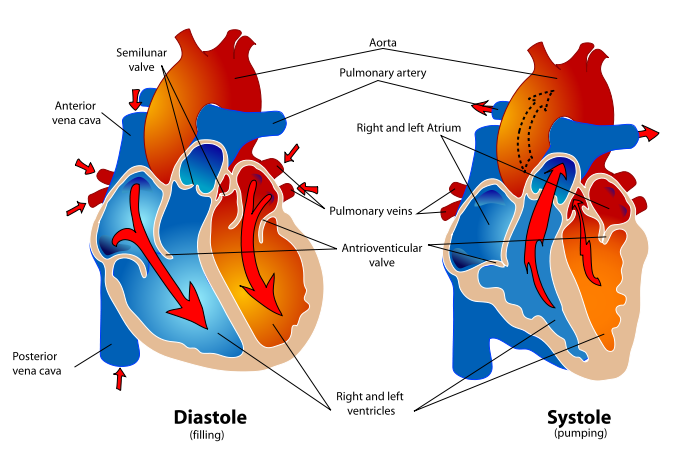
- Cardiac Cycle and Heart Rate
- Systole
- Contraction of the muscle
- Diastole
- Relaxation of the muscle
- Valves
- Atrioventricular
- Semi-lunar
- Pressures within the heart cause valves to open and close. Elastic recoil lowers pressure in atria and ventricles
- Systole
- CVD
- Blood Clotting
- As a vital defence mechanism, it minimises blood loss, prevents entry of pathogens, provide framework for repairs.
- Can also block arteries: cell death
- Damage to blood vessel
- Exposes Collagen
- Platelets attach
- Platelets release thromboplastin
- Calcium and K catalyses thromboplastin to convert prothrombin to thrombin
- This converts soluble fibrinogen to insoluble fibrin.
- This makes a network of fibres to trap RBC and debris to make a clot.
- This converts soluble fibrinogen to insoluble fibrin.
- Calcium and K catalyses thromboplastin to convert prothrombin to thrombin
- Platelets release thromboplastin
- Platelets attach
- Exposes Collagen
- Atherosclerosis
- Damage to endothelial Lining
- Increased Risk of Blood Clotting
- Inflammatory Response: White Blood Cells move to artery wall
- Cholesterol builds up: ATHEROMA
- Build up of Calcium salts and fibres: PLAQUE FORMATION
- Narrowing of artery
- Increased Blood Pressure
- POSITIVE feedback
- Increased Blood Pressure
- Narrowing of artery
- Build up of Calcium salts and fibres: PLAQUE FORMATION
- Cholesterol builds up: ATHEROMA
- Damage to endothelial Lining
- Treatments
- Reduced Lifestyle Changes
- Anti-hypertensives
- Duiretics
- increased urine volume lowers bp and vol.
- Beta Blockers
- Block hormones= contractions less powerful
- ACE inhibitors
- blocks angiotensin which causes arterial constriction
- Duiretics
- Aspirin/Clopidogrel
- Platelet Inhibitory drug: makes less sticky
- Anticoagulants
- Warfarin: reduce blood clots
- Statins
- Lower Cholesterol by blocking liver enzyme
- Blood Clotting
- Structure and function of Carbohydrates
- Monosaccharides
- Glucose
- Galactose
- Fructose
- Disaccharides
- Sucrose
- Lactose
- Maltose
- Polysaccharides
- INSOLUBLE
- Unbranched
- Amylose
- In Plants
- In Starch
- Alpha Glucose- tight spirals
- 1,4
- Amylose
- Branched
- Amylopectin
- Lots of terminal ends, digested more rapidly than amylose
- In starch
- In Plants
- 1,6
- Glycogen
- Animals, Bacteria Plants
- Storage
- Glucose
- Compact
- Amylopectin
- Unbranched
- INSOLUBLE
- Bonding
- Glycosidic links
- Forming: Condensation: Loss of 1 H20
- Breaking: Hydrolysis: Addiction of 1 H20
- Catalysed by enzymes
- Glycosidic links
- Monosaccharides
- Structure and Function of Lipids
- Insoluble in water
- Soluble in ethanol
- Triglycerides
- 3 fatty acids
- Glycerol
- CH2OH CHOH CH2OH
- Ester Bonds
- between fatty acids and Glycerol
- Fatty Acids vary
- Length
- Kinks/Double bonds
- combination of acids
- Saturated Fats
- Strong intermolecular bonds
- Solid
- Straight chain
- Unsaturated Fats
- Poly
- Weaker bonds
- Liquid
- many double bonds
- Mono
- Weak bonds
- Liquid
- Poly
- Reducing Risk
- Population studies on Risk Factors
- Cohort studies
- Large number of people followed over long periods of time
- Monitored to see if diseases occurs
- Case-Control Studies
- Case compared to control
- Cohort studies
- Risk Factors for CVD
- Genetic Factors
- HBP
- Poor Cholesterol Metabolism
- Age
- Elasticity/width in heart/arteries reduced
- Smoking
- High Blood Pressure
- Lifestyle
- Diet
- Obesity
- Exercise
- Diet
- Mutations in Genes relative to HDL:LDL production
- Perceived Risk
- Actual Risk
- Gender
- Oestrogen gives women protection from CVDs before menopause
- Cholestrol
- Lipoproteins
- HDLs
- GOOD
- Formed from unsat fats
- Transport to Liver where broken down
- Reduces Cholestrol
- LDLs
- BAD
- Formed from sat fats
- Bind to cell surfaces receptors, become saturated, cant break down Cholestrol
- Reduce activity
- HDLs
- Lipoproteins
- BMI= KG/M2
- Antioxidants
- Free Radicals: damage cells, need vitamin E/C to provide H to stabilise
- Reducing agents
- Genetic Factors
- Good Studies
- Valid
- Reliable
- non-Bias/controlled
- Large sample size
- Transport and Circulation
Genes and Health
- Structure and Role of DNA and RNA
- Nucleotides
- Phosphate
- Organic Base
- Sugar
- Deoxy: DNA, Ribose:RNA
- Condensation reactions
- RNA
- Triplets=Amino
- DNA
- Double Helix, complementary Base pairing
- Purines
- Adenine
- Guanine
- Pyrimidines
- Thymine
- Cytosine
- Nucleotides
- DNA replication and Protein synthesis
- DNA carries codes for Proteins
- Semi-Conservative theory
- Dispersive/Fragmentory
- Conservative
- 1. Hydrogen Bonds split
- 2. DNA nucleotides pair up with bases. DNA Polymerase links adjacent nucleotides
- 3.Two identical daughter Strands created
- 2. DNA nucleotides pair up with bases. DNA Polymerase links adjacent nucleotides
- Semi-Conservative theory
- DNA Copied
- mRNA made in Transcription
- 1. DNA unwinds. Hydrogen bonds break.
- One strand used (antisense)
- 2. Uracil pairs with Adenine. Ribonucleotides pair up complementory
- 3. RNA Polymerase used
- 1. DNA unwinds. Hydrogen bonds break.
- Then Translation...
- mRNA to protein
- On Ribosome
- Transfer RNA translates base sequence
- Brings Amino Acid to bind
- Makes polypeptide
- Brings Amino Acid to bind
- Transfer RNA translates base sequence
- On Ribosome
- mRNA to protein
- mRNA made in Transcription
- DNA carries codes for Proteins
- Genes, Mutation and CF
- Change in the base sequence of DNA
- Causing deformities within the protein being created
- Active sites etc.
- Causing deformities within the protein being created
- CF
- CFTR Protein
- Excess water:
- Na+ pumped across BASAL MEMBRANE
- Na+ diffuses through sodium channels
- Cl- follows down con gradient
- Water drawn out by osmosis due to high salt content in tissue fluid
- Cl- follows down con gradient
- Na+ diffuses through sodium channels
- Na+ pumped across BASAL MEMBRANE
- Not there, doesn't work.
- Excess water:
- CFTR Protein
- Effects of CF
- Gas Exchange
- In Lungs, Mucus: More infection, harbour pathogens.
- Block bronchioles/ reduces aveoli effectiveness
- Digestion
- Mucus blocks Pancreatic Duct: Digestive enzymes cant react small intestine. Tiredness, difficult gaining weight
- Damage insulin cells by fibrosed cysts, diabetes
- Reproduction
- Sperm cant leave/ Mucus blocks cervix
- Gas Exchange
- Change in the base sequence of DNA
- Genetic Inheritance
- Homozygous (same alleles)
- Phenotypes
- Genotypes
- Heterozygous
- Dominance
- Recessive
- Gene Therapy and Genetic Screening
- Somatic Therapy
- Use a Vector: Liposome
- allele inserted into cell
- Germ-Line
- Amniocentesis
- CVS Sampling
- Ethics
- Rights
- Risk of Miscarriage
- Abortion
- Costs
- Mental and emotional issues
- Somatic Therapy
- Cell Membranes
- Phospholipid Bilayer
- Hydrophobic tails inside the bilayer
- Phosphate, Glycerol, 2 fatty acids
- Proteins
- Channels
- Glycolipids/proteins
- Fluid Mosaic Model
- Phospholipids are triglycerides: Polar: Hydrophilic phosphate heads on the outside
- Polar molecules cannot easily pass through: lipid soluble can.
- Phospholipids are triglycerides: Polar: Hydrophilic phosphate heads on the outside
- Cholestrol
- Phospholipid Bilayer
- Enzyme Action and Rates of Reaction
- Enzymes: Catalysts
- Globular
- Lock and Key theory
- Active Sites
- Activation Energy
- Lowers Ea
- Creating suitable Ph
- assisting in breaking/making bonds as charged groups in active site interact and distort shape of substrate
- Enzymes: Catalysts
- Structure of Amino Acids and Proteins
- Carboxylic Group
- Amine Group
- Hydrogen and a Residual Group
- 4 Levels of Structures
- Primary
- Dipeptide
- Peptide bonds
- Condensation reactions
- Peptide bonds
- Polypeptide
- Dipeptide
- Secondary
- Alpha Helix
- Beta Pleated
- The hydrogen bonding between amino acids
- Tertiary
- 3D shape
- Hydrophobic interactions
- Hydrophilic outside of protein
- disulphide bridges
- Hydrogen bonds
- Ionic bonds between R groups
- Covalent bonds
- Hydrophobic interactions
- 3D shape
- Quaternary
- 2 or more polypeptide chains joining together: haemoglobin
- Primary
- Globular
- enzymes
- Complicated tertiary
- Fibrous
- collagen/keratin
- little tertiary
- Transport across Cell Membranes
- Diffusion
- Osmosis
- Facilitated Diffusion- protein channel
- Active Transport- ATP
- Carrier Proteins, up concentration gradient
- Exo and Endocytosis
- Gas Exchange surfaces
- large area
- thinner diffusion distance
- Concentration gradient
- Structure and Role of DNA and RNA
Core Practicals
- Daphnia
- Vitamin C
- DCPIP- goes colourless when reduced (gaining e-)
- 1. Calibrate (known volume of conc. of Vit C)
- Add unknown solution, until colourless
- Errors:
- Systematic
- Burette/pipette error in volume
- Not measured at right place (meniscus)
- Random
- end point misjudged, drops may be too much/too little
- Systematic
- Errors:
- Add unknown solution, until colourless
- 1. Calibrate (known volume of conc. of Vit C)
- DCPIP- goes colourless when reduced (gaining e-)
- Beetroot
- Cut equal sizes
- Rinse. Place in equal volumes of water (range of temperatures. Equal Time
- Remove, shake to disperse pigment
- Colourimeter
- Remove, shake to disperse pigment
- Rinse. Place in equal volumes of water (range of temperatures. Equal Time
- Cut equal sizes
Imagens e arquivos do mapa
Informações
- Descrição
- Biology AS Unit 1 MindMap: A summary of key points and biological principles
- Criado por
- zoerswann
- Visualizações
- 192
- Tags
- Avaliação