
Mapa mental
Information Processing
Conteúdo do mapa
Information Processing
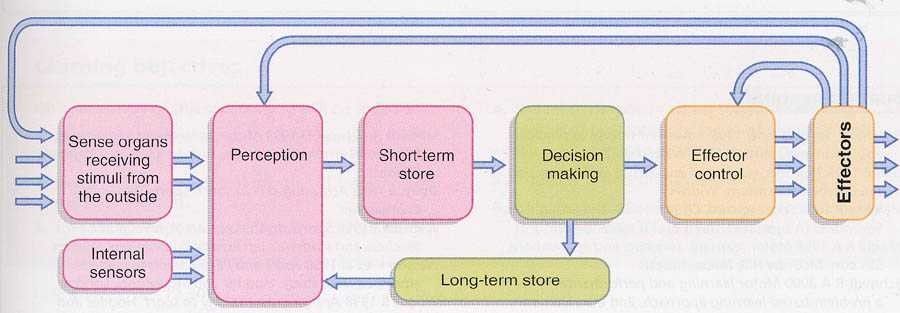
Welfords information processing model
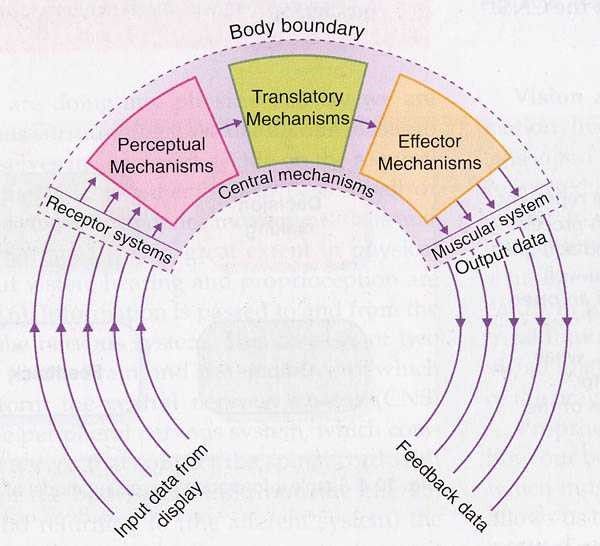
Whiting's Information processing model
1) Stimulus Identification Stage (INPUT)
- This is the sensory stage where the stimulus is detected, along with speed, size, colour, direction of movement from the display of stimulus
- The Display
- The physical environment in which the learner is performing. The display from the player would be crowd, team-mates, opposition etc.
- Stimuli and Cues
- These are the specific aspects of the display that are being registered by the learner's sense organs
- Sense Organs, Sensory Systems and Receptors
- These are the receptors which take in the sensory information
- Exteroceptors
- Receive extrinsic information from outside the body (from display)
- Visual, Auditory, Touch, Smell, Taste
- Receive extrinsic information from outside the body (from display)
- Proprioceptors
- Nerve receptors within the body in muscles, joints which provide intrinsic information reguarding what class of movement is occurring
- Interocpetors
- Info. from the internal organs of the body (heart, lungs etc.)
- The info is passed to the central mechanism of the brain via body's sensory nervous system
- Info. from the internal organs of the body (heart, lungs etc.)
- Perception
- Involves the interpreting of the sensory input, along with discrimination, selection and coding of important information that may be relevant to the decision making process. Process of selective attention and use of memory are important at this stage
2) Response Selection Stage (CENTRAL STAGE)
- Having identified information from the display, this stage involves deciding on the necessary movement in the context of the present situation occurring
- Translatory/ Decision making mechanism
- This involves the individual having to use the coded information received to recognise what is happening around them in order to decide and select the appropriate motor programme to deal with the situation
- Perception, Selective Attention, Short Term Memory and Long Term Memory are all involved in this stage of the information processing
3) Response Programming Stage (OUTPUT)
- The final stage is responsible for the organisation of the different motor systems in order to deliver the chosen plan of action
- Effector Mechanisms/ Effector Control
- Motor programmes or schemas are selected and developed, involving short-term and long-term memory.
- These plan, in the form of coded impulses, are sent via the body's effector or motor nerves to the appropriate muscles, telling them what action to perform
- Motor programmes or schemas are selected and developed, involving short-term and long-term memory.
- Muscular Sytems
- The muscles receive the relevant 'motor programme' or plan of action in the form of coded impulses; they initiate the movement and the action is performed
- Feedback
- As a result of any action, the receptor systems receive information in various forms. Either extrinsic (outside body) or Intrinsic (within the body)
- The body's control system, through a series of receptors and effectors controls our movement by evaluating the need for action and executing it when and where deemed appropriate
Selective Attenion
- A process that filters irrelevant information which has been gathered by the sensory system. Information is prioritised to help speed up decision making
Imagens e arquivos do mapa
Informações
- Descrição
- A Levels Physical Education (Acquiring Movement Skill) Mapa Mental sobre Information Processing, criado por danny-hudson97 em 30-03-2014.
- Criado por
- danny-hudson97
- Visualizações
- 147
- Tags
- Avaliação