
Skill Acquisition and Motor Learning
647 resources created by 342 users
This Skill Acquisition and Motor Learning page on GoConqr gathers community-made mind maps, flashcards, quizzes and notes, from the nature of skill and ability to schema theory, feedback and practice methods. It's built for school students, university students and professional candidates revising a topic, plus teachers after ready-made material. There are over 600 resources here, including more than 20 quizzes, over 300 mind maps and over 200 flashcards, with A-level and GCSE Physical Education among the exams mentioned. Pick a topic, try a quiz to find your gaps, then make your own sets.
Select topic
- Skill and Ability29
- Classification of Skills110
- Motor Development and Fundamental Movement Skills29
- Stages of Learning52
- Theories of Learning25
- Transfer of Learning18
- Information Processing in Sport40
- Motor Control and Motor Programmes37
- Constraints and Individual Differences9
- Types and Methods of Practice30
- Guidance in Sport27
- Feedback in Sport20
Top Skill Acquisition and Motor Learning resources
-
48 cardsWeek 0 - Autism Primer EXMD3070 Define Motor Development
-
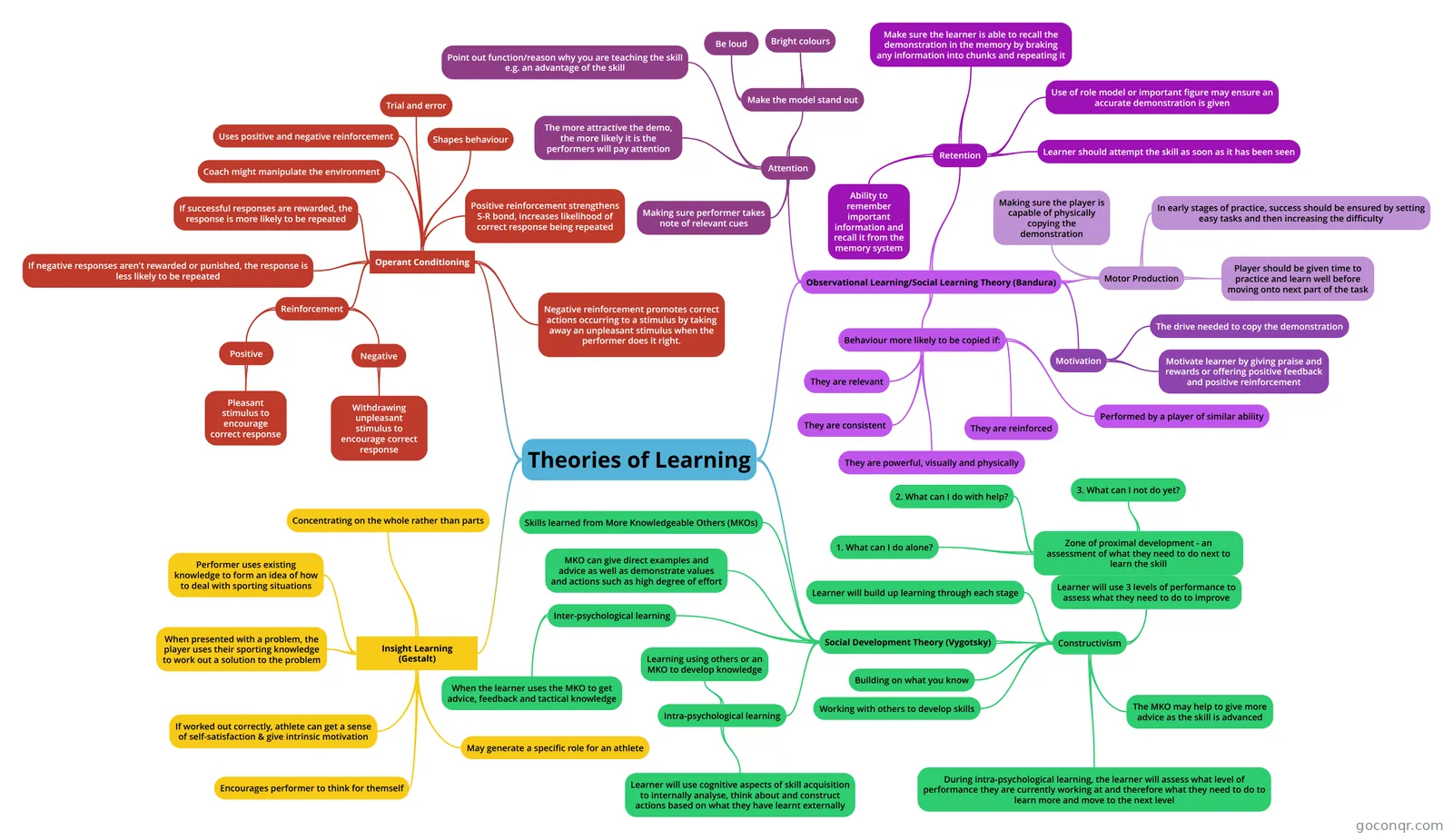 Mind map Theories of Learning
-
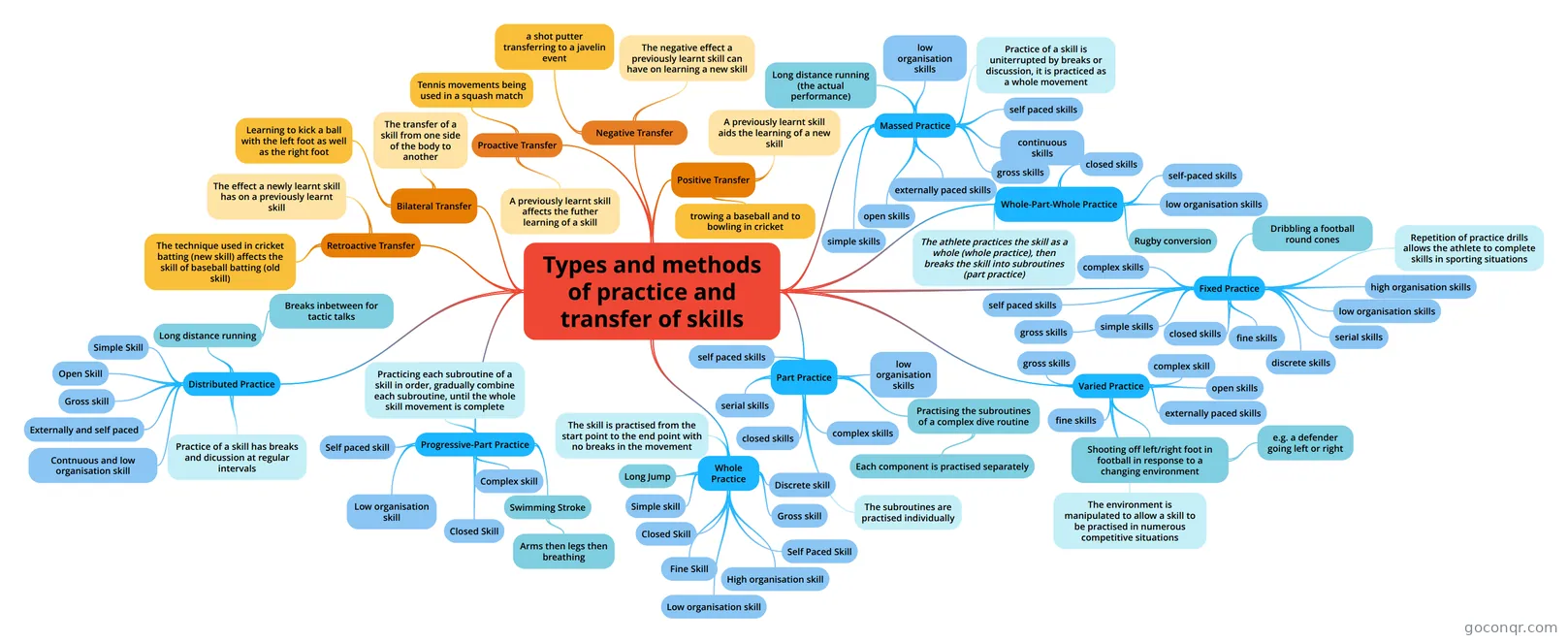 Mind map Types and methods of practice and transfer of skills
-
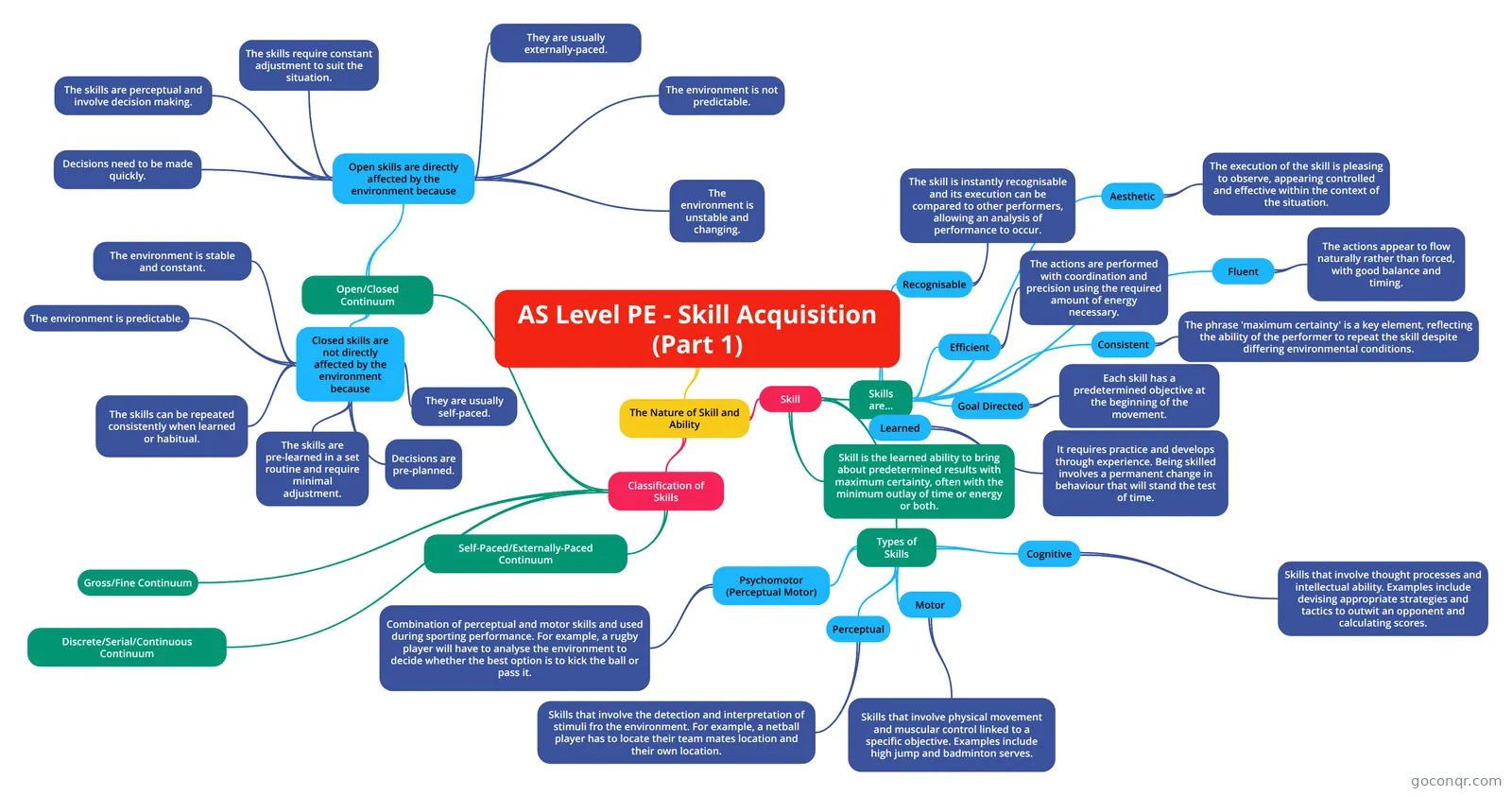 Mind map AS Level PE - Skill Acquisition (Part 1)
-
28 cardsHSE204 - Study Area 1, Topic 1 - Introduction to motor learning and classification of skills, games, and sport Motor Learning and Development (Deakin 2014)
-
13 cardsPower Law of Practice Draw a graph to show the relationship between the number of practices and the absolute error.
-
12 cardstypes of guidance four types of guidance
-
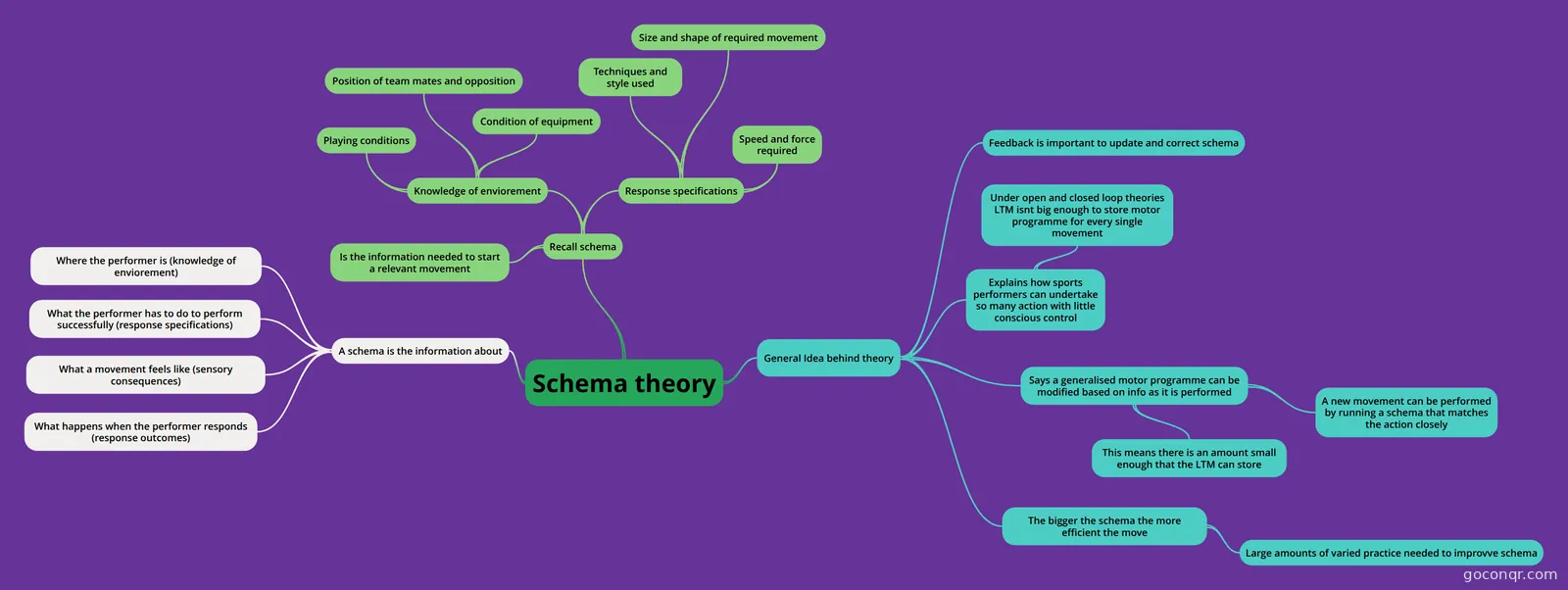 Mind map Schema theory
Quizzes
See all 23 quizzes-
10 questionsSkill characteristics (Part one) What are 7 characteristics of skill? (ACEFACE)
-
11 questionsPE 5.5 What is the definition of skill?
-
18 questionsPE 5,5 the awareness of your body is called PROPRIOCEPTION it is made up of information from your skin, muscles, a...
-
9 questionsTheory of learning quiz What are the three stages of learning?
Mind maps
See all 375 mind maps-
Theories of Learning
-
Types and methods of practice and transfer of skills
-
AS Level PE - Skill Acquisition (Part 1)
-
Schema theory
-
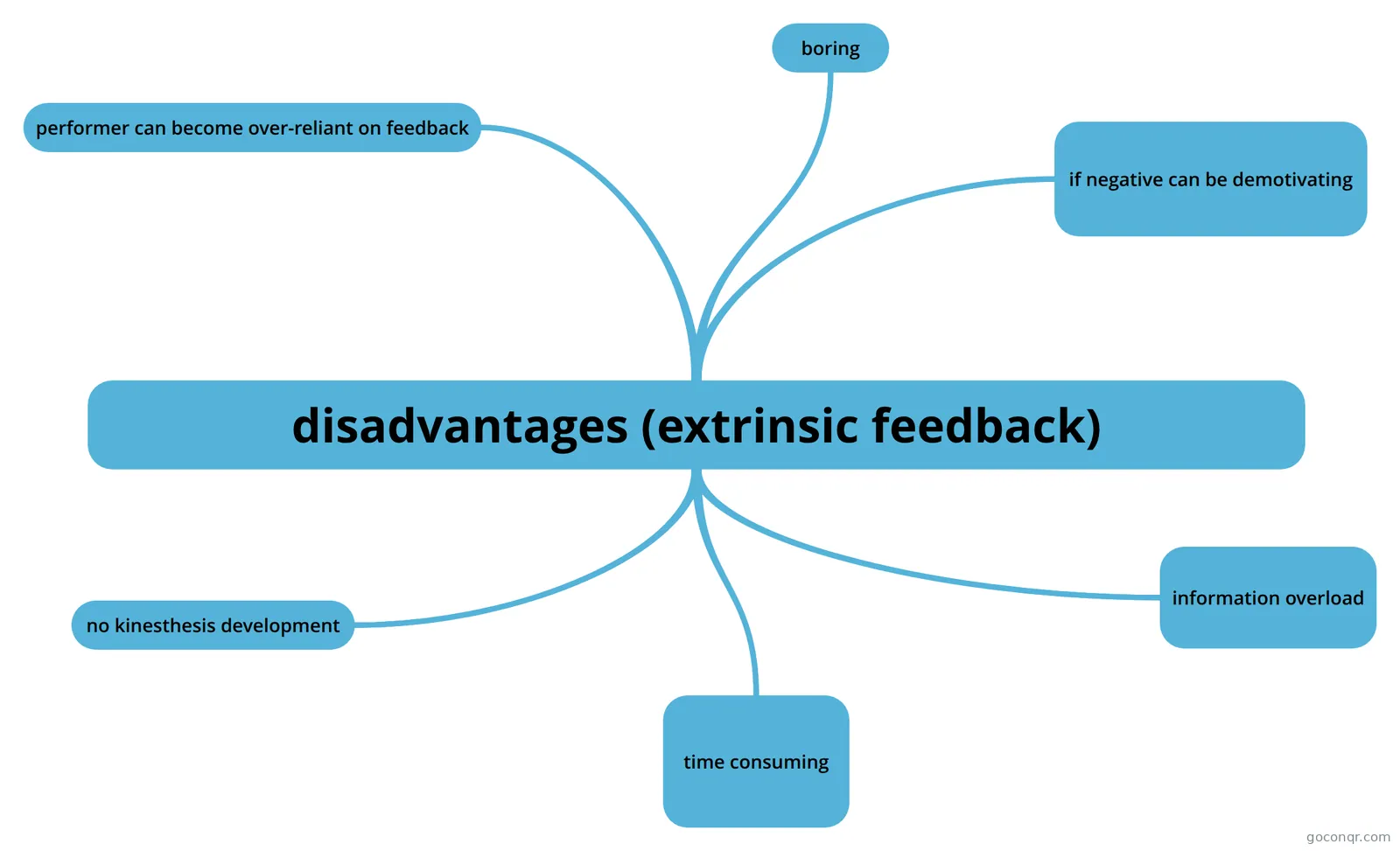 disadvantages (extrinsic feedback)
-
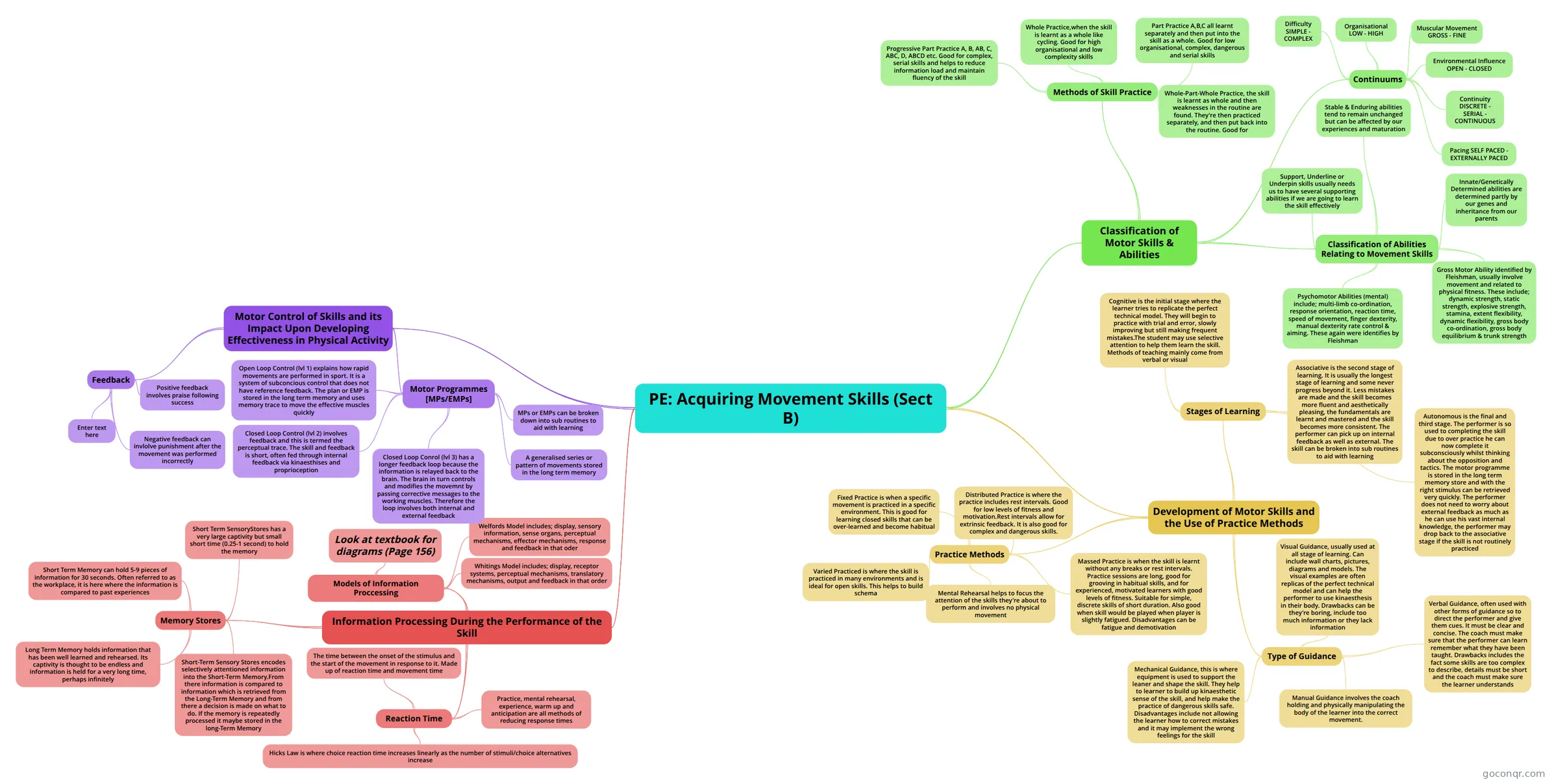 PE: Acquiring Movement Skills (Sect B)
-
Movement Skills Classification of movement skills including fundamental movement skills, sport specific skills, open and cl...
-
Chapter 15 - Teaching and Practice of Skills
Flashcards
See all 232 flashcards-
48 cardsWeek 0 - Autism Primer EXMD3070 Define Motor Development
-
28 cardsHSE204 - Study Area 1, Topic 1 - Introduction to motor learning and classification of skills, games, and sport Motor Learning and Development (Deakin 2014)
-
13 cardsPower Law of Practice Draw a graph to show the relationship between the number of practices and the absolute error.
-
12 cardstypes of guidance four types of guidance
-
10 cardsHSE204 - Study Area 2, Topic 3 : Cognitive approaches to motor control and motor learning Degrees of Freedom
-
74 cardsA-Level PE - Physiological Factors Affecting Performance - Part 1 Muscular Involvement - Gross
-
55 cardsMotor Learning and Coaching.
-
15 cardsSensorimotor learning process Define sensorimotor learning
Notes
See all 11 notes-
Aquisition of skill revision Skill A skill is something that you learn, the ability to do something repeatedly to a high standard.General sports skills can be used in all different sports E.g. Running, catching, throwing, jumping.Specific skills ...
-
Memory Memory can be split into three components:1. Short term sensory stores 2. Short term memory 3. Long term memory Short term sensory stores:- All the information goes through here and stays for up to a second.- Perceptu...
Topics in Skill Acquisition and Motor Learning
More Physical education and sport topics
About Skill Acquisition and Motor Learning
GoConqr OriginalWhat this unit covers
This unit sits in the Skill Acquisition, Psychology and Performance strand of Physical education and sport. Its resources start with the basics: what a skill is, how ability differs from skill, and how skills are classified on continuums. The mind map Skill and the flashcards on Skill Continuum and classification of skill work well here.
Theories and processing
Next come the ideas that explain how people learn. The Schema theory mind map explains how performers carry out so many actions with little conscious control. Theories of Learning covers operant conditioning, Bandura's observational learning, Vygotsky and insight learning. Information Processing walks through the stages from stimulus identification onwards, and there is a flowchart on Atkinson & Shiffrin, 1968 for memory.
Practice, guidance and feedback
Applied topics follow. The mind map Types and methods of practice and transfer of skills compares whole, part, progressive-part, varied, fixed, massed and distributed practice. The types of guidance flashcards set out the advantages and disadvantages of verbal, visual and manual guidance. For feedback, see Feedback and Augmented Feedback.
A sensible order
- Read the AS Level PE - Skill Acquisition (Part 1) mind map for the big picture.
- Work through the theory maps: schema, learning and information processing.
- Move to practice, guidance and feedback.
- Test yourself with quizzes such as Information Processing, Conditions of Practice and Learning, Transfer, & Expertise.
Using maps and quizzes together
Read a map, close it, then take the matching quiz. Any question you miss tells you which branch to reopen. Some university-style flashcard decks go further into motor control and sensorimotor learning, so they suit deeper study. When you are ready, try a quiz and then build a map of your own.
Frequently asked questions
Where should I start in this unit?
Begin with the mind map AS Level PE - Skill Acquisition (Part 1), which covers the nature of skill and ability. Then move to Schema theory and Theories of Learning. Once those feel familiar, try one of the quizzes to see what stuck.
Which quizzes are available?
There are more than 20 quizzes, including Information Processing, Conditions of Practice, Central Contributions, Sensory Contributions and Learning, Transfer, & Expertise. There is also AS PE- Continuums for checking how skills are classified. They suit a quick check after reading a map.
Which exams do these resources suit?
The listed resources mention A-level Physical Education, A-level PE, GCSE Physical Education and GCSE PE. Most of the material is at school level, and about a fifth is aimed at university students, so there are also deeper decks on motor control and motor learning.
Are the resources free to use?
Yes. Every resource listed here is free to open, study and take, with no account needed. They were made by GoConqr users rather than by GoConqr itself. A free account also saves your quiz scores and lets you make your own quizzes, mind maps, flashcards and notes.
What do the practice and feedback resources cover?
The mind map on types and methods of practice compares whole, part, varied, massed and distributed practice. The flashcards on types of guidance weigh up verbal, visual and manual methods. The mind map on extrinsic feedback lists drawbacks such as over-reliance and information overload.
What if I can't find the topic I need?
Try a nearby title, since topics overlap. Memory, for example, appears in a note, a flashcard deck on memory models and an information processing map. You can also make your own notes, maps or flashcards to fill the gap.