
Mapa mental
The theme of Appearance in King Lear
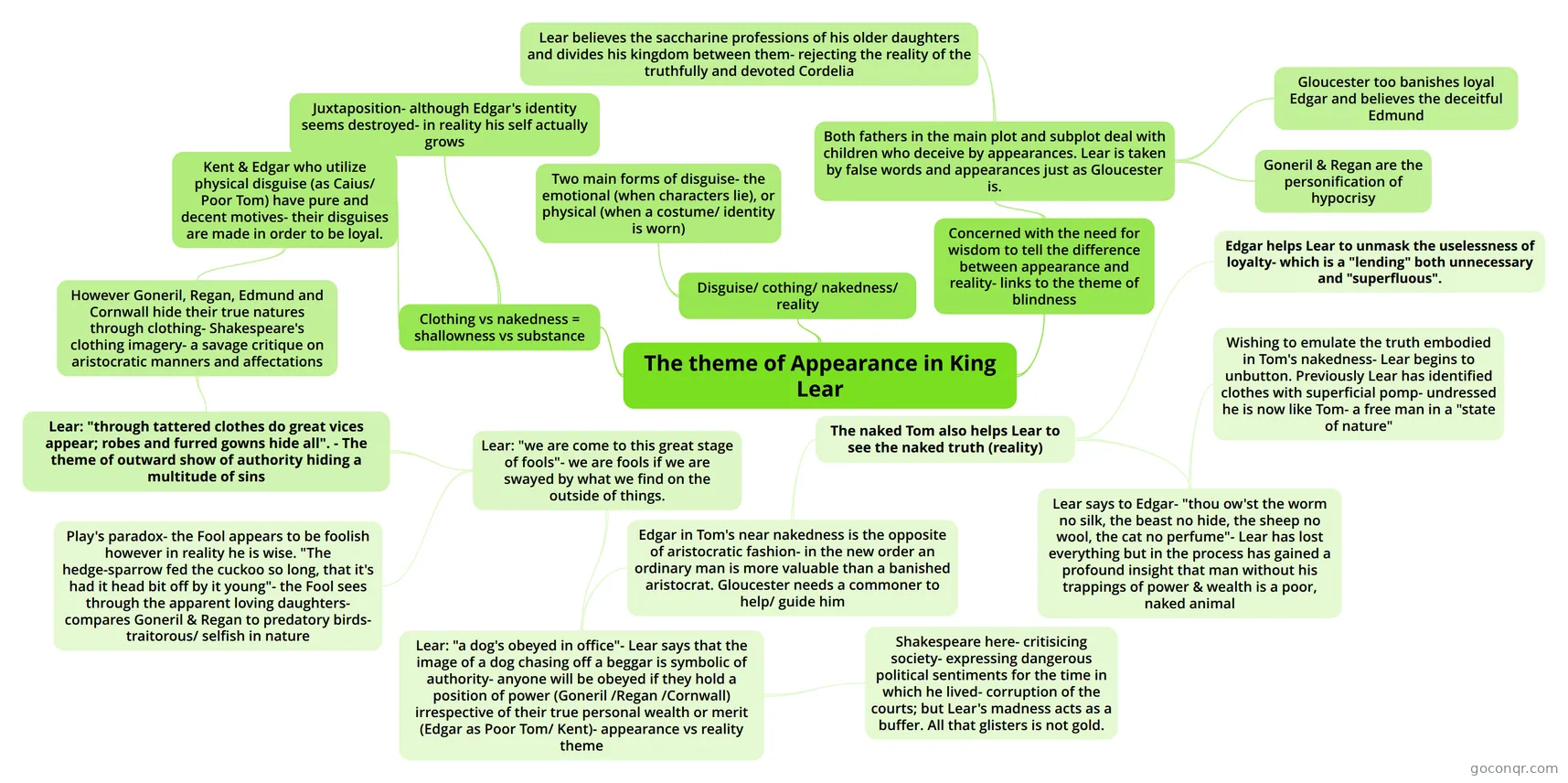
Mind map: The theme of Appearance in King Lear
Conteúdo do mapa
The theme of Appearance in King Lear
Disguise/ cothing/ nakedness/ reality
- Two main forms of disguise- the emotional (when characters lie), or physical (when a costume/ identity is worn)
Concerned with the need for wisdom to tell the difference between appearance and reality- links to the theme of blindness
- Both fathers in the main plot and subplot deal with children who deceive by appearances. Lear is taken by false words and appearances just as Gloucester is.
- Goneril & Regan are the personification of hypocrisy
- Lear believes the saccharine professions of his older daughters and divides his kingdom between them- rejecting the reality of the truthfully and devoted Cordelia
- Gloucester too banishes loyal Edgar and believes the deceitful Edmund
- Both fathers in the main plot and subplot deal with children who deceive by appearances. Lear is taken by false words and appearances just as Gloucester is.
Clothing vs nakedness = shallowness vs substance
- Kent & Edgar who utilize physical disguise (as Caius/ Poor Tom) have pure and decent motives- their disguises are made in order to be loyal.
- However Goneril, Regan, Edmund and Cornwall hide their true natures through clothing- Shakespeare's clothing imagery- a savage critique on aristocratic manners and affectations
- Lear: "through tattered clothes do great vices appear; robes and furred gowns hide all". - The theme of outward show of authority hiding a multitude of sins
- Lear: "we are come to this great stage of fools"- we are fools if we are swayed by what we find on the outside of things.
- Lear: "a dog's obeyed in office"- Lear says that the image of a dog chasing off a beggar is symbolic of authority- anyone will be obeyed if they hold a position of power (Goneril /Regan /Cornwall) irrespective of their true personal wealth or merit (Edgar as Poor Tom/ Kent)- appearance vs reality theme
- Shakespeare here- critisicing society- expressing dangerous political sentiments for the time in which he lived- corruption of the courts; but Lear's madness acts as a buffer. All that glisters is not gold.
- Edgar in Tom's near nakedness is the opposite of aristocratic fashion- in the new order an ordinary man is more valuable than a banished aristocrat. Gloucester needs a commoner to help/ guide him
- The naked Tom also helps Lear to see the naked truth (reality)
- Lear says to Edgar- "thou ow'st the worm no silk, the beast no hide, the sheep no wool, the cat no perfume"- Lear has lost everything but in the process has gained a profound insight that man without his trappings of power & wealth is a poor, naked animal
- Wishing to emulate the truth embodied in Tom's nakedness- Lear begins to unbutton. Previously Lear has identified clothes with superficial pomp- undressed he is now like Tom- a free man in a "state of nature"
- Edgar helps Lear to unmask the uselessness of loyalty- which is a "lending" both unnecessary and "superfluous".
- Lear says to Edgar- "thou ow'st the worm no silk, the beast no hide, the sheep no wool, the cat no perfume"- Lear has lost everything but in the process has gained a profound insight that man without his trappings of power & wealth is a poor, naked animal
- The naked Tom also helps Lear to see the naked truth (reality)
- Play's paradox- the Fool appears to be foolish however in reality he is wise. "The hedge-sparrow fed the cuckoo so long, that it's had it head bit off by it young"- the Fool sees through the apparent loving daughters- compares Goneril & Regan to predatory birds- traitorous/ selfish in nature
- Lear: "a dog's obeyed in office"- Lear says that the image of a dog chasing off a beggar is symbolic of authority- anyone will be obeyed if they hold a position of power (Goneril /Regan /Cornwall) irrespective of their true personal wealth or merit (Edgar as Poor Tom/ Kent)- appearance vs reality theme
- Lear: "we are come to this great stage of fools"- we are fools if we are swayed by what we find on the outside of things.
- Lear: "through tattered clothes do great vices appear; robes and furred gowns hide all". - The theme of outward show of authority hiding a multitude of sins
- However Goneril, Regan, Edmund and Cornwall hide their true natures through clothing- Shakespeare's clothing imagery- a savage critique on aristocratic manners and affectations
- Juxtaposition- although Edgar's identity seems destroyed- in reality his self actually grows
- Kent & Edgar who utilize physical disguise (as Caius/ Poor Tom) have pure and decent motives- their disguises are made in order to be loyal.
Informações
- Descrição
- Mapa Mental sobre The theme of Appearance in King Lear, criado por becca_ward0508 em 26-04-2014.
- Criado por
- becca_ward0508
- Visualizações
- 119
- Avaliação