
Notas
LSAT Prep Lecture I Intro to Arguments: Premise & Conclusion
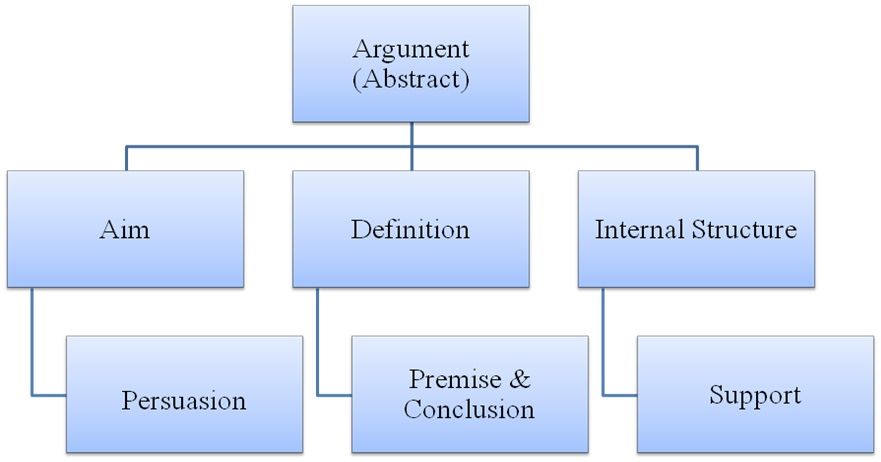
Conteúdo das notas (1)
Página 1
Topic: Methodology (Abstract in Nature)
I. General Theory (aka conditional logic)
a) If "A" implies "B" (A » B), then if "B" isn't implied "A" isn't implied (B ≠ A)
b) Embedded clauses need to be extracted and upon such, what is the predicate and subject?
II. Specific Theory
Types: true questions, weaking questions, strengthening questions and in/out questions
Rule: General Theory + Specific Theory = Guided Application
Guided Application establishes a model for solving problem sets (also referred to as types)
Overall Goals:
I. Taking 4-5 timed LSATs and being able to quickly identify problem types.
II. Complete "Blind Review" of tests, focus on weakness then repeat
General Notes:
I. Even seemingly persuasive arguments still can have a weak internal structure. Thus, the have very little support (supporting facts) to make the valid.
II. Whether an argument is "good" or "bad" is contingent upon how much premise supports the conclusion.
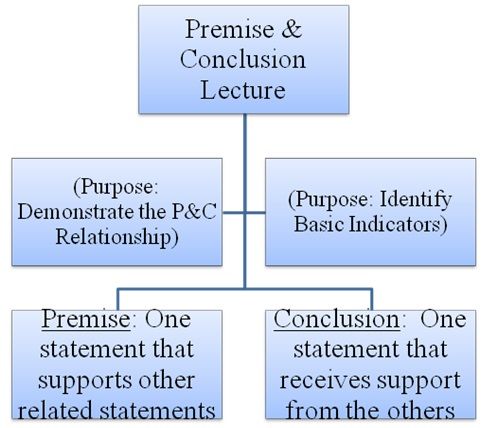
Proposed Situation:
"All Jedi use The Force. Luke Skywalker is a Jedi. Therefore, Luke uses The Force."
Note: The Proposed Situation relates The Fore to Luke and vice versa. Thus, applying the elements of Premise & Conclusion.
Whereas:
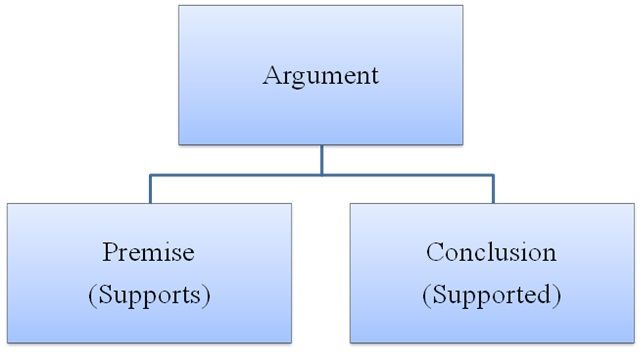
Application Breakdown:
Premise 1: All Jedi use the Force.
Premise 2: Luke Skywalker is a Jedi.
Conclusion: Therefore, Luke uses The Force.
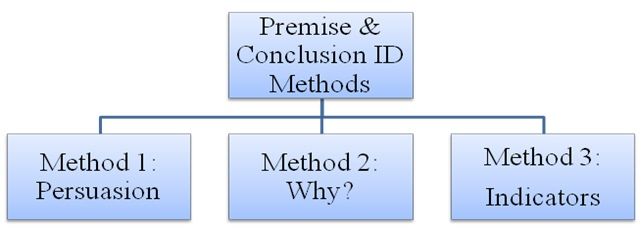
Persuasion: What is the author trying to persuade me of? (AKA: What is the conclusion?) (I.E.: Luke uses the force)
Why: Point to the middle statement and ask why should I believe this statement? Evaluate the other statements. The statement that answers the question why the conclusion.
Indicators: Look for specific words that will reveal if a statement is a Premise or Conclusion.
Overall Methodology
argument lecture: Components
Premise & Conclusion Analysis
Premise & Conclusion Applied
3 methods of identifying P&C