
Notas
Lecture 7- Types of Endocytosis
Conteúdo das notas (1)
Página 1
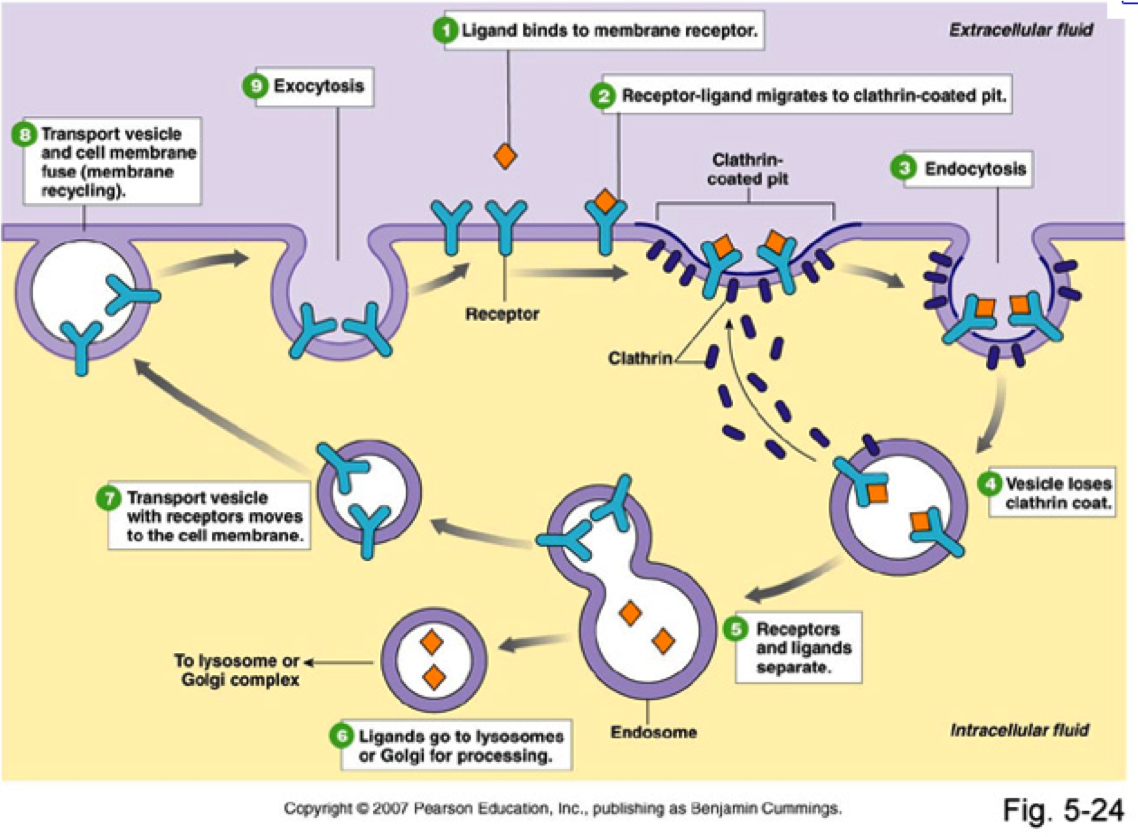
Receptors, in a coated pit, bind to the molecule that will enter the cell. The pit is reinforced by a lattice like network of proteins called clathrin.
Additional clathrin molecules add to the lattice, which eventually pinches off part of the membrane and forms a coated vesicle.
Inside the cell, the vesicle soon becomes uncoated as the clathrin molecules dissociate from the vesicle and each other.
The vesicle then fuses with an endosome (another vesicle) from within the cell.
The receptors are released and recycled. The receptors are returned tot he plasma membrane to bind to further complementary molecules that need to undergo receptor mediated endocytosis.
The vesicle then fuses with a lysosome which carries enzymes capable of digesting the contents of the vesicle
Receptor Mediated Endocytosis
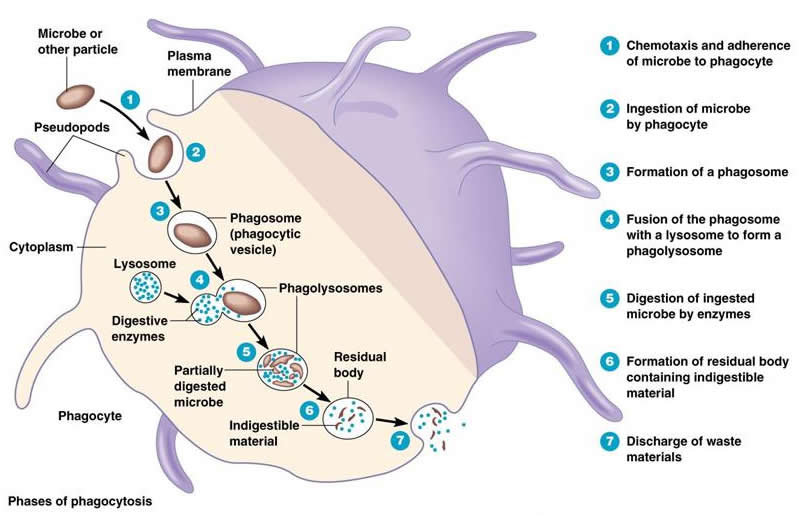
Phagocytosis
Chemotaxis and adherence of microbe to phagocyte
Ingestion of microbe by phagocyte
Formation of a phagosome (a vesicle forms around the microbe)
Fusion of the phagosome with a lysosome to form a phagolysosome
Digestion of the microbe by enzymes found in the lysosome
Formation of a residual body containing indigestible material
Discharge of waste material
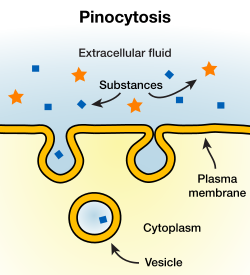
Pinocytosis
Small droplets of extracellular fluid are taken in (no receptors are needed). All solutes in the extracellular fluid are taken in (non-selective)
Lysosomes break down the components into monomers such as amino acids
Occurs in most cells but especially in absorptive cells in the intestine and kidney
New Page
Informações
- Descrição
- Biology- Semester 1 (Lecture 7- Plasma Membrane and Transport) Notas sobre Lecture 7- Types of Endocytosis, criado por emma_moran em 29-12-2013.
- Criado por
- emma_moran · dez 2013
- Atualizado
- 19 fev 2016
- Visualizações
- 191
- Tags
- Avaliação