
Notas
GCSE Chemistry - module c4
Conteúdo das notas (1)
Página 1
module c4
Atoms
The nucleus
1) Its in the middle of the atom
2) It contains protons and neutrons
3) It has a positive charge because of the protons
4) Almost the whole mass of the atom is concentrated in the nucleus
5) But size wise it is tiny compared to the rest of the atom
The electrons
1) Move around the nucleus
2) They're negatively charged
3) They're tiny, but they cover a lot of space
4) The volume of their orbits determines how big the atom is
5) They have virtually no mass
6) They're arranged in shells around the nucleus
7) These shells explain the whole of chemistry.
Protons- are heavy and positively charged
Neutrons- are heavy and neutral
Electrons- are tiny and negatively charged.
The number of protons equals the number of electrons
1) Neutral atoms have no charge overall
2) The charge on the electrons is the same size as the charge on the protons- but opposite
3) This means the number of protons always equals the number of electrons in a neutral atom
4) If some electrons are added or removed the atom becomes charged and is then an ion
5) The number of neutrons isn't fixed but is usually about the same as the number of protons
Each element has a different number of protons
1) Its the number of protons in an atom that decides what element it is
2) Atoms of the same element all have the same number of protons and atoms of different elements will have different numbers of protons
3) Elements all have different properties from each other due to differences in their atomic structure
Conservation of atoms
Atoms are not lost or made in chemical reactions
You still have the same atoms at the end of a chemical reaction as you did at the start. They are just arranged in different ways.
Balanced symbol equations show the atoms at the start and the atoms at the end and how they are arranged.
Line spectrums
Some elements emit distinctive colours when heated
When heated, some elements produce flames with a distinctive colour. For example, lithium produces a red flame, sodium produces a yellow/orange flame and potassium produces a lilac flame. These colours help chemists to identify a metal in a compound.
Each element gives a characteristic line spectrum
1) When heated the electrons in an atom move around very fast and release energy as light.
2) The wavelengths emitted can be recorded as a line spectrum
3) Different elements emit different wavelengths of light. This is due to each element having a different electron arrangement
4) So each element has a different pattern of wavelengths and a different line spectrum
5) This means the line spectrums can be used to identify elements
6) The practical technique used to produce line spectrums is called spectroscopy.
Line spectrums have identified new elements. New practical techniques have allowed scientists to discover new elements. Some of these elements simply wouldn't have been discovered without the development of these techniques. Helium was discovered in the line spectrum of the sun
module c4
History of the periodic table
Dobereimer tried to organise elements into triads
Back in the 1800s the only thing they could measure was relative atomic mass and so the known elements were arranged in order of atomic mass. In 1828, Dobereimer started to put this list of elements into groups of three which he called triads. The middle element of each triad had a relative atomic mass that was the average of the other two.
Newland's law of octaves
Newland noticed that when you arranged the elements in order of relative atomic mass every eighth element had similar properties and so he listed some of the known elements in rows of 7.
These sets of 8 were called Newland's octaves. Unfortunately the pattern broke down on the 3rd row with transition metals like titanium messing it up. It was because he left no gaps that his work was ignored but he was quite close.
He presented his work to the chemical society in 1865 but it was rejected.
1) His groups contained elements that didn't have similar properties
2) He mixed up metals and non metals
3) He didn't leave any gaps for elements that hadn't been discovered yet.
Mendeleev
1) In 1869 Dmitri Mendeleev in Russia, armed with about 50 known elements arranged them into his table of elements with various gaps.
2) Mendeleev put the elements in order of atomic mass. He found he had to leave gaps in order to keep the elements with similar properties in the same vertical groups in the first two rows before the transition metals come in on the third row.
3) The gaps were the really clever bit because they predicted the properties of so far undiscovered elements. When they were found and they fitted the pattern it helped to confirm Mendeleev's ideas.
The modern periodic table
The periodic table puts elements with similar properties together. There are around 100 elements which all materials are made of.
1) In the periodic table the elements are laid out in order of increasing proton number. Arranging elements like this means there are repeating patterns in the properties of the elements.
2) Vertical columns are called groups
3) Group numbers tell you how many electrons there are in the outer shell.
4) The elements in a group react more violently as you go down the group in group one, whereas reactivity decreases as you go down group 7.
5) The rows are called periods. Each new period represents a new full shell of electrons
6) The proton number of each element tells you how many protons are in the nucleus.
7) The relative atomic mass of each element tells you the total number of protons and neutrons there are in the nucleus.
module c4
Electron shells
Electron shell rules
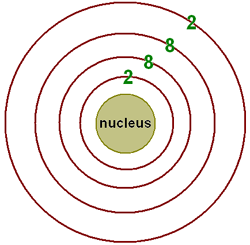
1) Electrons always occupy shells
2) The lowest shells are always filled first
3) Only a certain number of electrons are allowed in each shell
1st shell: 2
2nd shell: 8
3rd shell: 8
4) Atoms are always trying to get full electron shells
5) In most atoms the outer shell is not full and this makes the atom want to react
6) An element's electron arrangement determines its chemical properties
Ionic bonding
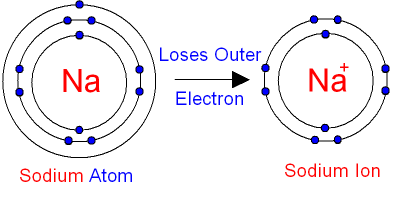
Ions are made when atoms gain or lose electrons
1) When atoms lose or gain electrons they form charged particles called ions
2) Ions can be made from single atoms or groups of atoms
3) When atoms lose or gain electrons all they're trying to do is get a full outer shell.
A shell with just one electron wants to get rid of it
1) All the atoms in group 1 have just one electron in their outer shell and they want to get rid of it so they'll have full shells remaining
2) When group 1 lose electrons they become positively charged
Nearly full shells aim to gain an electron
1) On the other side of the periodic table the elements in group 7 such as chlorine have nearly full outer shells
2) They are trying to fill the shell up
3) When the group gain an electron they form negative ions
Ionic bonding
Oppositely charged ions are strongly attracted to each other. So they form an ionic bond. Compounds formed between group 1 and group 7 elements are held together by ionic bonds.
Ionic compounds form a regular lattice
1) Solid ionic compounds like sodium chloride are made up of a giant lattice of ions. Each lattice forms a single crystal.
2) When ionic compounds become molten or are dissolved in water they can conduct electricity because the ions are able to move
Ions and formulas
The charges in an ionic compound add up to zero
Different ions have different charges. In compounds the total charge must always add up to zero.
positive ions- sodium Na+, Potassium K+, Calcium Ca2+, iron (II) Fe2+, Iron (III) Fe3+
Negative ions- chloride Cl-, fluoride F-, bromide Br-, Carbonate CO3 2-, sulphate SO4 2-
module c4
Group one- The Alkali Metals
-The group one metals all have one outer shell electron. This makes them very reactive as they want to get rid of it, and gives them all similar properties.
- When the alkali metals react they all form similar compounds.
- the alkali metals are shiny when freshly cut but quickly react with the oxygen in moist air and tarnish as they're so reactive
As you go down group 1 the alkali metals become more reactive because the outer electron is more easily lost because it's further from the nucleus.
They also have a higher density because the atoms have more mass
They have a lower melting and boiling point.
Group one reactions
Reaction with cold water produces hydrogen
1) When Li, Na, and K are put in water they react vigorously
2) They move around the surface fizzing lots
3) They produce hydrogen. Potassium gets hot enough to ignite it
4) A hydroxide of the metal forms e.g. sodium hydroxide
5) This experiment shows the relative reactivities of the alkali metals
Reaction with chlorine
Alkali metals react vigorously with chlorine. The reaction produces colourless crystalline salts like sodium chloride.
Group seven- the Halogens
Group 7 elements are known as the halogens
1) They all have 7 outer shell electrons. This makes them very reactive as they are trying to fill their outer shell. They have similar properties and means they all form similar compounds
2) The halogens form pairs of atoms
3) As you go down group 7 the halogens become less reactive because the outer electrons are further from the nucleus and so additional electrons are attracted less strongly.
4) They have a high melting and boiling point
The halogens are non metals with coloured vapours
-Fluroine is a very reactive, poisonous yellow gas at room temp
- Chlorine is a fairly reactive, poisonous dense green gas at room temp
- Bromine is a dense, poisonous orange volatile liquid at room temp
- Iodine is a dark grey crystalline solid at room temp or a purple vapour
Halogens become less reactive down the group
Group 7 Reactions
The halogens react with alkali metals like lithium to form salts called metal halides, e.g. sodium chloride.
Reactions with iron
They react with iron to form coloured solids called iron halides
Displacement reactions
A displacement reaction is where a more reactive element pushes out a less reactive element from a compound.
Chlorine is more reactive than iodine. So chlorine reacts with potassium iodide solution to form potassium chloride and the iodine is left in solution
module c4
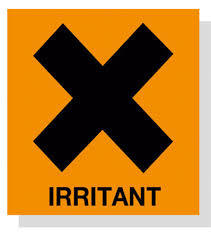
Oxidising- provides oxygen which allows other materials to burn more safely
Laboratory Safety
Highly flammable- catches fire easily
Toxic- can cause death either by swallowing, breathing in or absorption through the skin
Harmful- like toxic but less dangerous
Explosive- can explode
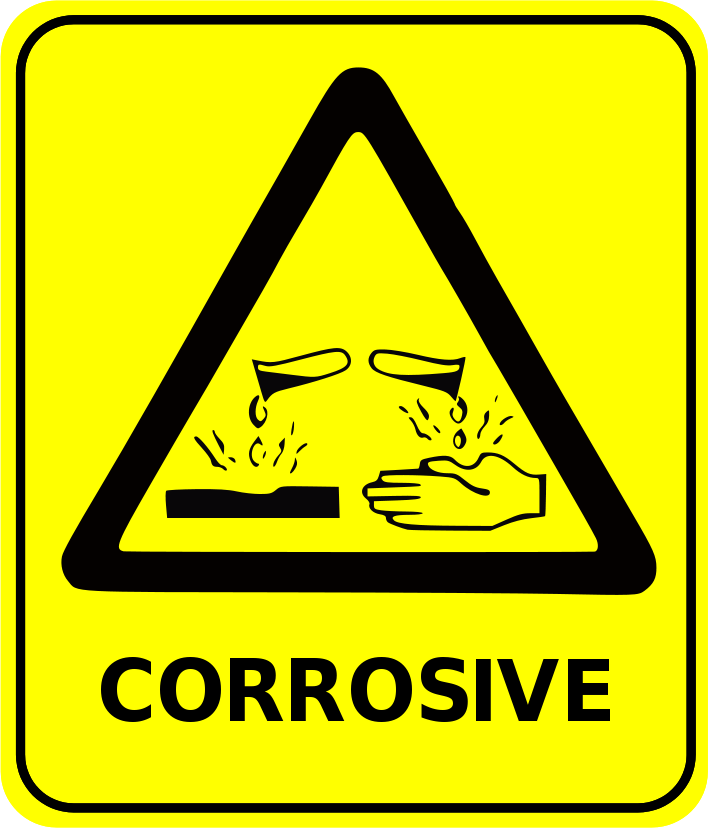
Corrosive-attacks and destroys living tissue
Alkali metals-
The group one metals can combust spontaneously. If they come into contact with water vapour in the air there can be a violent reaction if they're not stored under oil
All should not be touched with bare hands as sweat on skin can produce corrosive hydroxide and heat
Every piece of apparatus must be completely dry
The alkaline solutions are corrosive and may cause blistering
Halogens
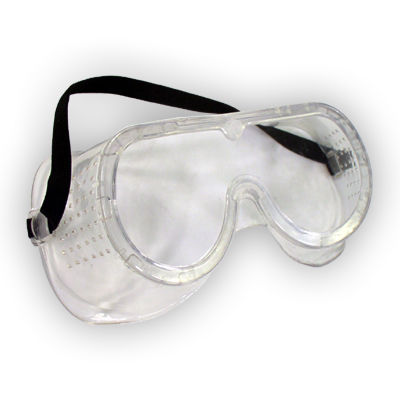
Some are very toxic. Fluorine is too dangerous to use inside of a lab. Liquid bromine is corrosive so cannot contact skin. Halogens have poisonous vapours that irritate the respiratory system and the eyes so must be used in a fume cupboard.
atoms and line spectrums
periodic table
electrons, ions & ionic bonding
group one & Group SEVEN
LABORATORY safety
Informações
- Descrição
- Notas sobre GCSE Chemistry - module c4, criado por jessmitchell em 01-06-2014.
- Criado por
- jessmitchell · jun 2014
- Atualizado
- 6 abr 2018
- Visualizações
- 1.215
- Tags
- Avaliação