
Flashcards
Management, Leadership and Decision Making

Flashcards do conjunto (26)
- 1Roles of Managers- Planning
- Organizing
- Controlling
- Directing - 2Planning- Helps to make decisions
- Helps reduce chance of failure
- Set objectives and targets
- Plans for functional areas within the business
- Estimating resources needed - 3Organizing- Determine internal organisation structures
- Establish and maintain employees relationships
- Allocate resources. - 4Controlling- Setting standards using the company objectives
- reviewing and reporting on company and employee performance
- Comparing objectives to performance to determine necessary action
Given through financial reports, employee performance and social performance - 5Directing- Influences and oversees staff behaviour
- Provides resources
- Motivation
- Communication - 6Mitzberg (FLLMDSEDRN) Interpersonal ManagementFigurehead- represent colleagues, inspiration, responsibility, authority
Leader- maintains effective working environment, motivates, develops
Liaison- communicates internally and externally - 7Mitzberg (FLLMDSEDRN) Informational ManagementMonitor- collects info, looks after ream performance and welfare
Diseminator- central communications
Spokesperson- representative, passes info externally - 8Mitzberg (FLLMDSEDRN) Decisional ManagementEntrepreneur- plans and initiates change
Disturbance Handler- deals with crisis and dispute
Resource allocator- puts resources where they would be most effective
Negotiator- internally and externally - 9Autocratic- Top control
- One-way communication (downwards)
- Minimal delegation
- Close employee supervision - 10Democratic- Operates on majority vote
- Encourages decentralization/ delegation
- Employee participation
- Employee empowerment - 11Laissez-Faire- Very few leaders/managers
- Self-motivated
- Employees agree with objectives - 12Tannenbaum and Schmidt-Tells- No subordinate involvement, ignorant managers (used when motivation is lacking)
- Sells- allowed to ask question (used when motivation is lacking)
- Suggests- presents decisions + background info, invites ideas, builds trust
- Consults- asks opinions before decisions, motivates
- Joins- presents problems + invites suggestions, joint decision, managers make decision, team gets credit
- Delegates- presents problems + invites suggestions, workers make decisions, team gets credit
- Abdicates- team makes decisions, high skilled team complete work, motivational - 13Blake Mouton GridTeam- best style, both are equally high
Country Club- goes on that if the team is happy they will work hard, production suffers
Authority-Compliance- autocratic, strict rules and punishment is the best motivation
Impoverished- worst style, can't be blamed if mistakes are made, disorganized
Middle of the road- needs not fully met for either, average performance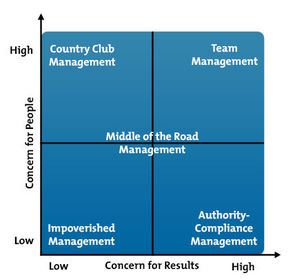
- 14Scientific Decision MakingStrategic decision making taken after analyzing and evaluating relevant evidence.
- 15Decision Trees- Helps decide if the net gain from the decision is worth while
- Uses estimates and probabilities to calculate outcomes
Square= Decision to make
Circles= Uncertain outcomes
1) probability x result (for both)
2) add together
3) minus costs = net gain - 16Advantages Of Decision Trees- Set out in a logical way
- Potential options and choices are considered at a time
- Risk can be addressed
- Costs are considered as well as benefits
- Easy to understand and tangible results - 17Disadvantages Of Decision Trees- Just estimates, can be wrong
- Uses only quantitative data
- Can be prone to bias
- Doesn't necessarily reduce the amount of risk - 18Define ProbabilityThe chance of the outcome happening
- 19Define Expected ValueThe financial value of an outcome
= Probability x Outcome/Result - 20Define Net GainThe value to be gained from taking that decision
= Expected Value- Cost of Decision - 21Opportunity CostMeasures the cost of a choice made in terms of the next best alternative foregone or sacrificed.
E.g. Work-leisure choices- The opportunity cost of deciding not to work an extra ten hours a week is the lost wages given up. - 22Stakeholder Interests- Suppliers- can decide to raise order prices which affects profits, long term contracts, see if payment will be prompt, credit terms
- Employees- salaries, job security and satisfaction, motivation, could cause strike, turnover
- Managers- new policies could change aims and objectives
- Customers- value for money, quality, customer service, main stakeholder
- Community- petitions against building planning permission and developments - 23Stakeholder EngagementInvolves stakeholders in decisions
- Communicate the right message
- Consult to optimize the product
- Plan
- Relationships with stakeholders
- Manage risks
- Compromise
- Responsibility to maintain dialogue with stakeholders - 24Stakeholder ModelInternal Stakeholders- employees, managers, owner
External Stakeholder- suppliers, society, government, creditors, shareholders, customers - 25Stakeholder MappingA collaborative process of research that draws from multiple perspectives to determine a key list of stakeholders.
1) Identifying- listing relevant groups
2) Analyzing: understanding stakeholder perspectives and interests
3) Mapping- visualizing relationships to objectives and stakeholders
4) Prioritizing- ranking stakeholder relevance and identifying issues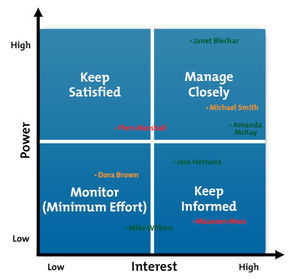
- 26PESTLE-CPolitical- tax policies, Fiscal policy, trade tariffs
Economic- inflation rate, interest rates, foreign exchange rates, economic growth patterns
Social- cultural trends, demographics, population analytic
Technological- automation, research and development, machines used
Legal- see political
Environmental- recyclable, sustainable
Competitors- prices, product, advertising, actions
Informações
- Descrição
- AS - Level Business FlashCards sobre Management, Leadership and Decision Making, criado por Freya Coombes em 28-03-2016.
- Criado por
- Freya Coombes
- Visualizações
- 49
- Tags
- Avaliação