
Quiz
Chapter 1
This quiz has question types that open in the usual player.
Questions in this quiz (41)
1Material engineers are responsible for three things for the materials used on a project:
- Athe selection
- Bthe quality assurance
- Cthe quality control
- Dthe specification
- Egenerating new materials
- Fnone of the above
2High performance materials are those with higher strength to weight ratio, that have improved durability, and are of lower cost.
- ATrue
- BFalse
3The Three R's of sustainable considerations in LEED buildings are [blank_start]recycling[blank_end], [blank_start]reuse[blank_end], [blank_start]reconstitution[blank_end].
- Arecycling
- Breuse
- Creconstitution
4Material selection considerations include economic factors, mechanical properties, non-mechanical properties, production/construction, aesthetic properties, with an emphasis on client needs and facility function.
- ATrue
- BFalse
5The three types of dynamic loads are [blank_start]periodic[blank_end], [blank_start]random[blank_end], and [blank_start]transient[blank_end].
- Aperiodic
- Brandom
- Ctransient
6[blank_start]Static, or Dead Loads[blank_end] are long term - applied and removed slowly so no vibrations, usually due to gravity. [blank_start]Dynamic, or Live Loads[blank_end] are short term shocks or vibrations.
- AStatic, or Dead Loads
- BDynamic, or Live Loads
- CStatic, or Dead Loads
- DDynamic, or Live Loads
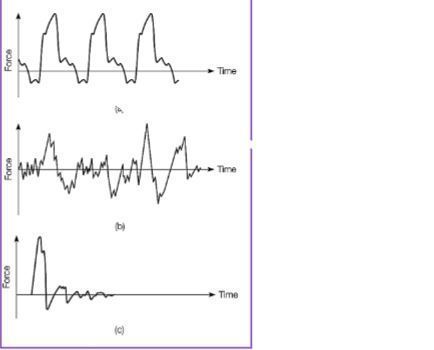
7[blank_start]Periodic[blank_end] vibrations are a repeating wave form from rotating equipment. [blank_start]Transient[blank_end] are quick impulse that decays back to resisting, like vehicles. [blank_start]Random[blank_end] never repeats, like earthquakes.
- APeriodic
- BRandom
- CTransient
- DPeriodic
- ERandom
- FTransient
- GPeriodic
- HRandom
- ITransient
8[blank_start]Stress[blank_end] is like force (or load) divided by cross-sectional area so that we can directly compare different sizes. [blank_start]Strain[blank_end] is like deformation with the size factored out.
- AStress
- BStrain
- CStress
- DStrain
9Elastic behavior is an instantaneous response to load.
- ATrue
- BFalse
10A linear material has a straight line stress-strain graph.
- ATrue
- BFalse
11An elastic behavior does not return to its original shape.
- ATrue
- BFalse
12Linear elastic, non-linear elastic, and non-linear inelastic are all possible behaviors for a material.
- ATrue
- BFalse
13For elastic metals, the Modulus of Elasticity is very high.
- ATrue
- BFalse
14The lower the Poisson's Ratio, the more durable the material it is. Therefore it can deform and still perform its job.
- ATrue
- BFalse
15What are the four other methods that can be used to find the Modulus of Elasticity if the response is not linear?
- AInitial Tangent Modulus
- BMinor Modulus
- CCosine Modulus
- DSecant Modulus
- EChord Modulus
- FTangent Modulus
- GNone of the above
16The higher the strength, the more brittle a material becomes.
- ATrue
- BFalse
17The yield strength @ [blank_start]0.2%[blank_end] offset is the stress which will produce a small amount of permanent deformation, generally equal to a strain of 0.002.
- A0.2%
18[blank_start]Permanent deformation[blank_end] is a condition marked by the breakage of molecular bonds. It is beyond the elastic limit, and is when a materials begins to deform plastically.
- APermanent deformation
19The two methods used to delineate where yield stress is the [blank_start]offset[blank_end] method and the [blank_start]extension[blank_end] method.
- Aoffset
- Bextension
20Match each definition to the proper vocabulary word.
[blank_start]Proportional limit[blank_end] - transition between linear and non-linear behavior
[blank_start]Elastic Limit (Yield Point)[blank_end] - transition between elastic and plastic behavior, max stress with full recovery
[blank_start]Yielding[blank_end] - strain continues with little or no increase in stress
[blank_start]Ultimate Stress[blank_end] - maximum stress on the curve
[blank_start]Rupture Stress[blank_end] - point where specimen fractures- AElastic Limit (Yield Point)
- BProportional limit
- CYielding
- DUltimate Stress
- ERupture Stress
- FElastic Limit (Yield Point)
- GProportional Limit
- HYielding
- IUltimate Stress
- JRupture Stress
- KElastic Limit (Yield Point)
- LProportional Limit
- MUltimate Stress
- NYielding
- ORupture Stress
- PElastic limit (Yield Point)
- QProportional Limit
- RUltimate Stress
- SYielding
- TRupture Stress
- UElastic Limit (Yield Point)
- VProportional Limit
- WUltimate Stress
- XYielding
- YRupture Stress
21The Three Essential Aspects of Engineering Design are [blank_start]Code[blank_end], [blank_start]Standard of Care[blank_end], and [blank_start]Performance Evaluation[blank_end].
- ACode
- BStandard of Care
- CPerformance Evaluation
22In Engineering Design, Code is the maximum standard design.
- ATrue
- BFalse
23Standard of Care considers the functionality beyond what code discusses - it is the safety aspect.
- ATrue
- BFalse
24Performance evaluation considers the environment in which the engineered structure/system must function in through its design service life.
- ATrue
- BFalse
25Label each vibration graph correctly.
- Aperiodic
- Brandom
- Ctransient
- Dtransient
- Erandom
- Fperiodic
- Gtransient
- Hrandom
- Iperiodic
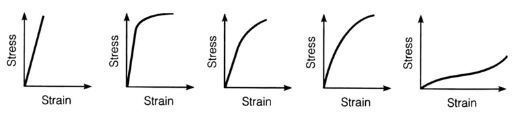
26Label each stress and strain curve with the correct material.
- ASoft rubber
- Bconcrete
- Caluminum alloys
- Dsteel
- Eglass and chalk
- Faluminum alloys
- Gconcrete
- Hglass and chalk
- Isteel
- Jsoft rubber
- Kglass and chalk
- Lsteel
- Mconcrete
- Nsoft rubber
- Oaluminum alloys
- Pglass and chalk
- Qsteel
- Raluminum alloys
- Sconcrete
- Tsoft rubber
- Usoft rubber
- Vconcrete
- Waluminum alloys
- Xsteel
- Yglass and chalk
27Temperature affects the mechanical behavior of all materials. The [blank_start]higher[blank_end] the temperature, the more [blank_start]ductile[blank_end] it becomes. The [blank_start]lower[blank_end] the temperature, the more [blank_start]brittle[blank_end] it becomes.
- Ahigher
- Blower
- Cbrittle
- Dductile
- Ehigher
- Flower
- Gbrittle
- Hductile
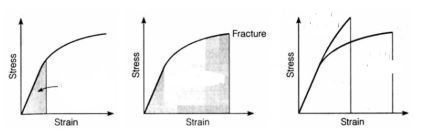
28The [blank_start]Modulus of Resilience[blank_end] is the energy required to reach the yield point. [blank_start]Toughness[blank_end] is the energy required to fracture or rupture.
- Atoughness
- BModulus of Resilience
- CToughness
- DModulus of Resilience
29Label the diagrams correctly.
- AModulus of Resilience
- BToughness
- CModulus of Resilience
- DToughness
- EHigh toughness
- FHigh strength
- GHigh toughness
- HHigh strength
30The Endurance Limit is the stress level below which fatigue does not occur.
- ATrue
- BFalse
31Factor of Safety is nonproportional to cost.
- ATrue
- BFalse
32Stresses develop because of different rates of thermal expansion and contraction for different materials that are connected together.
- ATrue
- BFalse
33[blank_start]Sustainable[blank_end] design is the philosophy of designing physical objects, the built environment, and services to comply with the principles of economic, social, and ecological sustainability.
- ASustainable
34The Leadership in Environment and Energy Design (LEED) was developed by the [blank_start]Green Building Council[blank_end].
- AGreen Building Council
35The three sources of variance are material, sampling, and testing.
- ATrue
- BFalse
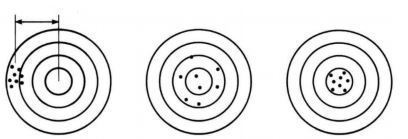
36Label the quality control diagrams correctly.
- Aaccuracy
- Bprecision
- Cbias
- Dbias
- Eaccuracy
- Fprecision
- Gbias
- Haccuracy
- Iprecision
37Proper sampling must ensure that a random and representative sample is taken from the population. [blank_start]Random[blank_end] sampling is having an equal chance of being selected. [blank_start]Representative[blank_end] sampling is having a perfect average of the entire stockpile.
- ARepresentative
- BRandom
- CRepresentative
- DRandom
38The benefits of Quality Control Charts include:
- Abasis of acceptance
- Bdetection of high project costs
- Cdecrease inspection frequency
- Dearly detection of troubles
- Eprovide a record of quantity
- Fprovide a record of quality
- Gnone of the above
39Experimental error is caused by which three factors?
- Amaterial inconsistency
- Bprocedural errors
- Clack of time
- Dmachine errors
- Ehuman errors
- Fnone of the above
40The Three Pairs of Eyes Rule implies a technician, manager, and division chief evaluate quality control before material products are shipped for use in the built environment.
- ATrue
- BFalse
41Which of the following is true about temperature effects on materials?
- ASome metals change from brittle to ductile when their temperature drops below freezing
- BMetals that are cooled loose toughness*
- CMetal machines will function as designed so long as their operating temperature is less than 60% of the metals' melting temperature**
- DBoth * and **
- ENone of the above
Information
- Description
- Engineering (CE Materials) Quiz on Chapter 1, created by Kiki Medina on 19/02/2019.
- Author
- Kiki Medina
- Language
- English
- Views
- 3
- Tags
- Rating
- No ratings yet Rate this quiz