
Quiz
Chemistry Unit 1
This quiz has question types that open in the usual player.
Questions in this quiz (95)
1Which of these activities might involve a chemist?
- Ameasuring the motions of the planet
- Bdetermining the fat content in a candy bar
- Cdetermining the air motion around a car
2A chemist uses benzene, a chemical made from oil, to make a new type of plastic. What type of chemist is she?
- Aorganic chemist
- Binorganic chemist
- Cphysical chemist
3How did chemist Fritz Haber and engineer Carl Bosch contribute to society?
- AThey discovered a way to make chlorofluorcarbons efficiently.
- BThey invented Teflon.
- CThey discovered a way to efficiently make ammonia.
4When placed in a 100 mL cube-shaped box, a substance fills the cube and has a volume of 100 mL. When placed in a 50 mL tube, that same amount of substance fills the tube and thus has a 50 mL volume. What is the state of the substance?
- Agas
- Bsolid
- Cliquid
5 A substance undergoes a change. Which of the following indicates that the change was a chemical change?
- AThe volume changes
- Bnew molecules are formed
6A tub of water is placed in a small room. If heat is removed from the room, which of the following will most likely occur if enough heat is removed?
- Afreezing
- Bdissolving
7Your teacher gives you a black powder. When you dissolve the powder in water, you see red particles that float to the top, black particles that sink to the bottom, and a green liquid. Was the black powder a pure substance, mixture, element, or compound?
- Asubstance (1 atom type, constant composition and properties)
- Belement (1 atom type, cannot be broken down or destroyed)
- Ccompound (bound, 2+ atoms)
- Dmixture (unbound, 2+ atoms)
8A molecule of ozone gas has three atoms of oxygen. Which of these describes ozone most specifically?
- Aelement
- Bcompound
- Csubstance
9The chemical formula for sodium citrate is Na 3C 6H 5O 7. Which of the following statements is true?
- ASodium citrate is a compound with a total of 21 atoms, each of a different element.
- BSodium citrate is an element with a total of 21 atoms.
- CSodium citrate is a compound with a total of 21 atoms.
10What is distillation?
- Ausing differences in boiling points to separate mixtures
- Bseparating particles of different sizes
11What is Chromatography?
- Aseparating mixtures on the basis of interactions between substances and a stationary phase
- Bblending two or more pure heterogeneous substances
12Which method would be the best for separating the salts from seawater?
- Adistillation
- Bfreezing
- Cgas chromatography
13What is orange soda?
- Acompound
- Belement
- Cmixure
14What property does "Water will not burn, but gasoline is flammable" refer to?
- Achemical property
- Bphysical property
15Which best describes why a liter of mercury weighs more than a liter of water?
- AMercury is denser than water.
- BWater has more mass than mercury.
- CMercury has more mass than water.
16Which of the following indicates a chemical change?
- Aa wire conducting electricity
- Ban exploding firecracker
- Csplitting wood
17A material weighs 8 grams and takes up 2 cubic centimeters of space. What is the material's density in grams per cubic centimeter (g/cm3)?
- A4 g/cm 3
- B10 g/cm 3
- C2 g/cm 3
18Jim drops an iron magnet during a chemistry lab experiment. He finds that it is no longer magnetic. What has happened in terms of its properties?
- AA chemical change occurred in which the iron remained iron, but lost one of its chemical properties.
- BA physical change occurred in which the iron remained iron, but lost one of its physical properties.
- CA physical change occurred that changed the iron in the magnet into nickel.
19Astronauts brought back 500 lb of rock samples from the moon. How many kilograms did they bring back? (1 kg = 2.20 lb)
- A1,100 kg
- B227 kg
20Which of the following is the correct scientific notation for 0.000056?
- A5.6 x 10^–5
- B5.6 x 10^5
21Which of the following measurements has three significant figures?
- A1.02 x 10^–3 g
- B200
- C1.02 x 10^3
22Nitrogen has a density of 1.17 x 10⁻³ g/cm3. If you have 2,500 cm3 of nitrogen gas, which of the following is the correct mass of nitrogen, using significant figures?
- A2.9g
- B2.9 x 10^3g
- C2.9 x 10^6g
23An enzyme works best at 98.6°F. But the equation that you must use to describe it requires the temperature to be in K. Which of the following is the correct temperature? ([°F x 0.555] + 255.37 = K, and [K – 255.37] x 1.8 = °F)
- A310 k
- B290 k
24Which of the following units is a derived unit?
- Adensity
- Bmeter
25You need to measure the brightness of a light bulb using the metric system. In which unit do you express your measurement?
- Acandela
- Bkilogram
26The temperature of a liquid is 75°F. What is its temperature in °C? [°C = (°F – 32) x 5/9 and °F = °C x 9/5 + 32]
- A24
- B35
27A gas in a laboratory vessel is cooled. If all the molecules of the enclosed gas cease to have any motion, what is the temperature in the vessel?
- A-237 c
- B237 k
28The metric unit of force is the Newton (N), which is kg • m/s2. Convert 10 mg • cm/s2 to Newtons. Be careful when working with units.
- A1 x 10^–7 N
- B1 x 10^–2 N
29Robert uses a spring scale to measure force. What are the units of his measurement?
- Ajoules
- Bnewtons
30A balloon is a sphere with a radius of 5.0 m. The force of air against the walls of the balloon is 45 N. What is the air pressure inside the balloon? (surface area = 12.56 x radius 2; 1 Pa = 1 N/m 2)
- A1.4 x 10–1 Pa
- B3.6 x 10–2 Pa
31A chemist burns a serving of peanuts in a calorimeter and sees that 150,000 J of energy is released. What should the information on the nutritional label say? (1 Calorie = 1,000 calories; 1 calorie = 4.186 J)
- A35.8 Calories
- B35.8 calories
32A box measures 2 cm x 0.09 m x 20 mm. What is its volume in cubic centimeters?
- A36 cubic centimeters
- B3.6 cubic centimeters
33Which of the following units would be used in energy calculations in thermodynamics?
- AkJ/mol
- Bkg•m/s2
34A linear graph with a negative slope would indicate which of the following?
- AAs the independent variable decreases, the dependent variable increases.
- BAs the independent variable increases, the value of the dependent variable remains the same.
35
Which of the following statements about trend lines is true?- AA trend line shows the general pattern of the data, but does not try to connect all the data points.
- BA trend line connects all points drawn on the graph.
36Which of the following is required for a properly labeled graph?
- Aa title
- Ba grid
37Which of the following statements is true?
- AThe dependent variable goes on the x-axis and the independent variable goes on the y-axis.
- BThe independent variable goes on the x-axis and the dependent variable goes on the y-axis.
38Jim says that all the axes on a graph must begin at 0, but Jill disagrees. Who is correct?
- AJim is correct
- BJill is correct
39In an experiment, Shara feeds her rat different brands of rat food (brands X, Y, and Z) each for 2 weeks and weighs the rat over several days during the period of each diet. What is the independent variable?
- Athe rats changing weight
- Bthe brand of rat food
40The atomic number of an atom is equivalent to which of the following?
- Athe number of protons in the nucleus
- Bthe number of protons plus the number of neutrons in the nucleus
41The mass number of an atom is equal to which of the following?
- Athe number of protons plus the number of neutrons in a nucleus
- Bthe number of protons plus the number of electrons in an atom
42A specific atom of molybdenum has an atomic number of 42 and a mass number of 96. How many protons are in this atom of molybdenum?
- A42
- B54
43An ion of magnesium has 12 protons and a charge of +2. How many electrons are in this ion?
- A14
- B10
44A fluorine ion has 9 protons and a charge of –1. How many electrons are in an ion of fluorine?
- A8
- B10
45An atom of calcium loses two electrons. What is the charge on an ion of calcium?
- A-2
- B+2
46Carbon has different isotopes. What is different between an atom of 12C and an atom of 13C?
- Anumber of neutrons in the nucleus
- Bnumber of protons and electrons in the atom
47An atom has 16 protons and 17 neutrons. What is the chemical symbol for the atom? Consult the periodic table.
- A33S
- B33CI
48Nitrogen (N2) is made up of 99.632% 14N and 0.368% 15N. The atomic mass of 14N is 14.003 amu. The atomic mass of 15N is 15.000 amu. What is the average atomic mass of nitrogen?
- A14.007 amu
- B1.40 amu
49[blank_start]octect rule[blank_end] is the concept that elements that have eight electrons in the outermost shell are the most stable.
- AOctect rule
50The alkali metals have only [blank_start]one[blank_end] electron in their outer orbitals.
- Aone
51In Groups 1A through 8A, the group number tells you the number of electrons in the [blank_start]highest-energy orbital[blank_end].
- Ahighest energy orbital
52[blank_start]1s 2s 2p 3s 3p 4s 3d 4p 5s[blank_end] is the electron configuration filling order according to the Aufbau principle.
- A1s 2s 2p 3s 3p 4s 3d 4p 5s
53[blank_start]Dmitri Mendeleev[blank_end] created the periodic table.
- ADmitri Mendeleev
54Which of the following characteristics was not included in Dmitri Mendeleev's periodic table?
- Adistribution of elements determined by electron configuration
- Belements placed in columns based on chemical properties
55What is the primary atomic characteristic that Mendeleev used to organize the periodic table?
- Aatomic number
- Batomic mass
56Mendeleev left several blank spaces in his original periodic table. What did those spaces represent?
- Aelements that had yet to be discovered
- Belements with unknown physical properties
57According to the periodic law, what is the relationship between elements and periods?
- AElement properties repeat from period to period.
- BElements in a period have the same chemical properties.
58Which of these sets of elements has similar properties? Consult the periodic table.
- Astrontium, magnesium, calcium, beryllium
- Boxygen, nitrogen, carbon
59The group number determines how many [blank_start]valence electrons[blank_end] an element has.
- Avalence electrons
60Group 17 is equal to [blank_start]7a[blank_end].
- A7a
61Group 17 has [blank_start]7[blank_end] valence electrons
- A7
62[blank_start]Transition metals[blank_end] have different types of valence electrons.
- ATransition metals
63[blank_start]The periodic law[blank_end] is the concept of all elements being arranged by their atomic number
- AThe periodic law
641s^2 2s^2 2p^6 3s^2 is the electron configuration for an [blank_start]electrically neutral atom of magnesium[blank_end]
- Aelectrically neutral atom of magnesium
65What does this image identify?
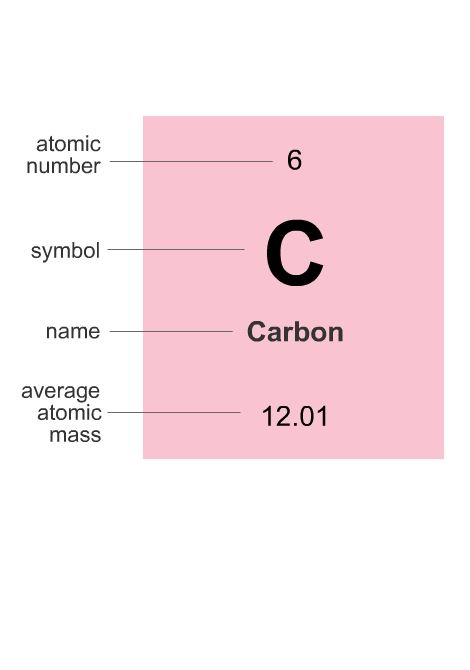
- Aelement on the periodic table
66Elements with symbols in black are [blank_start]solids[blank_end] at room temperature.
- Asolids
67Elements with symbols in blue are [blank_start]liquids[blank_end] at room temperature.
- Aliquids
68Elements with symbols in red are [blank_start]gases[blank_end] at room temperature.
- Agases
69Elements with symbols in [blank_start]green[blank_end] are not found in nature. They are only created in a laboratory.
- Agreen
70The [blank_start]atomic radius[blank_end] is the average distance between the nuclei of two adjacent atoms of the same kind; a measure of atomic size
- Aatomic radius
71[blank_start]Ionization[blank_end] is the amount of energy required to remove an electron from an atom
- AIonization
72the first ionization energy increases from [blank_start]left to right[blank_end] across the periodic table
- Aleft to right
73Ionization energy [blank_start]decreases[blank_end] down a group
- Adecreases
74[blank_start]Cations[blank_end] are ions with a positive charge
- ACations
75[blank_start]anions[blank_end] are ions with a negative charge
- Aanions
76[blank_start]Electronegativity[blank_end] is the ability of an atom to attract bonding pairs of electrons to itself
- AElectronegativity
77Electronegativity of elements within a group [blank_start]decreases[blank_end] from top to bottom
- Adecreases
78The electronegativity of the elements across a period tends to [blank_start]increase[blank_end] from left to right
- Aincrease
79The atomic radius [blank_start]increases[blank_end] from top to bottom within a group.
- Aincreases
80The atomic radius [blank_start]decreases[blank_end] as one moves across a period.
- Adecreases
81Na has a [blank_start]larger[blank_end] atomic radius than Na +
- Alarger
82Only [blank_start]3/4[blank_end] of all elements are on the period table.
- A3/4
83[blank_start]Alkali metals[blank_end] are those in Group 1A.
- AAlkali metals
84[blank_start]Alkaline earth metals[blank_end] are found in Group 2A.
- AAlkaline earth metals
85The [blank_start]transition[blank_end] metals are located in the d-block of the periodic table.
- Atransition
86Iron, silver, and gold are [blank_start]transition[blank_end] metals.
- Atransition
87[blank_start]17[blank_end] elements in the periodic table are nonmetals.
- A17
88Located in Group 8A, [blank_start]noble gases[blank_end] are often classified as nonmetals.
- Anoble gases
89Fluorine is a toxic nonmetal that readily combines with [blank_start]Alkali metals[blank_end] to gain the single electron it needs to have a complete outer shell.
- AAlkali metals
90Chlorine is a [blank_start]halogen[blank_end] nonmetal that readily combines with Alkali metals to gain the single electron it needs to have a complete outer shell.
- Ahalogen
91Carbon is a [blank_start]nonmetal[blank_end]
- Anonmetal
92[blank_start]Argon[blank_end] is the most abundant noble gas.
- AArgon
93Neon is a gas that is very stable and does not readily combine with other elements. According to the periodic table, Neon is a [blank_start]nonmetal[blank_end].
- Anonmetal
94N is a nonmetal that forms a gas commonly found in our [blank_start]atmosphere[blank_end].
- Aatmosphere
95[blank_start]Allotropes[blank_end] are when each of two or more different physical forms in which an element can exist
- AAllotropes
Information
- Description
- Chemistry k12 Grade 11 Unit 1
- Author
- Rachel N.
- Language
- English
- Views
- 55
- History
- Created on 21 Aug 2017 · updated on 6 Apr 2018
- Tags
- Rating
- No ratings yet Rate this quiz