
Karteikarten
Veterinary Technician 2
Karten in diesem Stapel (32)
- 1Presenting ProblemReason the animal is brought to the vet
- 2Veterinary Practice ActsLaws that govern vet medicine in a certain state
- 3National Association of Vet Techs in America and CanadaRepresents Vet Techs in the U.S. and Canada
- 4VenipunctureTo collect blood
- 5Occluding (Oh-clue-ding)Holding off vein, softly moving thumb on vein for blood flow
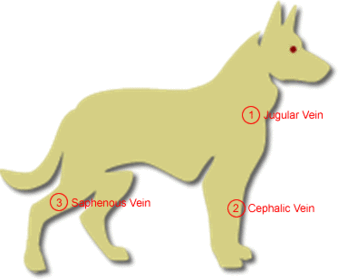
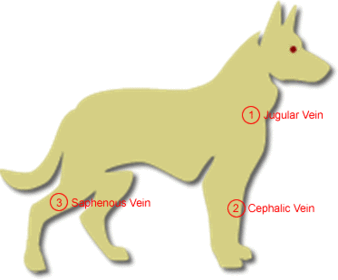
- 6Cephalic Vein (C-Fale-lick) *Dog and CatAlong the front of the forearm
- 7Saphenous Vein (Saph-ah-Nis)Outer surface of the dog's hind leg
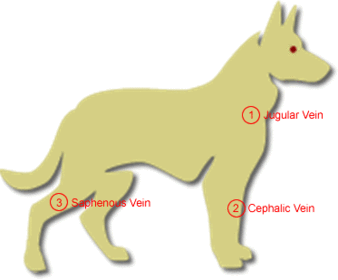
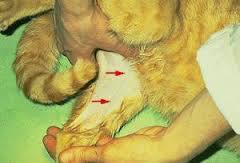
- 8Femoral Vein *CatOuter surface of the cat's hind leg
- 9Jugular Vein *Dog and CatFront of the neck
- 103 types of major restraint- Manual (by hand)
- Mechanical (help of tools, i.e cat bag)
- Chemical (sedatives, least wanted) - 11Classical ConditioningBased on Pavlov's experiments;
Refers to the association of stimuli that occurs at approximately the same time or area.
*(Feeding a baby at the same time in the same area every day) - 12Operant ConditioningAssociating a certain activity with punishment or reward.
(Pee outside = treat) - 13Instrumental Learning (Trial-And-Error Learning)Learning process controlled by consequences
- 14SociobiologyThe study of biological bases of the social behavior
- 15Fixed Action PatternsStereotypical or predictable behaviors
*(Dogs dig, Birds fly, cats meow) - 16Positive ReinforcementAny immediate pleasant occurrence that follow a behavior used to reinforce good behavior.
*(Treat for using the bathroom outside) - 17Negative ReinforcementDecrease a negative behavior with negative reinforcement
*(Shock collars, a pat on the head)
Better to not be associated with the owner - 18Socialization PeriodA place in time where an animal should be socialized with humans.
Puppies- 4-14 Weeks
Kittens- 2-8 Weeks - 19Conflict Related AggressionAggression avoid something/someone
- 20Predatory AggressionHave no warning
- 21Basic factors when treating problem behaviors (T.R.R.C)T-Trust
R-Reward (imminently)
R-Reprimand (No harm just scare)
C-Consistency - 22ExtinctionElimination of a problem behavior by completely removing the cause of the problem
(Remove shoes to another place to stop dog chewing them) - 23Aversion TherapyCreating a relationship between an unpleasant stimulus and an object the animal is messing with
(Putting double-sided tape to stop cat from getting on table) - 24Avoidance TherapyLink a bad behavior with an unpleasant event
*(Chewing=sprayed with water) - 25HabituationSurrounding pet with stimulus that is causing a problem until pet becomes used to it
- 26Counter conditioningReplace an undesirable behavior with a desirable one
- 27Unconditioned ResponseReflex behavior
(Cat falling=trying to land on feet) - 28SOAP-Subjective
-Objective
-Assessment
-Procedure/Plan - 29Subjective Data (Soap)The reason the animal is at vet and observations of the animal and condition that cant be quantified.
-Limp? -Vomit? - 30Objective Data (sOap)Quantified.
Can and will be measured.
-Weight -Temp - 31The Assessment (soAp)Includes possible or probable explanations for the problem.
-Guide for vet
-Duagnosis can be included - 32The Procedure/Plan (soaP)-Outlines plan for treatment
-Includes problems that should be monitored, follow up care, prescriptions.
-Only for vet.
Informationen
- Beschreibung
- Vet Tech chapter one terms
- Erstellt von
- Kadii Spurling · Okt 2015
- Aktualisiert
- 6 Apr 2018
- Aufrufe
- 150
- Bewertung