
Karteikarten
Birds And Mammal Flashcards (Reinhardt University)
Karten in diesem Stapel (97)
- 1Birds evolved fromdinosaurs
- 2EndothermyInsulation
- 3Which came first - high metabolic rate or insulation - in birds?High metabolic rate
- 4Ancestors of modern birds were...fast, terrestrial predators (needed high metabolic rate for chasing prey)
- 5Feathers...increased internal heating - feathers are insulation.
- 6Birds produce...lots of CO2 = capable of lots of activities.
- 7Dinosaurs had feathers, meaning that feathers are...an old adaptation that predates flight.
- 8Bird Characteristic - Long UlnaIncreased wing area
- 9Bird Characteristic - Strut like coracoidsincreased leverage for pectorialis
- 10Bird Characteristic - FurculaSupport shoulders during flapping
- 11Bird Characteristic - Opposable HalluxGrasp branches, hind toe on bird foot
- 12Bird Characteristic - Keeled Sternumincreased leverage for pectorialis. large muscle needs to attach somewhere - keeled sternum gives more surface area.
- 13Bird Characteristic - PygostyleReduced tail. decreased drag and wobbling in flight
- 14Bird Characteristic - Shortened Vertebral Columnprovides center of gravity near wings
- 15Supracoracoideus Muscleon upstroke --> pulls to coracoid to contract
- 16Pectoral GirdleUniquely arranged for flight
- 17Cursorial (ground up)1/2 hypotheses for bird flight: light running.
- 18Arboreal (trees-down)2/2 hypotheses for bird flight: gliding
- 19wings aided in....capturing prey & escaping predation by extended "jumps"
- 20Archaeopteryxhas many plesiomorphic (homologous) traits.
- 21Size of flying birds12kg Max
- 22Size of Flightless Birds150kg Max
- 23feathers made of....Keratin (like reptile scales)
- 24RachisRuns through feathers center
- 25Barbsextend from rachis on each side.
form vanes held together with barbules (hooks) - 26Distally FeathersSmooth and Compact
top of feather
aid in flight - 27Proximally feathersless well arranged
bottom of feather
downy looking
provide warmth - 28Contour FeathersExternal
Smooth and reduce drag - 29Semiplumesintermediate between contour and down.
half and half of smooth and fluffy. - 30Downsmall, insulating, fluffy
traps warm air to the body - 31BristlesProtects eyes and nostrils
help with sensation and catching insects.
detect food as they're flying - 32Filoplumessense flight information
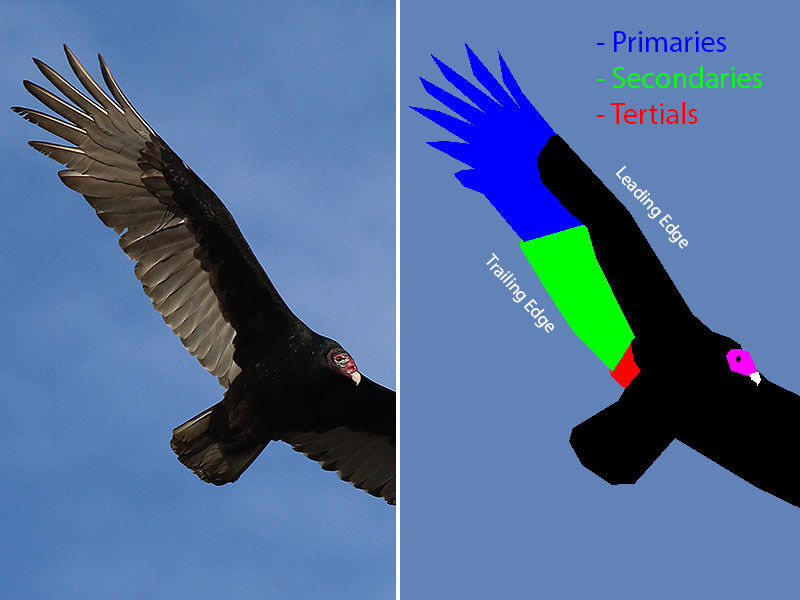
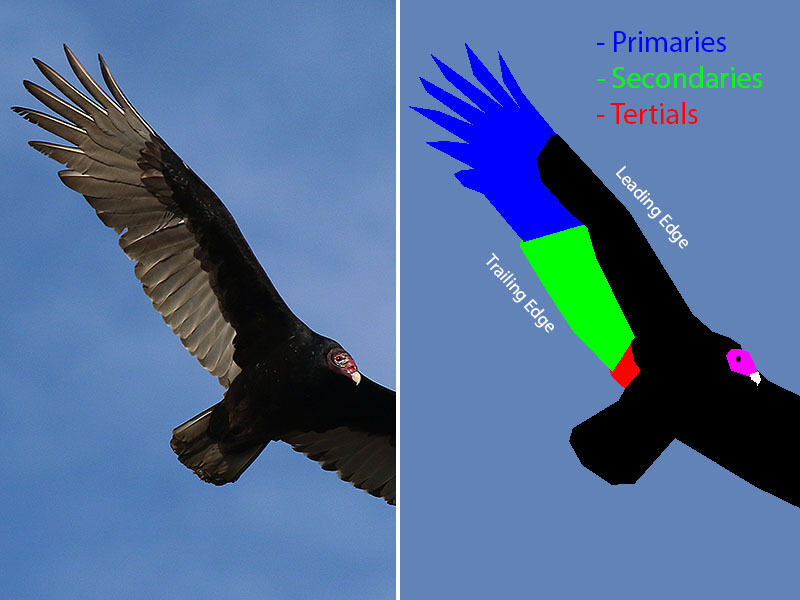
wind speed, pressure, adjust in flight - 33Primariesinserted at metacarpals and phalanges
provide forward thrust - tip of wing - 34Secondariesinserted along ulna
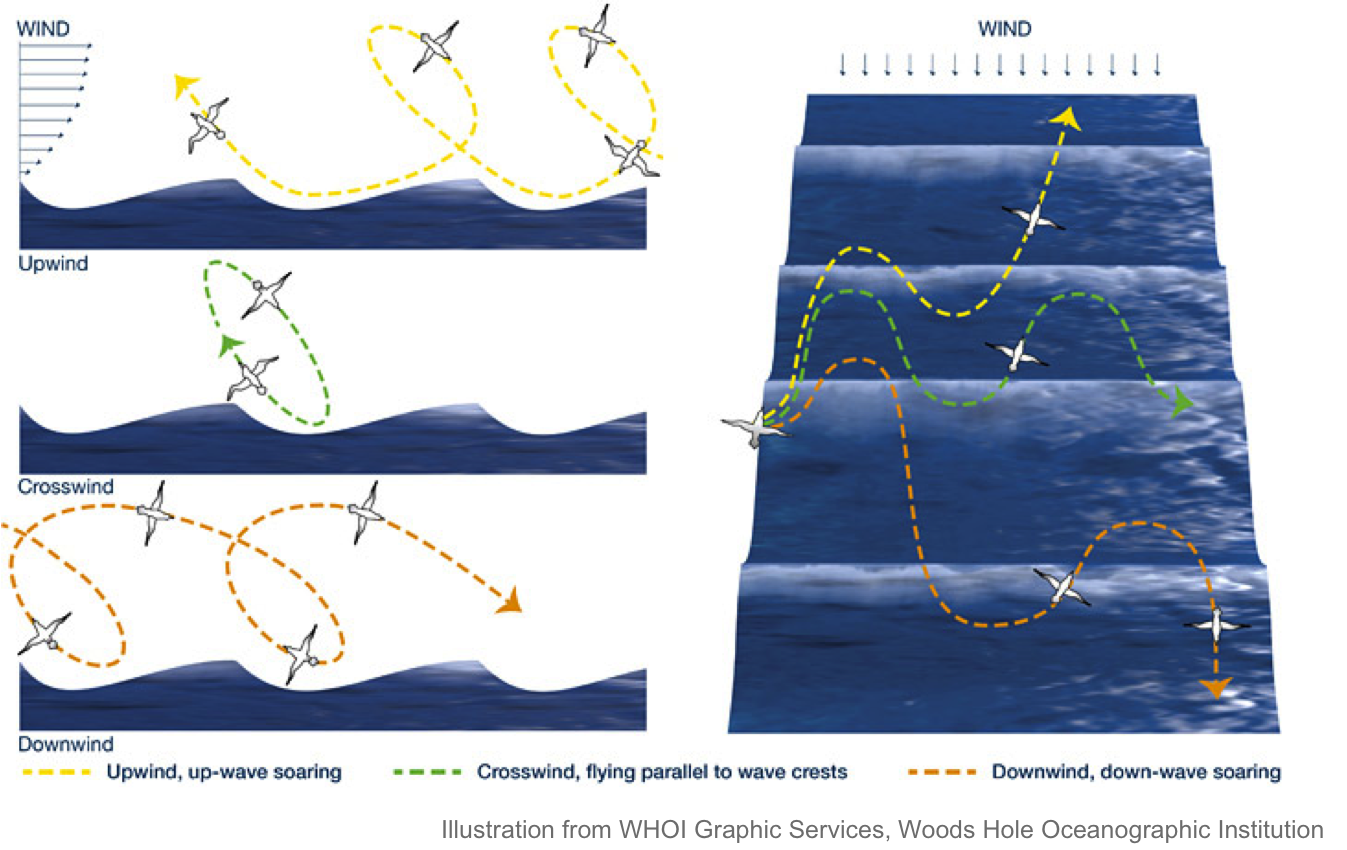
provide lift - 35Dynamic SoaringLong, thin, gliding
ex: Albatross, shearwaters, seabirds - 36Elliptical Wingsshort, powerful, high maneuverability
lots of flapping
ex: grouse, quail, pheasant, woodland birds - 37High Aspect Ratio Wingsflat profile, little drag, rear swept, fast flight
speed
ex: swallows, swifts, kites - 38High Lift WingsIntermediate b/w elliptical and high aspect
high maneuverability & slow soaring speed
ex: Hawks, vultures, storks - 39adaptations for flightStreamlined bodies
Contour Feathers
Pneumatic Bones = Unidirectional flow
Increased mass of flight muscles - 40Streamlined Bodies200 km/hr flight
smooth - 41Contour Featherssmooth feathers reduce drag
- 42Pneumatic BonesPores, hollow, weight reduction
used in respiration
Parabronchial (air pockets in bones): as it exhales air is going into the lungs from air sacs (Unidirectional)
Very efficient - 43Increased Mass....of flight muscles
less than 30% of body mass - 44CropStores food
Enlarged portion of esophagus
food for offspring - 45Stomach2 Chambers
- 46ProventiculusAnterior chamber of stomach
secretes acid and enzymes - 47GizzardPosterior chamber of stomach
muscular (often has rocks)
mechanical digestion - 48Instestinerapid absorption of nutrients
- 49CecaSymbiotic bacteria in herbivores and omnivores
- 50Cloacareabsorbs water
- 51Insect CatchingShort, thin, pointed
- 52Fish Catchinglong, spear like
- 53Sand probingvery long, thin
- 54Raptorshort, heavy, hooked, sharp
- 55StrainerFlat and broad, fills on edges
- 56Seed CrackerShort, heavy, sharp edged
- 57Insect Netterwide, short with bristles
- 58Nectar FeederLong, narrow, protrusible tongue
- 59Drilling for insectsheavy, pointed
- 60Senses need to be able to...renew info about immediate environment
- 61Vision and HearingAcute vision and hearing
marginal sense of smell - 62How many species?around 9600 species
- 63Diverged from who?Dromeosaurs - Jurrasic period
- 64Found onall continents
- 65Relationships of lineages....largely unresolved
- 66bird ordersfalconiformes (falcons)
gruiformes (herons, ducks)
charadriiformes (killdeer)
strigiformes (owls)
Caprimulgiformes (mustache beak)
Apodiformes (hummingbird)
Piciformes (woodpecker)
Passeriformes (bluejay) - 67Monotremesegg laying mammals
ex: platypus, echidna - 68SynapsidaDiverged from the rest of Amniota
Single temporal fenestra
early synapsids resembled other "reptiles" - 69Mammaiia have...insulation (hair)
Endotherm
4 chambered heart - 70Adaptations for Increased metabolism in mammalsturbinates (bones) in nasal openings
chewing food
secondary plates separating nasal and mouth openings.
strengthened jaw - opening of temporal fenestra.
increased ear sensitivity - 71More adaptations for increased metabolism in mammalsventral leg placement - no lung/leg conflict
dorsoventral flexion
Reduction of tail
longer legs - toe walking, more leverage
Diaphragm - 72sebaceous glandsMammary glands are derived from this
modified oil production glands - 73Benefits of LactationMother/offspring bond
Antibiotic. Immune defense. Reduced microbial activity in nest.
reduces offspring dependence on seasonal food supply. - 74Adaptation for LactationIncrease in facial musculature
more effectively receiving milk. - 75How many species of mammals?about 5,000
there are more amphibians, reptiles, and birds. - 76Mammal hairinsulation
- 77Glandular skinSweat (cooling), scent & sebaceous (chemical communication), mammary glands
- 78Diphydont and heterodontmouth with 2 teeth and diversity of teeth.
(diff types of teeth all with diff functions) - 79Fleshy earsgather vibrations, better hearing
- 80mammal respiratory system2o palate, muscular diaphragm.
improved respiratory system. - 81Mammal brainhigh developed
Apomorphic development
hemisphere connection - 82Mammals are....endothermic and homeothermic
- 83No cloacaseperate openings(2) for waste excretion and reproduction
- 84Placentamost mammals have
except for egg laying - monotremes - 85Senses reflect....nocturnal nature of most mammals.
likely that the first niche was nocturnal - 86Olfactionacute sense of smell
receptors on epithelium of turbinates
Olfactory bulb of brain large in most (sensory receptor is large)
reduced in primates & cetaceans - 87Retina mostly rod cellshighly sensitive to light, poor acute vision
--->form images in low light conditions
Birds/lizards mostly have cone cells - 88Tapedum Lucidumreflective layer behind retina
"Sprite eyes"
second chance for light to stimulate retinal cell. - 89Mammal complex middle ear3 bones derived from jaw
unique to mammals that amplify sound
- outer ear amplifies sound - 90Mammal Skin (Integmunt)Highly variable
insulating
water tight
many glands w/ diff. functions - 91Sebaceous glandOils
feeding skin microbiome
repel moisture - 92Apocrine glandchemical communication
musk glands - mating - 93Eccrine gland"sweat" for thermoregulation
- 94mammary glandmilk, possibly homology w/ sebaceous and apocrine
- 95MonotremataPlatypus and Echidna
Leathery eggs, cloaca
no nipples w/ mammary glands
"reptile-like" pectoral girdle
closest to reptiles - 96Marupialiaopossums, kangaroos
275 species
Australia & N/S. America
Simple placenta and pouch
Shell membrane around embryo
Neonates with strong forelimbs, large lungs - 97Eutheriaplacental
4200 species
placenta - allows gases/nutrients to diffuse between mother and fetus
no eggshell membrane
longer gestation period
Informationen
- Beschreibung
- Zoology @ Reinhardt Uni. Felix's Class. Module Five final exam.
- Erstellt von
- Olivia Fields
- Aufrufe
- 37
- Tags
- Bewertung