
Mindmap
Memory
Inhalt der Mindmap
Memory
explicit (declarative) memory,
- facts and events, people, places, and objects;
- require the hippocampus and adjacent cortex —and in humans involve conscious awareness
- HM study
- Emergence of a Systems Approach to Memory Storage Hypocampus
- Electrophysiological recording of hippocampal activity in freely behaving rats first demonstrated that the most striking feature of hippocampal neurons is their spatially specific firing
- that the hippocampal neurons encode a map of the animal’s spatial location
- A defining feature of explicit memory, such as the hippocampal- dependent memory for space, is that it requires attention
- The recruitment of attention is important not only for optimal encoding of memory but also for subsequent retrieval
- hippocampus receives multimodal sensory information, the encoding of this information probably engages several brain structures, each of which might be the target of independent attentional modulation.
- Successful performance of a spatial task was associated with stable place fields in the neurons. Furthermore, conditions that maximize place field stability greatly increased orientation to novel cues. This suggests that storage and retrieval of place cells is modulated by a top-down cognitive process, resembling attention, and that place cells are neural correlates of spatial memory
- Spacial map entorhinal cortex
- functioning as a hub in a widespread network for memory and navigation
- They found that whereas some neurons fired at the objects, other cells developed specific firing at places where objects had been located on previous trials, thereby providing a readout of past experience in the environment
- Each of these space-encoding cells has a grid-like, hexagonal receptive field and conveys information to the hippocampus about position, direction, and distance
- functioning as a hub in a widespread network for memory and navigation
- Spacial map entorhinal cortex
- Successful performance of a spatial task was associated with stable place fields in the neurons. Furthermore, conditions that maximize place field stability greatly increased orientation to novel cues. This suggests that storage and retrieval of place cells is modulated by a top-down cognitive process, resembling attention, and that place cells are neural correlates of spatial memory
- hippocampus receives multimodal sensory information, the encoding of this information probably engages several brain structures, each of which might be the target of independent attentional modulation.
- The recruitment of attention is important not only for optimal encoding of memory but also for subsequent retrieval
- A defining feature of explicit memory, such as the hippocampal- dependent memory for space, is that it requires attention
- that the hippocampal neurons encode a map of the animal’s spatial location
- Synaptic Plasticity in the Mammalian Brain
- long-term potentiation (LTP)
- only synapses that are active when the postsynaptic cell is strongly depolarized are (specificity) potentiated and (b) inactive synapses were not potentiated. Thus, groups of synapses that are coordinately active and contribute together to the firing of the target postsynaptic neuron will be strengthened, providing a plausible mechanism for linking ensembles of neurons encoding different environmental features that are presented together and thereby forming memory associations
- Hippocampal Subregions and LTP in Explicit Memory
- APV to block NMDA receptors in rats and tested their spatial memory in a water maze. Inhibition of NMDA receptors to levels sufficient to block LTP in the hippocampus also blocked the animal’s ability to learn a new spatial location in the water maze.
- Mechanisms Involved in the Maintenance of Memory
- that consolidation doesn’t occur just once per item, but that under some circumstances it can be actively recruited during later retrieval of that same item
- When inhibitors of protein synthesis are given in a short time window after memory retrieval, they disrupt the subsequent storage of the memory, similar to what is seen with consolidation of initial learning, hence the term reconsolidation
- As opposed to consolidation, which always takes place when a new item is encoded in long-term memory, reconsolidation does not seem to occur after each memory reactivation
- They trained participants to fear a visual CS by associating it with a mild shock to the wrist. A day later they presented the CS only. The participants were then trained in an extinction paradigm after 10 min or 6 hr. In the 10 min group, long-term memory, as expressed in skin conductance response to the CS, was blocked even a year later.
- As opposed to consolidation, which always takes place when a new item is encoded in long-term memory, reconsolidation does not seem to occur after each memory reactivation
- When inhibitors of protein synthesis are given in a short time window after memory retrieval, they disrupt the subsequent storage of the memory, similar to what is seen with consolidation of initial learning, hence the term reconsolidation
- Explicit, Declarative, Memory in the Human Brain
- Commonly, memory-predicting activity is identified in areas including (but not restricted to) the medial temporal lobe, as expected from clinical findings of the role of medial temporal lobe damage in amnesia
- as well as subregions of the prefrontal cortex and the posterior parietal cortex
- Systems Consolidation and Transformation of Declarative Memory
- The current models of systems consolidation in humans draw from behavioral and anatomical investigations of amnesic patients, and fMRI studies that monitor time-dependent alterations in recollection-correlated brain activity in healthy human participants.
- In ‘‘global amnesics,’’ like H.M., who suffered damage to the MTL and particularly to the hippocampus and entorhinal cortex (Scoville and Milner, 1957; Corkin, 2002; Squire, 2009), performance on many explicit tasks show temporally graded retrograde amnesia, implying that the older memories are less dependent on an intact MTL.
- ‘‘standard consolidation theory
- to explain this observation by suggesting that the hippocampus is only a temporary repository for memory whereas the neocortex stores the memory thereafter
- ‘‘multiple trace theory’’
- that the hippocampus rapidly and obligatorily encodes all episodic information. This information is sparsely encoded in distributed ensembles of hippocampal neurons, acts as an index for neurocortical neurons that attend the information, and binds them into a coherent representation. The resulting hippocampal-neocortical ensemble constitutes the memory trace for the episode
- Since reactivation of the trace commonly occurs in an altered context, it results in newly encoded hippocampal traces, which in turn bind new traces in the neocortex. This results in multiple traces that share some or all the information about the initial episode.
- Over time, multiple related traces facilitate the extraction of factual information into a semantic representation of the gist of the episode. This information integrates into a larger body of semantic knowledge and becomes independent of the specific learning episode.
- Since reactivation of the trace commonly occurs in an altered context, it results in newly encoded hippocampal traces, which in turn bind new traces in the neocortex. This results in multiple traces that share some or all the information about the initial episode.
- that the hippocampus rapidly and obligatorily encodes all episodic information. This information is sparsely encoded in distributed ensembles of hippocampal neurons, acts as an index for neurocortical neurons that attend the information, and binds them into a coherent representation. The resulting hippocampal-neocortical ensemble constitutes the memory trace for the episode
- ‘‘standard consolidation theory
- In ‘‘global amnesics,’’ like H.M., who suffered damage to the MTL and particularly to the hippocampus and entorhinal cortex (Scoville and Milner, 1957; Corkin, 2002; Squire, 2009), performance on many explicit tasks show temporally graded retrograde amnesia, implying that the older memories are less dependent on an intact MTL.
- The Role of Sleep in Consolidation
- Sleep may promote the preferential strengthening of emotional memoranda and of items that are expected to be subsequently retrieved
- posited that plastic processes during wakefulness result in a net widespread increase in synaptic strength in the brain, and the role of sleep is to downscale synaptic strength to a baseline level that is energetically sustainable and possibly also more useful for acquiring new learning the next day
- Their proposal is that during slowwave sleep (SWS), the characteristic neuronal activity patterns and low cholinergic activity act together to promote the reactivation and redistribution to neocortex of hippocampal-dependent memories, thereby instantiating systems consolidation
- Subsequently, during rapid eye movement (REM) sleep, high cholinergic- and theta activity promote synaptic consolidation of the newly redistributed representations in the neocortex
- posited that plastic processes during wakefulness result in a net widespread increase in synaptic strength in the brain, and the role of sleep is to downscale synaptic strength to a baseline level that is energetically sustainable and possibly also more useful for acquiring new learning the next day
- Retrieval of Explicit Memory
- Our brain can retrieve complex explicit information and act on it within a fraction of a second
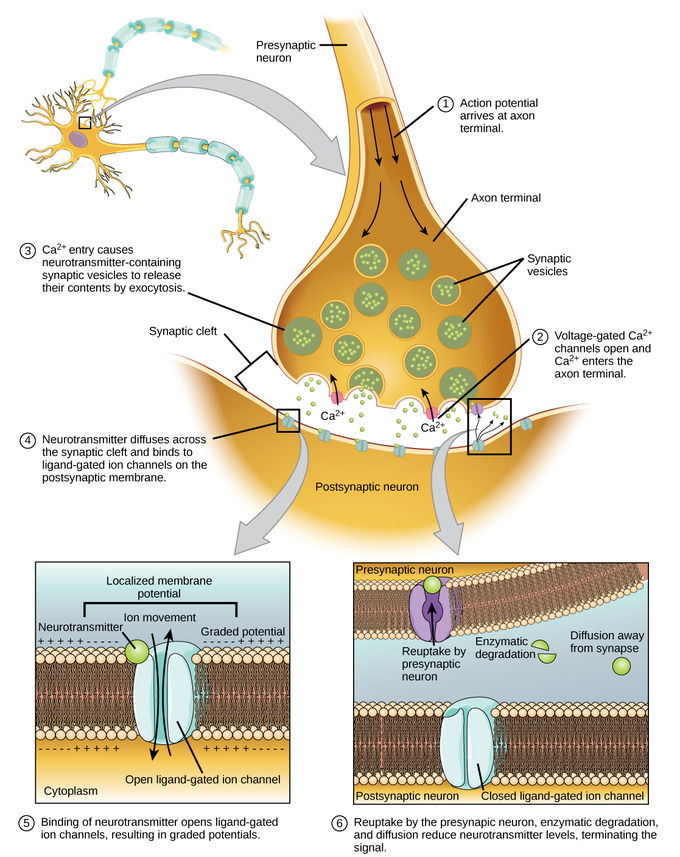
- a combination of sequential and parallel distributed processes that involve multiple brain circuits
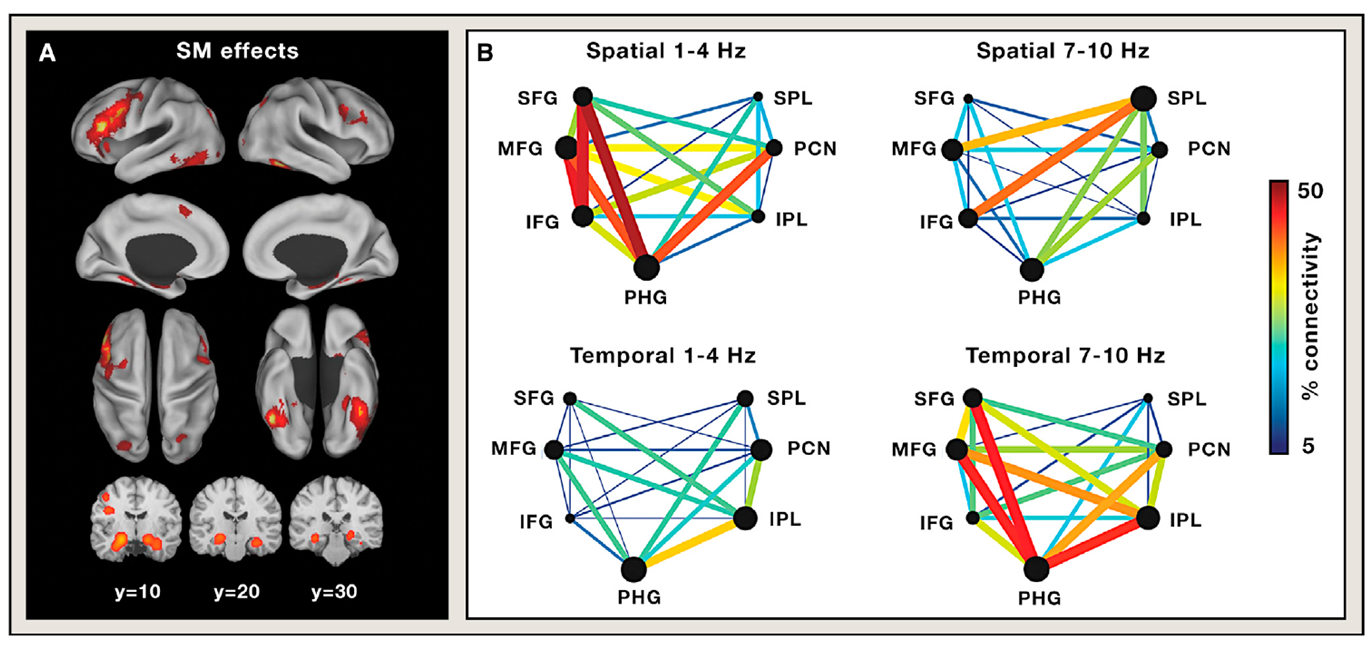
- The prefrontal cortex interacts with the medial temporal lobe during retrieval , providing top-down selection of information, updating episodic features, and acting on the product of retrieval in a way that aligns our response with the task at hand. In addition, regions of the parietal cortex are implicated in attention-driven retrieval efforts and search and in binding and representing episodic features
- successful retrieval is associated with greater overall connectivity among sites and, moreover, that successful retrieval of temporal context occurs at higherfrequency interactions than retrieval of spatial context.
- The prefrontal cortex interacts with the medial temporal lobe during retrieval , providing top-down selection of information, updating episodic features, and acting on the product of retrieval in a way that aligns our response with the task at hand. In addition, regions of the parietal cortex are implicated in attention-driven retrieval efforts and search and in binding and representing episodic features
- a combination of sequential and parallel distributed processes that involve multiple brain circuits
- Our brain can retrieve complex explicit information and act on it within a fraction of a second
- Sleep may promote the preferential strengthening of emotional memoranda and of items that are expected to be subsequently retrieved
- The current models of systems consolidation in humans draw from behavioral and anatomical investigations of amnesic patients, and fMRI studies that monitor time-dependent alterations in recollection-correlated brain activity in healthy human participants.
- Commonly, memory-predicting activity is identified in areas including (but not restricted to) the medial temporal lobe, as expected from clinical findings of the role of medial temporal lobe damage in amnesia
- that consolidation doesn’t occur just once per item, but that under some circumstances it can be actively recruited during later retrieval of that same item
- long-term potentiation (LTP)
- Electrophysiological recording of hippocampal activity in freely behaving rats first demonstrated that the most striking feature of hippocampal neurons is their spatially specific firing
implicit (nondeclarative) memory,
- For perceptual and motor skills
- does not require conscious awareness and relies mostly on other brain systems: namely, the cerebellum, the striatum, the amygdala,
- How is implicit memory stored
- 1948 Konorski renamed Cajal’s idea synaptic plasticity [the ability of neurons to modulate the strength of their synapses as a result of use (Konorski, 1948)].)
- Elemetry forms of learning
- habituation
- Retract presynaptictermnial
- dishabituation
- sensitization
- classical conditioning
- operant conditioning
- Short term implicit memory
- single-trial learning and the formation of short-term memory, evident in both the gill-withdrawal reflex of Aplysia and the tail-flick response
- revealed that these short-term changes in synaptic strength result from the modulation of the release of chemical transmitters from presynaptic neurons
- A decrease in the amount of transmitter released was found to be associated with short-term habituation
- whereas an increase was associated with short-term dishabituation and sensitization
- capability for storing implicit memory is built into the neural architecture of the reflex pathway itself and depends on its capability for synaptic plasticity.
- revealed that these short-term changes in synaptic strength result from the modulation of the release of chemical transmitters from presynaptic neurons
- Encoding of short term memory
- single sensitizing stimulus to the tail increases the strength of the synaptic connections between the sensory and motor neurons
- The stimulus leads to the activation of modulatory neurons that release serotonin onto the sensory neuron
- Serotonin, in turn, increases the concentration of cyclic adenosine monophosphate (cAMP) in the sensory cell.
- The cAMP molecules signal the sensory neuron to release more of the transmitter glutamate into the synaptic cleft, thus temporarily strengthening the connection between the sensory and motor neuron
- Serotonin, in turn, increases the concentration of cyclic adenosine monophosphate (cAMP) in the sensory cell.
- The stimulus leads to the activation of modulatory neurons that release serotonin onto the sensory neuron
- Classical conditioning
- Conditioned stimulus
- Paired training, in which the conditioned stimulus (stimulation of the siphon) is applied just before the unconditioned stimulus (a shock to the tail), produces a greater increase in the gill-withdrawal reflex than either stimulus alone or than unpaired stimuli.
- firing of an action potential by the sensory neuron just before the tail shock causes greater facilitation of the synaptic connection between sensory and motor neurons, an action also known as activity-dependent enhancement of synaptic facilitation.
- if serotonin, which increases the concentration of cAMP in the sensory neuron, arrives at the synapse just after the influx of calcium ions, the synthesis of cAMP and the strengthening of the sensory-motor synapses are further enhanced.
- firing of an action potential by the sensory neuron just before the tail shock causes greater facilitation of the synaptic connection between sensory and motor neurons, an action also known as activity-dependent enhancement of synaptic facilitation.
- Paired training, in which the conditioned stimulus (stimulation of the siphon) is applied just before the unconditioned stimulus (a shock to the tail), produces a greater increase in the gill-withdrawal reflex than either stimulus alone or than unpaired stimuli.
- Long term Memory consolidation
- Thus, a single brief application of serotonin produces a short-term increase in synaptic strength (short-term facilitation), whereas repeated, spaced applications produce increases in synaptic strength that can last for more than a week (long-term facilitation) (
- Consolidation
- A cellular study of long-term memory in Aplysia showed that this protein synthesis reflects new gene expression, which is initiated in long-term sensitization by the repeated release of serotonin.
- PKA activates gene expression by means of the cAMP response element binding protein, CREB-1
- produces the growth of new synaptic connections
- PKA activates gene expression by means of the cAMP response element binding protein, CREB-1
- A cellular study of long-term memory in Aplysia showed that this protein synthesis reflects new gene expression, which is initiated in long-term sensitization by the repeated release of serotonin.
- Consolidation
- Maintenance of Long-Term Memory
- This means that long-term facilitation and its associated synaptic changes are synapse specific
- Latent mRNA is transpoted to each synapse and is transcriped by when the sypanse is consitialey bobared with seratonin, this resules in increase grown of pre synaptic terminals
- Implicet memory in the mamlian brain
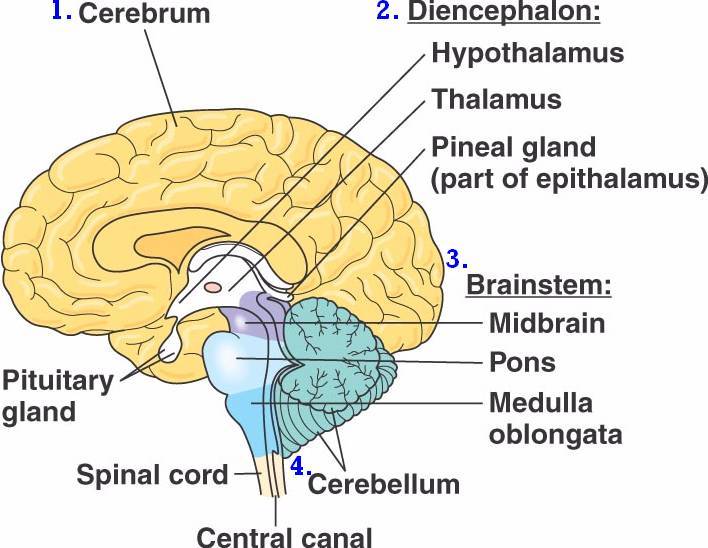
- This form of learning involves the amygdala, a region of the brain that receives direct auditory information from the thalamus and processed information from neocortex, and which provides an output to areas of the hypothalamus that regulate autonomic fear responses
- Amydala
- primary role in the processing of memory, decision-making, and emotional reactions, the amygdalae are considered part of the limbic system
- Thalamus
- relaying of sensory and motor signals to the cerebral cortex,[2][3][page needed] and the regulation of consciousness, sleep, and alertness
- Neo cortex
- higher-order brain functions such as sensory perception, cognition, generation of motor commands,[1] spatial reasoning and language
- Hyoerthanamus
- responsible for certain metabolic processes and other activities of the autonomic nervous system.
- body temperature, hunger, important aspects of parenting and attachment behaviors, thirst,[2] fatigue, sleep, and circadian rhythms.
- responsible for certain metabolic processes and other activities of the autonomic nervous system.
- Amydala
- This form of learning involves the amygdala, a region of the brain that receives direct auditory information from the thalamus and processed information from neocortex, and which provides an output to areas of the hypothalamus that regulate autonomic fear responses
- This means that long-term facilitation and its associated synaptic changes are synapse specific
- Thus, a single brief application of serotonin produces a short-term increase in synaptic strength (short-term facilitation), whereas repeated, spaced applications produce increases in synaptic strength that can last for more than a week (long-term facilitation) (
- Conditioned stimulus
- single sensitizing stimulus to the tail increases the strength of the synaptic connections between the sensory and motor neurons
- single-trial learning and the formation of short-term memory, evident in both the gill-withdrawal reflex of Aplysia and the tail-flick response
- habituation
not the result of a linear sequence of events that culminates in an indelible, long-term memory
- outcome of several interactive processes: encoding or acquisition of new information, short-term memory, intermediate-term memory, consolidation of long-term memory, maintenance of long-term memory, and destabilization and restabilization of memory in the course of retrieving, updating, and integrating a given memory with other memories
(Eric R. Kandel,1,2,3,4,* Yadin Dudai,5 and Mark R. Mayford6, 2014)
Bilder und Dateien der Mindmap
Informationen
- Beschreibung
- Mindmap am Memory, erstellt von Vivian Gleeson am 16/03/2016.
- Erstellt von
- Vivian Gleeson
- Aufrufe
- 1
- Bewertung