
Mindmap
Antibiotics 1: Penicillins and Cephalosporins
Inhalt der Mindmap
Antibiotics 1: Penicillins and Cephalosporins
Classes of antibiotics
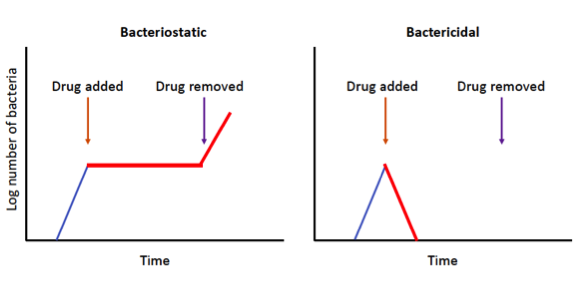
- Bactericidal vs. Bacteriostatic
- Bactericidal
- Kill bacteria
- No bacteria left when drug is removed
- Penicillins
- Cephalosporins
- Fluoroquinolones
- Aminoglycosides
- Metronidazole
- Sulphonamides + trimethoprim (Potentiated sulphonamides)
- Bacteriostatic
- Slow bacterial growth
- Sulphonamides
- Trimethaprim
- Tetracyclines
- Chloramphenicol
- Linomycin
- Concentration dependent (static/cidal)
- Erythromycin
- (Macrolides)
- Low conc = static
- High conc = cidal
- Tend to use low concs (static effect) in practice
- Bactericidal
- Time vs. Concentration Dependence
- Time Dependent
- Work slowly
- Plasma levels should be above minimum inhibitory concentration (MIC) for as long as possible in each 24 hour period
- Penicillins
- Cephalosporins
- Concentration Dependent
- Peak concentration determines how effective the drug will be
- Aminoglycosides
- Fluoroquinolones
- Metronidazole
- The greater the concentration, the greater the effect
- Whilst still limiting side effects
- Time Dependent
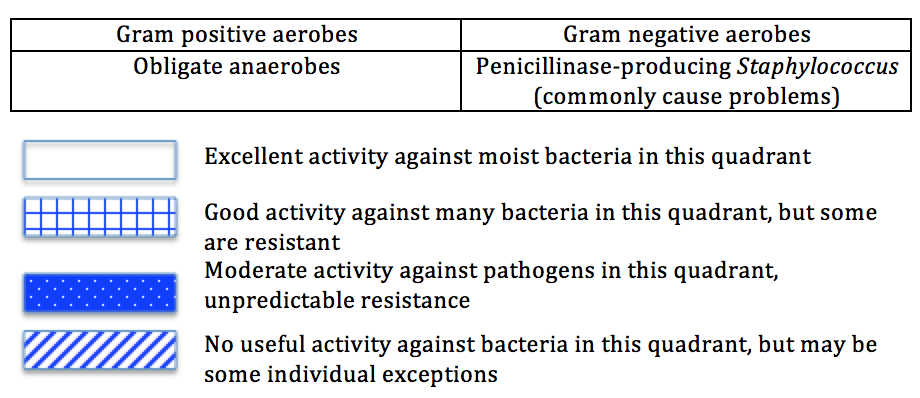
- Spectrum of activity
- What bacteria are the drug effective against?
- Bactericidal vs. Bacteriostatic
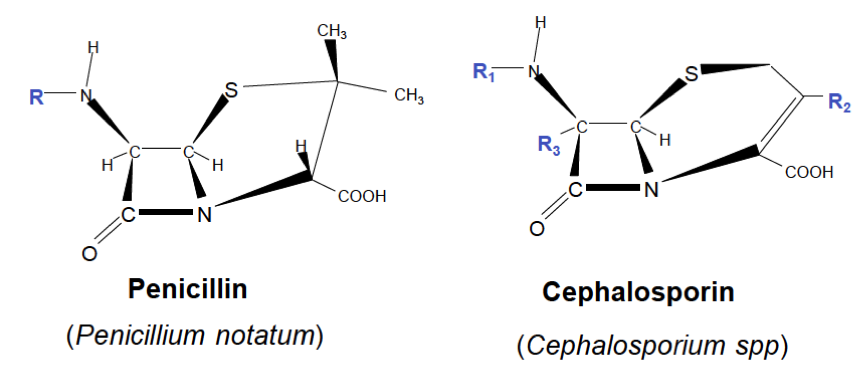
β-lactam antibiotics
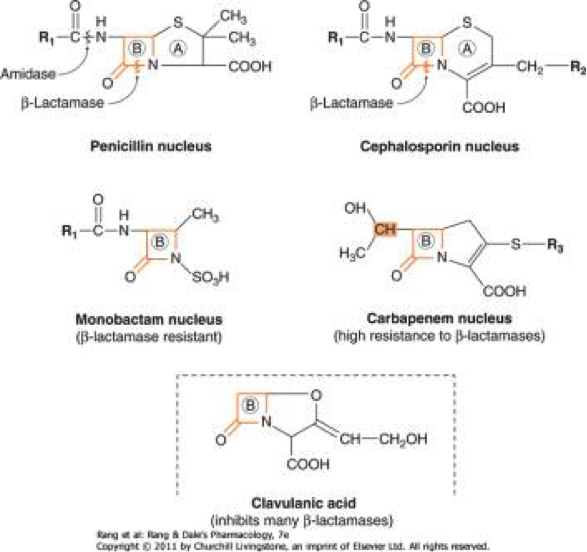
- 3 carbons, 1 nitrogen forming ring which is important for the activity of the drug
- Antibacterial activity
- Ability to bind to transpeptidases
- Mutations reduce effectiveness
- Drug access to transpeptidase
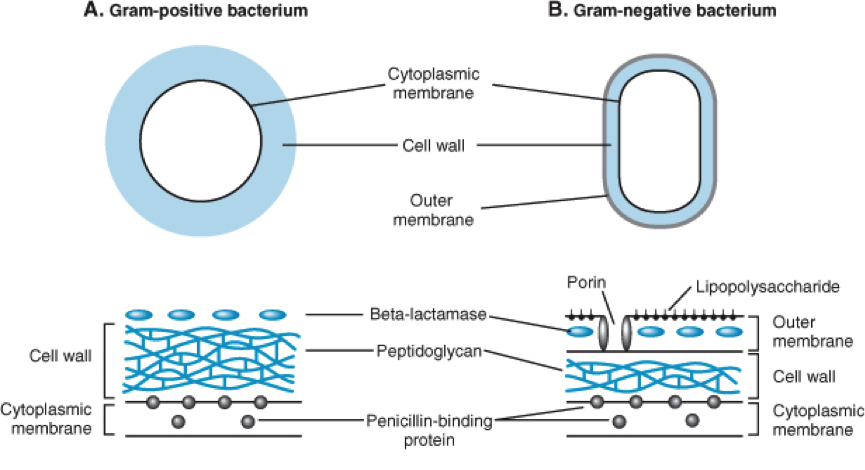
- In gram –ve bacteria LPS can hinder drug passage
- Stability against β-lactamase activity
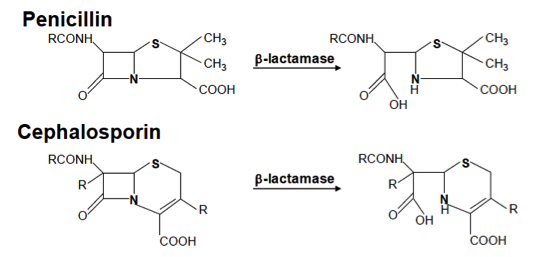
- e.g. penicillinase – break down β-lactam drugs
- Ability to bind to transpeptidases
- β-lactamase
- Diverse group of enzymes
- Specific to the bacteria
- Staphylococcal β-lactamase = penicillinase
- Breaking of the β-lactam ring means rigidity is lost
- Drug is unable to bind to the transpeptidase, is thus no longer effective
- Clavulanic acid
- β-lactamase inhibitor
- No antibacterial effect alone
- Several products containing amoxicillin and clavulanic acid licensed for veterinary use in cats, dogs and cattle
- e.g. synulox – 1:1 mix of amoxicillin and clavulanic acid
Penicillins
- Pharmacokinetics
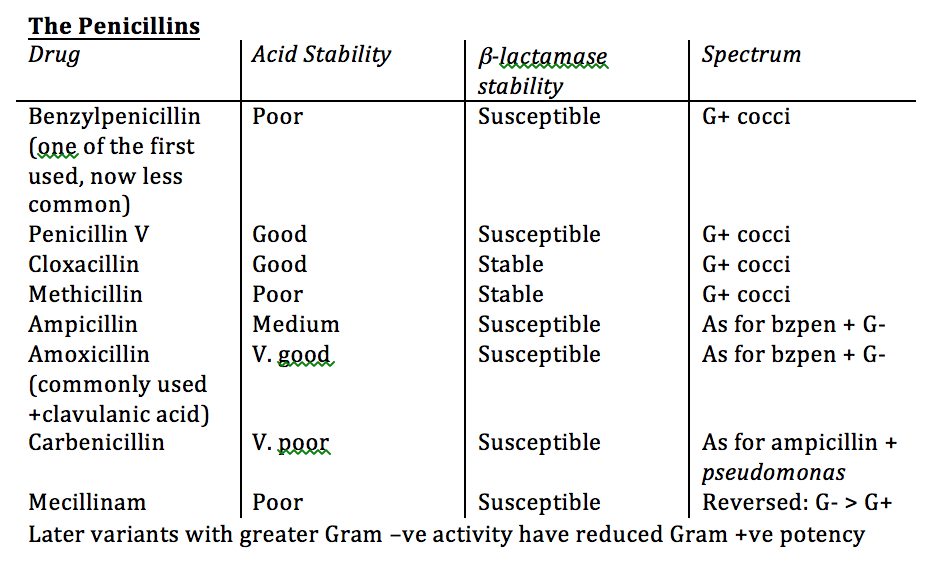
- Oral availability – varies depending on acid stability
- Widely distributed – but do not cross blood brain barrier
- Eliminated by kidney
- Pharmacokinetics
Cephalosporins
- Pharmacokinetics
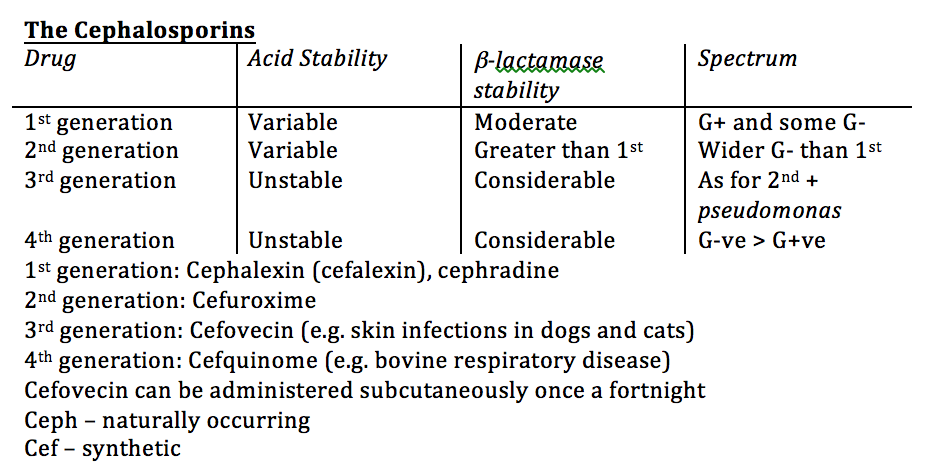
- Some can be orally administered, most parenterally
- Widely distributed – some cross blood brain barrier (most don’t)
- Eliminated by kidney
- Pharmacokinetics
Carbapenems and Monobactams
- Tend not to be licensed for vet use
Antibacterial Agent Targets
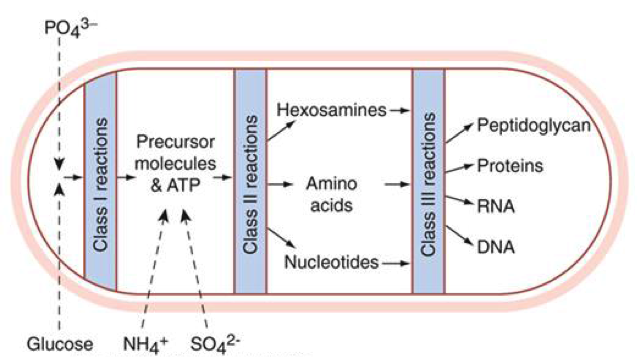
- Biochemical reactions
- Class I
- Not unique to bacteria
- Non-lethal
- Poor targets
- Class II
- Better targets e.g. folate synthesis
- Different enzyme pathway c.f. host
- Allows specificity
- Different enzyme pathway c.f. host
- Better targets e.g. folate synthesis
- Class III
- Important targets
- Bacteria specific reactions
- Fewer side effects
- Products are specific to bacteria e.g. peptidoglycan
- Class I
- Bacterial cell wall
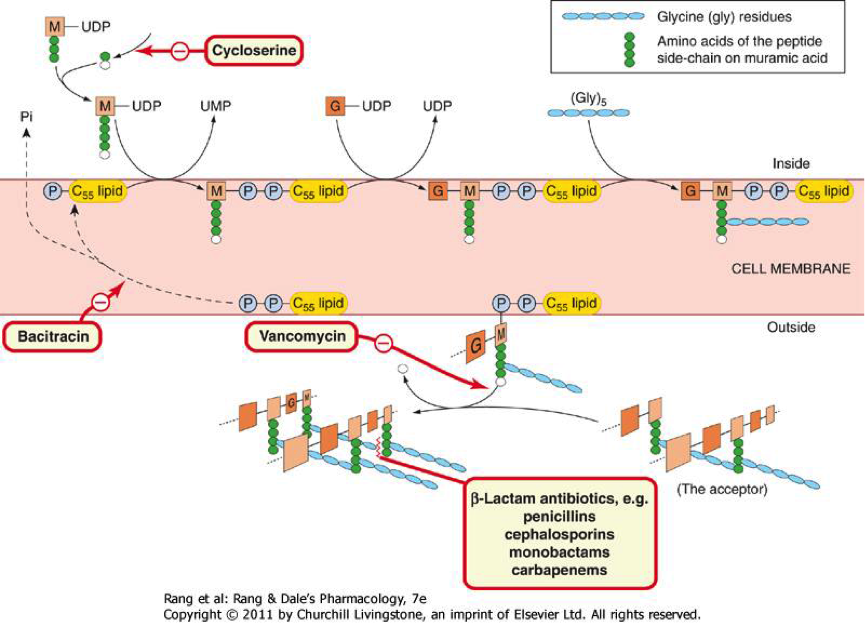
- Peptidoglycan (aka murein) synthesis
- Cytoplasm
- Membrane
- Extra-membrane
- Formation of linear peptidoglycan polymer
- Cross-linking of the linear units to form a complex lattice structure
- Attachment of NAMA and NAG to a lipid carrier
- Extra-membrane
- Synthesis of NAMA and NAG
- Building a pentapeptide chain on NAMA (5 - one is lost in latter stages)
- Membrane
- Cytoplasm
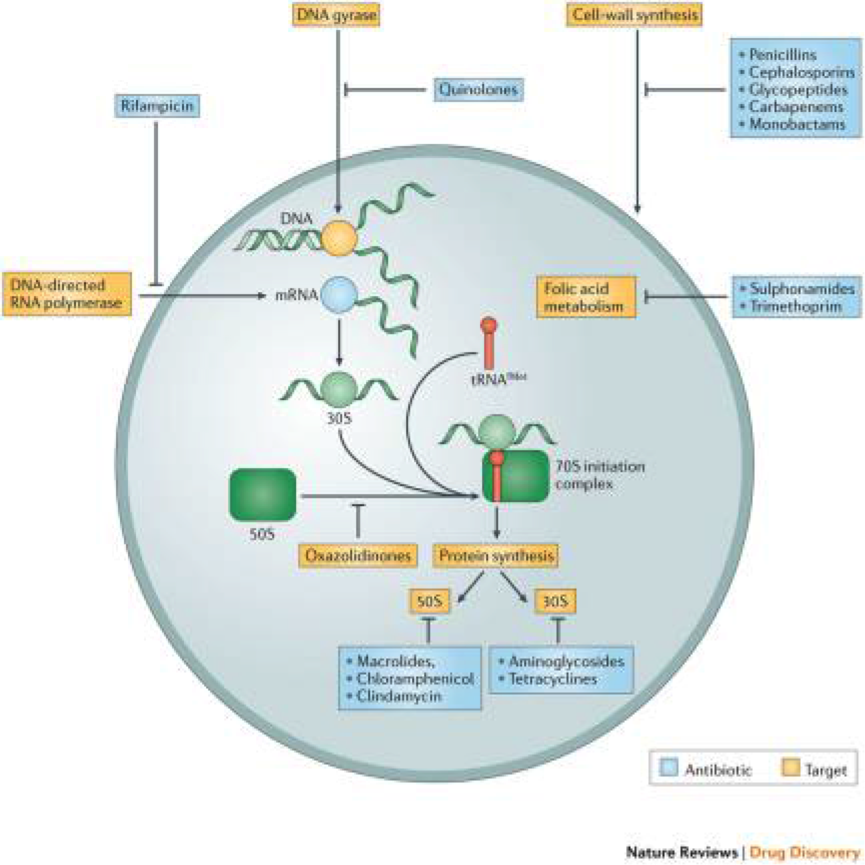
- Inhibitors of peptidoglycan synthesis (tends to affect final step)
- β-lactams: penicillins, cephalosporins
- Glycopeptides: vancomycin
- Cycloserine
- Bacitracin
- Gram +ve vs. -ve
- Gram +ve
- Thick cell wall (50% peptidoglycan)
- No outer membrane
- Gram -ve
- Thin cell wall (5% peptidoglycan)
- An outer membrane (obstructs antibacterial entry)
- Restricted, delayed access to the peptidoglycan - so the drugs are less effective
- Gram +ve
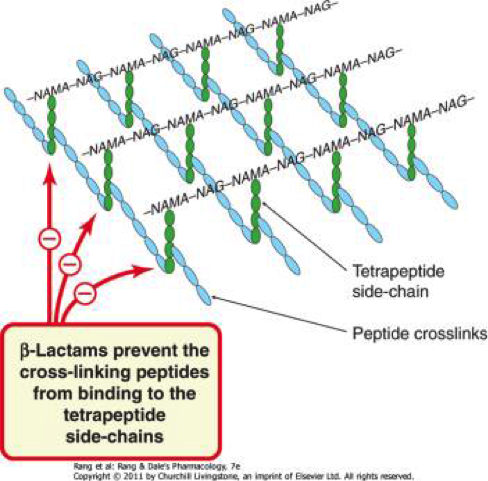
- Peptidoglycan structure
- NAMA = N-acetylmuramic acid
- NAG = N-acetyglucosamine – amino sugars
- Tetrapeptide side chains are comprised of 4 amino acids
- 5 glycine residues link the tetrapeptide side chains
- Peptide cross links are formed between the glycine chains
- Main site of action of penicillins and cephalosporins
- Peptide cross links are formed between the glycine chains
- 5 glycine residues link the tetrapeptide side chains
- Peptidoglycan (aka murein) synthesis
- Biochemical reactions
Adverse reactions and contraindications
- Wide therapeutic ratio
- Mammalian cells lack a cell wall
- Can give high doses with minimal toxic effect
- Mammalian cells lack a cell wall
- Hypersensitivity
- Almost immediate
- Usually mild
- Can be fatal
- Anaphylaxis
- Gastrointestinal superinfection
- Death of susceptible gut flora allows proliferation of non-susceptible bacteria
- Wide therapeutic ratio
Mycobacteria
- TB in cattle not treatable – animals must be destroyed
- Treatment in cats
- A fluoroquinolone (inhibits DNA gyrase)
- + clarithromycin (a macrolide, inhibits protein synthesis)
- + rifampicin (inhibits RNA synthesis)
- Can get in pets (mostly cats)
- Small no. of cases per year
- Arbinosyl transferase – addition of arabinose units
- Fatty acid synthase 1 and 2 – mycolic acid
- Prolonged treatment needed - not easy to kill
Bilder und Dateien der Mindmap
Informationen
- Beschreibung
- BVSc3 AD2 (Antibiotics) Mindmap am Antibiotics 1: Penicillins and Cephalosporins, erstellt von Jess Pope am 23/12/2016.
- Erstellt von
- Jess Pope
- Aufrufe
- 243
- Tags
- Bewertung