
Mindmap
Medieval Medicine
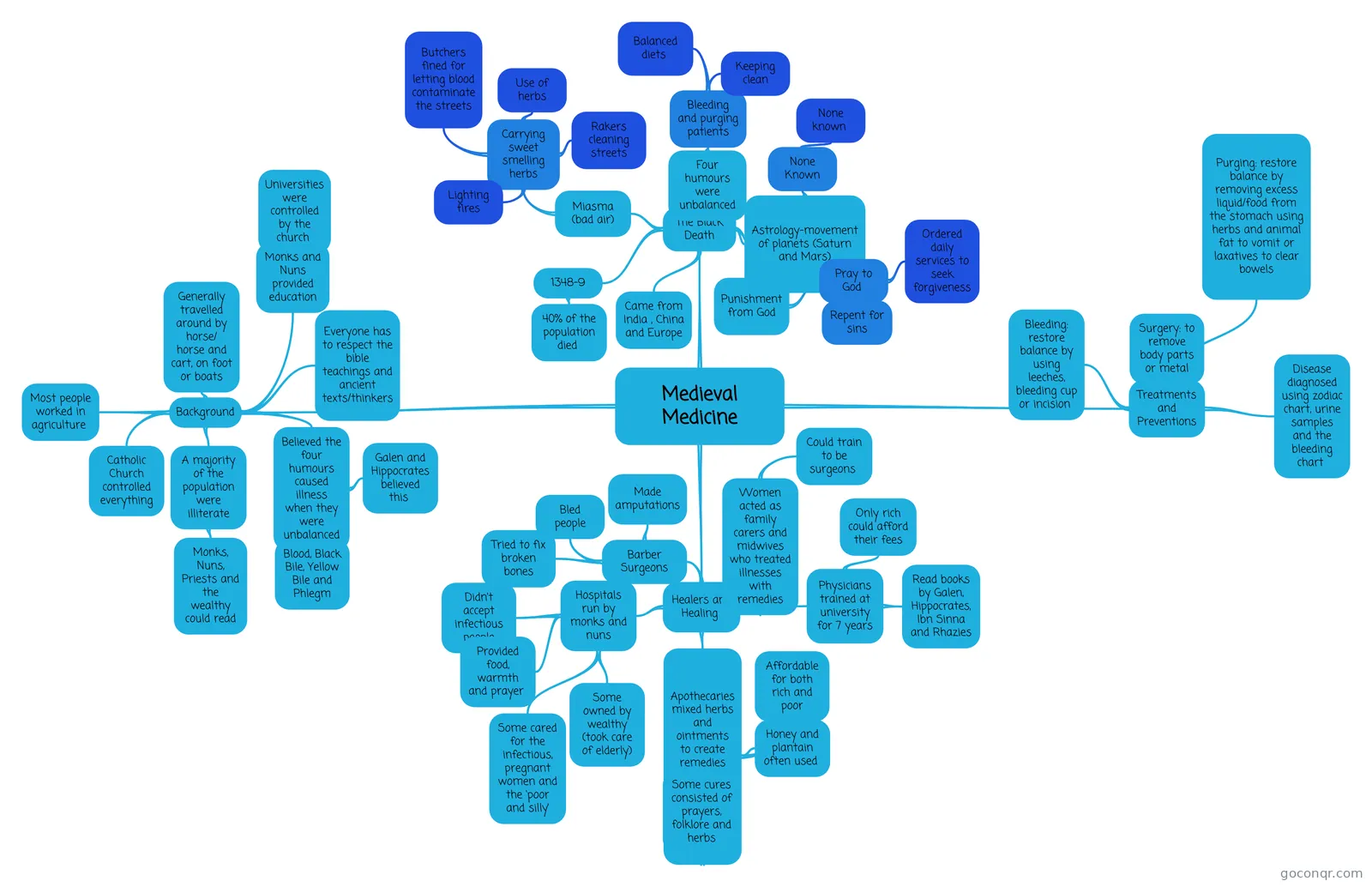
Mind map: Medieval medicine
Inhalt der Mindmap
Medieval Medicine
Background
- Most people worked in agriculture
- Monks and Nuns provided education
- Universities were controlled by the church
- Generally travelled around by horse/ horse and cart, on foot or boats
- Everyone has to respect the bible teachings and ancient texts/thinkers
- Believed the four humours caused illness when they were unbalanced
- Blood, Black Bile, Yellow Bile and Phlegm
- Galen and Hippocrates believed this
- A majority of the population were illiterate
- Monks, Nuns, Priests and the wealthy could read
- Catholic Church controlled everything
The Black Death
- Four humours were unbalanced
- Bleeding and purging patients
- Balanced diets
- Keeping clean
- Bleeding and purging patients
- Astrology-movement of planets (Saturn and Mars)
- None Known
- None known
- None Known
- Miasma (bad air)
- Carrying sweet smelling herbs
- Rakers cleaning streets
- Butchers fined for letting blood contaminate the streets
- Lighting fires
- Use of herbs
- Carrying sweet smelling herbs
- Punishment from God
- Pray to God
- Repent for sins
- Ordered daily services to seek forgiveness
- Pray to God
- 1348-9
- 40% of the population died
- Came from India , China and Europe
- Four humours were unbalanced
Treatments and Preventions
- Bleeding: restore balance by using leeches, bleeding cup or incision
- Surgery: to remove body parts or metal
- Purging: restore balance by removing excess liquid/food from the stomach using herbs and animal fat to vomit or laxatives to clear bowels
- Disease diagnosed using zodiac chart, urine samples and the bleeding chart
Healers and Healing
- Women acted as family carers and midwives who treated illnesses with remedies
- Could train to be surgeons
- Physicians trained at university for 7 years
- Read books by Galen, Hippocrates, Ibn Sinna and Rhazies
- Only rich could afford their fees
- Apothecaries mixed herbs and ointments to create remedies which were sold through the Balds Leechbook
- Affordable for both rich and poor
- Honey and plantain often used
- Some cures consisted of prayers, folklore and herbs
- Barber Surgeons
- Bled people
- Made amputations
- Tried to fix broken bones
- Hospitals run by monks and nuns
- Didn’t accept infectious people
- Provided food, warmth and prayer
- Some owned by wealthy (took care of elderly)
- Some cared for the infectious, pregnant women and the ‘poor and silly’
- Women acted as family carers and midwives who treated illnesses with remedies
Informationen
- Beschreibung
- Basic information and knowledge needed that gives a simple overview on Medieval Medicene
- Erstellt von
- Kaci Estabrook
- Aufrufe
- 19
- Bewertung