
Mindmap
Nutrients and Energy (A2)
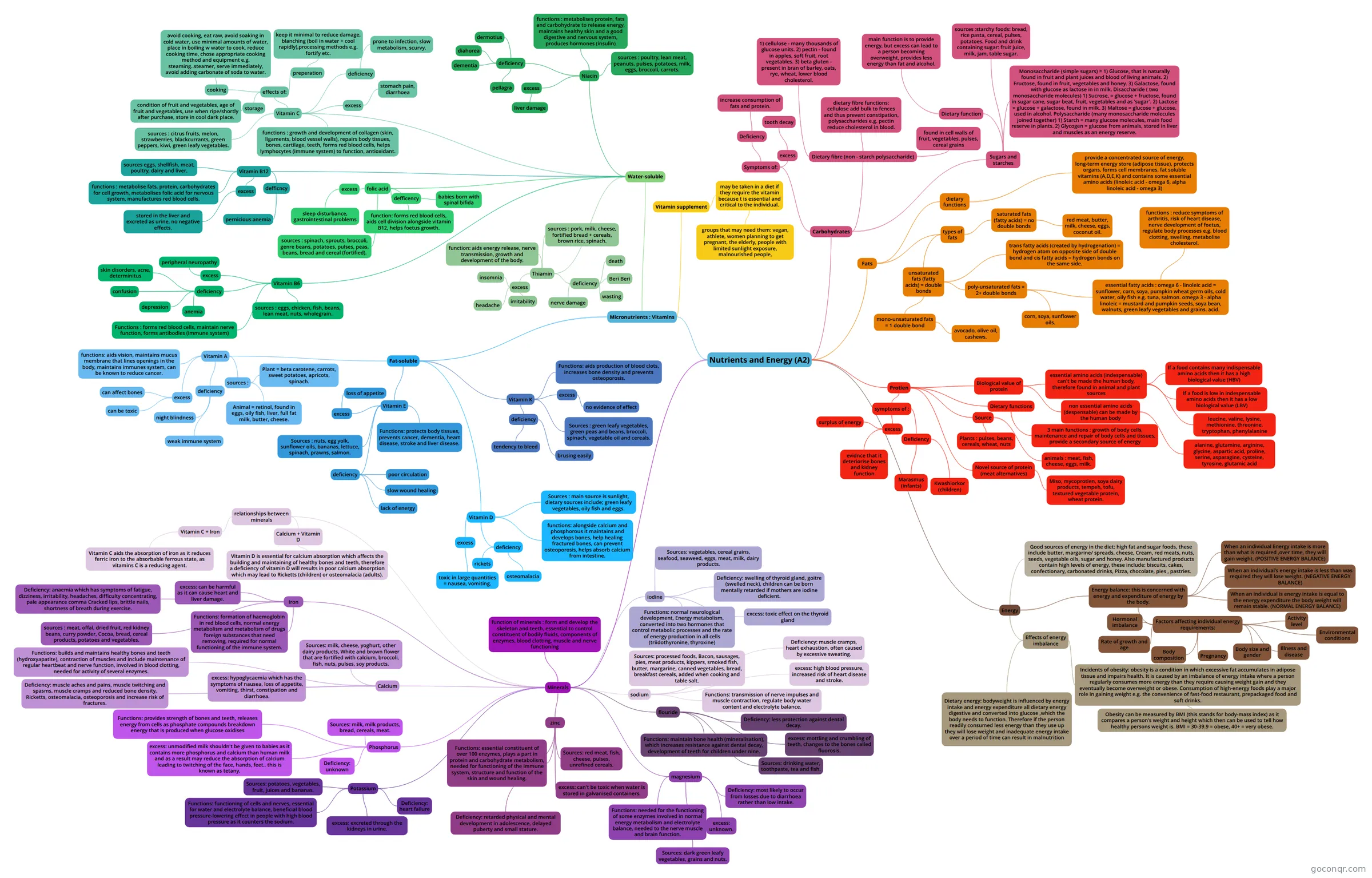
Mind map: nutrients and energy
Inhalt der Mindmap
Nutrients and Energy (A2)
Protien
- Novel source of protein (meat alternatives)
- Miso, mycoprotien, soya dairy products, tempeh, tofu, textured vegetable protein, wheat protein.
- Biological value of protein
- essential amino acids (indespensable) can't be made the human body, therefore found in animal and plant sources
- leucine, valine, lysine, methionine, threonine, tryptophan, phenylalanine
- If a food contains many indispensable amino acids then it has a high biological value (HBV)
- If a food is low in indespensable amino acids then it has a low biological value (LBV)
- non essential amino acids (despensable) can be made by the human body
- alanine, glutamine, arginine, glycine, aspartic acid, proline, serine, asparagine, cysteine, tyrosine, glutamic acid
- essential amino acids (indespensable) can't be made the human body, therefore found in animal and plant sources
- Source
- Plants : pulses, beans, cereals, wheat, nuts
- animals : meat, fish, cheese, eggs, milk.
- Dietary functions
- 3 main functions : growth of body cells, maintenance and repair of body cells and tissues, provide a secondary source of energy
- symptoms of :
- excess
- surplus of energy
- evidnce that it deteriorise bones and kidney function
- Deficiency
- Kwashiorkor (children)
- Marasmus (infants)
- excess
- Novel source of protein (meat alternatives)
Fats
- dietary functions
- provide a concentrated source of energy, long-term energy store (adipose tissue), protects organs, forms cell membranes, fat soluble vitamins (A,D,E,K) and contains some essential amino acids (linoleic acid - omega 6, alpha linoleic acid - omega 3)
- types of fats
- unsaturated fats (fatty acids) = double bonds
- mono-unsaturated fats = 1 double bond
- avocado, olive oil, cashews.
- poly-unsaturated fats = 2+ double bonds
- corn, soya, sunflower oils.
- essential fatty acids : omega 6 - linoleic acid = sunflower, corn, soya, pumpkin wheat germ oils, cold water, oily fish e.g. tuna, salmon. omega 3 - alpha linoleic = mustard and pumpkin seeds, soya bean, walnuts, green leafy vegetables and grains. acid.
- functions : reduce symptoms of arthritis, risk of heart disease, nerve development of foetus, regulate body processes e.g. blood clotting, swelling. metabolise cholesterol.
- trans fatty acids (created by hydrogenation) = hydrogen atom on opposite side of double bond and cis fatty acids = hydrogen bonds on the same side.
- mono-unsaturated fats = 1 double bond
- saturated fats (fatty acids) = no double bonds
- red meat, butter, milk, cheese, eggs, coconut oil.
- unsaturated fats (fatty acids) = double bonds
- dietary functions
Carbohydrates
- Sugars and starches
- Dietary function
- main function is to provide energy, but excess can lead to a person becoming overweight, provides less energy than fat and alcohol.
- Monosaccharide (simple sugars) = 1) Glucose, that is naturally found in fruit and plant juices and blood of living animals. 2) Fructose, found in fruit, vegetables and honey. 3) Galactose, found with glucose as lactose in in milk. Disaccharide ( two monosaccharide molecules) 1) Sucrose, = glucose + fructose, found in sugar cane, sugar beat, fruit, vegetables and as 'sugar'. 2) Lactose = glucose + galactose, found in milk. 3) Maltose = glucose + glucose, used in alcohol. Polysaccharide (many monosaccharide molecules joined together) 1) Starch = many glucose molecules, main food reserve in plants. 2) Glycogen = glucose from animals, stored in liver and muscles as an energy reserve.
- sources :starchy foods: bread, rice pasta, cereal, pulses, potatoes. Food and drink containing sugar: fruit juice, milk, jam, table sugar.
- Dietary function
- Symptoms of:
- excess
- tooth decay
- Deficiency
- increase consumption of fats and protein.
- excess
- Dietary fibre (non - starch polysaccharide)
- 1) cellulose - many thousands of glucose units. 2) pectin - found in apples, soft fruit, root vegetables. 3) beta gluten - present in bran of barley, oats, rye, wheat, lower blood cholesterol.
- found in cell walls of fruit, vegetables, pulses, cereal grains
- dietary fibre functions: cellulose add bulk to fences and thus prevent constipation, polysaccharides e.g. pectin reduce cholesterol in blood.
- Sugars and starches
Micronutrients : Vitamins
- Fat-soluble
- Vitamin A
- sources :
- Plant = beta carotene, carrots, sweet potatoes, apricots, spinach.
- Animal = retinol, found in eggs, oily fish, liver, full fat milk, butter, cheese.
- functions: aids vision, maintains mucus membrane that lines openings in the body, maintains immunes system, can be known to reduce cancer.
- excess
- can affect bones
- can be toxic
- deficiency
- night blindness
- weak immune system
- sources :
- Vitamin D
- functions: alongside calcium and phosphorous it maintains and develops bones, help healing fractured bones, can prevent osteoporosis, helps absorb calcium from intestine.
- Sources : main source is sunlight, dietary sources include; green leafy vegetables, oily fish and eggs.
- excess
- toxic in large quantities = nausea, vomiting.
- deficiency
- rickets
- osteomalacia
- Vitamin E
- Sources : nuts, egg yolk, sunflower oils, bananas, lettuce, spinach, prawns, salmon.
- Functions: protects body tissues, prevents cancer, dementia, heart disease, stroke and liver disease.
- deficiency
- lack of energy
- slow wound healing
- poor circulation
- excess
- loss of appetite
- Vitamin K
- Functions: aids production of blood clots, increases bone density and prevents osteoporosis.
- Sources : green leafy vegetables, green peas and beans, broccoli, spinach, vegetable oil and cereals.
- deficiency
- brusing easily
- tendency to bleed
- excess
- no evidence of effect
- Vitamin A
- Water-soluble
- Thiamin
- sources : pork, milk, cheese, fortified bread + cereals, brown rice, spinach.
- function: aids energy release, nerve transmission, growth and development of the body.
- excess
- headache
- irritability
- insomnia
- deficiency
- nerve damage
- wasting
- death
- Beri Beri
- Niacin
- sources : poultry, lean meat, peanuts, pulses, potatoes, milk, eggs, broccoli, carrots.
- functions : metabolises protein, fats and carbohydrate to release energy, maintains healthy skin and a good digestive and nervous system, produces hormones (insulin)
- deficiency
- pellagra
- dermotius
- dementia
- diahorea
- excess
- liver damage
- Vitamin B6
- sources : eggs, chicken, fish, beans, lean meat, nuts, wholegrain.
- Functions : forms red blood cells, maintain nerve function, forms antibodies (immune system)
- excess
- peripheral neuropathy
- deficiency
- skin disorders, acne, determinitus
- confusion
- depression
- anemia
- Vitamin B12
- sources eggs, shellfish, meat, poultry, dairy and liver.
- functions : metabolise fats, protein, carbohydrates for cell growth, metabolises folic acid for nervous system, manufactures red blood cells.
- excess
- stored in the liver and excreted as urine, no negative effects.
- defficncy
- pernicious anemia
- folic acid
- sources : spinach, sprouts, broccoli, genre beans, potatoes, pulses, peas, beans, bread and cereal (fortified).
- function: forms red blood cells, aids cell division alongside vitamin B12, helps foetus growth.
- excess
- sleep disturbance, gastrointestinal problems
- defficency
- babies born with spinal bifida
- Vitamin C
- sources : citrus fruits, melon, strawberries, blackcurrants, green peppers, kiwi, green leafy vegetables.
- functions : growth and development of collagen (skin, ligaments, blood vessel walls), repairs body tissues, bones, cartilage, teeth, forms red blood cells, helps lymphocytes (immune system) to function, antioxidant.
- excess
- stomach pain, diarrhoea
- deficiency
- prone to infection, slow metabolism, scurvy.
- effects of:
- storage
- condition of fruit and vegetables, age of fruit and vegetables, use when ripe/shortly after purchase, store in cool dark place.
- cooking
- avoid cooking, eat raw, avoid soaking in cold water, use minimal amounts of water, place in boiling w water to cook, reduce cooking time, chose appropriate cooking method and equipment e.g. steaming..steamer, serve immediately, avoid adding carbonate of soda to water.
- preperation
- keep it minimal to reduce damage, blanching (boil in water + cool rapidly),processing methods e.g. fortify etc.
- storage
- Thiamin
- Vitamin supplement
- may be taken in a diet if they require the vitamin because t is essential and critical to the individual.
- groups that may need them: vegan, athlete, women planning to get pregnant, the elderly, people with limited sunlight exposure, malnourished people,
- may be taken in a diet if they require the vitamin because t is essential and critical to the individual.
- Fat-soluble
Minerals
- zinc
- Sources: red meat, fish, cheese, pulses, unrefined cereals.
- Functions: essential constituent of over 100 enzymes, plays a part in protein and carbohydrate metabolism, needed for functioning of the immune system, structure and function of the skin and wound healing.
- Deficiency: retarded physical and mental development in adolescence, delayed puberty and small stature.
- excess: can't be toxic when water is stored in galvanised containers.
- Phosphorus
- Sources: milk, milk products, bread, cereals, meat.
- Functions: provides strength of bones and teeth, releases energy from cells as phosphate compounds breakdown energy that is produced when glucose oxidises
- Deficiency: unknown
- excess: unmodified milk shouldn't be given to babies as it contains more phosphorus and calcium than human milk and as a result may reduce the absorption of calcium leading to twitching of the face, hands, feet.. this is known as tetany.
- Calcium
- Sources: milk, cheese, yoghurt, other dairy products, White and brown flower that are fortified with calcium, broccoli, fish, nuts, pulses, soy products.
- Functions: builds and maintains healthy bones and teeth (hydroxyapatite), contraction of muscles and include maintenance of regular heartbeat and nerve function, involved in blood clotting, needed for activity of several enzymes.
- Deficiency: muscle aches and pains, muscle twitching and spasms, muscle cramps and reduced bone density, Ricketts, osteomalacia, osteoporosis and increase risk of fractures.
- excess: hypoglycaemia which has the symptoms of nausea, loss of appetite, vomiting, thirst, constipation and diarrhoea.
- magnesium
- Sources: dark green leafy vegetables, grains and nuts.
- Functions: needed for the functioning of some enzymes involved in normal energy metabolism and electrolyte balance, needed to the nerve muscle and brain function.
- Deficiency: most likely to occur from losses due to diarrhoea rather than low intake.
- excess: unknown.
- Iron
- sources : meat, offal, dried fruit, red kidney beans, curry powder, Cocoa, bread, cereal products, potatoes and vegetables.
- Functions: formation of haemoglobin in red blood cells, normal energy metabolism and metabolism of drugs foreign substances that need removing, required for normal functioning of the immune system.
- Deficiency: anaemia which has symptoms of fatigue, dizziness, irritability, headaches, difficulty concentrating, pale appearance comma Cracked lips, brittle nails, shortness of breath during exercise.
- excess: can be harmful as it can cause heart and liver damage.
- Potassium
- Functions: functioning of cells and nerves, essential for water and electrolyte balance, beneficial blood pressure-lowering effect in people with high blood pressure as it counters the sodium.
- Sources: potatoes, vegetables, fruit, juices and bananas.
- excess: excreted through the kidneys in urine.
- Deficiency: heart failure
- function of minerals : form and develop the skeleton and teeth, essential to control constituent of bodily fluids, components of enzymes, blood clotting, muscle and nerve functioning
- sodium
- Sources: processed foods, Bacon, sausages, pies, meat products, kippers, smoked fish, butter, margarine, canned vegetables, bread, breakfast cereals, added when cooking and table salt.
- Functions: transmission of nerve impulses and muscle contraction, regulate body water content and electrolyte balance.
- Deficiency: muscle cramps, heart exhaustion, often caused by excessive sweating.
- excess: high blood pressure, increased risk of heart disease and stroke.
- flouride
- Sources: drinking water, toothpaste, tea and fish.
- Functions: maintain bone health (mineralisation), which increases resistance against dental decay, development of teeth for children under nine.
- Deficiency: less protection against dental decay.
- excess: mottling and crumbling of teeth, changes to the bones called fluorosis.
- iodine
- Sources: vegetables, cereal grains, seafood, seaweed, eggs, meat, milk, dairy products.
- Functions: normal neurological development, Energy metabolism, converted into two hormones that control metabolic processes and the rate of energy production in all cells (triidothyronine, thyroxine)
- excess: toxic effect on the thyroid gland
- Deficiency: swelling of thyroid gland, goitre (swelled neck), children can be born mentally retarded if mothers are iodine deficient.
- relationships between minerals
- Vitamin C + Iron
- Vitamin C aids the absorption of iron as it reduces ferric iron to the absorbable ferrous state, as vitamins C is a reducing agent.
- Calcium + Vitamin D
- Vitamin D is essential for calcium absorption which affects the building and maintaining of healthy bones and teeth, therefore a deficiency of vitamin D will results in poor calcium absorption which may lead to Ricketts (children) or osteomalacia (adults).
- Vitamin C + Iron
- zinc
Energy
- Energy balance: this is concerned with energy and expenditure of energy by the body.
- When an individual is energy intake is equal to the energy expenditure the body weight will remain stable. (NORMAL ENERGY BALANCE)
- When an individual Energy intake is more than what is required ,over time, they will gain weight. (POSITIVE ENERGY BALANCE)
- When an individual's energy intake is less than was required they will lose weight. (NEGATIVE ENERGY BALANCE)
- Factors affecting individual energy requirements:
- Rate of growth and age
- Body size and gender
- Activity level
- Pregnancy
- Illness and disease
- Body composition
- Hormonal imbalance
- Environmental conditions
- Effects of energy imbalance
- Dietary energy: bodyweight is influenced by energy intake and energy expenditure all dietary energy digestive and converted into glucose ,which the body needs to function. Therefore if the person readily consumed less energy than they use up they will lose weight and inadequate energy intake over a period of time can result in malnutrition
- Incidents of obesity: obesity is a condition in which excessive fat accumulates in adipose tissue and impairs health. It is caused by an imbalance of energy intake where a person regularly consumes more energy than they require causing weight gain and they eventually become overweight or obese. Consumption of high-energy foods play a major role in gaining weight e.g. the convenience of fast-food restaurant, prepackaged food and soft drinks.
- Obesity can be measured by BMI (this stands for body-mass index) as it compares a person's weight and height which then can be used to tell how healthy persons weight is. BMI = 30-39.9 = obese, 40+ = very obese.
- Good sources of energy in the diet: high fat and sugar foods, these include butter, margarine/ spreads, cheese, Cream, red meats, nuts, seeds, vegetable oils, sugar and honey. Also manufactured products contain high levels of energy, these include: biscuits, cakes, confectionary, carbonated drinks, Pizza, chocolate, pies , pastries.
- Energy balance: this is concerned with energy and expenditure of energy by the body.
Informationen
- Beschreibung
- Food technology Mindmap am Nutrients and Energy (A2), erstellt von Ellie May am 22/06/2017.
- Erstellt von
- Ellie May
- Aufrufe
- 1
- Bewertung
Mehr zu Energy Balance and Weight Management