
The expansion of the British Empire in Africa; the Suez Canal and Egypt
Folien in diesem Satz (7)
-
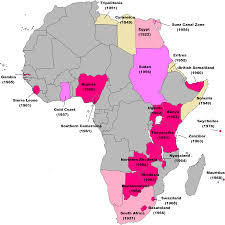
- Bildunterschrift: British Expansion in Africa
- This was called the 'Swing to the East'.
- There were many reasons for British expansion into Africa, including:
- Trade & Economy
- Personal Influence
- Strategic Factors
- Moral Factors
- Adventure & Exploration
-
Reasons for Expansion in Africa
- All of the reasons given for expansion in Africa on the previous slide are explained in more detail on the attached mind map:
- Reasons for Expansion
-
- From 1857 - 1890, GB was more reactive to other powers.
- They tried to match the claims of other countries.
- Companies were chartered so that Europeans couldn't be involved with lucrative British bases.
- Only in Egypt was there any direct intervention.
-
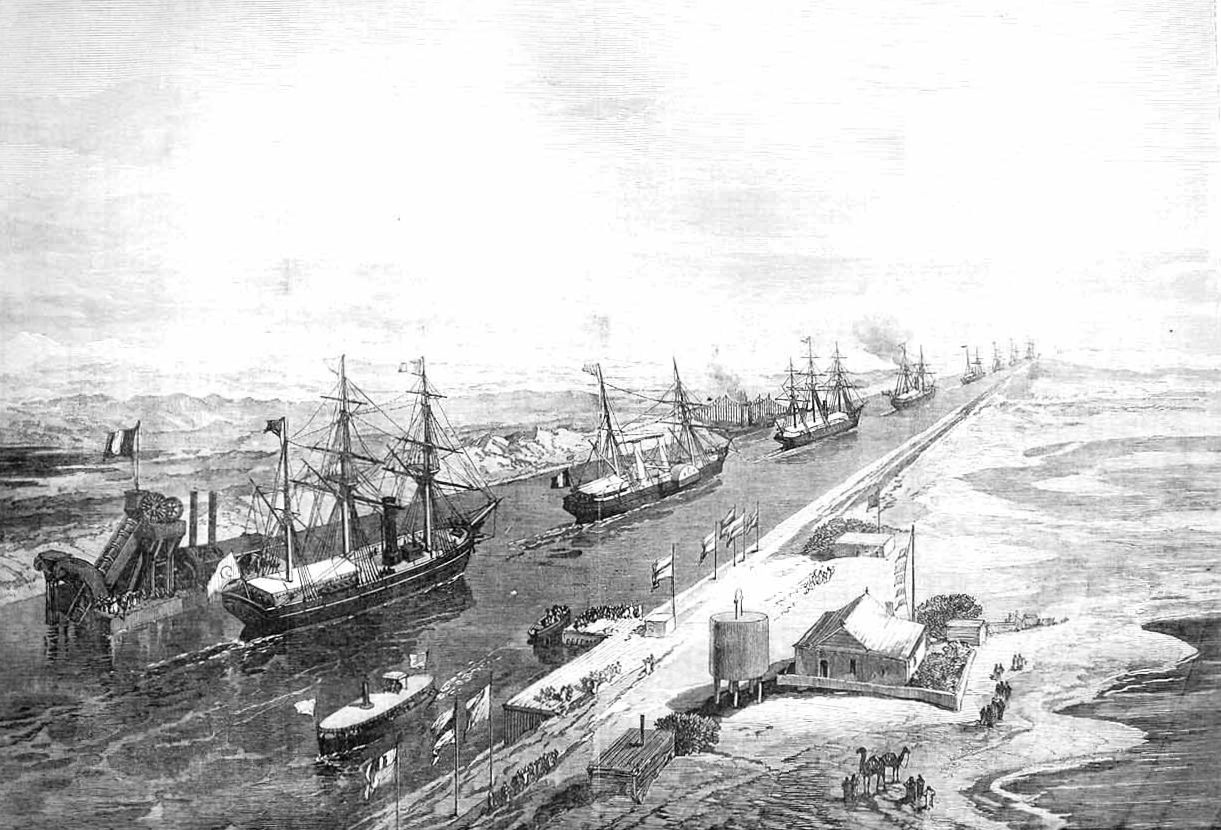
- Bildunterschrift: Suez Canal Opening
- Intervention here started during the American Civil War (1861 - 1865), as GB mills were starved of raw cotton.
- GB companies invested in the production of Egyptian cotton and Isma'il Pasha's modernisation programme.
- By the 1870's, 40% of Egypt's imports came from GB
- Isma'il Pasha started irrigation, railways, schools, street lighting and the Suez Canal projects.
- The Suez Canal connected the Mediterranean to the Red Sea.
- It helped with trade to India and China - the route to India was 6,000 miles shorter than that via. the Cape.
-
- 1854 - 1856: Ferdinand de Lesseps got a concession from Egypt to set up the Suez Canal Company in 1858.
- They ran the canal for 99 years (from 1869)
- GB didn't buy shares at first, as they thought it would be unsuitable for large ships.
- The canal reduced the profits of GB traders in the Cape.
- 1875: Isma'il faced increasing debts and wanted a buyer for Egypt's shares in the canal for $4 million.
- Benjamin Disraeli (GB Prime Minister) bought them without parliamentary consent.
- This gave GB more control over the passage to India and income from shipping tariffs.
-
Establishing Control in Egypt:
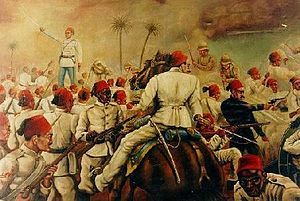
- Bildunterschrift: Arabi Pasha's Revolt
- Isma'il was deposed in 1879 because of domestic and Anglo-French pressure.
- Tewfiq was installed as Khedive and GB money helped Egypt - taxes were imposed and the army was reduced by 2/3.
- This increased unemployment and led to a nationalist rebellion by Colonel Arabi Pasha.
- June 1882: Violence led to the deaths of 50 Europeans.
- William Gladstone (GB Prime minister at the time) intervened, and Sir Garnet Wolseley secured the Suez Canal.
- He defeated Arabi's forces at Tel-el-Kebir before Tewfiq was restored as puppet ruler.
- Evelyn Baring installed as consul-general.
- GB influence confirmed by the 1885 Convention of London - securing an international loan for Egyptian government.
-
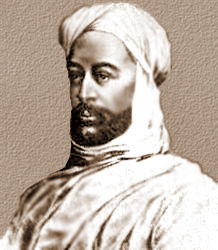
- Bildunterschrift: Muhammad Ahmad
- Colonel Charles Gordon was sent as Governor-General to Sudan From 1877 - 1880.
- Opposed by Muhammad Ahmad who proclaimed himself the 'Mahdi' in June 1881.
- He changed a political movement to a jihadist army to liberate Sudan from external rule.
- By 1882, they had control over the area around Khartoum.
- 1883: A counter-attack was launched, but Gladstone ordered the removal of forces from Khartoum in 1884.
- They were overrun in January 1885, but Gladstone didn't intervene further.
Informationen
- Beschreibung
- UK AQA A-Level History content used
- Erstellt von
- Leona Deyaa · Mai 2017
- Aktualisiert
- 5 Mai 2017
- Aufrufe
- 548
- Bewertung