
Flashcards
Exam 1
Cards in this deck (146)
- 1What is the emergency phone number?4444
- 2Order of PPE1. Gown
2. Glasses
3. Mask
4. Gloves - 3When do you have to wash your hands?-After using bathroom
- Before eating
- Before and after degloving
- Dry hands completely - 4Rules of oral surgeryDon't lock your knees
Don't touch anything with your gloves
Keep your hands above the waist - 5What position is patient in?semi-supine
- 6Usual sequence for positioningOperator
Patient
Light
Assistant - 7How to establish your preferred position1. Sit in operator's chair with seat angled forward
2. Close eyes
3. Relax muscles
4. Sit in free space not leaning on backrest
5. Adjust height of the stool so thighs are slightly downhill
6. move upperbody to comfortable position
7. Move head to comfortable position
8. Bring thumbs and index fingers together
9. Open eyes and remember! - 8Where should your patient be?Mouth should be at heart height in mid-saggital plane
- 9When do you not want wide open mouth?When looking at buccal surfaces of posterior teeth
- 10How should assistant's chairs be positioned?- 2-6" above dentist's chair
- Find a place to rest your forearm
- work area should be below the elbow
- Instruments should be close at hand - 11What are some features of an assistant chair?- Taller than dentist's chair
- Foot ring
- Abdominal support
- Seat up-down adjustment - 12What are the zones of operation?Static (12-2; instrument cart, etc.)
Assistant (2-4)
Transfer (4-7)
Operator (7-12)
***reverse this for L-handed operator - 13Causes of MSD in dentistryPosture (leaning)
Bending and twisting
Repetitive motion
Equipment (vibration, ill-fitting gloves) - 14How can we prevent MSD?Magnification
Position the patient correctly (forearms parallel to the floor)
Position yourself correctly
Stretch breaks
Aerobic exercise
Instruments with cushioned grip and large handle
Wrist support - 15Where do women get MSD most often? Men?Women: shoulder and neck
Men: mid to lower back - 16Where do you exchange instruments?Only in the transfer zone!
- 17How do you position the working end of the instrument correctly?Maxillary: UP
Mandibular: DOWN - 18Where do you put anesthetic syringes?Have them ready to go but hidden from view
Usually under patient napkin - 19Steps of syringe assembly1. Insert carpule into syringe
2. Remove clear plastic needle cover
3. Twist plastic needle onto syringe
4. Engage plunger (hold syringe firmly, plunger up, and use palm of other hand to deliver a single sharp tap) - 20Which fingers do you use as fulcrums?3rd and 4th fingers
- 21What does high-speed evacuation do?Removes spray coolant from the high-speed handpiece
- 22Oral evacuation tip placementPosition after operator positions handpiece
Avoid bumping the teeth, lips, or gingiva
Rest on tooth distal to target tooth
Bevel of tip should be parallel to the buccal or lingual surface
Middle of tip should be even with the occlusal surface
Far enough from handpiece that it doesn't draw off water spray - 23#17 (Cowhorn) explorer
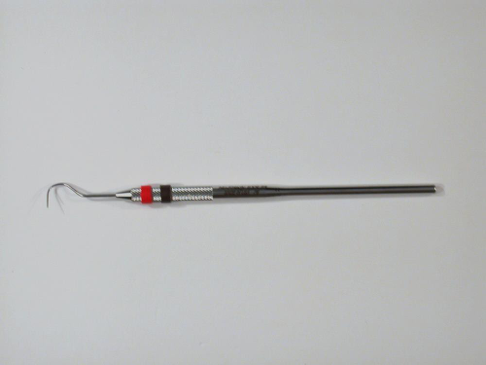
- 24EXT 11-12 explorer ("pigtail")
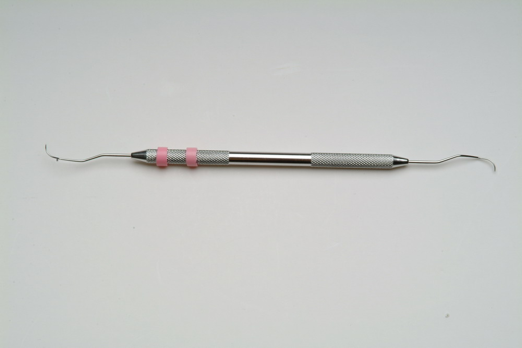
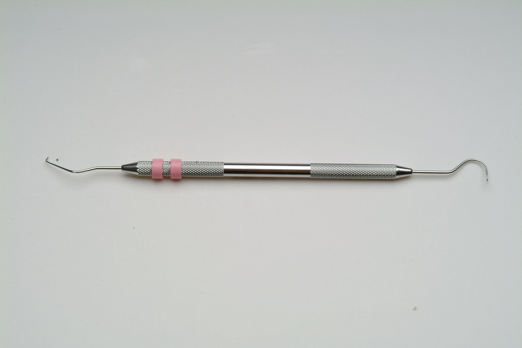
- 25DE #17 explorer/calculus detection
- 26—Svedopter
Saliva ejector + tongue guard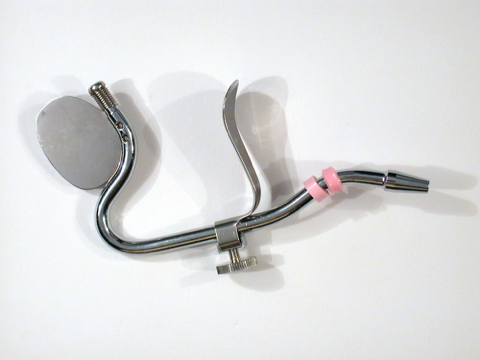
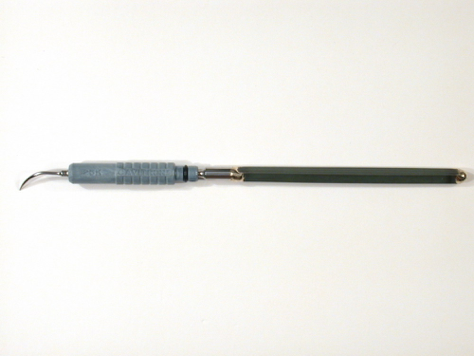
- 27—Cavitron tip
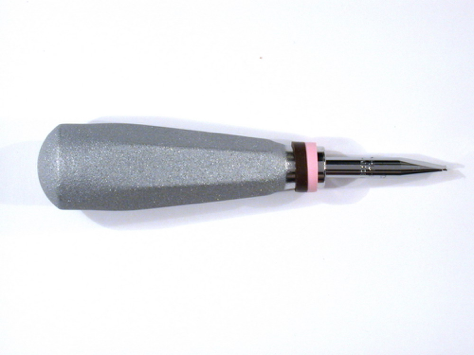
- 28—Elevator (oral surgery)
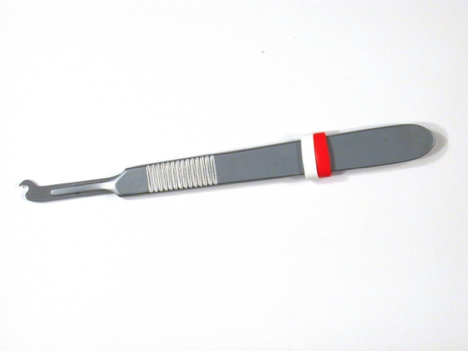
- 29—Bard-Parker (scalpel) handle
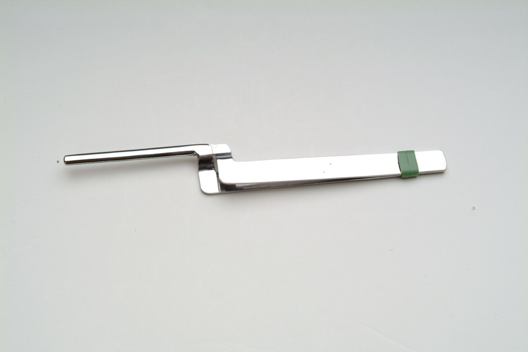
- 30—Articulating paper holder
- 31—Cement spatula
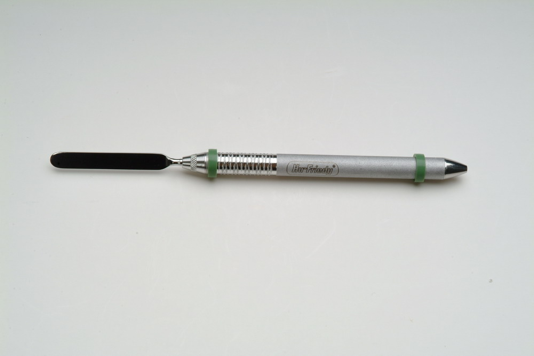
- 32—Plastic instrument
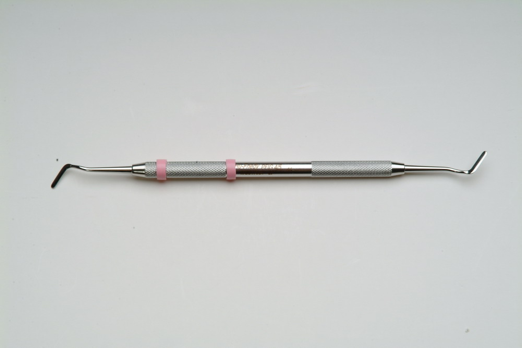
- 33—Round burs
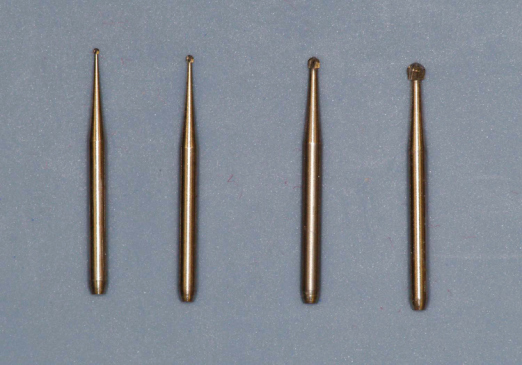
- 34—Inverted cone burs
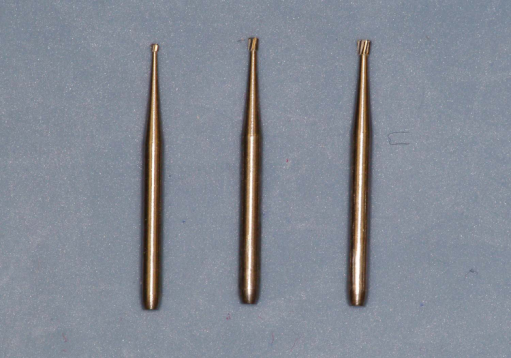
- 35—Straight fissure burs
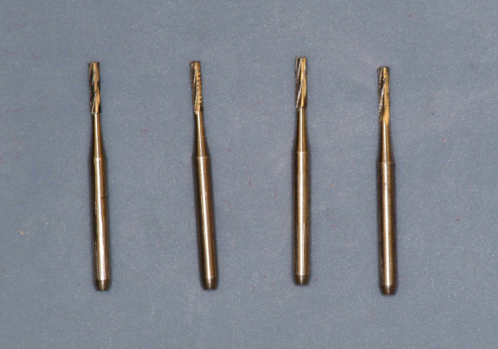
- 36—Finishing and tapered fissure burs
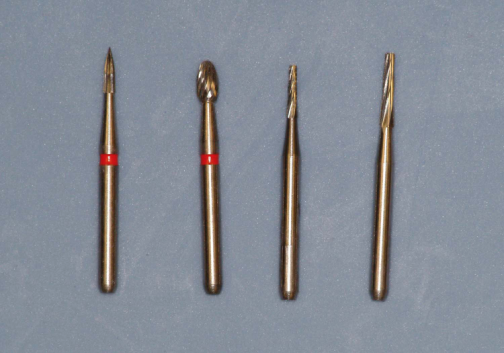
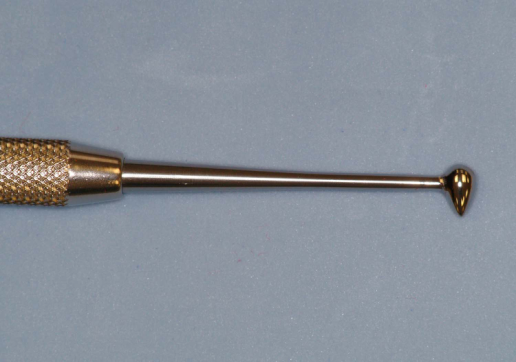
- 37—Small spoon excavator
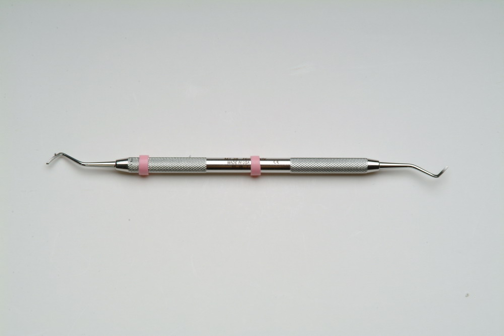
- 38—Large spoon excavator
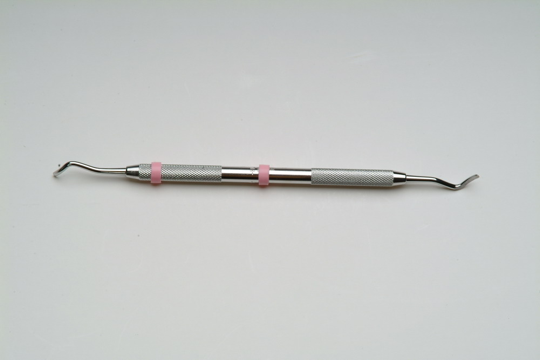
- 39—matrix bands
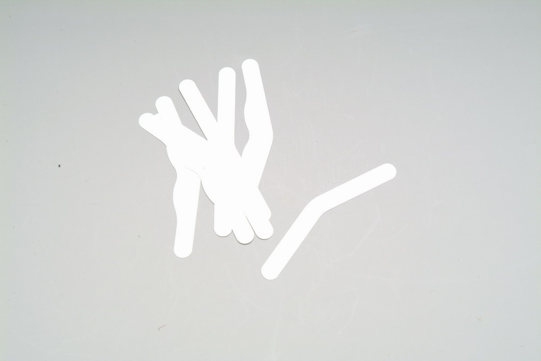
- 40—Amalgam capsules
Double (blue)
Single (green)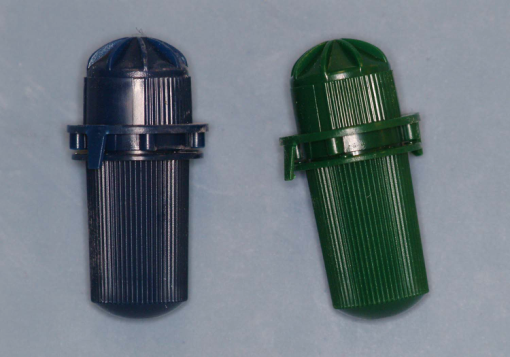
- 41—amalgam carrier
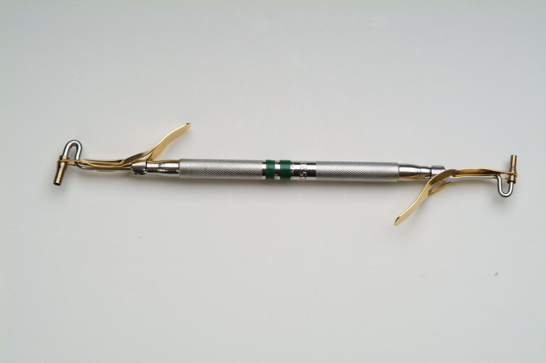
- 42—small amalgam carrier
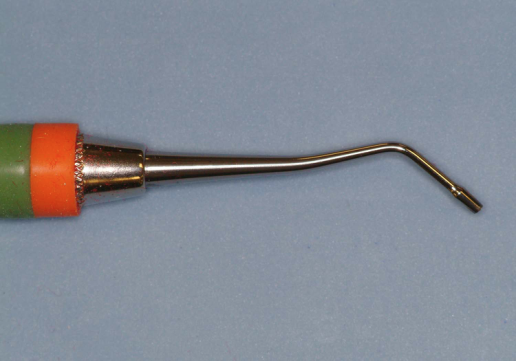
- 43—large amalgam carrier
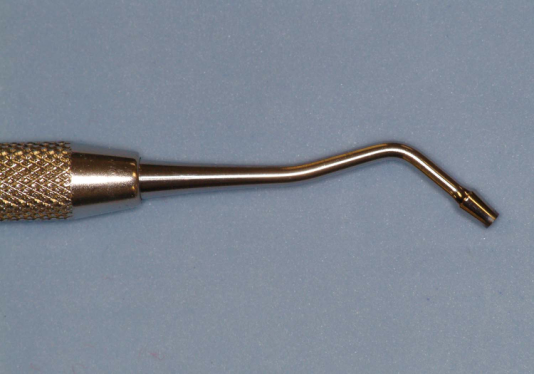
- 44—Discoid/Cleoid carver
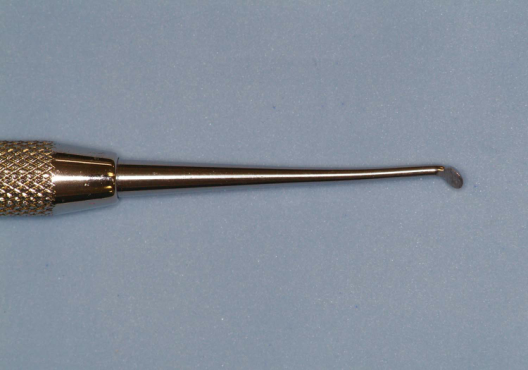
- 45—Hollenbeck carver
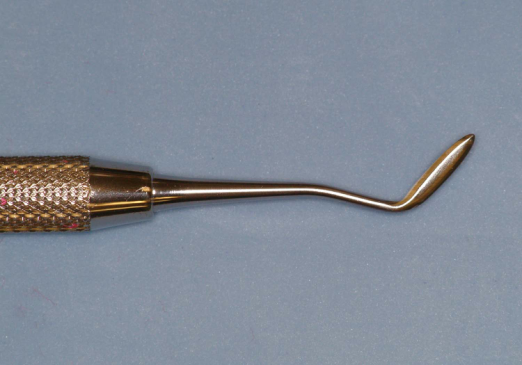
- 46—Ball burnisher
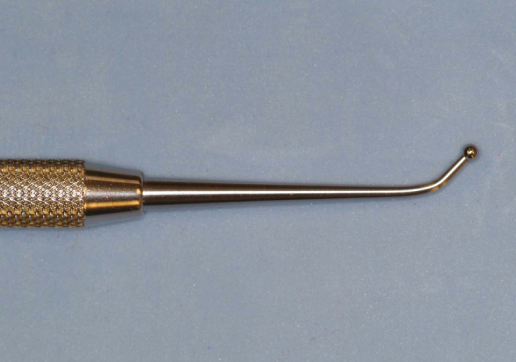
- 47—Appleseed burnisher
- 48Average oral temperature98.2
- 49When are the lowest and highest times of body temperature?Lowest at 6AM and highest 4-6PM
- 50UMKC SOD normal temperature97-99 degrees
- 51How to convert from axillary/rectal temperatureAxillary = oral - 1
Rectal = oral + 1 - 52How do you measure oral temperature?Under tongue, as far back as comfortable
20 minutes since patient had anything to eat or drink
Wait for the beep - 53Where do we measure pulse?Radial, brachial, and carotid
Take for 20s and multiply by 3 - 54What is normal pulse?60-90 bpm
Kids higher, athletes lower - 55What is arrhythmia?Irregular heart rhythm
- 56What is fremitus?Vibration accompanying a heart murmur
- 57What is thrill?Turbulence so marked that it is palpable
- 58What is PMI?Point of maximal impulse
- 59What is water-hammer pulse?Forcible impulse but immediate collapse
aortic incompetency - 60What causes "squeaky shoe" sound in heart?Pericarditis
- 61What is "gallops" in heart?Triple cadence at beats >100
Due to abnormal 3rd or 4th heart sound
Usually indicates serious disease - 62What is bruit?An abnormal auscultatory sound
- 63What is carotid bruit?Systolic murmur heard at the root of the neck but not at the aortic area OR any bruit produced by blood flow in the carotid artery
- 64What is normal breaths per minute?12-20 bpm
- 65What is bradypnea? Tachypnea?slow breathing (B)
fast breathing (T) - 66What is apneustic breathing?post-inspiratory pause
ABNORMAL - 67What is the antecubital fossa?triangular area on anterior view of elbow
- 68What exceptions are there for where we take blood pressure readings?Wound, scar, or bandage
Lymphedema from mastectomy - 69How long should you wait before retaking BP?>2 minutes
or confirm on other arm - 70What is a normal BP reading?Systolic 100-140
Diastolic 60-90 - 71What is hypotension?Generally <90/<60
Notify patient
Sit them up slowly to prevent orthostatic hypotension (?) - 72What is hypertension?140/90 - 160/100: med consult
160/100 - 180/110: no surgical procedures
>180/110: emergency treatment only
Notify patient and faculty in any case - 73Common mistakes when taking blood pressureRushing
Cuff size
Cuff fit
Arm not at heart level or not supported - 74Hypertension patient factorsStress (increases BP by 6-12 but goes away after 5-10 minutes)
Distended bowel or bladder
Hypertension and drugs
Caffeine (if not a habitual drinker)
Tobacco (lasts for 30 minutes)
Cocaine
Amphetamines
Meth - 75Fire extinguisher locationsDispensary
CSR
Fire hoses
Special Patient Care (2)
Second floor labs
Library (2)
Oral surgery (2) - 76First aid kit locations1st floor lab
2nd floor labs (both sides) - 77Exposure Control Plan (OSHA)Must be accessible to all employees
Must be reviewed or updated annually when:
- You change procedures
- You have new classes of employees that are exposed
- Relevant technology changes
Document annual consideration and implementation of new safer devices - 78What is on a Safety Data Sheet?Properties of each chemical
The physical, health, and environmental health hazards
Protective measures
Safety precautions for handling, storing, and transporting the chemical - 79What are Safety Data Sheets meant for?Employees who may be occupationally exposed at work
Employees who need to know the proper methods for storage etc.
Emergency responders such as fire fighters, hazardous material crews, EMTs, and emergency room personnel - 80Safety Data Sheet locationsDispensary
All labs - 81Safety Data Sheet diamond risk label scale0-4 (4 most severe)
Blue = health hazard
Red = fire hazard
Yellow = reactivity hazard
White = other hazards - 82RE-READ AMALGAM SAFETY DO'S AND DONT'S:)
- 83What are the amalgam categories?Non-contact amalgam (scrap) is excess mix leftover at the end of a dental procedure
Contact amalgam has been in contact with the patient
- Includes extracted teeth with amalgam restoration, carving scrap collected at chairside, and amalgam captured by chair side traps, filters, or screens (amalgam "sludge") - 84What is syncope?Fainting
- 85What are the signs and treatment of fainting?Pale, cold, clammy skin, dizziness
Recline the patient, adjust headrest, ensure an open airway, loosen tight clothing, check pulse, apply cold damp towel to forehead, administer oxygen (only if necessary) - 86How do you open the main tank valve of an oxygen tank?R = tight
L = loose - 87What should the oxygen tank flow be?6-8 liters/min
average adult - 88What should pressure of oxygen tank be?>500 lbs
if less than that, take tank to dispensary for replacement - 89What should you do if patient is bleeding?Apply pressure with sterile gauze, instruct patient to bite on it, and wait 5-10 min
If gauze is saturated, apply new gauze
Continue this procedure for at least 30 minutes or until bleeding stops - 90What do you call during medical emergency?4444 during business hours
1515 after hours (816-235-1515)
911 outside building and on weekends - 91What is considered Regulated Medical Waste? Where does it go?Gauze saturated with blood after surgery
Extracted teeth
Surgically removed hard or soft tissues
Contaminated sharp items
Needles
Scalpel blades
Wires
Go into a small red bio-bag and brought to the CSR for disposal - 92What do you do with Instrument Cassettes during breakdown?Keep gloves on, put instruments back into cassette, put cassette into headrest bag, and take back to CSR
Afterward, take off gloves - 93Where does the amalgam scrap and capsule go?into amalgam scrap container
- 94What things go into the sharps container?Needles, scalpel blades, burs, carpules (glass)
- 95What do you need to flush water through at the beginning of the day?20-30 seconds each
handpiece, air/water syringe, and ultrasonic scaler - 96What all do you need to do to get a cubicle ready?Clean and disinfect the non-wrapped surfaces
Plastic-wrap the keyboard, delivery tray, chair controls, and light
Put mouse in headrest bag - 97What are gluteraldehydes?6-10 hours immersion required
20-30 minutes for disinfection
may corrode instruments
is toxic and irritating
Instruments must be rinsed afterwards
Must store in sterile container - 98What is spore testing?AKA biologic monitoring
Non-pathologic spores on paper strips, vial sterilized in autoclave, and then sent to lab for analysis
If spores killed: sterilizer working
Recommended to do once per week - 99When are handpieces activated?Handpieces are activated when they are lifted. A switch in the holder will turn on the fiber optic in the 1st handpiece ONLY and air in 2nd and air in the 3rd. REMEMBER THIS
- 100What is the focal length of the light?~30 inches
- 101What is a class 5 integrator?A thing in every cassette and pouch sterilized that tells whether the sterilization cycle has reached time, temperature, and presence of steam.
Does not replace weekly spore testing
Look to see if dark bar has reached the "safe" area - 102What is a chemiclave?Steam under pressure with chemical vapor (often formaldehyde)
Shorter cycle, but hazardous chemical vapor - 103What is dry heat?320 degrees for 2 hr or 338 degrees for 1 hr
doesn't dull cutting edges or rust, but long cycle and handpieces won't tolerate
Poor penetration - 104What are flash sterilizers?Use steam (273 degrees/30 psi for 3-10 min)
Not intended to be used as sole or primary method of sterilization
UMKC doesn't have these - 105What are autoclaves?Steam under pressure (250 degrees @ 15psi for 20 min)
Most common (UMKC only has these)
Dulls cutting edges and rusts (only disadvantages) - 106What is in a Basic Oral Exam tray?Mirror, explorer (double-ended), periodontal probe, air/water syringe tip
- 107What is the Instrument Management System?Most instruments in tray sets based on procedures
Metal cassettes - 108Why don't you have patient close lips around saliva ejector?Encourages backflow even though we have anti-retraction valves
- 109How much more effective are ultrasonic cleaners than hand scrubbing?16x
- 110What happens if UMKC has a boil-water advisory?Stop using units, flush lines for 1-5 minutes, and disinfect waterlines
- 111How is surgical water sterile?Bypasses the dental unit and tubing is sterilized
- 112What are options for treating waterlines?Antiretraction valves, coated tubing, separate waterlines, filtration, and ozination
- 113What CFU should water be at?<500
- 114What is biofilm?Slime layer formed by bacteria as a nutrient source and source of protection
Dental units = small lumens
Laminar flow near biofilm is nearly zero, but negligible disruption with flushing - 115What should we do with extracted teeth?Dispose in medical waste container
If given to lab, intermediate level disinfect
If given to patient, no regulations
Use in preclinical lab: cleaned, put in container with 1/3 bleach, 1/3 water, 1/3 g with biohazard label
Autoclave if no amalgam, formalin for 2 wks if amalgam - 116Where are the eyewash stations?Dispensary, CSR, Team 1, and first floor lab
- 117What is the needlestick protocol?1. Wash with soap and water
2. Contact: Dana Linville, Dr. Wells, Valorie Moore-Porter, or Jennifer Smith
3. Fill out Incident Report form
4. During normal hours, go to TMC's Occupational Health Dept
5. After hours, call TMC's ER department, ask to speak to the charge nurse - 118What do you do if you test HIV+?Report it to Assoc. Dean of Clinical Affairs (Dr. Linda Wells)
- 119There are work restrictions if you are actively infected with...Diphteria, Hep A (until 7 days after jaundice), Hep B (until HBV antigen negative), Measles (until 7 days after rash), Mumps, Pertussis, Rubella, Varicella, or Meningococcus (until 1 day after you start meds)
- 120How long can Zika virus survive on surfaces?up to 8 hrs
- 121If a patient has TB...Use respiratory protection, adequate ventilation, and patient isolation
Postpone non-emergent procedures - 122Average risk of virus transmission after needlestickHep B: 1-31%
Hep C: 0-7%
HIV: 0.3-0.5% - 123What is the HIV postexposure protocol?Needlestick: soap and water
Mucosal splash: water
Antiseptic: no evidence for or against (don't use bleach)
Report and fill out paperwork promptly
Antiretroviral drugs - 124Risk of HIV transmissionSingle needlestick = 0.3-0.5% risk
Mucous membrane exposure: 0.1% risk
Intact skin exposure: <<0.1% risk - 125Why is HIV transmission so rare?Dies in seconds on exposure to air
- 126What is Hepatitis D?Only occurs with HBV (4% of HBV+ people)
Causes higher rate of mortality (makes HBV more dangerous) - 127What is Hepatitis C?Not transmitted efficiently by occupational blood exposure
Usually by needlesticks - 128What is Hepatitis B?Survives for up to 1 week on a surface
10% chronic carriers
1% infected
Vaccine available - 129What type of blood-borne pathogen transmission is most likely?Patient --> DHCP
- 130What is allergic contact dermatitis?Type IV delayed hypersensitivity
May result from allergy to chemicals used in glove manufacturing - 131How can we minimize latex allergy issues?Dry hands completely before donning gloves, use only latex-free and powder-free
- 132What is contact dermatitis?Irritant contact dermatitis
NOT an allergy
Dry, itchy, irritated areas - 133What is Type I hypersensitivity?Reaction to natural rubber latex proteins
"True allergy"
Reactions can be serious and may include nose, eye, and skin reactions plus respiratory distress - 134Which hand cleaning agent is most effective?Alcohol rub
Hands have to be generally clean first! - 135When to wash hands? How long?15 SECONDS
When you wake up, before and after gloves, after bathroom, after petting animals, before eating, and between patients - 136How efficient are masks?95% filtration efficiency for bugs >3 microns
- 137When do you have to change your mask?When changing patients, a mask becomes damaged or damp, and every hour if heavy aerosol
- 138Where can you find face shields?Available in CSR and oral surgery
Don't have to use!
Have to use with mask and clean b/w patients - 139When do you have to wear a mask?Always when in cubicles when working inside the mouth or using an aerosol-generating instrument
- 140What things are CDC guidelines concerned with?Blood, secretions, saliva, excretions (except sweat), non-intact skin (wounds), mucous membrane exposure (oral and nasal)
- 141What is considered under OSHA regulated waste?Blood or OPIM in liquid or semi-liquid state, items caked with dried blood or OPIM that may release it, contaminated sharps, and pathological or microbiologic waste that contains blood or OPIM
- 142What is OPIM?Other Potentially Infectious Material
Includes: semen, vaginal secretions, CSF, synovial fluid, pleural fluid, peritoneal fluid, amniotic fluid, saliva, any body fluid contaminated with blood, all body fluids if you can't differentiate b/w them, any unfixed human tissue or organ - 143What are work practice controls?Procedures that reduce the likelihood of exposure to infectious materials by altering the manner in which a task is performed
Examples: recapping a needle using one-handed scoop - 144What are engineering controls?Devices that isolate or remove the risk of exposure to bloodborne pathogens in a workplace
Examples: use of cassettes, sharps containers - 145What are administrative controls?The policies, procedures, and enforcement measures targeted at reducing the risk of occupational exposure to infectious persons
Example: postponing non-emergency treatment of patients having active TB - 146What is OSHA?Occupational Safety & Health Administration
Federal or State run program with force of law behind it designed to protect employees
Information
- Description
- Patient Care Flashcards on Exam 1, created by Brianne Schmiegelow on 01/09/2017.
- Created by
- Brianne Schmiegelow
- Views
- 55
- Tags
- Rating