
Flashcards
Ionic bonding
Cards in this deck (5)
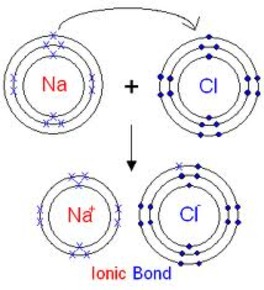
- 1Ionic bondingIn ionic bonding, atoms lose or gain electrons to form charged particles (or ions) which are then strongly attracted to one another (because of the attraction of opposite charges, + and -)
- 2Shells with one electronAll the atoms on the left hand side of the periodic table (sodium, magnesium etc.) have just one or two electrons in their outer shell. They're keen to lose them so that they'll only have full shells left. They get rid of them leaving the atom as a positive ion. Ions are very reactive and will leap at the first passing ion with an opposite charge and stick to it.
- 3Shells that are nearly fullIn groups 6 or 7, elements like oxygen and chlorine have outer shells that are nearly full. They want to gain that extra one or two electrons so they have a full outer shell. When they do they become negative ions and then they latch on to the ion that gave up the electron a moment earlier.
- 4Example of nearly full shells gaining extra electron and forming an ionic bond
- 5Giant ionic lattices1) ionic bonds form between metals and non metals and always produce giant ionic structures. 2) the ions form a closely packed regular lattice arrangement. the ions are not free to move though, so these compounds do not conduct electricity when solid. 3) there are very strong chemical bonds between all the ions.
Information
- Description
- GCSE Science (Chemistry) Flashcards on Ionic bonding, created by eibhlinjones200 on 31/05/2013.
- Created by
- eibhlinjones200
- Views
- 124
- Tags
- Rating