
Help shape GoConqr. What should we add next?

Flashcards

Rocks

Madelyn Potter Science 7th grade English 24 cards

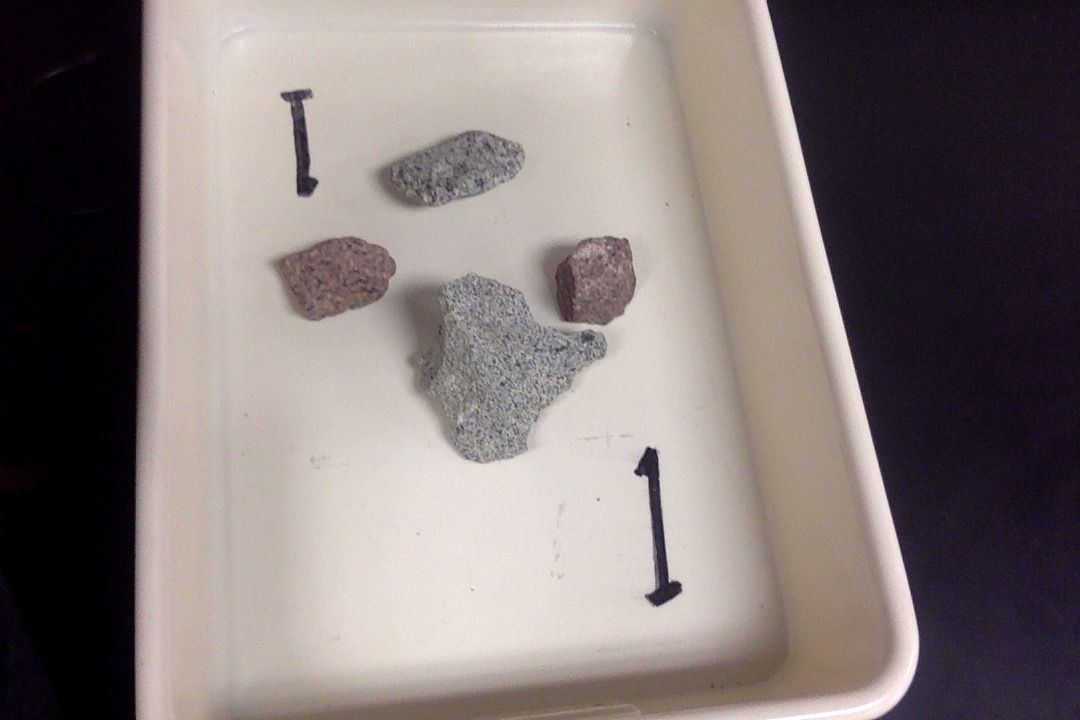
Granite Igneous -Intrusive Intrusive, Light colored because it has greater amounts of Silica.

Cards in this deck (24)

  1. 1—Granite
    Igneous -Intrusive
    Intrusive, Light colored because it has greater amounts of Silica.
    Granite Igneous -Intrusive Intrusive, Light colored because it has greater amounts of Silica.
  2. 2—Diorite
    Igneous - Intrusive
    Intrusive, Mineral compositions between Granitic and Basaltic. Gray to Dark Grey in color usually. (Andesitic)
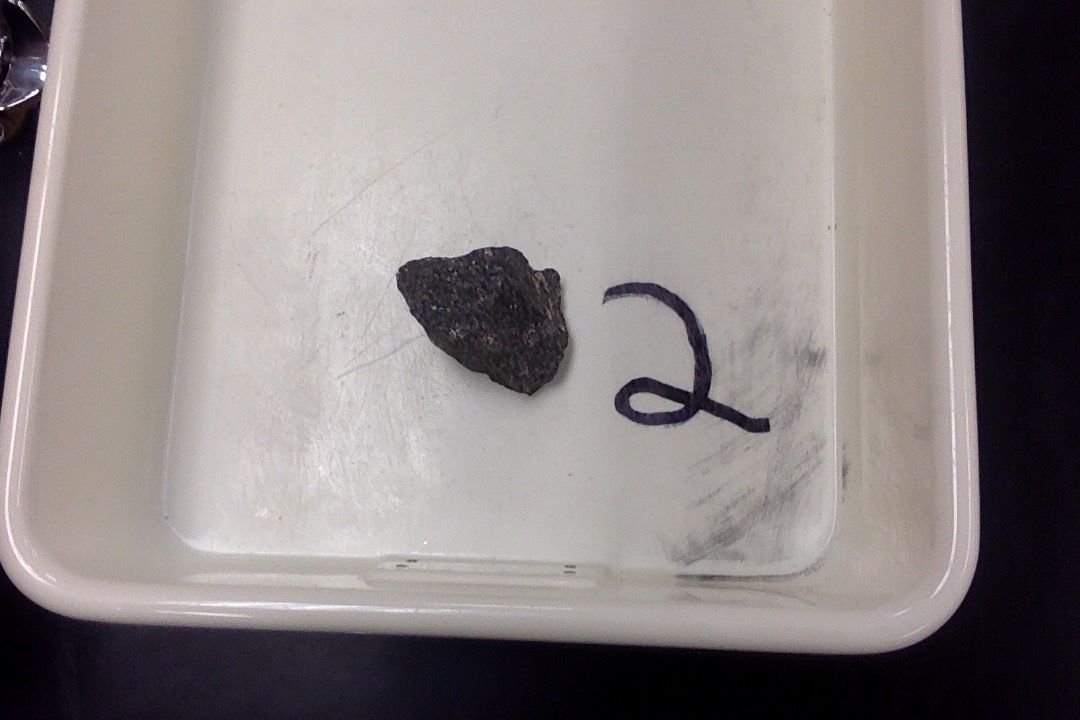
    Diorite Igneous - Intrusive Intrusive, Mineral compositions between Granitic and Basaltic. Gray to Dark Grey in color usually. (Andesitic)
  3. 3—Gabbro
    Igneous - Intrusive
    Intrusive, Dark, course-grained. Chemically similar to Basalt. (Basaltic)
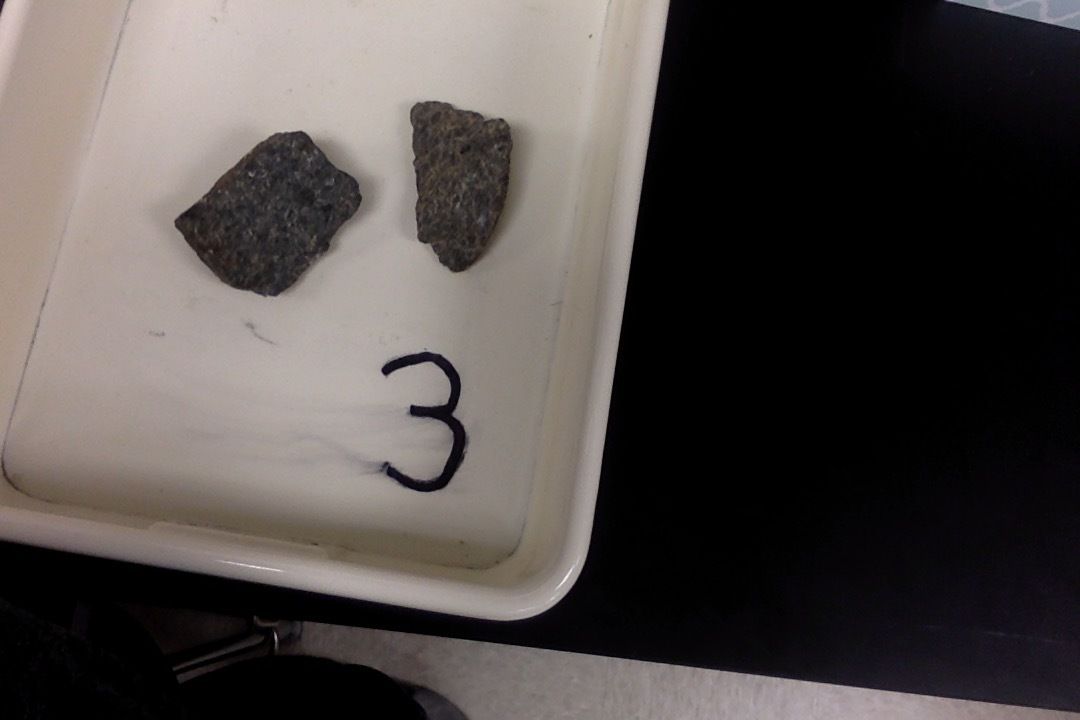
    Gabbro Igneous - Intrusive Intrusive, Dark, course-grained. Chemically similar to Basalt. (Basaltic)
  4. 4—Basalt
    Igneous- Extrusive
    Extrusive, Dark-colored because it has greater amounts of Iron and Magnesium, more dense (Basaltic)
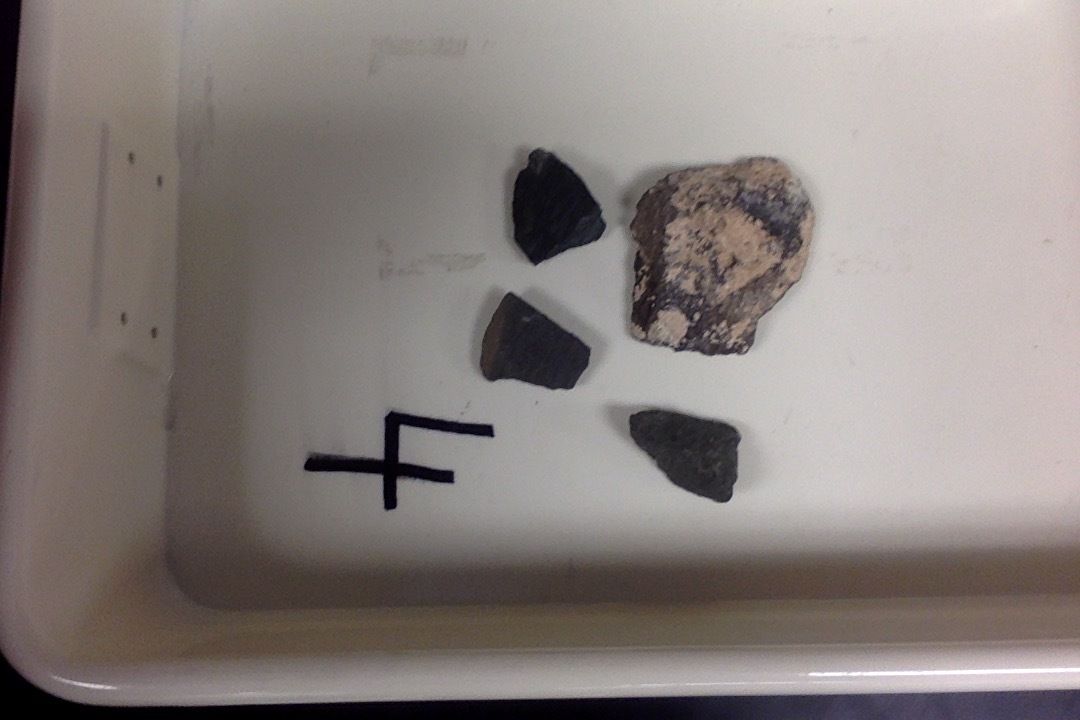
    Basalt Igneous- Extrusive Extrusive, Dark-colored because it has greater amounts of Iron and Magnesium, more dense (Basaltic)
  5. 5—Andesite
    Igneous - Extrusive
    Extrusive, Intermediate between Basalt and Rhyolite. (Andesitic)
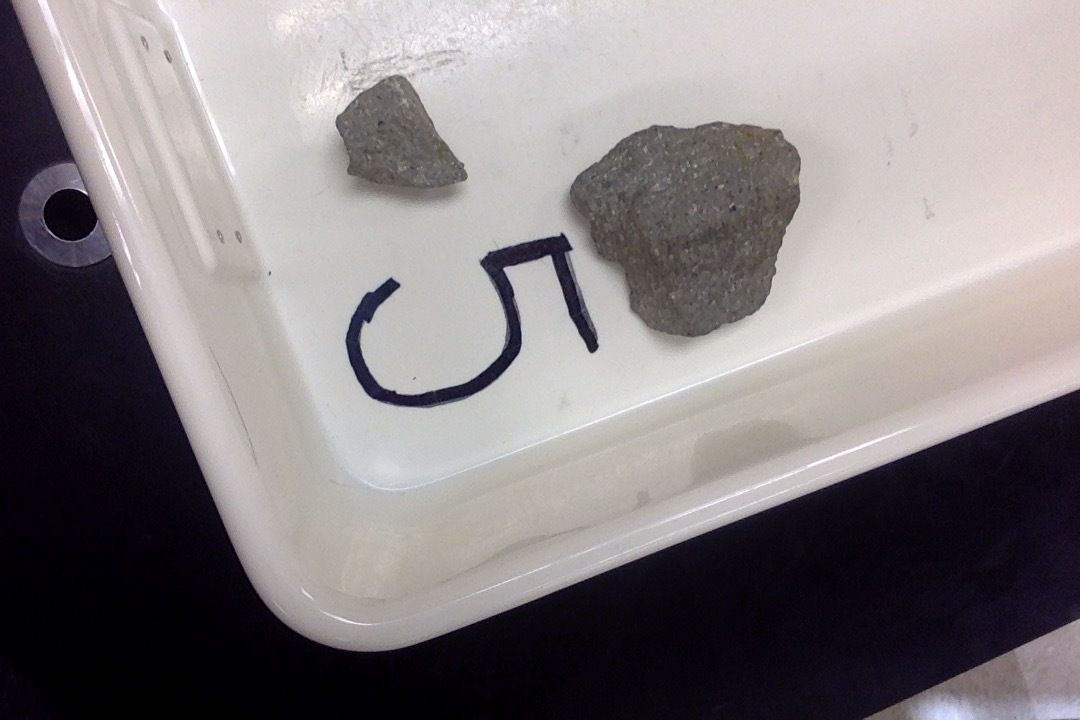
    Andesite Igneous - Extrusive Extrusive, Intermediate between Basalt and Rhyolite. (Andesitic)
  6. 6—Rhyolite
    Igneous - Extrusive
    Extrusive, but silica-rich, usually lighter in color and density. (Granitic)
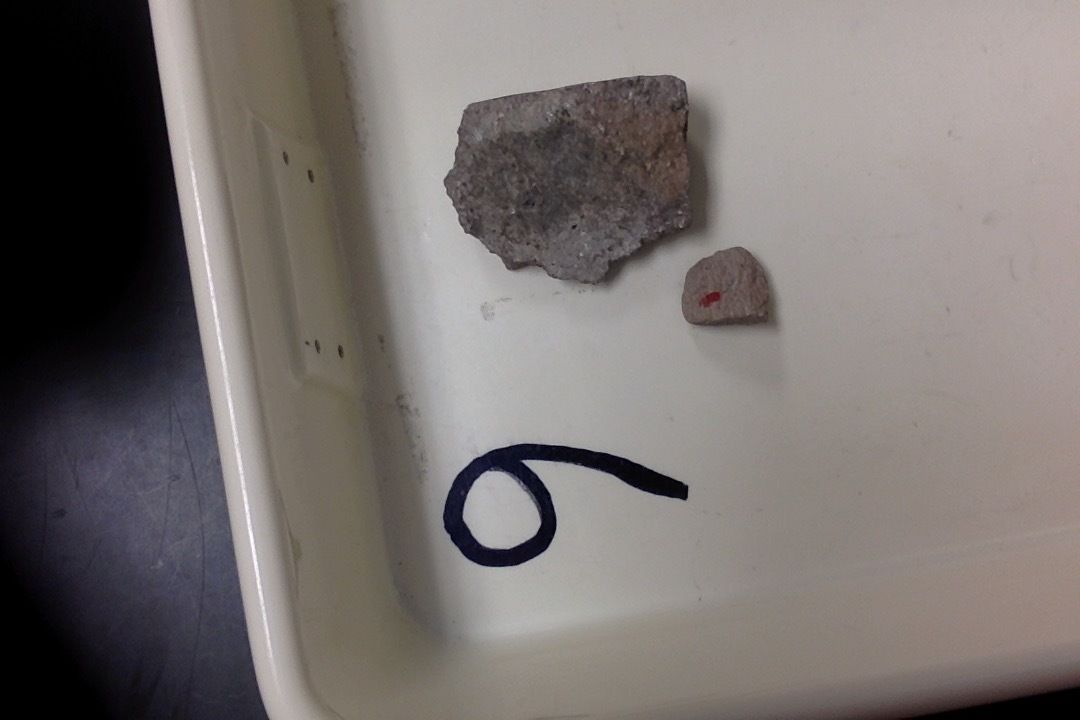
    Rhyolite Igneous - Extrusive Extrusive, but silica-rich, usually lighter in color and density. (Granitic)
  7. 7—Obsidian
    Igneous- Extrusive
    Extrusive, Glassy, usually black (Granitic, actually high in silica, just doesn’t follow the color rules)
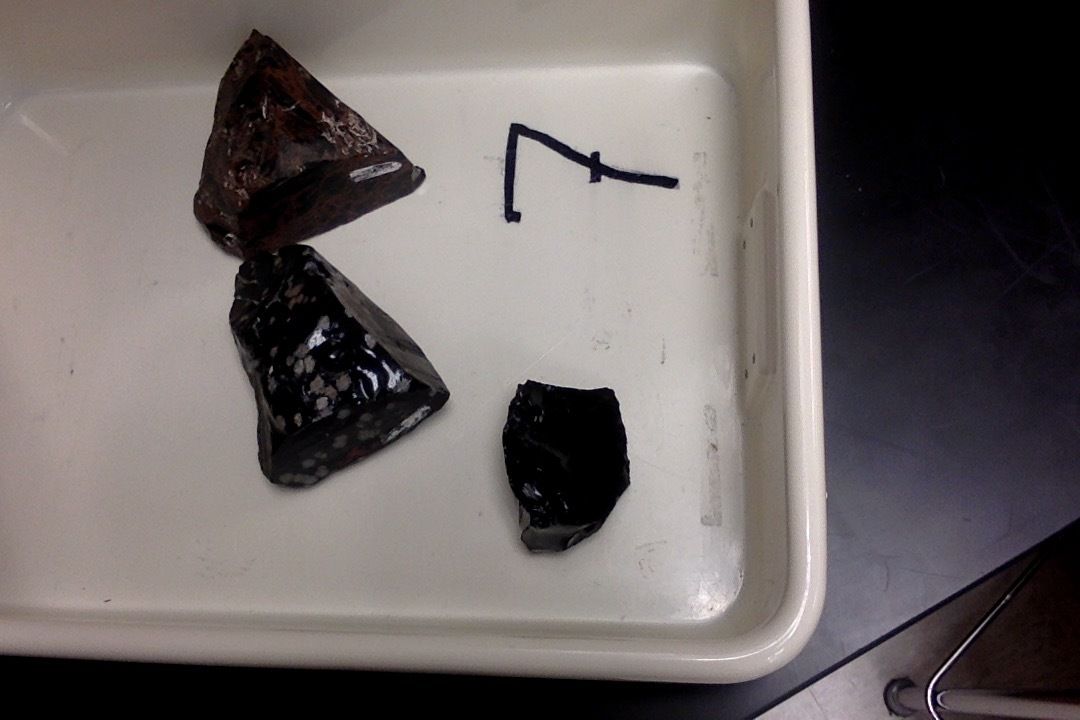
    Obsidian Igneous- Extrusive Extrusive, Glassy, usually black (Granitic, actually high in silica, just doesn’t follow the color rules)
  8. 8—Pumice
    Igneous - Extrucive
    Extrusive, Light-colored and light mass with holes caused by gas bubbles that were released when it was formed (Granitic)
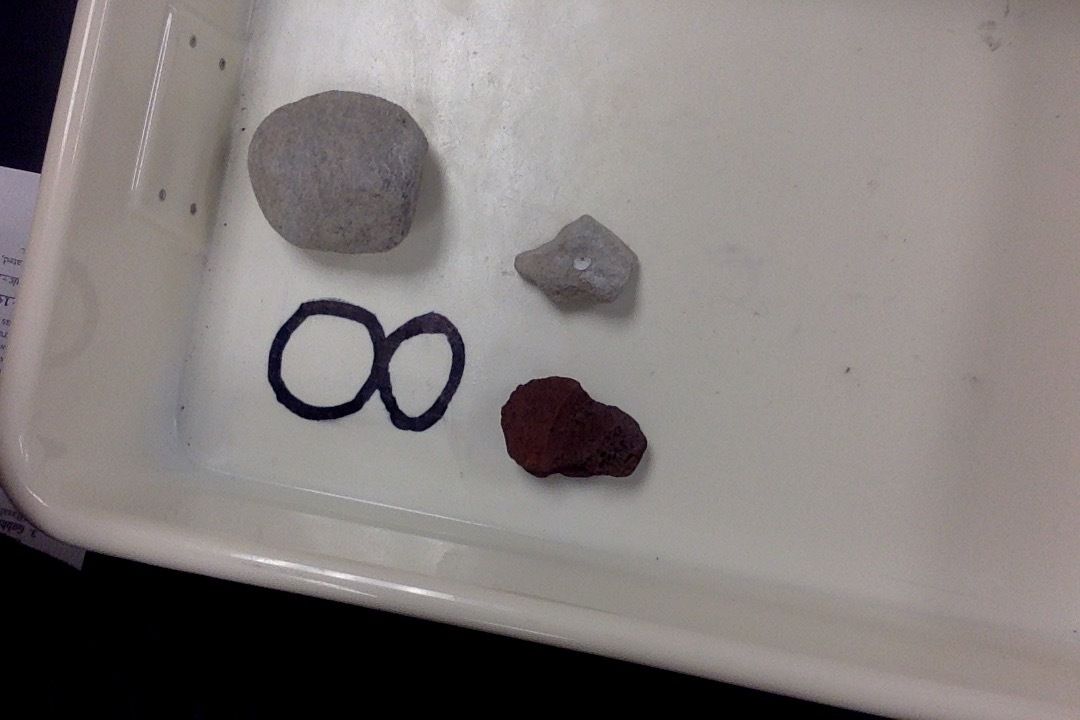
    Pumice Igneous - Extrucive Extrusive, Light-colored and light mass with holes caused by gas bubbles that were released when it was formed...
  9. 9—Scoria
    Igneous - Extrusive
    Extrusive, Dark-colored and somewhat lighter in mass with holes caused by gas bubbles that were released when it formed (Basaltic)
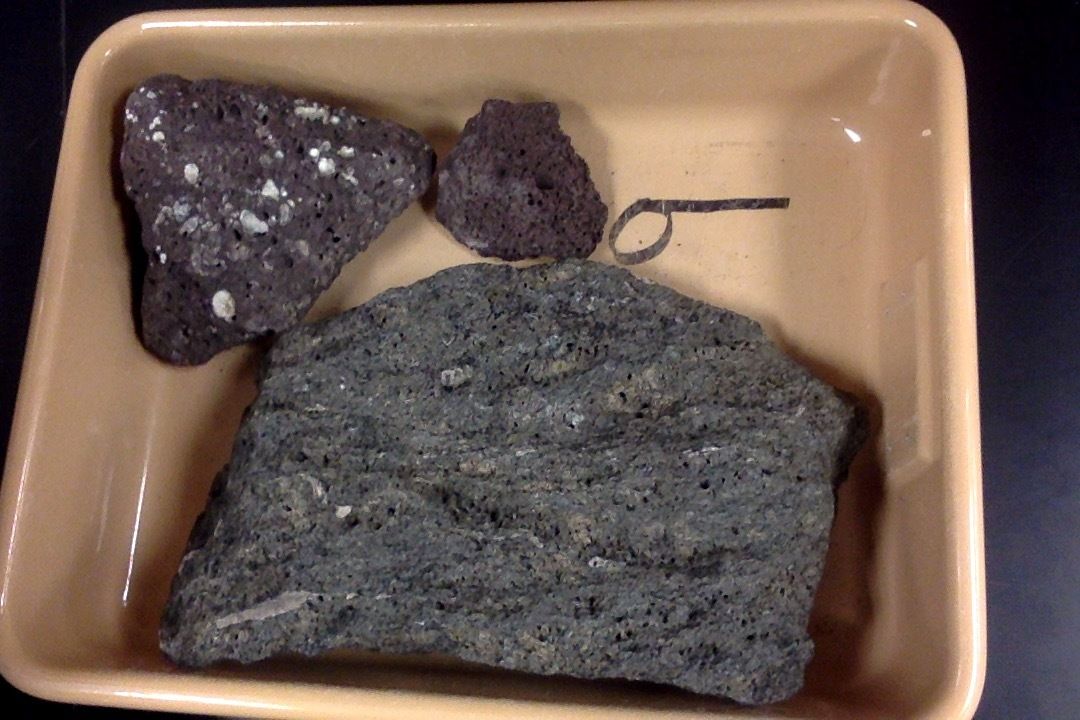
    Scoria Igneous - Extrusive Extrusive, Dark-colored and somewhat lighter in mass with holes caused by gas bubbles that were released when ...
  10. 10—Gneiss
    Metamorphic - Foliated
    Foliated, Parent rock most likely Granite or another Metamorphic rock.
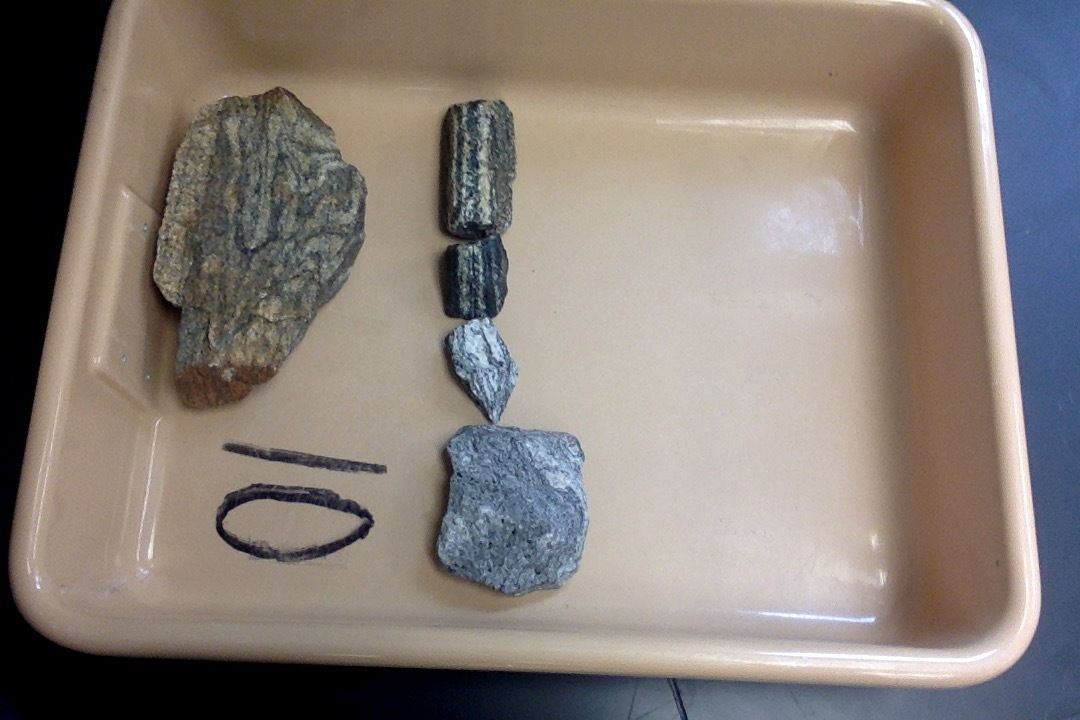
    Gneiss Metamorphic - Foliated Foliated, Parent rock most likely Granite or another Metamorphic rock.
  11. 11—Schist
    Metamorphic - Foliated
    Foliated, Flattened grains, most likely formed from an Igneous rock like Granite but was not changed enough to form Gneiss.
    Phyllite
    Metamorphic - Foliated
    Foliated, starts to form layers. The larger piece in this bin.
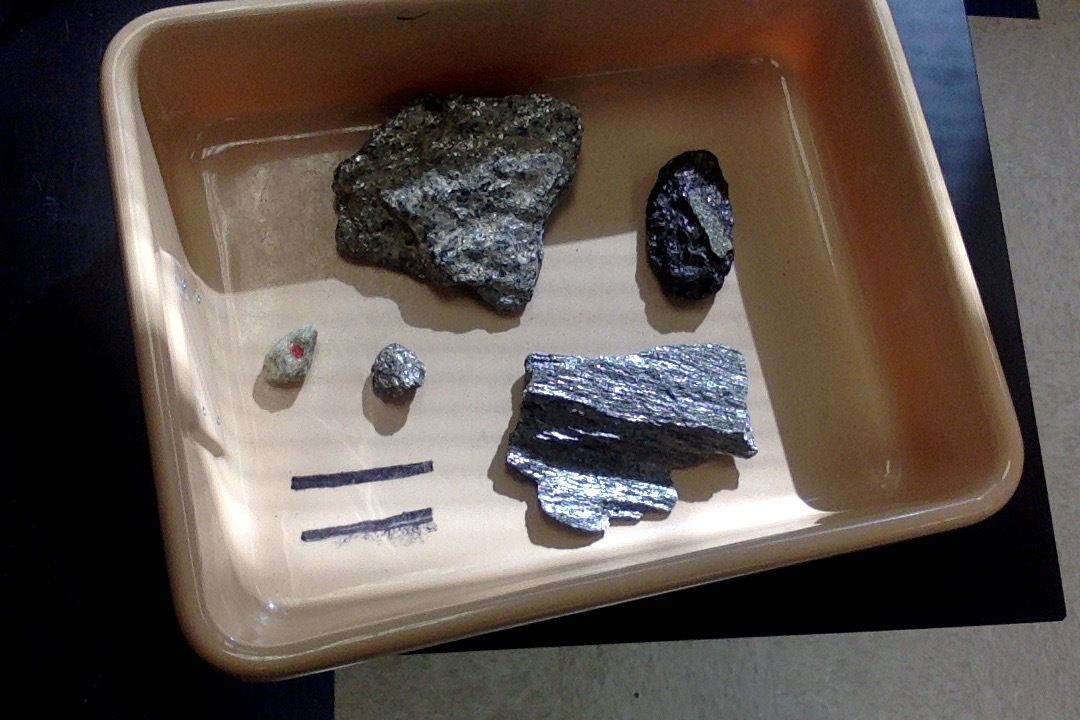
    Schist Metamorphic - Foliated Foliated, Flattened grains, most likely formed from an Igneous rock like Granite but was not changed enough...
  12. 12—Slate
    Metamorphic - Foliated
    Foliated, Parent rock most likely Shale. (No Fossils will be found because of the metamorphism)
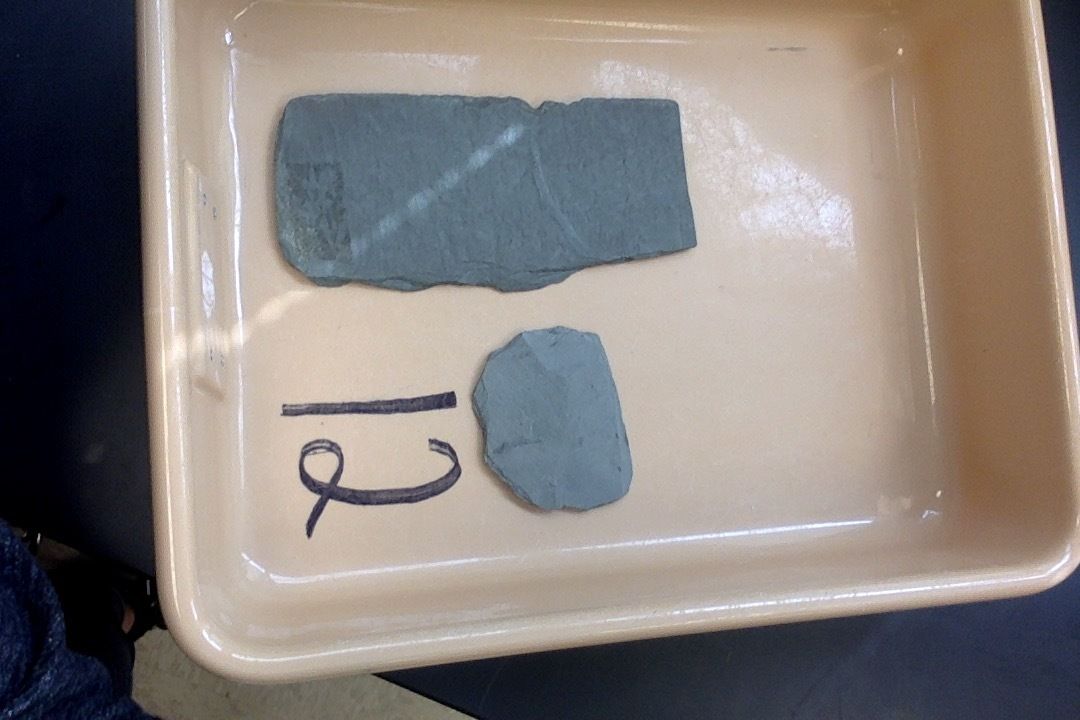
    Slate Metamorphic - Foliated Foliated, Parent rock most likely Shale. (No Fossils will be found because of the metamorphism)
  13. 13—Marble
    Metamorphic - Nonfoliated
    Nonfoliated, Parent rock most likely Limestone.
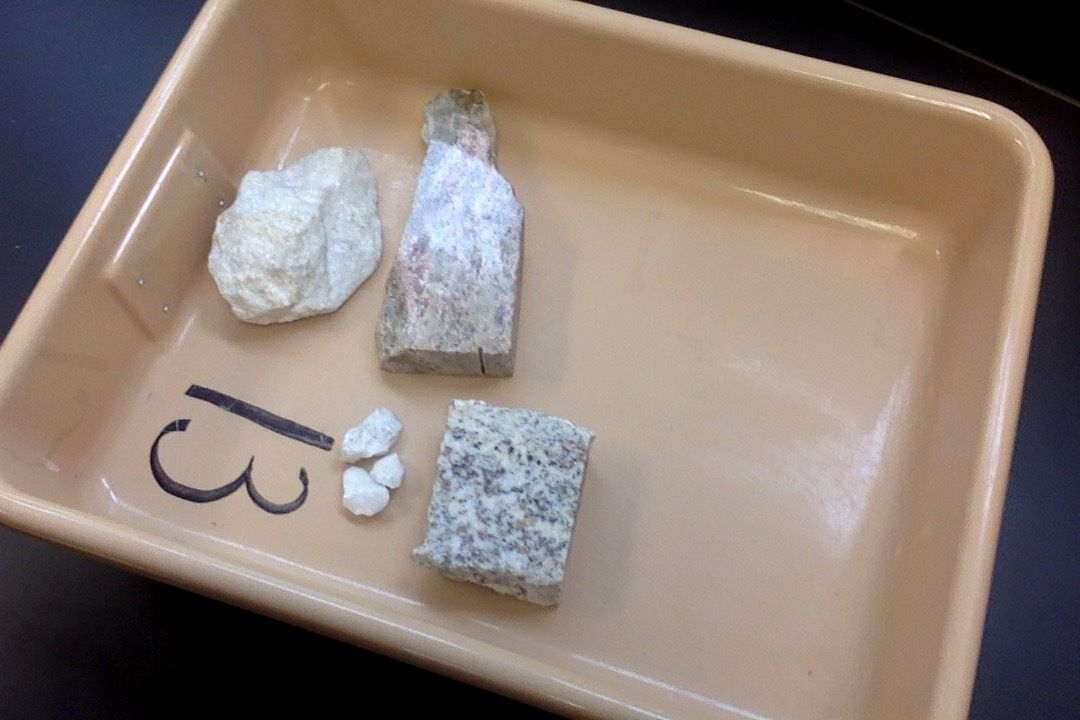
    Marble Metamorphic - Nonfoliated Nonfoliated, Parent rock most likely Limestone.
  14. 14—Quartzite
    Matamorphic - Nonfoliated
    Nonfoliated, Parent rock most likely Sandstone.
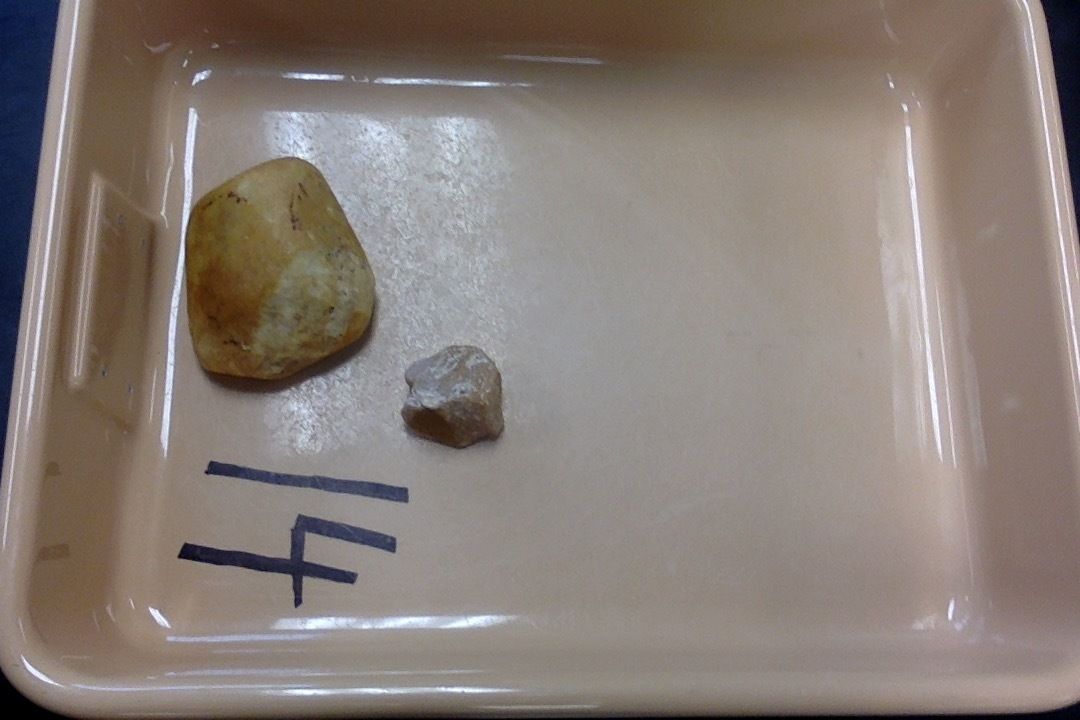
    Quartzite Matamorphic - Nonfoliated Nonfoliated, Parent rock most likely Sandstone.
  15. 15—Shale
    Sedimentary - Detrial
    Detrital, formed from the sediment Clay. (Fossils may be found)
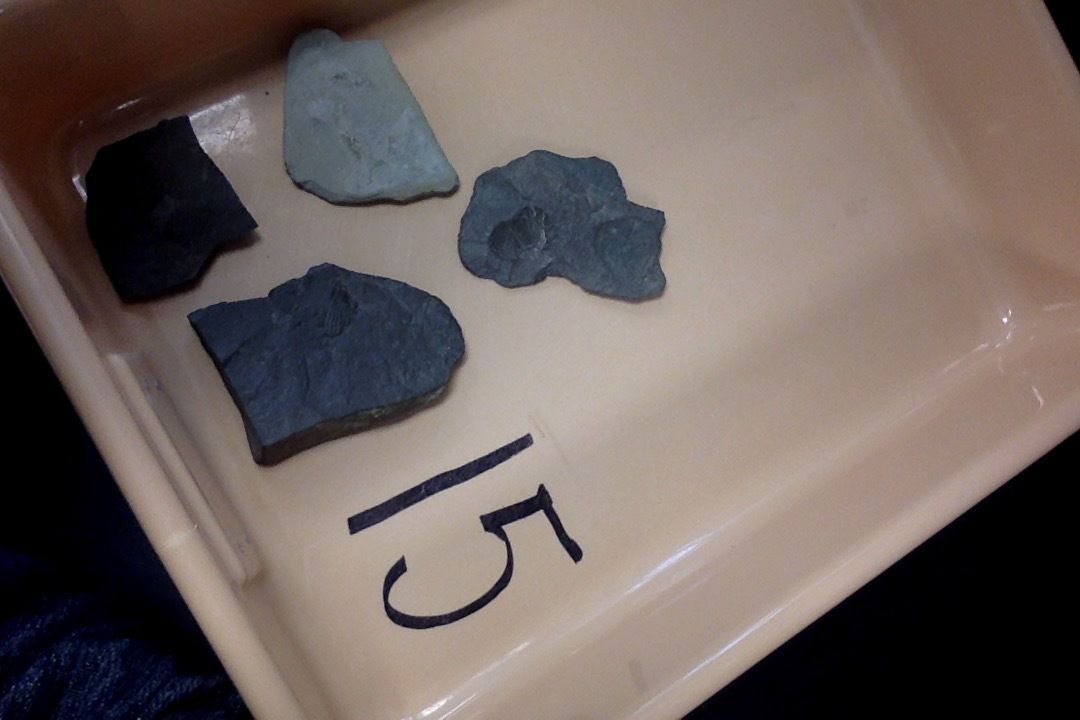
    Shale Sedimentary - Detrial Detrital, formed from the sediment Clay. (Fossils may be found)
  16. 16—Sandstone
    Sedimentary - Detrital
    Detrital, formed from the sediment Sand.
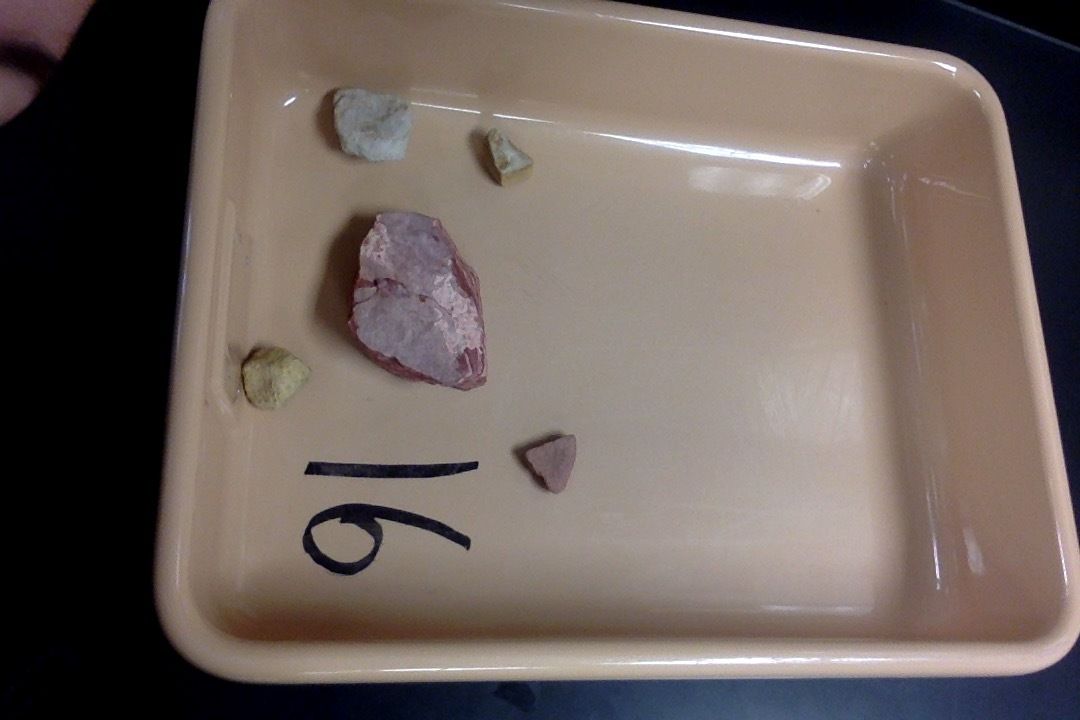
    Sandstone Sedimentary - Detrital Detrital, formed from the sediment Sand.
  17. 17—Conglomerate
    Sedimentary - Detrital
    Detrital, formed from pebbles. If the gravel is rounded (pebbles), it is called Conglomerate.
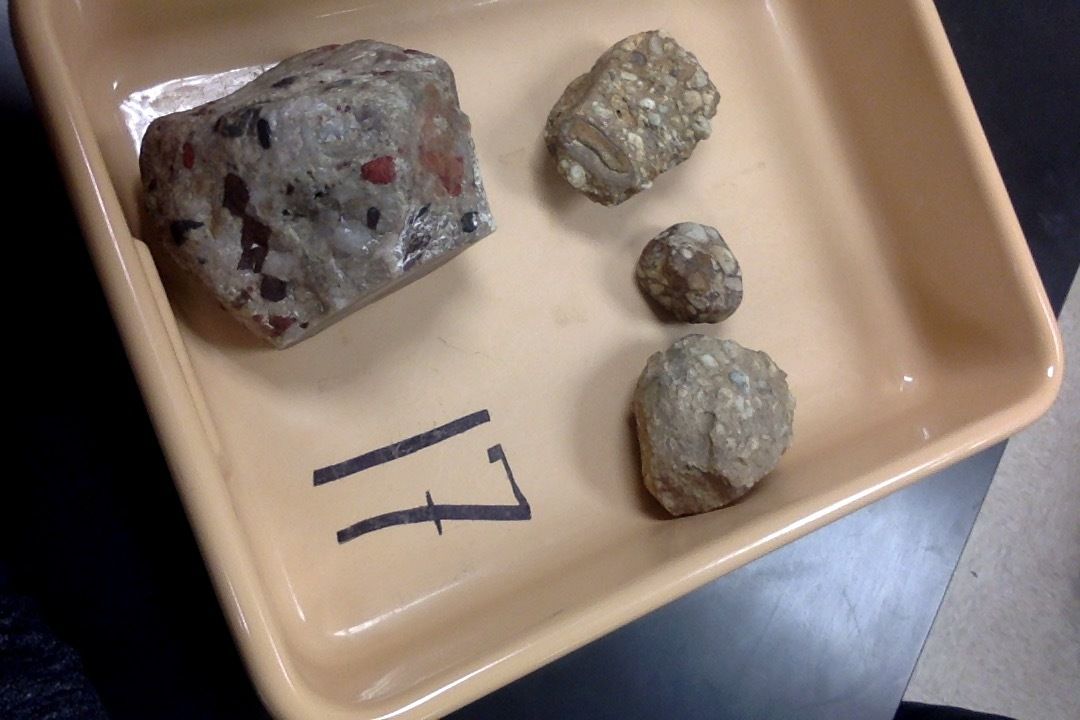
    Conglomerate Sedimentary - Detrital Detrital, formed from pebbles. If the gravel is rounded (pebbles), it is called Conglomerate.
  18. 18—Breccia
    Sedimentary - Detrital
    Detrital, formed from gravel. If the gravel has angular, jagged edges it is called Breccia.
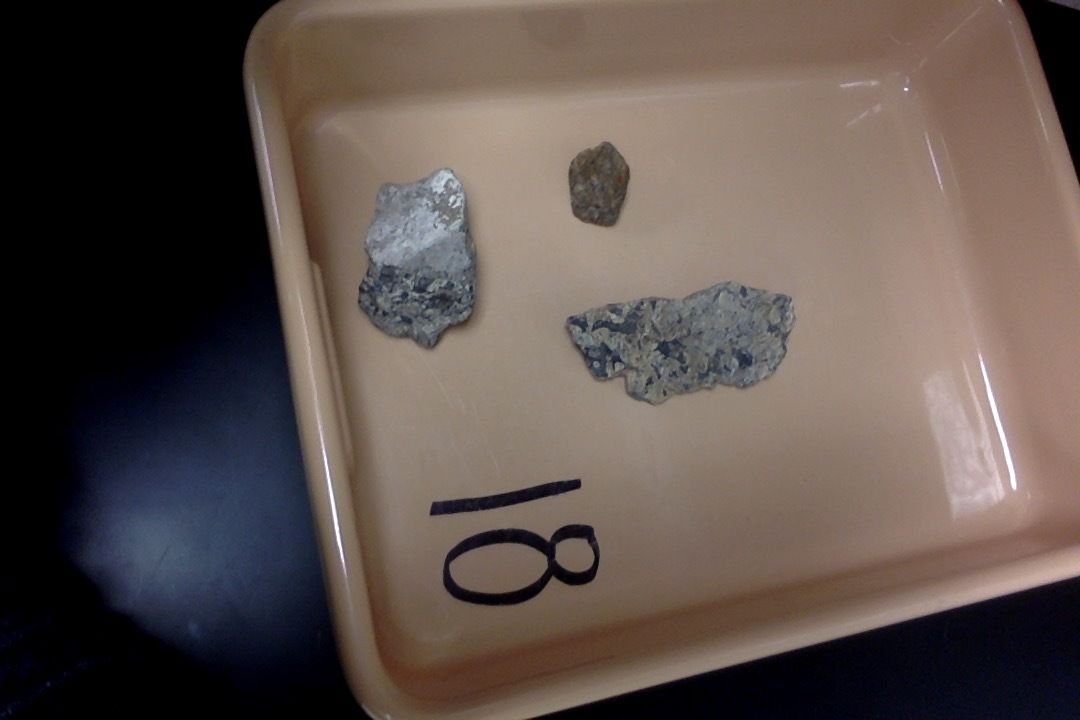
    Breccia Sedimentary - Detrital Detrital, formed from gravel. If the gravel has angular, jagged edges it is called Breccia.
  19. 19—Limestone
    Sedimentary - Chemical
    Chemical, formed from the solution with Calcium Carbonate, which usually is formed from the dissolved mineral Calcite.
    Calcite is the clear crystal in this bin. (Fossils may be found in small amounts)
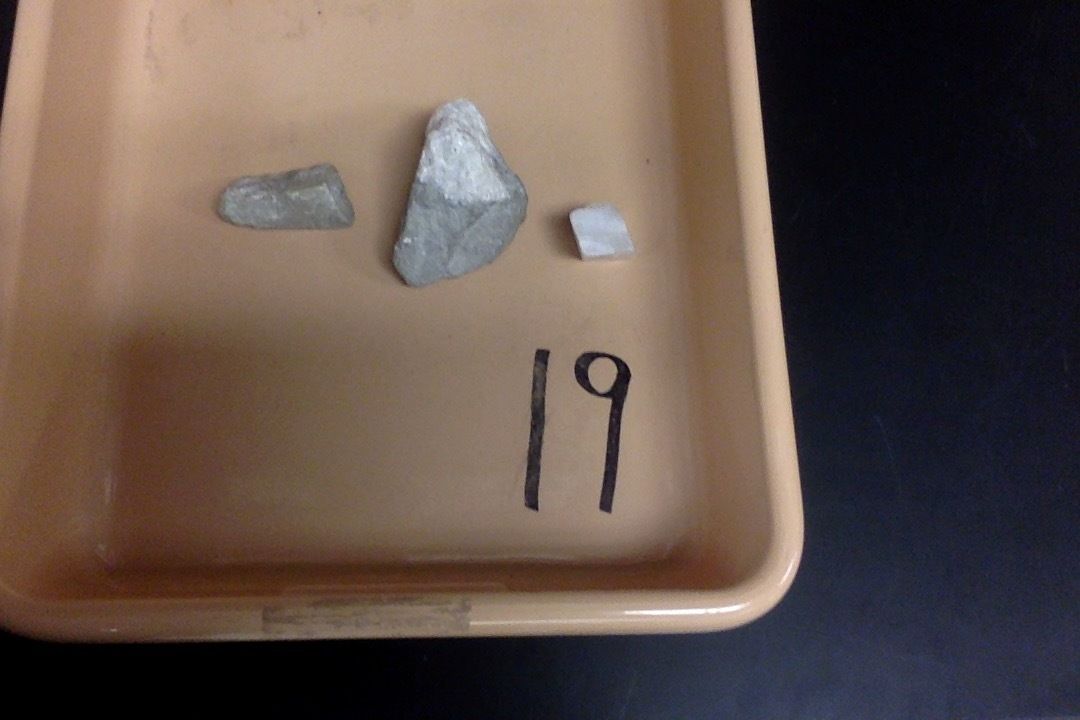
    Limestone Sedimentary - Chemical Chemical, formed from the solution with Calcium Carbonate, which usually is formed from the dissolved mi...
  20. 20—Halite
    Sedimentary - Chemical
    Chemical, formed from the solution of Sodium Chloride (Salt), also called Rock Salt.
    Gypsum: formed from the solution of Calcium Sulphate.
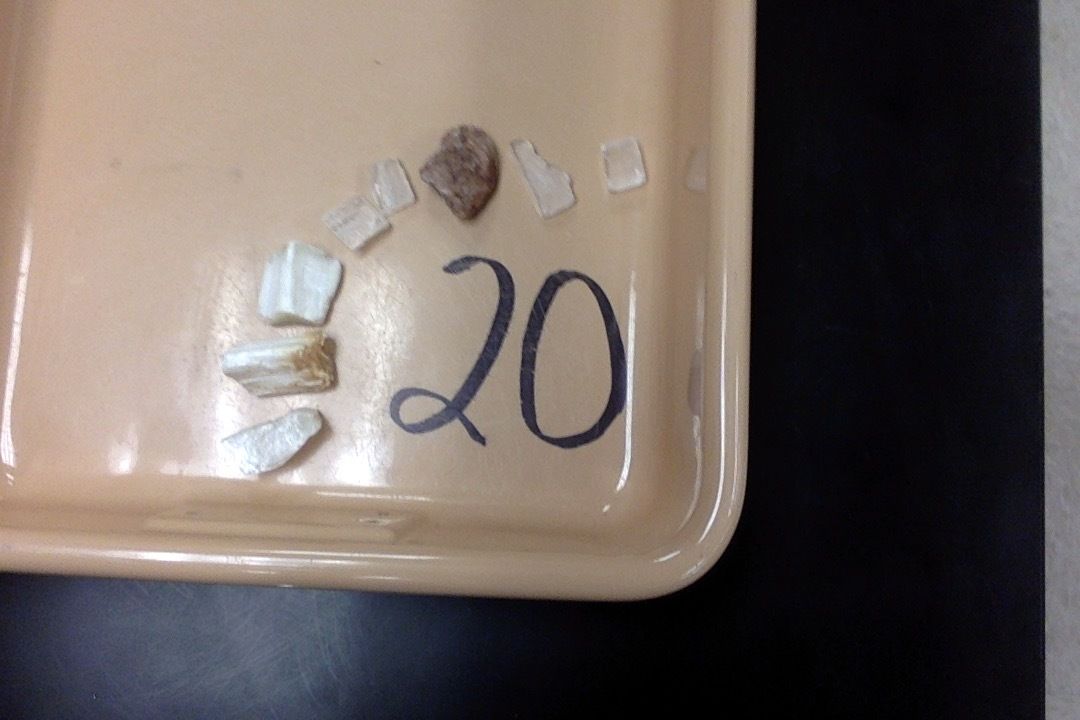
    Halite Sedimentary - Chemical Chemical, formed from the solution of Sodium Chloride (Salt), also called Rock Salt. Gypsum: formed from th...
  21. 21—Fossil-rich Limestone
    Sedimentary - Organic
    Organic, contains an abundance of casts or remains of fossils. (Also known as Fossiliferous Limestone)
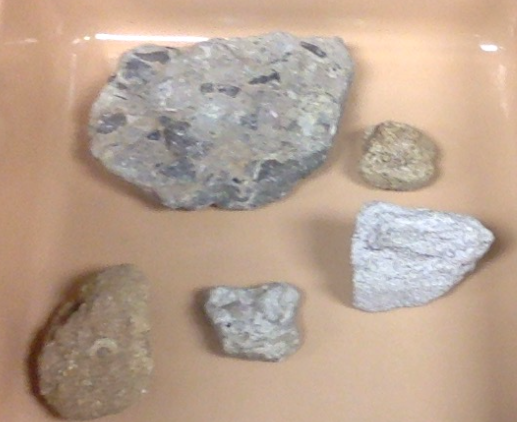
    Fossil-rich Limestone Sedimentary - Organic Organic, contains an abundance of casts or remains of fossils. (Also known as Fossiliferous L...
  22. 22—Conquina
    Sedimentay - Organic
    Organic, contains mostly shells cemented together.
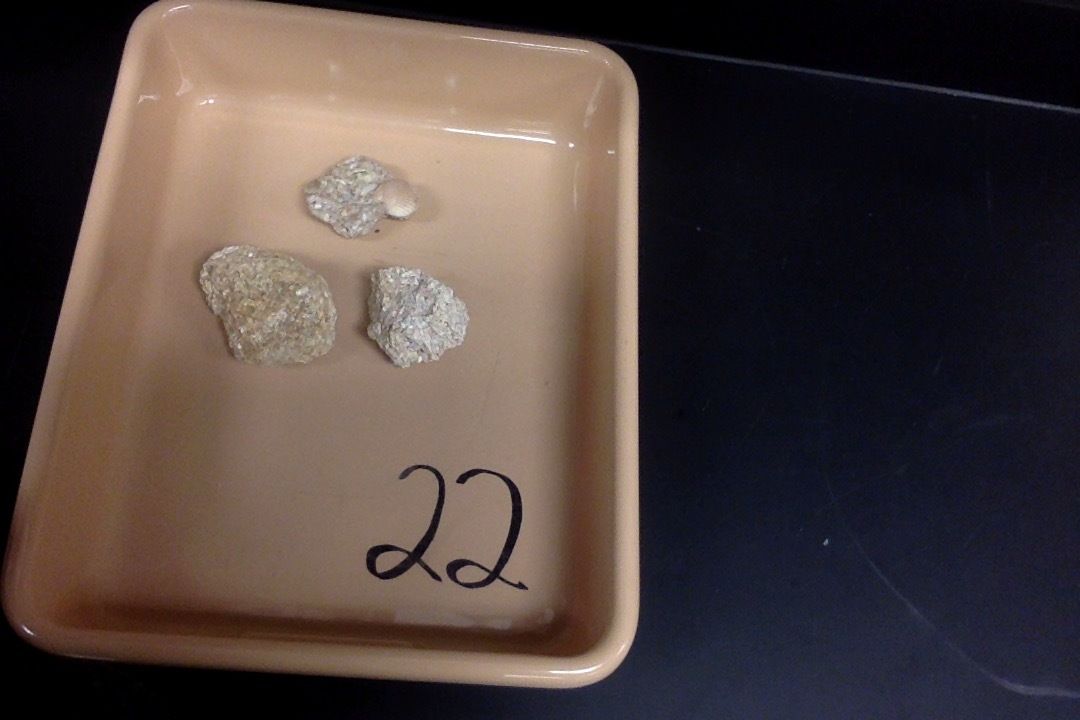
    Conquina Sedimentay - Organic Organic, contains mostly shells cemented together.
  23. 23—Chalk
    Sedimentary - Organic
    Organic, contains microscopic pieces of shells, calcium carbonate.
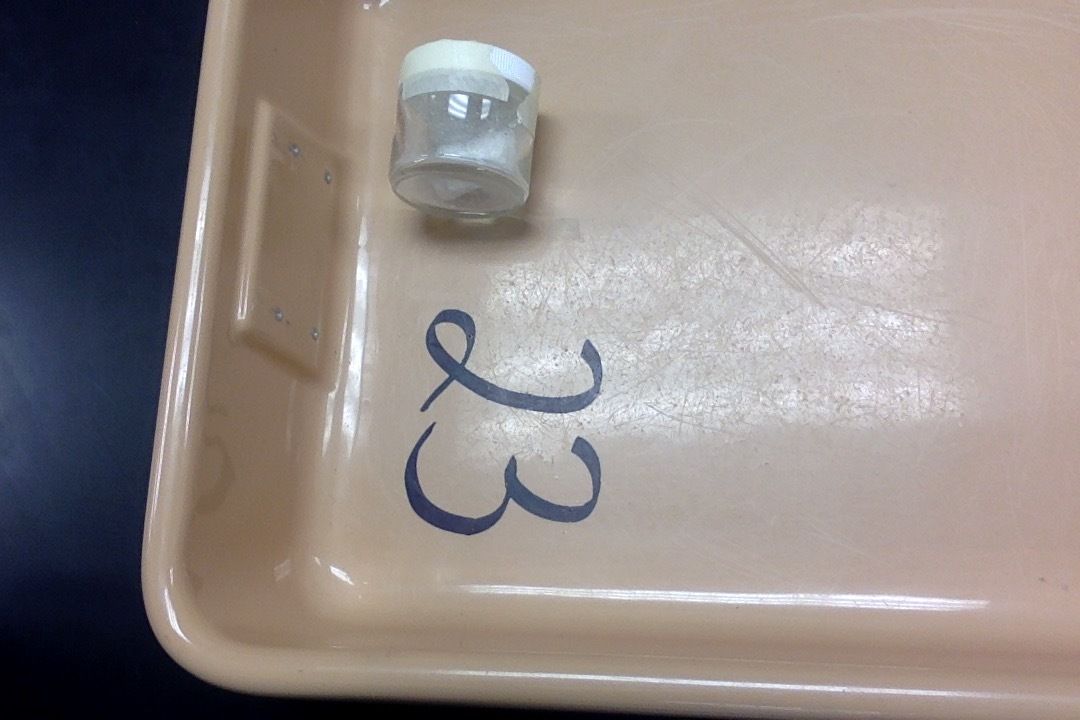
    Chalk Sedimentary - Organic Organic, contains microscopic pieces of shells, calcium carbonate.
  24. 24—Coal
    Sedimentary - Organic
    Organic, contains compacted dead plants. Can be burned to provide energy.
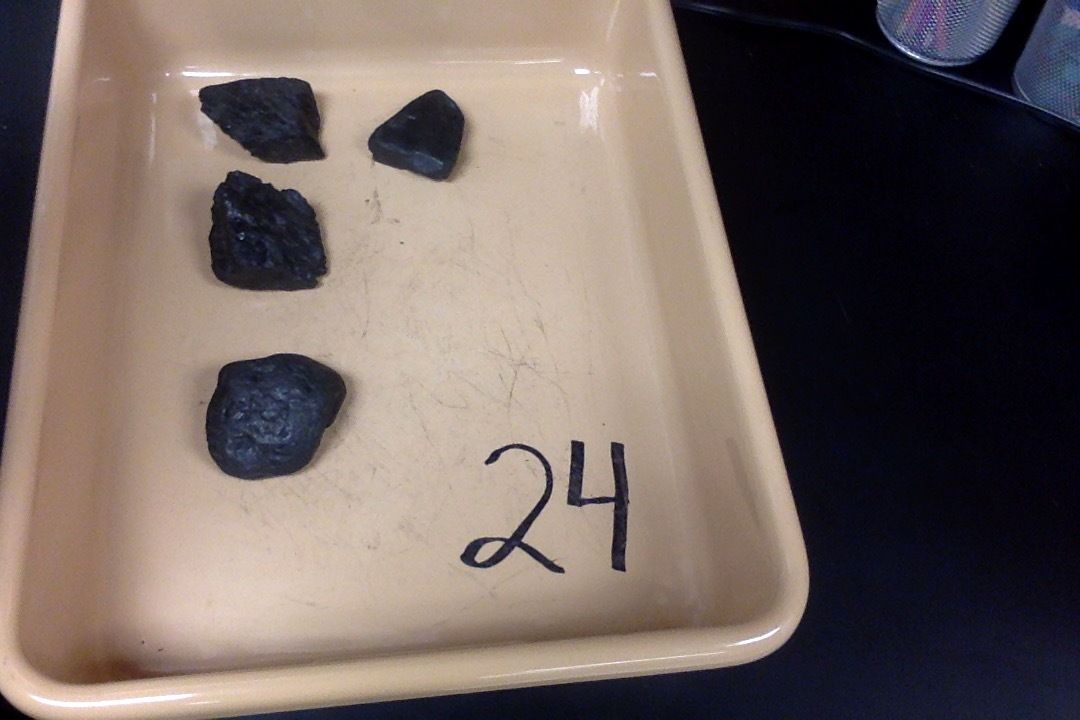
    Coal Sedimentary - Organic Organic, contains compacted dead plants. Can be burned to provide energy.

Information

Description
What is the name? What type of rock? What is it made of?
Created by
Madelyn Potter
Views
17
Tags
alter 13/14 test
Rating

More on Rock Classification

Feedback

What is it about?

What should we add next?