
Rocks and the Rock Cycle
156 resources created by 133 users
This Rocks and the Rock Cycle page on GoConqr gathers community-made quizzes, mind maps, flashcards and notes, from igneous, sedimentary and metamorphic rocks to minerals and the rock cycle itself. It's built for school students revising a topic and teachers after ready-made material. There are over 900 resources here, including more than 80 quizzes, more than 400 mind maps and over 300 flashcard decks, with plenty aimed at GCSE and A-level Geology. Try a quiz to find your gaps, then explore the maps.
Top Rocks and the Rock Cycle resources
-
87 cardsThe Rock Cycle Sediments are transported by
-
19 questionsDifferent Types of Rock Y8 Different types of rock
-
10 questionsRocks and Minerals Many materials in our everyday life are made of rocks which are in turn made from various materials. Depend...
-
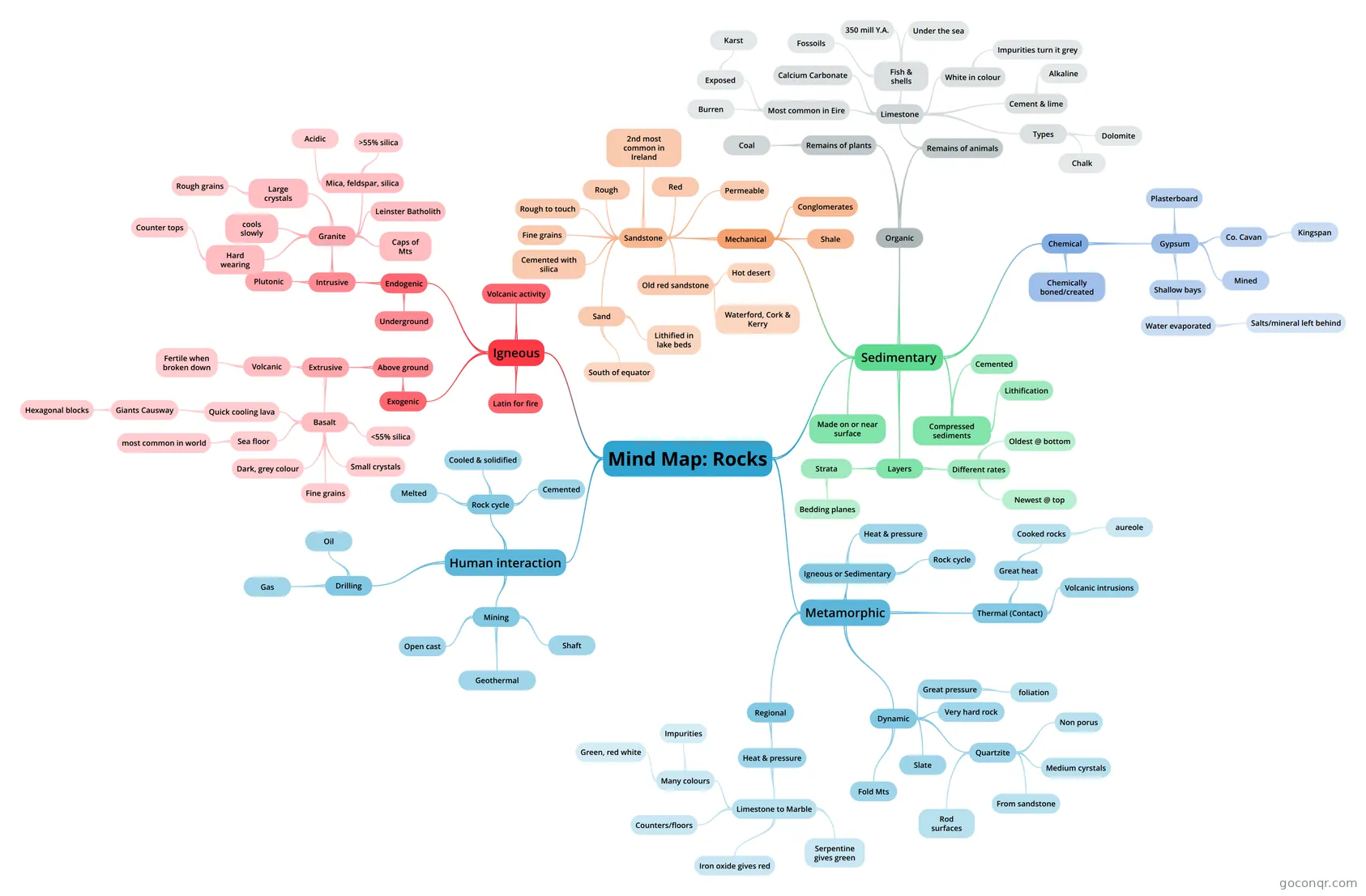 Mind map Mind Map: Rocks Mind Map: Rocks
-
18 cardsMinerals There are minerals
-
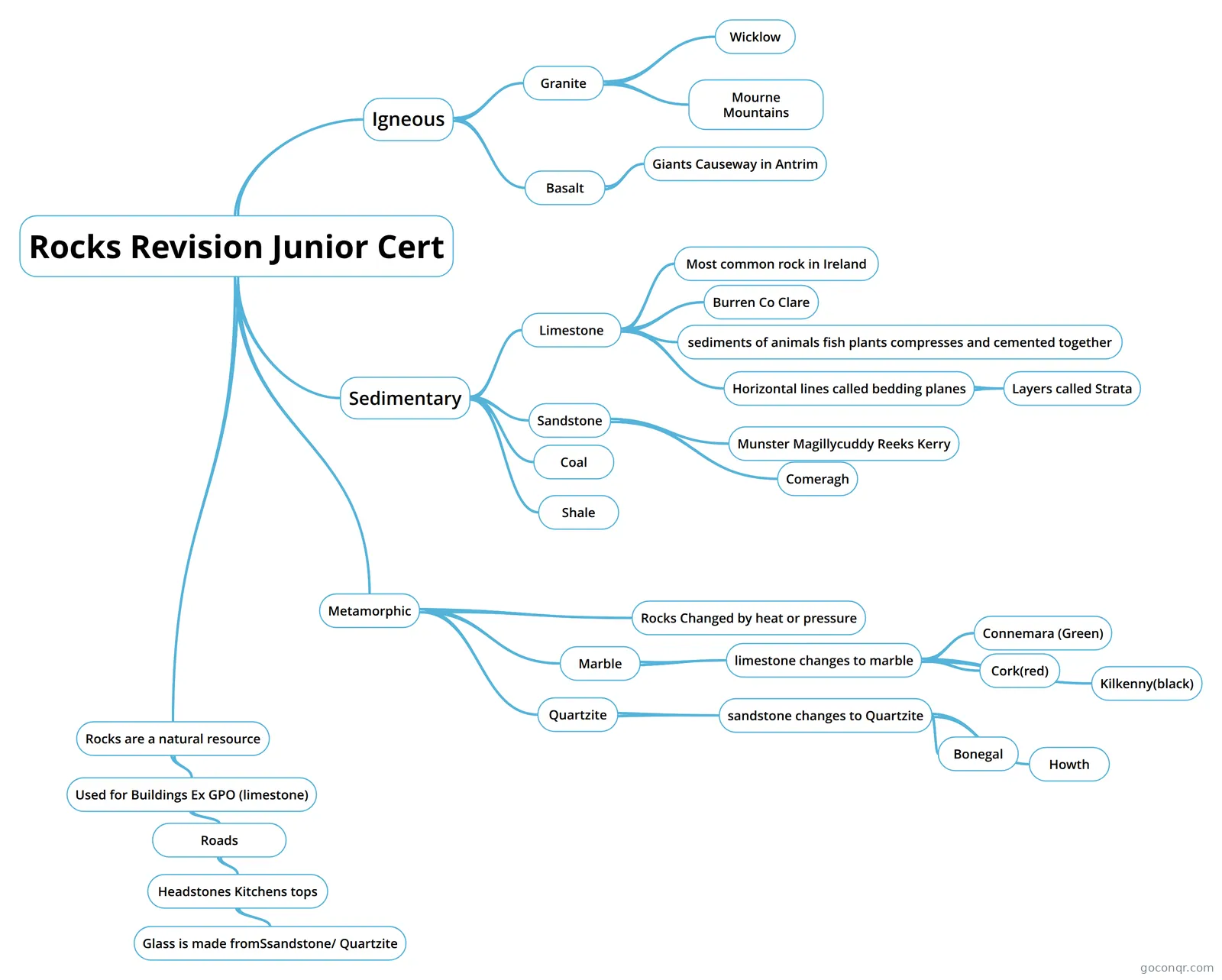
Mind map Types of Rock mind map of the three rock types
-
16 questionsThe Rock Cycle All rocks begin as
-
20 cardsMinerals
Quizzes
See all 31 quizzes-
19 questionsDifferent Types of Rock Y8 Different types of rock
-
10 questionsRocks and Minerals Many materials in our everyday life are made of rocks which are in turn made from various materials. Depend...
-
16 questionsThe Rock Cycle All rocks begin as
-
23 questionsGeography: Rocks Choose the sedimentary rock.
-
55 questionsIt's a Hard Rock Life Test ROCKS
-
29 questionsRock Types What does geology mean?
-
19 questionsTypes of Rocks: Quiz How is this rock called? -Type: sedimentary -Description: densly packed, high absorption rate, clastic -For...
-
19 questionsRocks and Fossils Y8 Rocks Rock grains, rock materials, fossils
Mind maps
See all 50 mind maps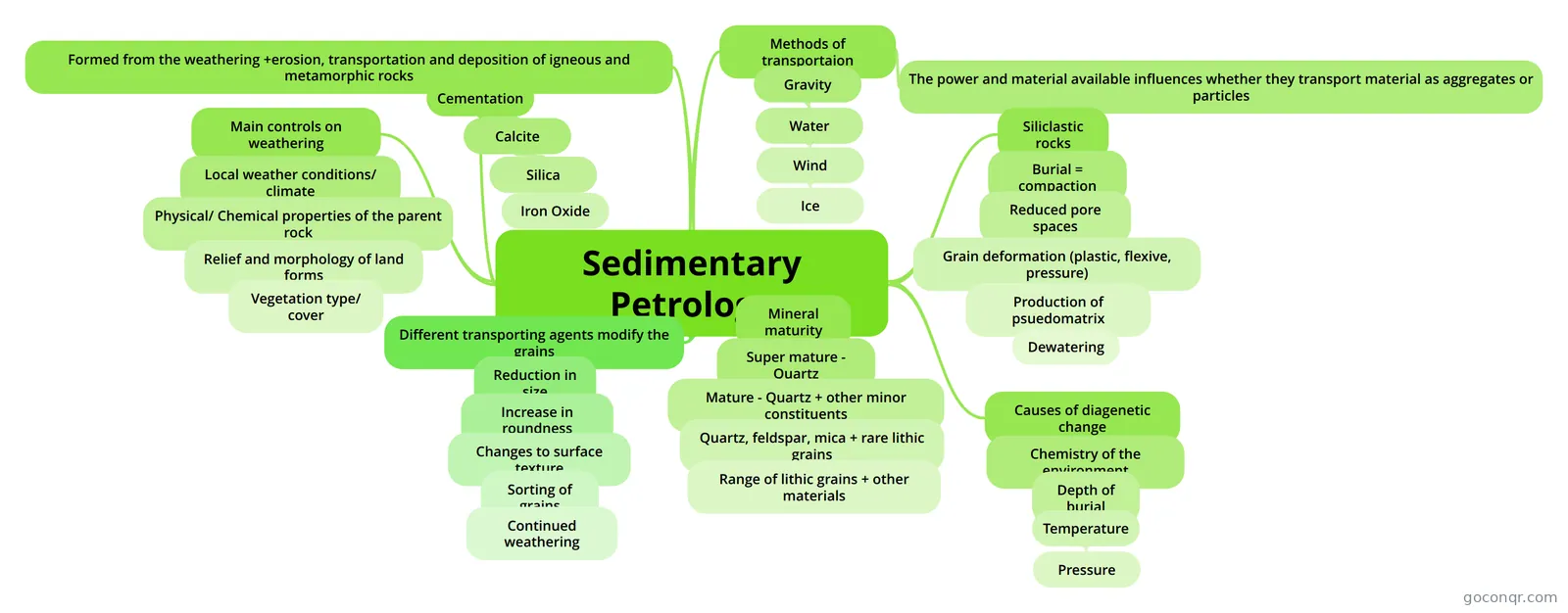
Flashcards
See all 58 flashcards-
87 cardsThe Rock Cycle Sediments are transported by
-
18 cardsMinerals There are minerals
-
20 cardsMinerals
-
7 cardsrocks what is a rock ?
-
67 cardsEarth Science (1) Earth Science study guide on Course Hero https://www.coursehero.com/study-guides/earthscienceck12x33/
-
34 cardsRocks Test Retake What is a Rock?
-
27 cardsEarthsci Lab test Has 2 planes at 90 degrees. Crystals are prismatic (blocky). It can be dark green, brown or black, and vitr...
-
20 cardsgeo chap 5 the rock cycle intro
Flowcharts
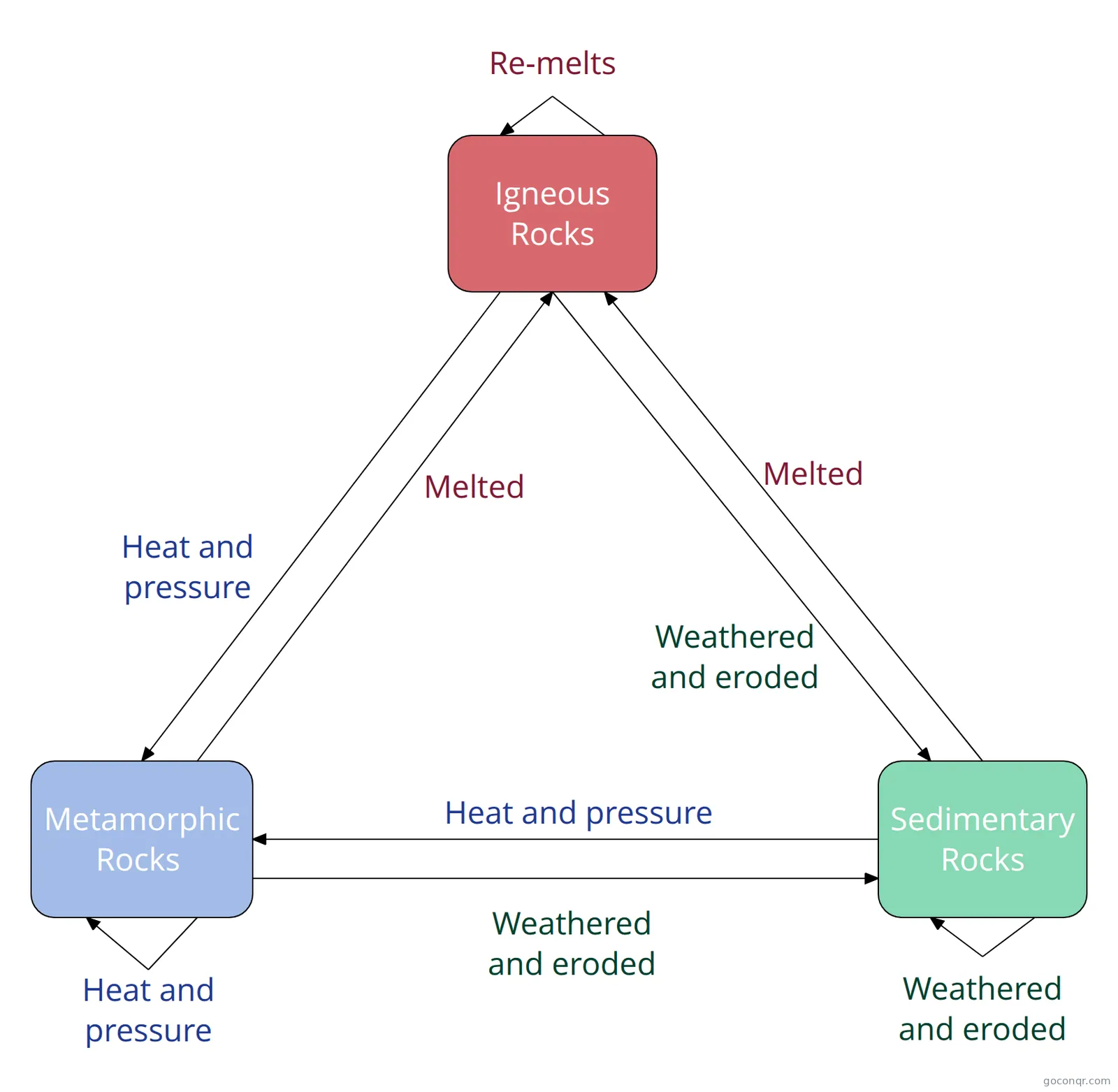
Notes
See all 12 notes-
Identifying Non-clastic Rocks Limestones chemical limestone formed from the precipitation of CaCO3 from sea water biological limestone formed from organic remains such as shell fragments Most limestones contains more than 90% of CaCO3, usually in ...
-
3 different types of rocks (mnemonics) S.I.M.Sedimentary - sediments eg. limestone, sandstone Igneus - magma escaping from mantle then cooling eg. granite, basalt Metamorphic - great pressure eg. quartzite and marble New Page
-
Graded Bedding This is a diagram of "graded bedding." This is a edit-allowed note, please appropriately label something on this diagram or add on to this page something about graded bedding. Anything you add can help others and me.
-
Rocks - GCSE Chemistry ROCKS The rock cycle and how it worksThe rock cycle is the name given to the process where rocks are formed, changed, broken and melted as shown in the picture on the left. It is the movement of tectonic plates that m...
-
Rocks Chemistry Revision Explaining the Earth Rocks are made out of a mixture of minerals. The shape of rocks can be changed by weathering and erosion. Weathering can be chemical, physical or biological. The Rock Cycle The ...
-
Rocks Chemistry Revision Explaining the Earth Rocks are made out of a mixture of minerals. The shape of rocks can be changed by weathering and erosion. Weathering can be chemical, physical or biological. The Rock Cycle The ...
-
Rocks are linked by the Rock Cycle Processes at the Earth's SurfaceIgneous ProcessesMagma, a hot melt from within the Earth's crust or upper mantle, may be erupted onto the surface as lava flow. If the eruption is more explosive, solid fragments called...
-
Broad Classification of Rocks Pressure, Temperature and RocksIgenous, sedimentary and metamorphic rocks are all formed under different pressure and temperature conditiion in the rock cycle. The boundaries are zones where rock grades into another. ...
Slides
More Geology and earth sciences topics
About Rocks and the Rock Cycle
GoConqr OriginalWhat this unit covers
The page brings together material on the three main rock types and the way they change into one another. The Types of Rock mind map sets out igneous, sedimentary and metamorphic rocks, with points such as granite making up a large part of all continents and basalt being the most common igneous rock. The Mind Map: Rocks resource goes further, splitting igneous rocks into intrusive and extrusive, and adding human interaction.
Where to start
Begin with the flashcard deck The Rock Cycle. It runs through how sediments are transported, the process of lithification, how rocks are broken down into sediments and how igneous rocks form. Then open the Minerals flashcards, which ask what a mineral is, what ores are and how hardness is assessed.
- Read the Types of Rock mind map for the big picture.
- Work through The Rock Cycle flashcards.
- Take the Different Types of Rock quiz, which uses fill-in-the-blank questions on magma and rock types.
- Try the quiz called The Rock Cycle for a second check.
Going deeper
The mind map Sedimentary Petrology looks at weathering, erosion, transportation and deposition. The notes on identifying non-clastic rocks cover chemical and biological limestone. A slide set on igneous petrology suits those who want more detail. Many resources mention GCSE Geology, GCSE Science, GCSE Chemistry, GCSE Geography and A-level Geology, so you can look for the one that matches your course.
Using quizzes and maps together
Read a mind map first, then close it and take a quiz on the same rock type. Wrong answers show you which branch to revisit. Flashcards then help you fix the key terms in memory. Teachers can pick a map or quiz to set as a starter or a revision task.
Where it sits
This unit belongs to the Earth Materials strand in Geology and earth sciences. Choose a resource that suits you and start studying, or make your own set once you have worked through a few.
Frequently asked questions
Which resource should I open first?
Start with the flashcard deck The Rock Cycle. It covers sediments, lithification, how rocks are broken down and how igneous rocks form. After that, the Types of Rock mind map gives a clear overview of igneous, sedimentary and metamorphic rocks, and the Different Types of Rock quiz checks what you have taken in.
What do the mind maps on this page cover?
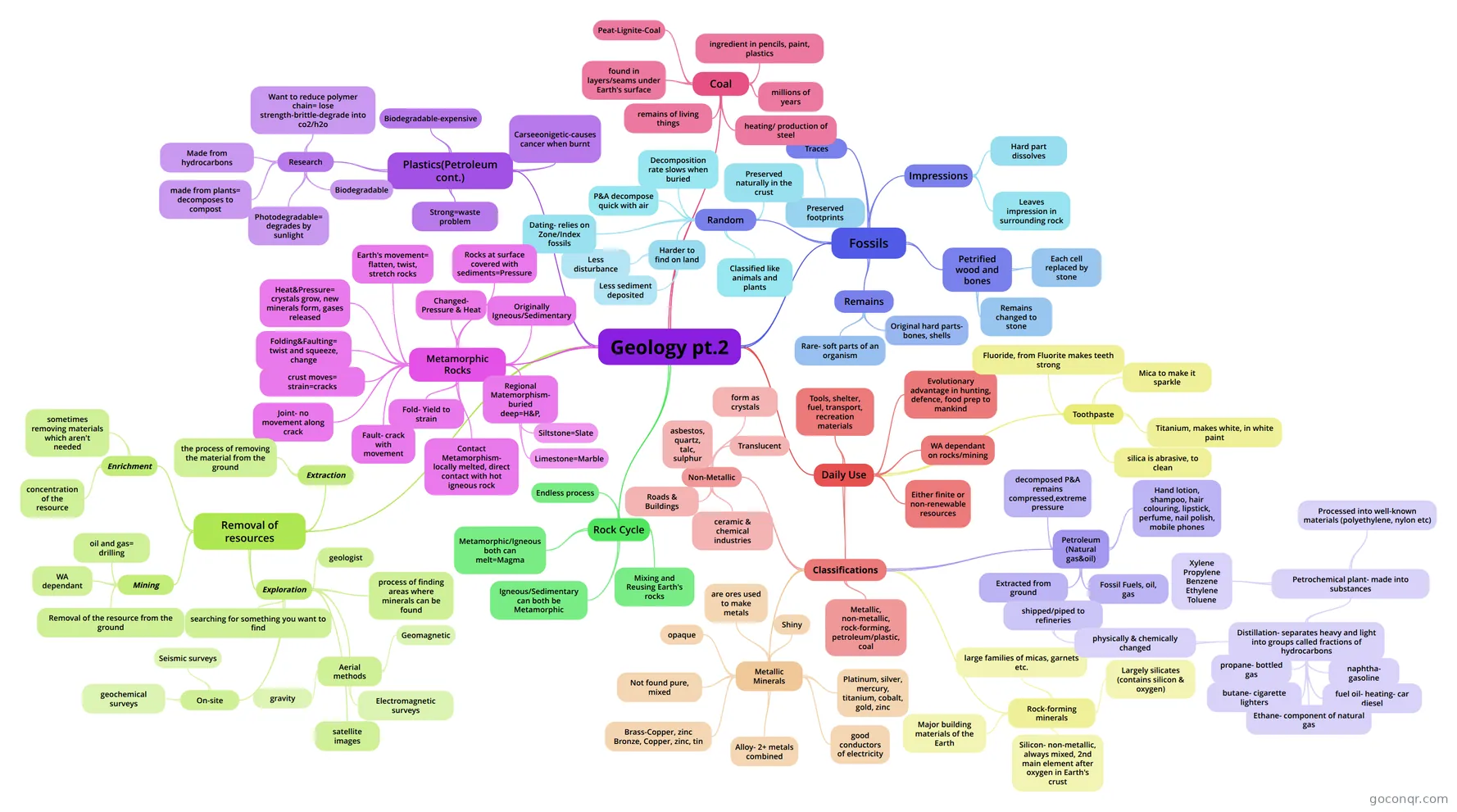
They cover the three rock types, the rock cycle, sedimentary rock formation, igneous rock and weathering. Mind Map: Rocks includes intrusive and extrusive igneous rocks and human interaction. Sedimentary Petrology looks at weathering, erosion, transportation and deposition. There are more than 400 mind maps to choose from.
Are these resources free to use?
Yes. Every resource listed here is free to open, study and take, with no account needed. They were made by GoConqr users, not by GoConqr itself. If you sign up for a free account, your quiz scores are saved and you can make your own quizzes, mind maps, flashcards and notes.
Which exams do the resources suit?
Most resources are aimed at secondary level. Those listed mention GCSE Geology, GCSE Science, GCSE Chemistry, GCSE Geography and A-level Geology. Check the title and excerpt of a resource to see whether it matches your course before you start.
Are there quizzes as well as flashcards?
Yes. There are more than 80 quizzes alongside over 300 flashcard decks. Quizzes such as Different Types of Rock and The Rock Cycle test the basics, while others cover rocks and minerals, sedimentary rock and fossils. Use flashcards to learn terms, then a quiz to test them.
What if I cannot find what I need?
Try a nearby title, such as Minerals for mineral properties or Sedimentary Rocks for sediment topics. Over 900 resources are listed, so another wording may help. If a topic is still missing, you can make your own mind map, quiz or flashcards for it.