
Flashcards
Final
Cards in this deck (48)
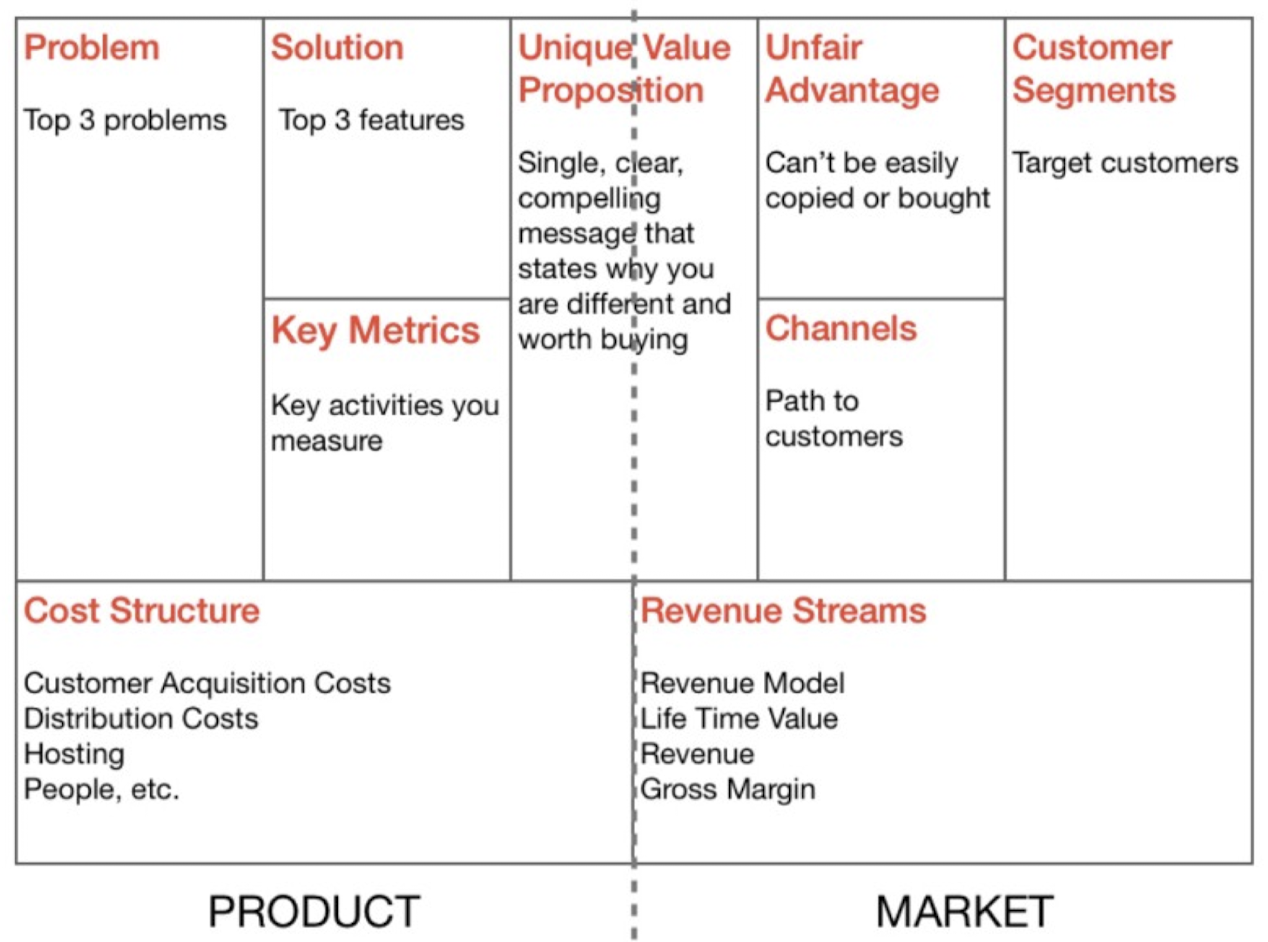
- 1—Lean Canvas
- 2Customer Segmentationidentifying and describing the key types of customers that will interact with your system
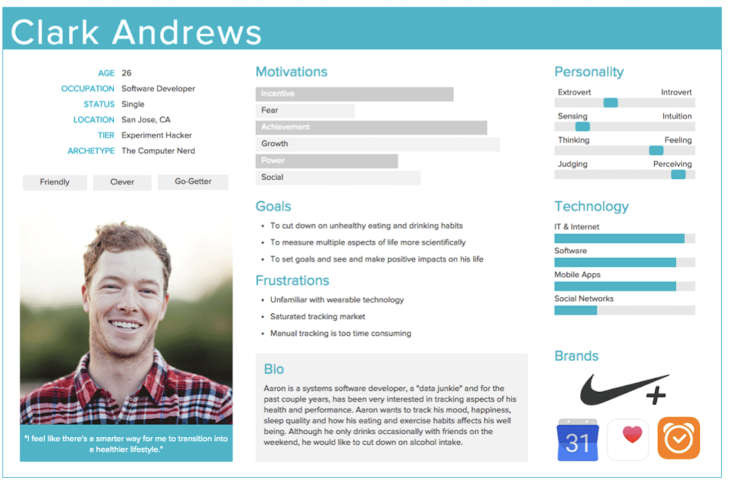
- 3—Persona
- 4Delightera feature that will satisfy customers to some degree even when it is not fully implemented
- 5Performance needa feature that satisfies customers more and more as it is fully implemented
- 6Basic Needa feature that, no matter how well implemented, won't really wow or impress a customer
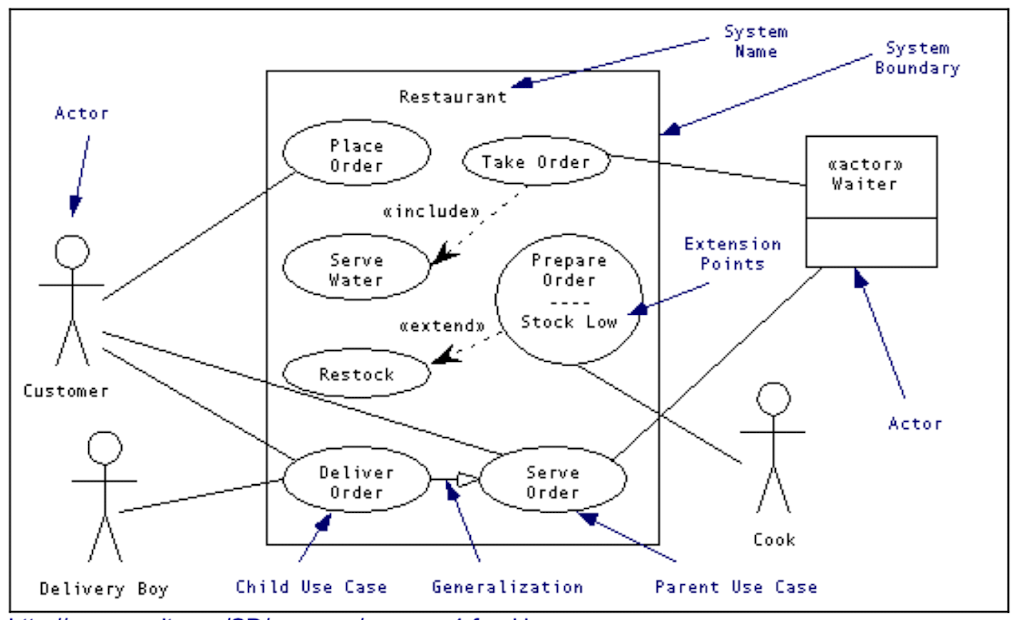
- 7—Use case diagram
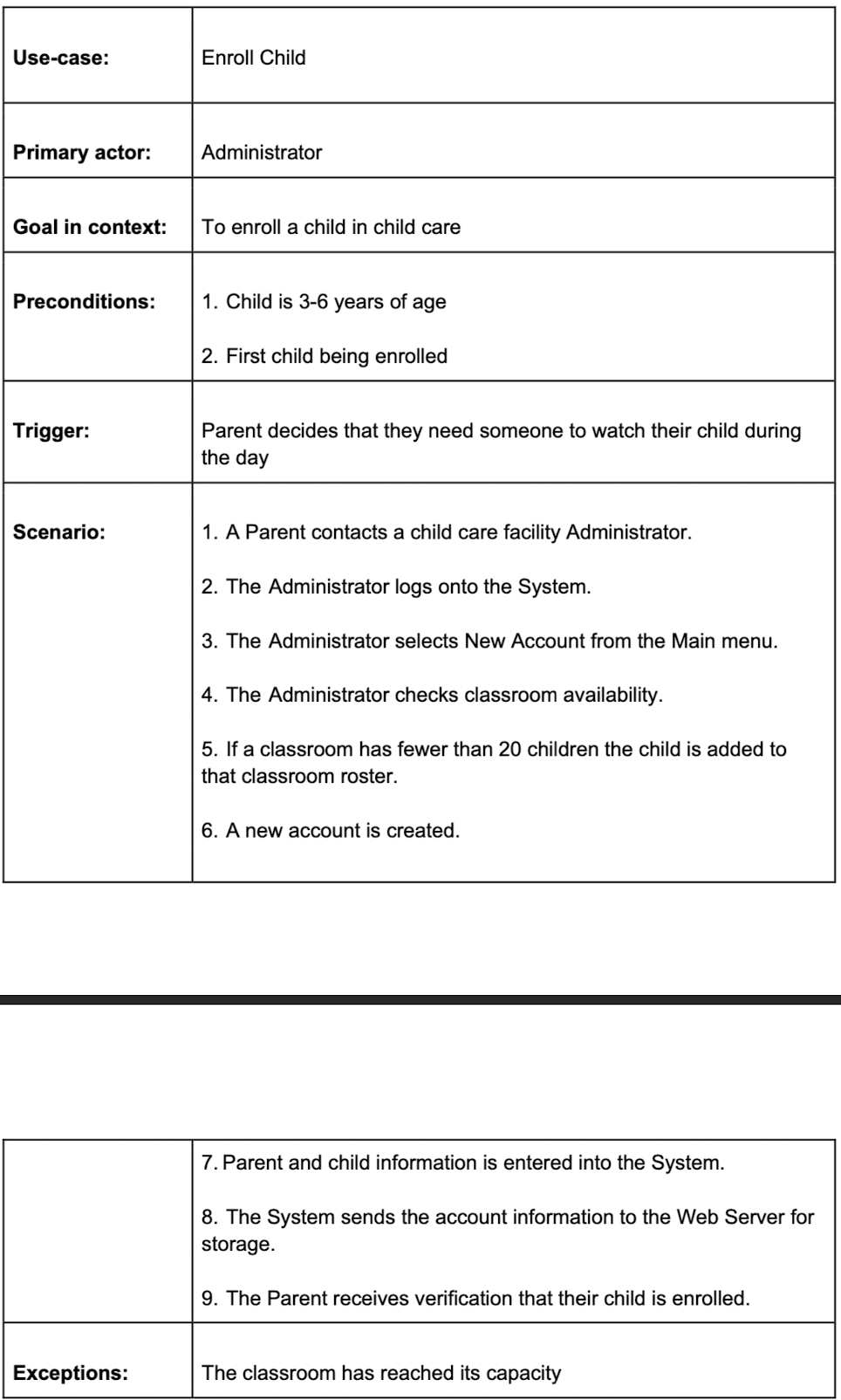
- 8—Use case scenario

- 9—Use case
- 10SPICIERcustomer scenario
S - tells a narrative story
P - includes personal detail
I - is implementation-free
C - told in the customer's voice
I - reveals deep insight about customer needs
E - includes emotions and environment
R - based on research - 11—hassle map
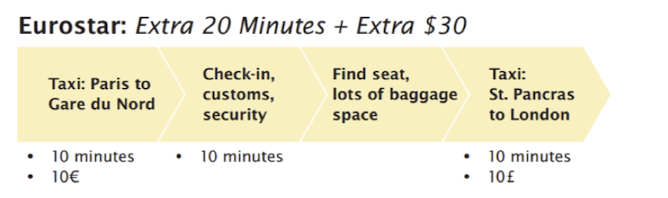
- 12Requirementwhat the system needs to be able to do
functional and non-functional - 13SpecificationsHow the system will fulfill the requirements
- 14Functional Requirementstatements of services the system should provide
- 15Non-Functional Requirementconstraints on the services or functions offered by the system.
(ie. timing, etc.) - 16The system must...critical requirement
- 17the system should ...important, but not necessary
- 18the system could...desirable, but not necessary
- 19the system won't,...wanted, but no appropriate at this time
- 20MOSCOWmust, should, could, won't
- 21INVESTFor evaluating user stories
I - indépendant
N - negotiable
V - valuable
E - Estimable
S - small
T - testable - 22—Domain Diagram aka Logical View
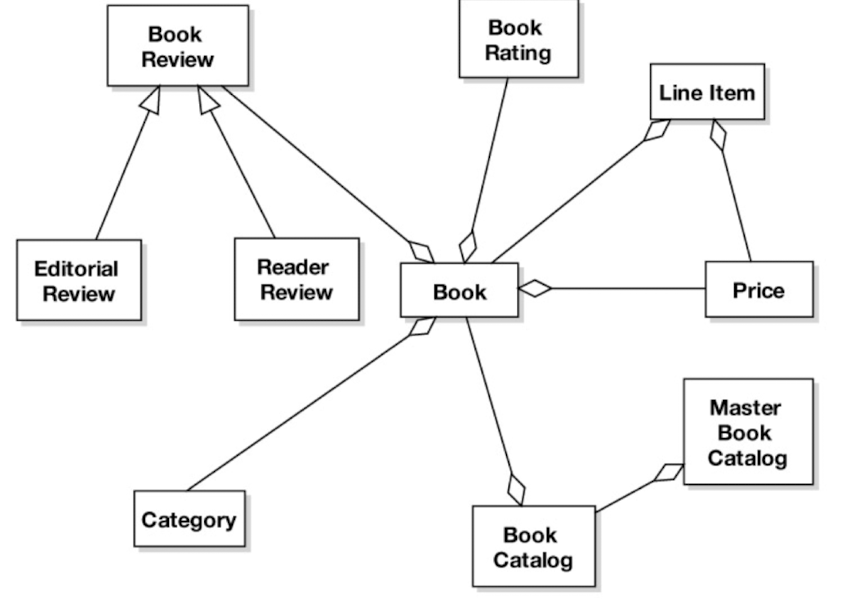
- 23—Activity Diagram aka Process View
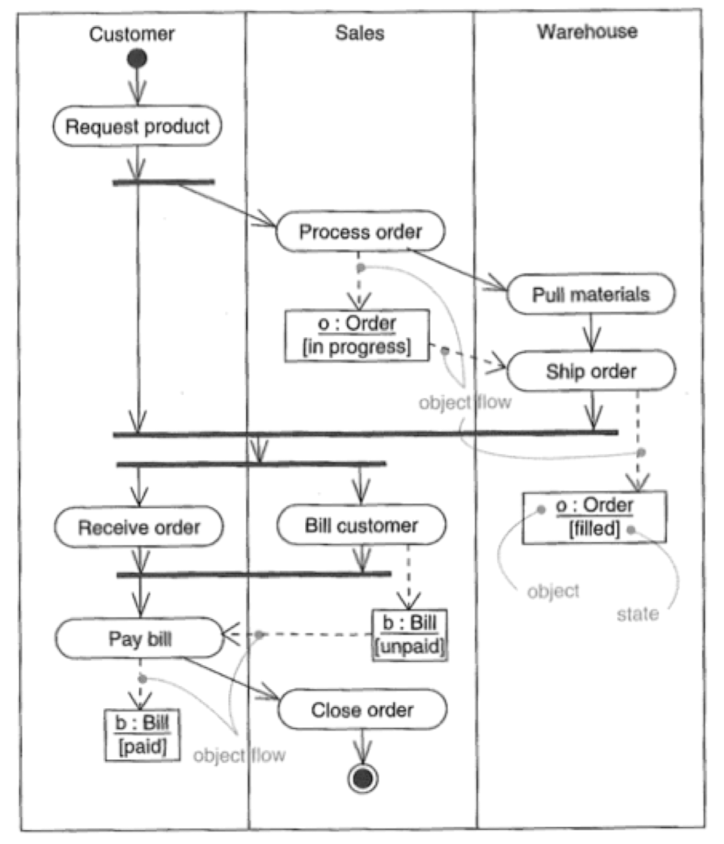
- 24—Block Diagram aka Development View
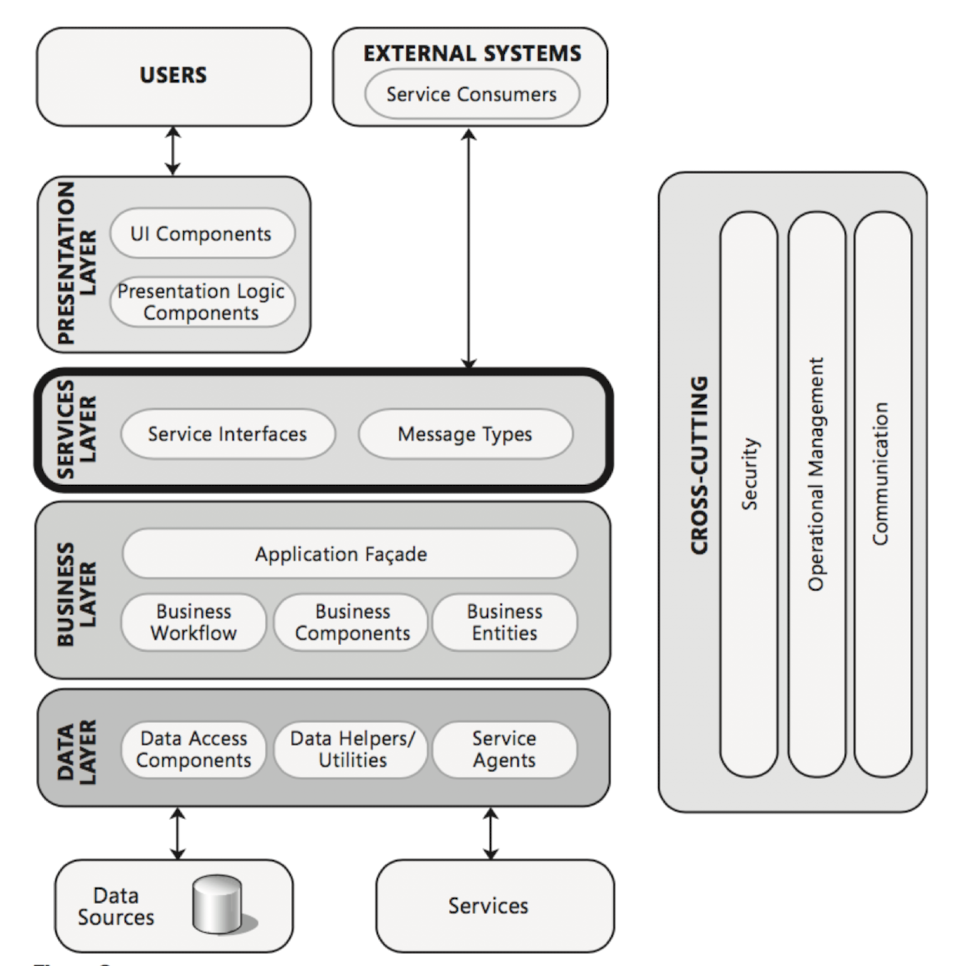
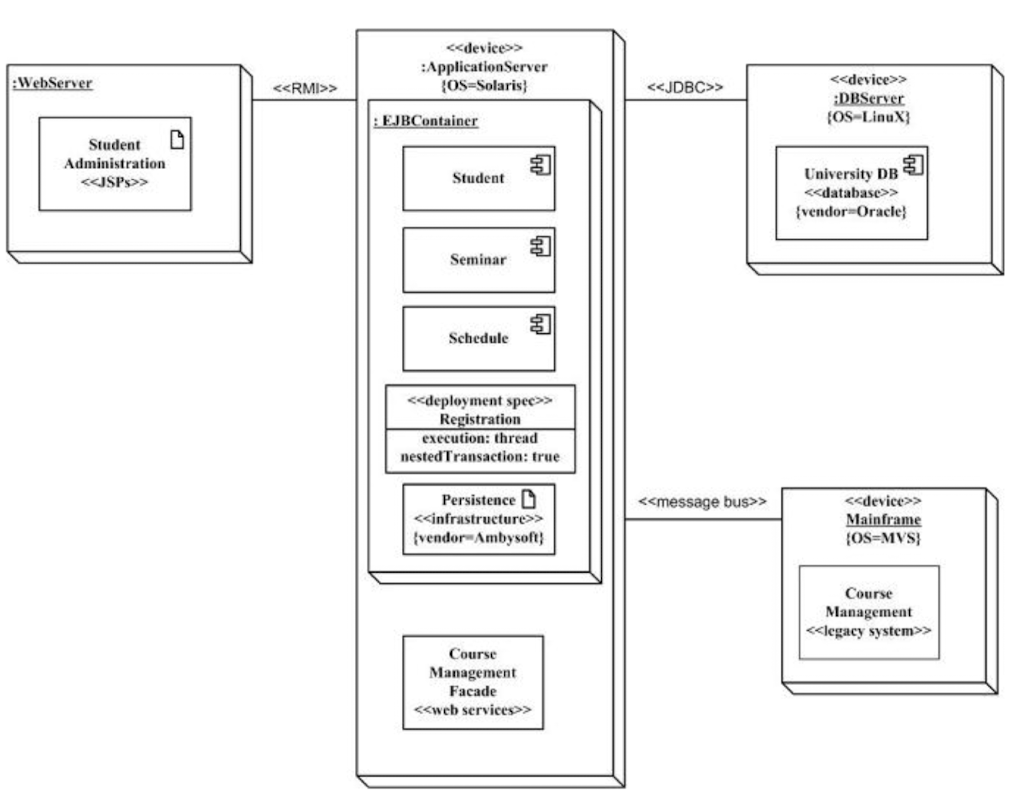
- 25—Deployment Diagram aka Physical View
- 26ICONIXOOP analysis and design methodology. Use case centric.
- 27—Robustness Diagram
(not UML)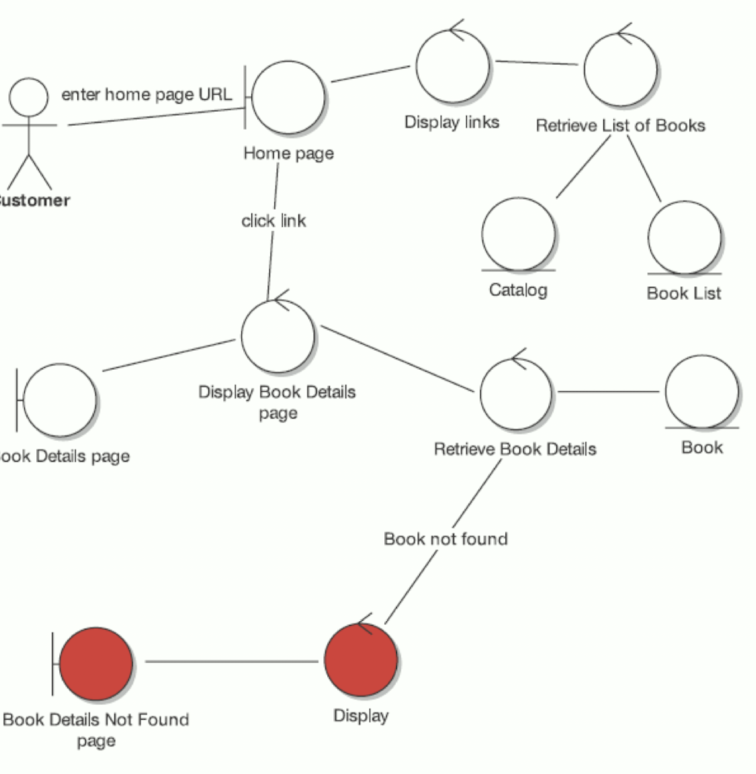
- 28—-Entity Object-
data or business objects
- 29—-Control Tasks-
functionally of the user case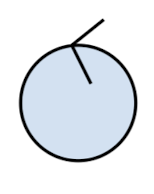
- 30—-Boundary Object-
User interface, networking interfaces, etc.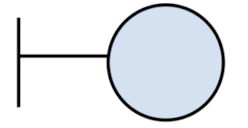
- 31—Class Diagram
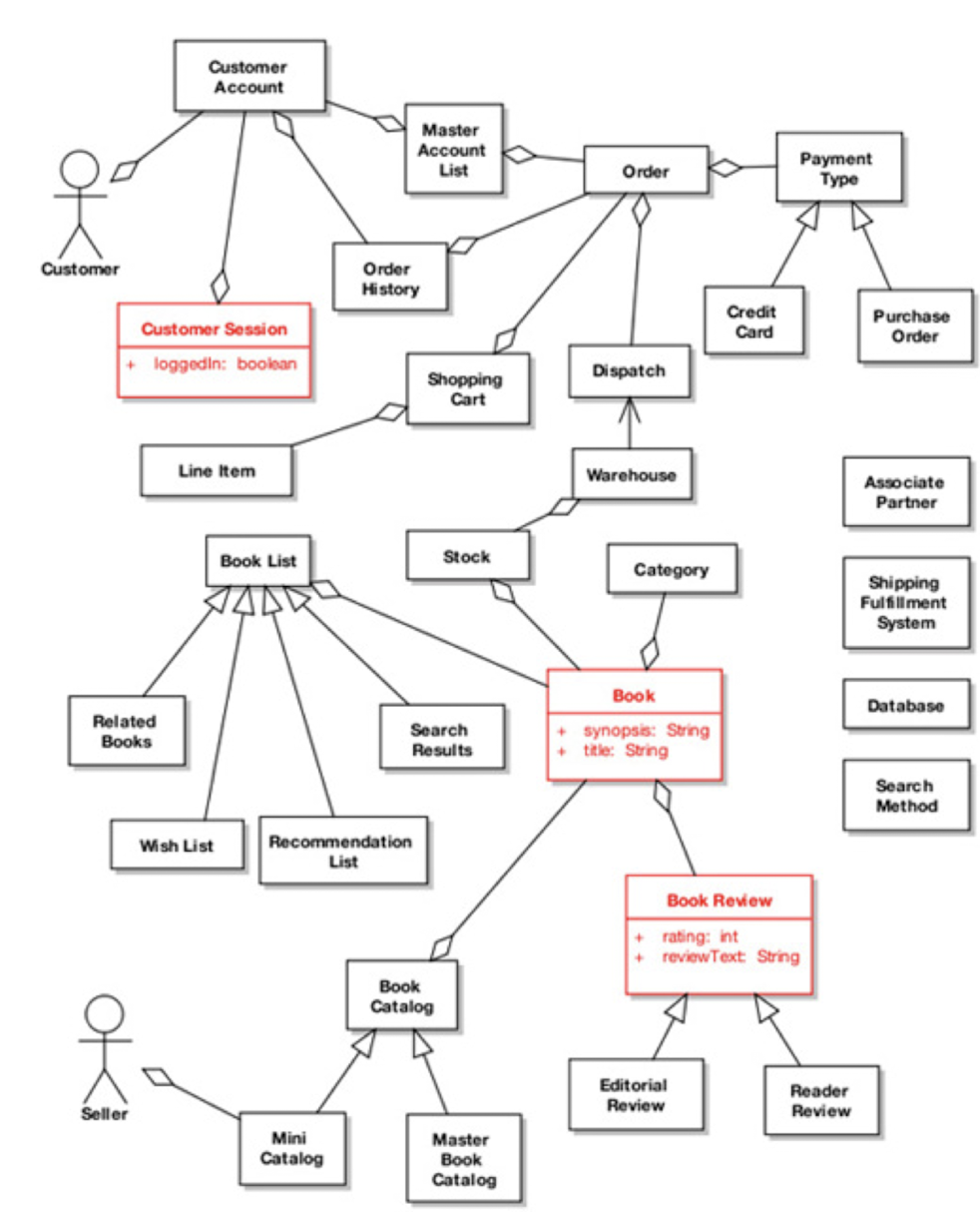
- 32—Sequence Diagram
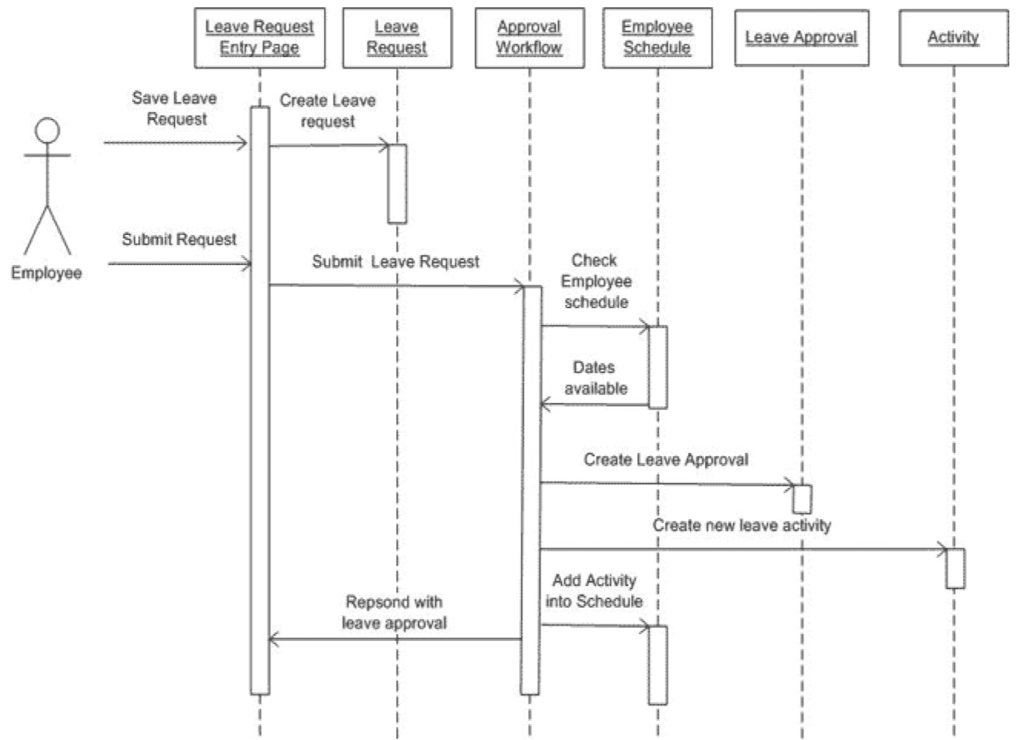
- 33Threat Modelingused to identify possible threats, analyze them to determine which one to focus on mitigating, and come up with plans for how to respond to possible threats.
- 34—Misuse Case
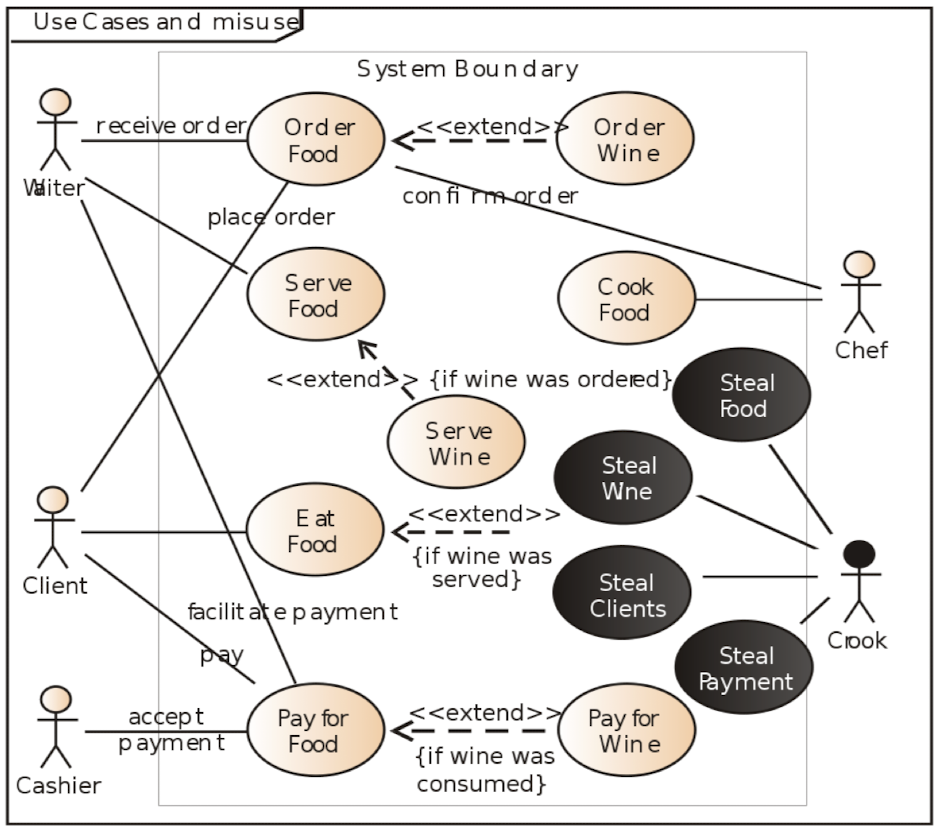
- 35—Threat Tree
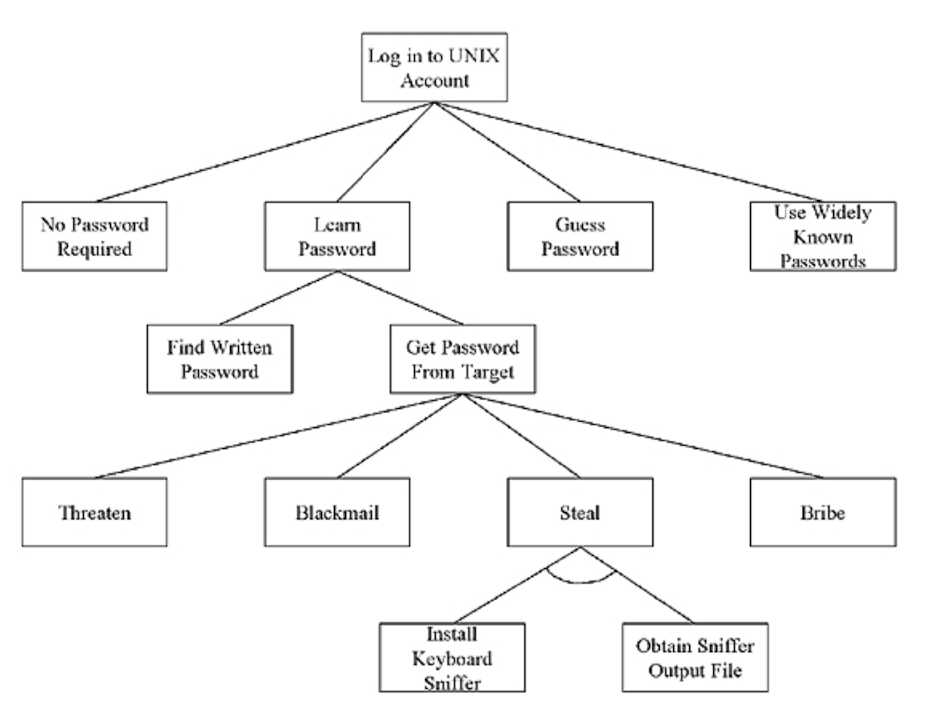
- 36STRIDEa manual process for identifying six different types of threats:
S - spoofing identity
T - tampering with data
R - repudation
I - information disclosure
D - denial of service
E - elevation of privilege - 37—Data flow diagram (DFD)
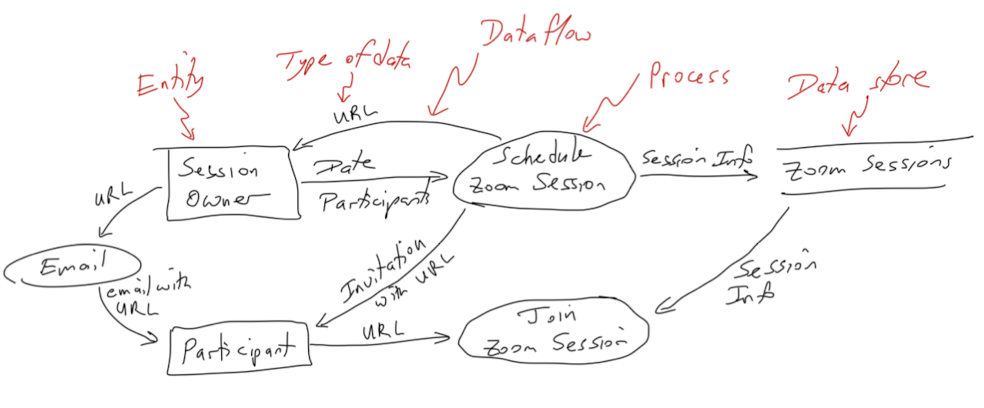
- 38DREADidentifies five key aspects that contribute to how problematic, risky, or import a thread is.
D - damage potential
R - reproducibility
E - exploitability
A - affected users
D - Discoverability
rank each of these five aspects to prioritize - 39Initial Investmentdevelopment effort, new infrastructure, migration and roll out, creating and delivery of training
- 40On-Going OperationsInfrastructure (including internet access), operations support, technical support, end user training, repair work
- 41Continuing Developmentevolutionary support, critical systems support, fixing bugs, new features
- 42Best software development estimation1.) expert estimates (past experiences)
2.) using metrics (empirical models ie. COCOMO)
3.) guessing - 43Break-Even Analysiscomparative systems analysis
(old versus new systems) - 44Payback Analysiscumulative costs are offset by cumulative benefits
for simple projects and time-frames - 45Net Present Value (NPV)more realistic economic analysis for large projects requiring more than one year back
- 46ROI= (benefits - costs) / costs
calculated for a time period like 5 years but expressed in terms of annualized rate - 47Risk Exposurethe additional cost and schedule impact that should be included because of risks
- 48Minimum Viable Product (MVP)subset of entire features of a system that when implemented provides functionality to users (stakeholders)
goal = validation
Information
- Description
- Computer Science Flashcards on Final, created by Yasmine Subbagh on 07/06/2023.
- Created by
- Yasmine Subbagh
- Views
- 0
- Rating