
Flashcards
separate but equal
Cards in this deck (23)
- 114th amendmentone of the civil war amendments defined US citizenship and guarantees "equal protection under the laws"
- 2De jure segregationsegregation established by law for example jim crow & the supreme court decision in Plessy v. ferguson
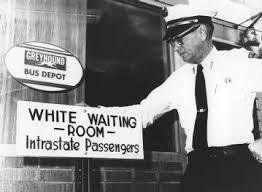
- 3De facto segregationlatin phrase that mean "by fact" segregation that occurred NOT by law but as a result of tradition
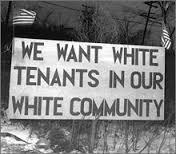
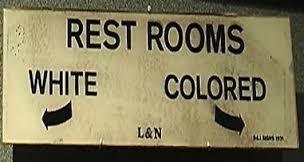
- 4jim crow lawssegregation laws in the south
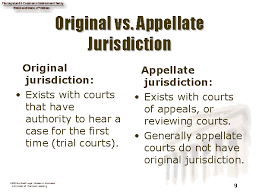
- 5original jurisdictionauthority of a court to hear a case for the first time
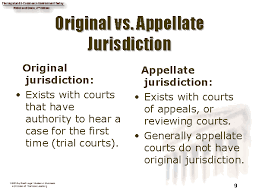
- 6appellate jurisdictionthe authority of a court to hear a case appealed from a lower court
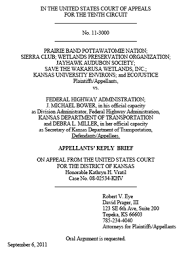
- 7legal briefa written document explaining the position of one side or the other in a case
- 8majority opiniona statement that presents the views of the majority of the supreme court justices regarding a case

- 9dissenting opiniona statement written by a supreme court justice who disagrees with the majority opinion presenting his or her own opinion
- 10stare decisisprinciple followed by judges and the supreme court a latin term that means let yesterday decision stand
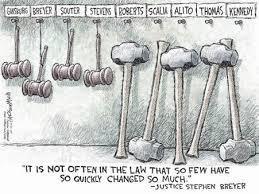
- 11precedenta ruling that is used as the basis for a judicial decision in a later similar case
- 12due process of lawsmeans fair and equal treatment in a court of law 5th & 14th amendments mention due process of laws
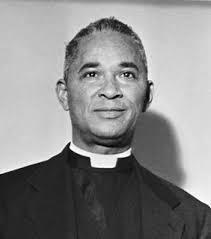
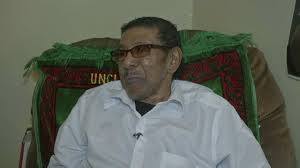
- 13reverend J , A delainewas a Methodist minister and civil rights leader from Clarendon County, South Carolina. He received a B.A. from Allen University in 1931, working as a laborer and running a dry cleaning business to pay for his education. DeLaine worked with Modjeska Simkins and the South Carolina NAACP on the case Briggs v. Elliott, which became one of the five cases argued under Brown v. Board of Education
- 14harry briggs jr.SC student who signed equalization petition
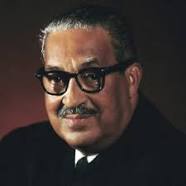
- 15Thurgood MarshallNAACP lawyer who argued the Clarendon County case in the Supreme Court
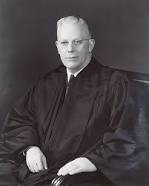
- 16Earl WarrenChief Justice who persuaded others to desegregate
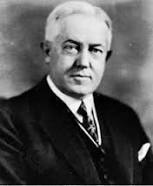
- 17John W. DavisFormer presidential candidate, top trial lawyer in US
- 18Dred ScottDred Scott was a slave in Missouri. From 1833 to 1843, he resided in Illinois (a free state) and in an area of the Louisiana Territory, where slavery was forbidden by the Missouri Compromise of 1820. After returning to Missouri, Scott sued unsuccessfully in the Missouri courts for his freedom, claiming that his residence in free territory made him a free man. Scott then brought a new suit in federal court. Scott's master maintained that no pure-blooded Negro of African descent and the descendant of slaves could be a citizen in the sense of Article III of the Constitution.
- 19plessy v. fergusonThe state of Louisiana enacted a law that required separate railway cars for blacks and whites. In 1892, Homer Adolph Plessy--who was seven-eighths Caucasian--took a seat in a "whites only" car of a Louisiana train. He refused to move to the car reserved for blacks and was arrested.
- 20brown v. board of educationBlack children were denied admission to public schools attended by white children under laws requiring or permitting segregation according to the races. The white and black schools approached equality in terms of buildings, curricula, qualifications, and teacher salaries. This case was decided together with Briggs v. Elliott and Davis v. County School Board of Prince Edward County.
- 21briggs v. elliottThe Briggs case was named for Harry Briggs, one of twenty parents who brought suit against R.W. Elliott, the president of the school board for Clarendon County, South Carolina. Initially, parents had only asked the county to provide school buses for the black students as they did for whites. When their petitions were ignored, they filed a suit challenging segregation itself. Reverend J. A. DeLaine, a school principal, was instrumental in recruiting the parent plaintiffs and enlisting the help of the NAACP. Thurgood Marshall, lead counsel for the NAACP Legal Defense Fund, Inc., and Harold Boulware, a local lawyer, filed Briggs v. Elliott in the fall of 1950.
- 22korematsu v. united statesDuring World War II, Presidential Executive Order 9066 and congressional statutes gave the military authority to exclude citizens of Japanese ancestry from areas deemed critical to national defense and potentially vulnerable to espionage. Korematsu remained in San Leandro, California and violated Civilian Exclusion Order No. 34 of the U.S. Army.
- 23university of california v. bakkeAllan Bakke, a thirty-five-year-old white man, had twice applied for admission to the University of California Medical School at Davis. He was rejected both times. The school reserved sixteen places in each entering class of one hundred for "qualified" minorities, as part of the university's affirmative action program, in an effort to redress longstanding, unfair minority exclusions from the medical profession. Bakke's qualifications (college GPA and test scores) exceeded those of any of the minority students admitted in the two years Bakke's applications were rejected. Bakke contended, first in the California courts, then in the Supreme Court, that he was excluded from admission solely on the basis of race.