
Flashcards
1.2.3 Software Development
Cards in this deck (28)
- 1Stages in the System Development Lifecycle: Feasibility + Defining the problemHelps answer the question of should we procced the proposed project idea
We determine early on that a program or solution will work, and if it doesn’t we save time, mainly and work later on - 2Stages in the System Development Lifecycle: RequirementsAnalyze carefully what the user wants, and refine the project's goals into a set of requirements
A requirements specification page is needed at the end of this stage that list all the requirements the user wants , which is checked and signed off by the client. - 3Stages in the System Development Lifecycle: Analysis and DesignThe design team work out how to do it. Describes the desired features and operations in detail: pseudocode, mocked up screen layouts, business rules and process diagrams etc.
- 4Stages in the System Development Lifecycle: Implementation (coding)Design is passed to the programmers who write the actual code for the program
- 5Stages in the System Development Lifecycle: Testing (installation planning)After coding the solution, all the pieces are brought together in a testing environment to check for error and bugs. Checks the system actually works as its intended.
- 6Stages in the System Development Lifecycle:] EvalutionUsing criteria, the finished program/system is evaluated against the objectives that were originally agreed with the client and analysist
- 7Stages in the System Development Lifecycle: MaintenanceGathers everything which happens during the rest of the software's life after it has been installed. E.g. changes , corrections, additions, upgrades, moves to a different computing platform.
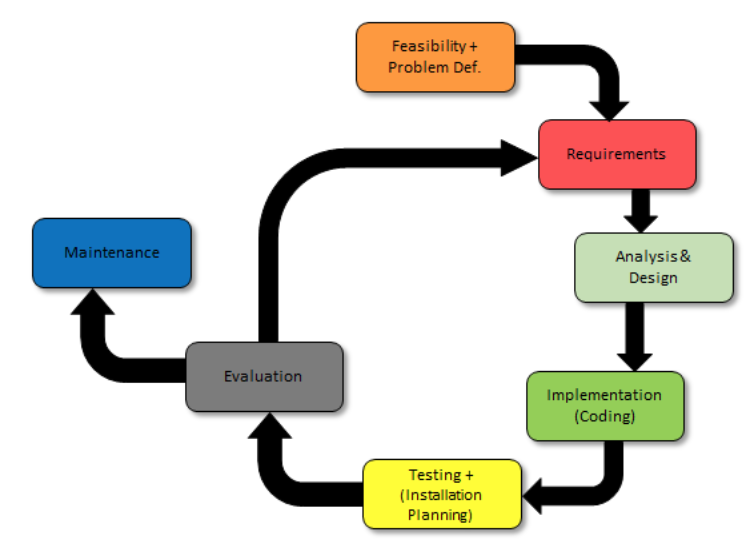
- 8RAD Methodology (diagram)
- 9RAD Methodology (explanation)A methodology for designing and writing software that includes producing successive prototyping versions of the software until a final version has been produced.
Several increasing refined prototypes are made with reduced functionality.
These are Design, Coding, Testing and Evaluation by the user, the user decides if they are happy with the system or want further improvements.
The improvements feed into the requirements which go through the cycle again – this can last several weeks.
Each prototype has improved functionality and referred to iterative development. - 10Waterfall Development (Diagram)
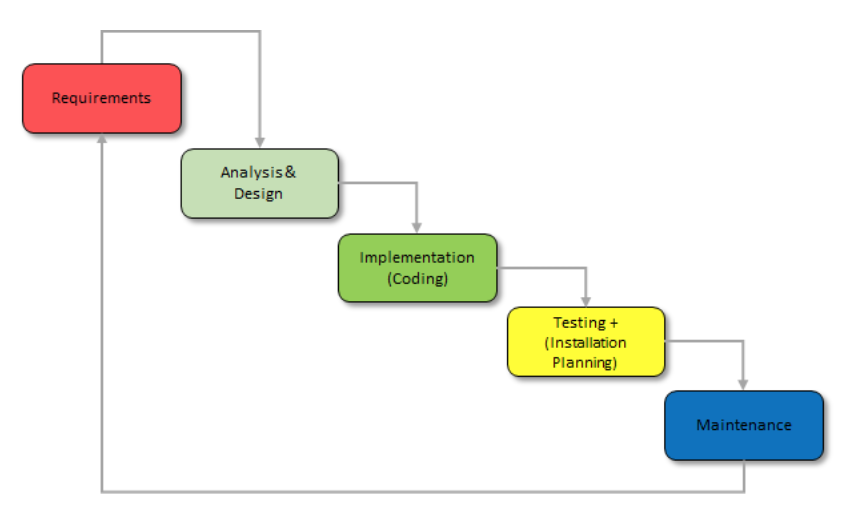
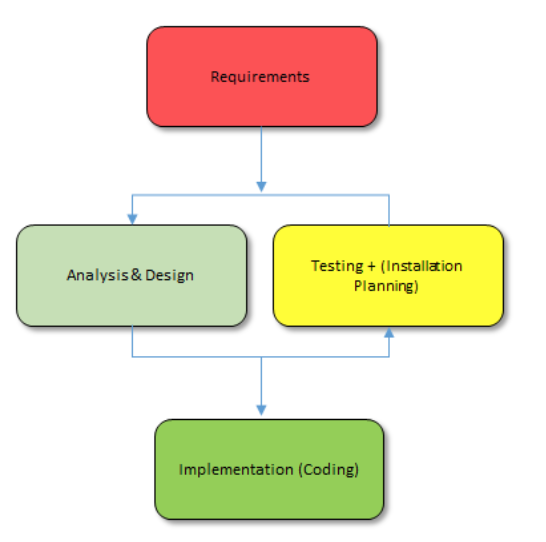
- 11Waterfall Development (explanation)The waterfall gets its name due to it cascading effect from one phase to another. Each phase has a well-defined starting and end point, with indefinable deliveries onto the next phase.
The up arrows reflect the fact that developers often have to re-work earlier stages due to experience gained as development progresses. - 12Spiral Development Cycle (Diagram)
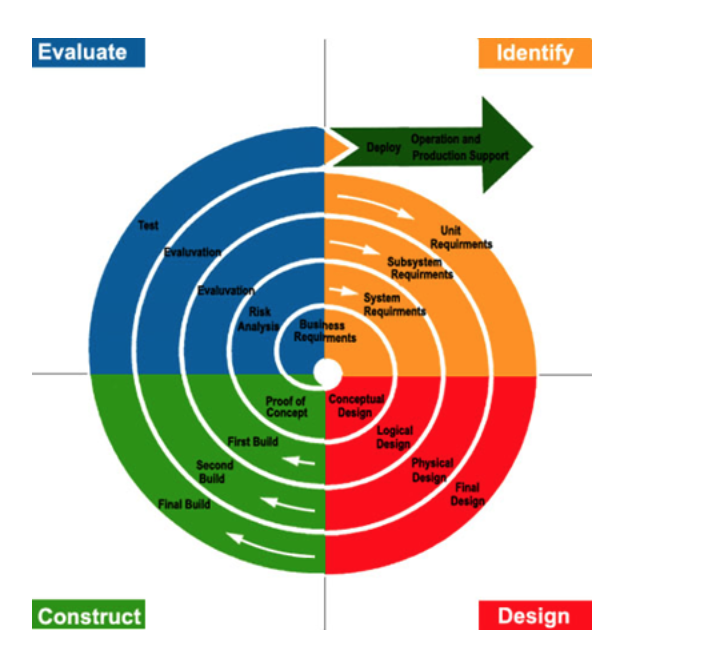
- 13Spiral Development Cycle (explanation)The spiral model is developed from waterfall, RAD and incremental. Although it is a risk driven approach to development, it acknowledges that risk is at the heart of many large scale development projects and keeps in mind of these risks during …
which instead of following steps it follows the steps but goes back to the first one to develop it even further. Similar to waterfall it starts off with identifying the problem, Requirements, analyzing, design, testing and evaluation but then returns to requirements to improve/change them and follows the cycle again until it is complete. - 14Extreme Programming (Diagram)
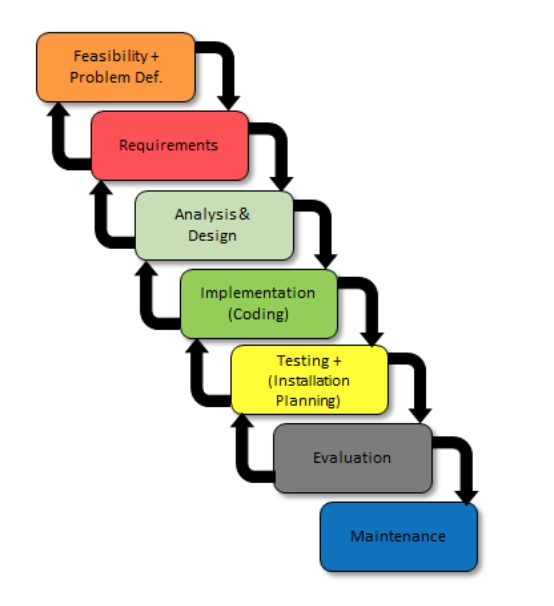
- 15Extreme Programming (Explanation)Extreme programming allows the method once reached the finally step to be able to backtrack to any step that is needing attention to improve/change. But includes all the stages that are seen in previous methods.
- 16Agile method (Diagram)
- 17Agile method (Explanation)The Agile method also includes all the stages that are seen in previous methods but has them in one big cycle that end with a launch ("Go live") to allow users to use this and the developers can receive feedback on how to improve it.
- 18Waterfall Development: AdvantagesSimplicity
Easy model to manage
Each stage has clear deliveries
Each stage has well-defined boundaries
Easy to spot timescale slips - 19Waterfall Development: DisadvantagesLack of flexibility
High-risk factor
End user very removed from development
Poor choice for systems with unsure requirements - 20RAD: AdvantagesUser feels involved
End product matches users requirements - 21RAD: DisadvantagesRegular contact with client
Does not scale well to large projects
Not suitable if efficacy of code is priority - 22Spiral: AdvantagesRisk is at its hear
Works well for large projects - 23Spiral: DisadvantagesRisk management is very specialised and cost skill
Time consuming - 24Agile + Extreme Programming: AdvangesQuality of end code very high
Efficient code/few bugs - 25Agile + Extreme Programming: DisadvangesIncrease development
Heavy collaboration
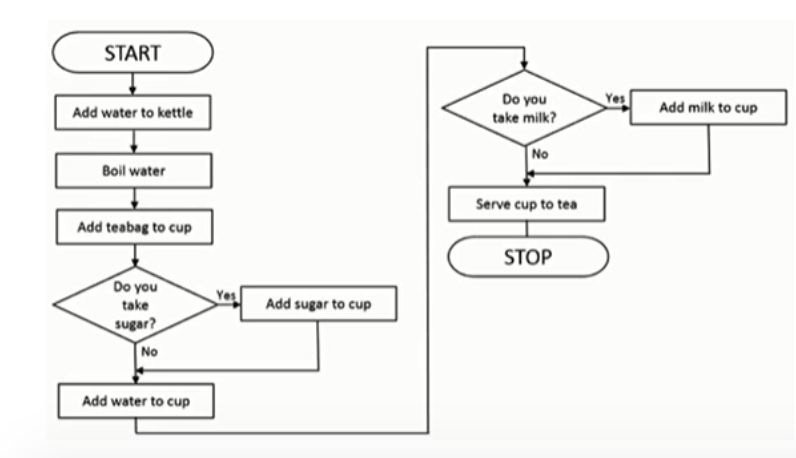
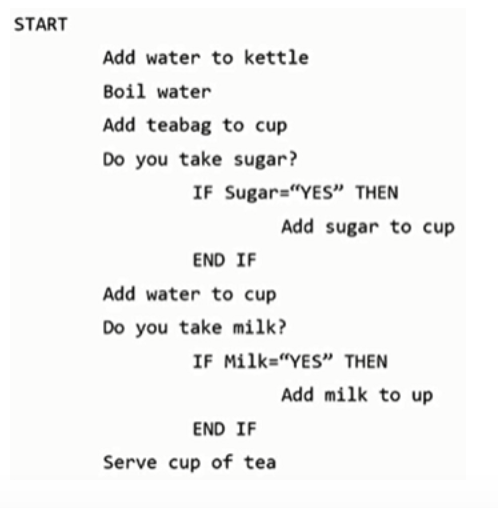
Embedded end user required - 26Algorithm– The logical steps needed to solve a given problem, often expressed as: Pseudocode or Flowchart
This involves breaking down the problem into smaller sub-problems and identifying logical steps needed to solve them - 27Algorithm (FLOWCHART EXAMPLE)
- 28Algorithm (PSEDOCODE EXAMPLE)
Information
- Description
- A-Level Computer Science Flashcards on 1.2.3 Software Development , created by Alyssa Watson on 28/05/2018.
- Created by
- Alyssa Watson
- Views
- 1
- Rating