
Flashcards
US History B Portfolio Initiative
Cards in this deck (50)
- 1Virginia CompanyThe Virginia Company of London was a joint-stock company chartered by King James I in 1606 to establish a colony in North America. A year later, the company's charter was revoked and the king assumed direct control of Virginia.
- 2JamestownJamestown became the capital of Virginia after 1619 but was almost entirely destroyed during Bacon's Rebellion and further declined after the removal of the capital to Williamsburg.
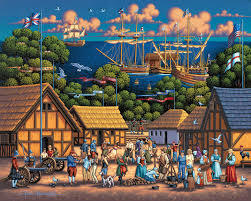
- 3Powhatan RelationsThe relationship between the Jamestown settlers and the indigenous people of Virginia was strained from the start.The settlers failed to realize that the Indians lived very close to the subsistence level by hunting and gathering little more than their immediate needs required.
- 4House of Burgessesthe lower house of the colonial Virginia legislature.
- 5Bacon’s RebellionBacon's Rebellion was an armed rebellion in 1676 by Virginia settlers led by Nathaniel Bacon against the rule of Governor William Berkeley.
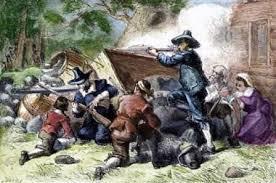
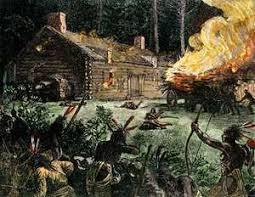
- 6King Philip’s WarKing Philip's War of 1675-1676 marked the last major effort by the Indians of southern New England to drive out the English settlers.
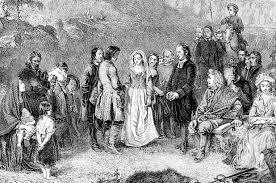
- 7Puritansa member of a group of English Protestants of the late 16th and 17th centuries who regarded the Reformation of the Church of England under Elizabeth as incomplete and sought to simplify and regulate forms of worship.
- 8Pilgrimsa person who journeys to a sacred place for religious reasons.
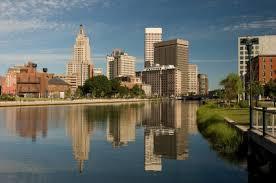
- 9Development of Rhode IslandRhode Island has an interesting history. Roger Williams founded the colony in 1636. He guaranteed religious and political freedom. Religious refugees from the Massachusetts Bay Colony settled in Rhode Island. It was one of the most liberal colonies.
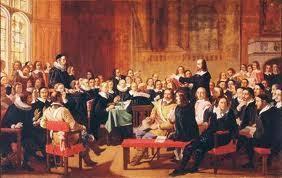
- 10Half-Way CovenantMany Puritans believed God was punishing the colony for failing to bring more people into the covenant. By the end of the 17th century, four out of every five Congregational churches in Massachusetts had adopted the Halfway Covenant, with some also extending access to the Lord's Supper.
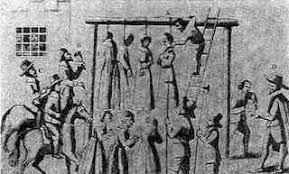
- 11Salem Witch TrialsTrials held in Salem, Massachusetts, in 1692 that led to the execution of twenty people for allegedly practicing witchcraft. The trials are noted for the hysterical atmosphere in which they were conducted; many townspeople were widely suspected of witchcraft on flimsy evidence.
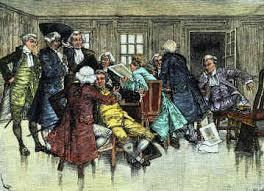
- 12Loss of the Massachusetts CharterThe colony began in 1628 and was the company's second attempt at colonization. It was successful, with about 20,000 people migrating to New England in the 1630s. The population was strongly Puritan, and its governance was dominated by a small group of leaders who were strongly influenced by Puritan religious leaders.
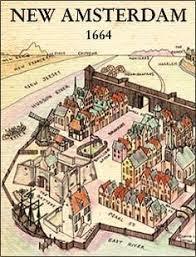
- 13Dutch Settlement of AmsterdamNew Amsterdam becomes New York. Dutch Governor Peter Stuyvesant surrendered New Amsterdam, the capital of New Netherland, to an English naval squadron under Colonel Richard Nicolls.A successful Dutch settlement in the colony grew up on the southern tip of Manhattan Island and was christened New Amsterdam.
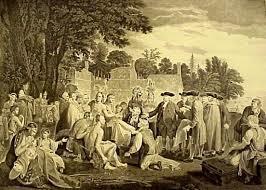
- 14Settlement of PennsylvaniaPenn's original name for the colony was to be New Wales, but that suggestion was rejected. Instead, he chose Sylvania and it was modified by the King to "Pennsylvania" in honor of Penn's father.
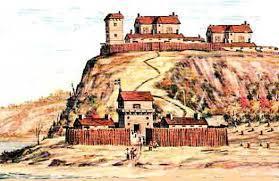
- 15French settlement in QuebecFrench colonization started when Jacques Cartier landed in Gaspé in 1534. One year later the French came into contact with Iroquoian villages on both shores of the St. Lawrence River, for example at Stadacona near the location of the future Québec City and Hochelaga.
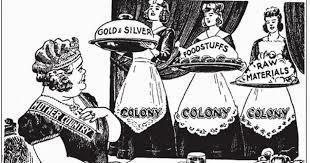
- 16Mercantilismthe economic theory that trade generates wealth and is stimulated by the accumulation of profitable balances, which a government should encourage by means of protectionism.
- 17Transatlantic Tradesomething that spans across the atlantic ocean. transatlantic slave trade. trade system that exchanged staple products, manufactured goods, and slaves in trade networks that involved Europe, Africa, and the New World.
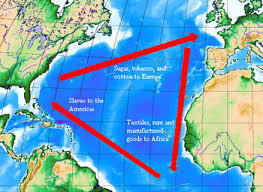
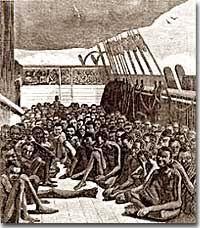
- 18Middle Passagethe sea journey undertaken by slave ships from West Africa to the West Indies.
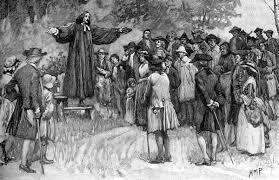
- 19The Great AwakeningThe Great Awakening was a series of religious revivals in the North American British colonies during the 17th and 18th Centuries. The First Great Awakening is the most famous of the movements and is usually referred to as simply "the Great Awakening."
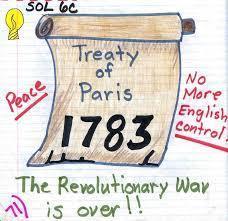
- 201763 Treaty of ParisThe Treaty of Paris, signed in Paris by representatives of King George III of Great Britain and representatives of the United States of America on September 3, 1783, ended the American Revolutionary War.
- 21French and Indian WarTheatres of the Seven Years' War. The French and Indian War pitted the colonies of British America against those of New France, each side supported by military units from the parent country and by American Indian allies.
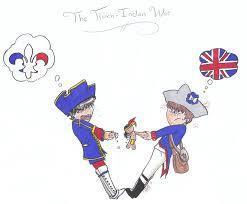
- 22Proclamation of 1763In 1763, at the end of the French and Indian War, the British issued a proclamation,mainly intended to conciliate the Indians by checking the encroachment of settlers on their lands. In the centuries since the proclamation, it has become one of the cornerstones of Native American law in the United States and Canada.
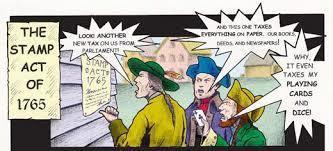
- 23Stamp Actan act of the British Parliament in 1765 that exacted revenue from the American colonies by imposing a stamp duty on newspapers and legal and commercial documents. Colonial opposition led to the act's repeal in 1766 and helped encourage the revolutionary movement against the Crown.
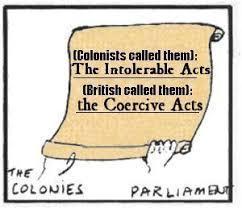
- 24Intolerable ActsThe Intolerable Acts were five laws that were passed by the British Parliament against the American Colonies in 1774.
- 25Thomas Paine’s Common SensePublished in 1776, Common Sense challenged the authority of the British government and the royal monarchy. The plain language that Paine used spoke to the common people of America and was the first work to openly ask for independence from Great Britain.
- 26Declaration of IndependenceThe Declaration of Independence proclaimed that governments are instituted to secure citizens' “unalienable Rights.” That was the same morning that John Adams presented Jefferson's first draft of a new Declaration of Independence to the Continental Congress.
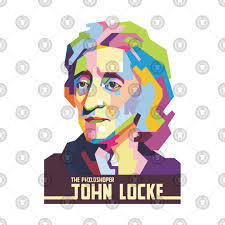
- 27John LockeA seventeenth-century English philosopher. Locke argued against the belief that human beings are born with certain ideas already in their minds.
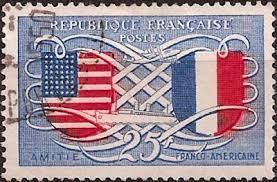
- 28French assistance during the American RevolutionAs the French and the British continued to vie for power in the 1770s, French officials saw an opportunity in the rebellion of Britain's North American colonies to take advantage of British troubles.
- 29Marquis De LafayetteMarquis de Lafayette. 1757–1834, French general and statesman.
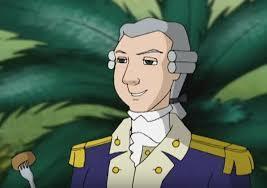
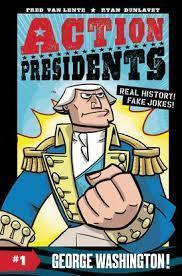
- 30George Washington (presidency and role in military)After serving as President of the United States, he briefly was in charge of a new army in 1798. Washington, despite his youth, played a major role in the frontier wars against the French and Indians in the 1750s and 1760s.
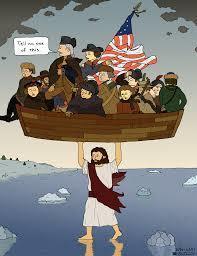
- 31Crossing of the Delaware RiverIt commemorates General George Washington during his famous crossing of the Delaware River with the Continental Army on the night of December 25–26, 1776, during the American Revolutionary War.
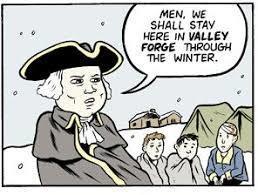
- 32Valley ForgeA village of southeast Pennsylvania on the Schuylkill River northwest of Philadelphia. It was the site of the headquarters of the Continental Army under George Washington from December 1777 to June 1778 during the American Revolution.
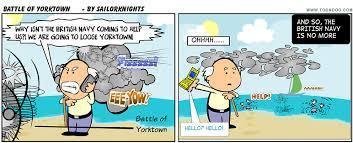
- 33Battle of YorktownOn this day in 1781, General George Washington, commanding a force of 17,000 French and Continental troops, begins the siege known as the Battle of Yorktown against British General Lord Charles Cornwallis and a contingent of 9,000 British troops at Yorktown, Virginia, in the most important battle of the Revolutionary.
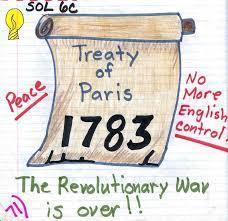
- 34Treaty of Paris, 1783When news of the British defeat at Yorktown reached England, support for the war in America faded in both the British Parliament and the public. England agreed to begin peace negotiations with the Americans to end the Revolutionary War.
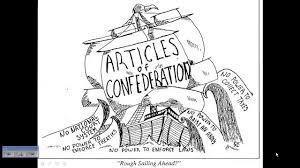
- 35Articles of Confederation (weaknesses)The major downfall of the Articles of Confederation was simply weakness. The federal government, under the Articles, was too weak to enforce their laws and therefore had no power.
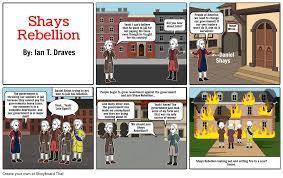
- 36Daniel Shay’s RebellionShays' Rebellion was a series of violent attacks on courthouses and other government properties in Massachusetts, beginning in 1786, which led to a full-blown military confrontation in 1787.
- 37Federalistsa person who advocates or supports a system of government in which several states unite under a central authority.
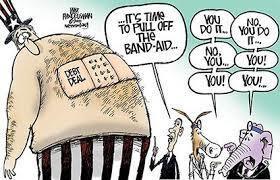
- 38Anti-Federalistsany person who opposes federalism.
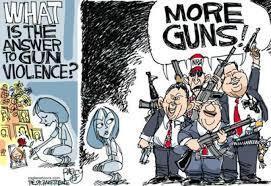
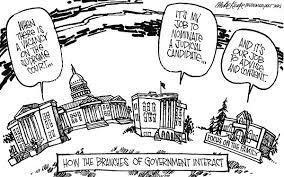
- 39Checks & Balancescounterbalancing influences by which an organization or system is regulated, typically those ensuring that political power is not concentrated in the hands of individuals or groups.
- 40Alexander HamiltonAlexander Hamilton was an American statesman and one of the Founding Fathers of the United States. He took an early role in the militia as the American Revolutionary War began. In 1777, he became a senior aide to General Washington in running the new Continental Army.
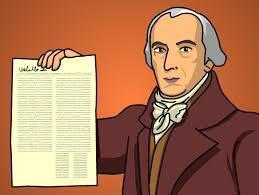
- 41James MadisonJames Madison was a founding father of the United States and the fourth American president, serving in office from 1809 to 1817. When Jefferson became the third U.S. president, Madison served as his secretary of state. In this role, he oversaw the Louisiana Purchase from the French in 1803.
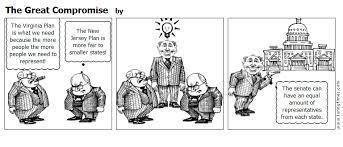
- 42The Great CompromiseIn the "Great Compromise," every state was given equal representation, previously known as the New Jersey Plan, in one house of Congress, and proportional representation, known before as the Virginia Plan, in the other.
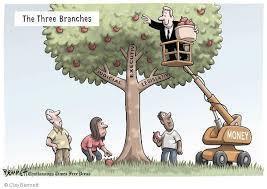
- 43Separation of powersSeparation of powers imposes internal limits by dividing government against itself, giving different branches separate functions and forcing them to share power.
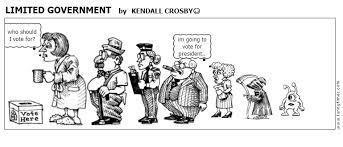
- 44Limited GovernmentAn individual's rights and liberties are protected against governmental power even if that power is exercised in the name of a majority of people. In a limited government, there exist minimal government intervention in personal liberties and the economy.
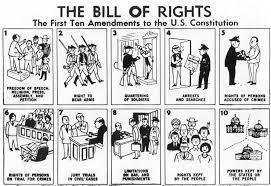
- 45The Bill of Rightsthe first ten amendments to the US Constitution, ratified in 1791 and guaranteeing such rights as the freedoms of speech, assembly, and worship.
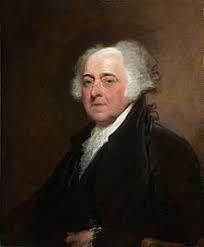
- 46John AdamsA political leader of the late eighteenth and early nineteenth centuries; one of the Founding Fathers. Adams was a signer of the Declaration of Independence. He was the second president, from 1797 to 1801, after George Washington. Washington and Adams were the only presidents from the Federalist party.
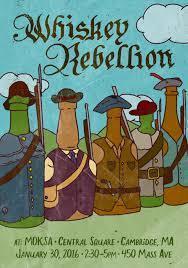
- 47Whiskey RebellionWhiskey Rebellion, (1794), in American history, uprising that afforded the new U.S. government its first opportunity to establish federal authority by military means within state boundaries, as officials moved into western Pennsylvania to quell an uprising of settlers rebelling against the liquor tax.
- 48Cites
- 49—
- 50—
Information
- Description
- This is for US History B Portfolio Initiative
- Created by
- Haley McElmurray
- Views
- 23
- Tags
- Rating