
2895973
Description

Flashcards by Alyssa Conte, updated more than 1 year ago

|
Created by Alyssa Conte
over 11 years ago
|
|
| Question | Answer |
| biome | large area of the biosphere that has characteristic climate, plants, animals and soil |
| biotic | living |
| abiotic | non-living |
| elevation | the height above sea level |
| adaptation | a characteristic that allows an organism to better survive and reproduce |
| structural adaptation | a physical feature that helps an organism survive |
| physiological adaptation | a physical or chemical event inside the body of an organism that allows it to survive |
| behavioural adaptation | a behaviour that helps an organism to survive |
| divisions of life on earth in order from largest to smallest: | biosphere biome ecosystem habitat |
| nutrients | minerals that organisms need to live and grow |
| photosynthesis | a chemical reaction that converts solar energy into chemical energy usable by plants |
| ecological hierarchy + the order | the order of relationships in an ecosystem: ecosystem community population organism |
| symbiosis | a relationship in which two different organisms live together in close association |
| commensalism | one organism benefits and the other organism is not affected |
| mutualism | both organisms benefit |
| parasitism | one organism benefits and the other organism is harmed |
| host | the organism that a parasite lives in or on |
| niche | the role an organism has within an ecosystem |
| competition | an interaction that occurs between two or more organisms when they need the same resource in the same location at the same time |
| predation | the relationship where one organism (the predator) kills and consumes another organism (the prey) |
| producers | produce food in the form of carbohydrates |
| consumers | organisms that feed on other organisms |
| decomposers | organisms such as bacteria and fungi that change wastes and dead organisms into usable nutrients for other organisms |
| detrivores | consumers that eat dead organisms and waste matter |
| herbivores | eat only plants |
| carnivores | meat eater |
| omnivores | both plant and animal eaters |
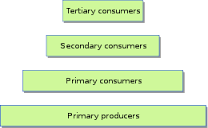
| trophic levels | |
| pyramid of numbers | shows number of organisms at each trophic level |
| pyramid of biomass | shows number of organisms at each trophic level multiplies by their mass |
| pyramid of energy | shows amount of energy available at each trophic level |
| carbon store | a.k.a carbon sink, is a short or long term accumulation of carbon |
| where are short-term carbon stores? | -aquatic and terrestrial organisms -carbon dioxide -atmosphere -top layer of the ocean |
| where are long-term carbon stores? | -middle & lower ocean layer dissolved in CO2 -coal -oil -gas deposits in land -ocean sediments |
| carbon exchange | how carbon is moved through terrestrial and aquatic ecosystems |
| cellular respiration | the process where both plants and animals release carbon dioxide back into the atmosphere |
| carbonate | carbon & oxygen dissolved in ocean water |
| fossil fuels | oil, gas and coal |
| legumes | plants such as peas and beans that can fix atmospheric nitrogen |
| nitrification | 2 step process that occurs when nitrifying bacteria convert ammonium into nitrate |
| denitrification | the process where nitrogen is returned into the atmosphere |
| where does nitrogen fixation occur? | atmosphere, soil & water |
| where is phosphorus found? | phosphates found in rocks & ocean floor |
| geological uplift | the process of mountain building where earth's crust folds and deeply buried rock layers rise and are exposed |
| bioaccumulation | build up of synthetic and organic chemicals in living organisms |
| keystone species | species that greatly affect population numbers and health of an ecosystem |
| biomagnification | process where chemicals accumulate and become more concentrated at each trophic level |
| DDT | pesticide introduced to control mosquito populations |
| heavy metals | metals that accumulate and are toxic to animals at low concentrations |
| 3 heavy metals | lead, cadmium, mercury |
| bioremediation | the use of micro-organisms or plants to help clean up chemical pollution |
| natural selection | process where the best adapted members of a species will survive and reproduce |
| adaptive radiation | members of a species adapt to a variety of habitats |
| ecological succession | changes that take place over time in the types of organisms that live in an area |
| primary succession | occurs where no soil exists |
| pioneer species | first organisms to survive and reproduce |
| lichens | examples of a mutualistic relationship between fungus and algae |
| secondary succession | occurs after a major disturbance |
| climax community | a mature community that continues to change over time |
| ecological stability | populations are able to return to their previous state when disturbed |
| estuaries | coastal bodies of water where rivers or streams meet the ocean |
| deforestation | forests are logged or cleared for human use and not replanted |
| soil degradation | soil becomes less healthy and able to support life |
| native species | plants and animals the naturally inhabit an area |
| foreign species | organisms that people intentionally or accidentally introduced into regions where they did not exist |
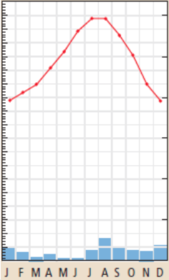
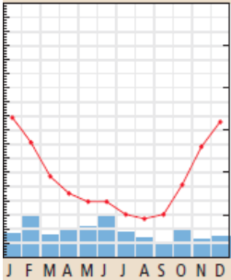
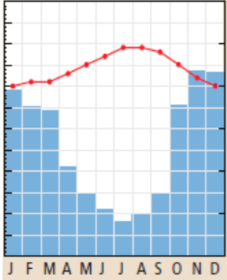
| boreal forest | |
| desert | |
| grassland | |
| permanent ice | |
| temperate rainforest | |
| tropical rainforest | |
| tundra | |
| what percent of energy is lost moving up each trophic level? | 90% lost as heat to the environment |
| what does soil so for an ecosystem? | provides water storage + nutrients |
| what happens to prey when predator count goes up? | prey count goes down |
| biodegration | breaking down of dead organic matter by living organisms like bacteria |
| where does nitrogen fixation occur? | water, soil, atmosphere |
| nitrogen fixation | nitrogen gas is converted to ammonium |
| nitrification | ammonium is converted into nitrate |
| denitrification | nitrogen is returned into the atmosphere |


Want to create your own Flashcards for free with GoConqr? Learn more.