
Flashcards
.
Cards in this deck (23)
- 1FUNCTIONS OF THE CIRCULATORY SYSTEMIts main function is to carry nutrients and oxygen from the digestive and respiratory systems to the cell environment. Additionally, it also transports white blood cells for protection against infections and it regulates body temperature.
- 2BLOOD IS FORMED BY:It is divided into two parts: Plasma and cells. Plasma is formed by water, proteins, salts, amino acids and glucose. And cells are formed by:
-Erythrocytes or red blood cells.
-Leukocytes or white blood cells.
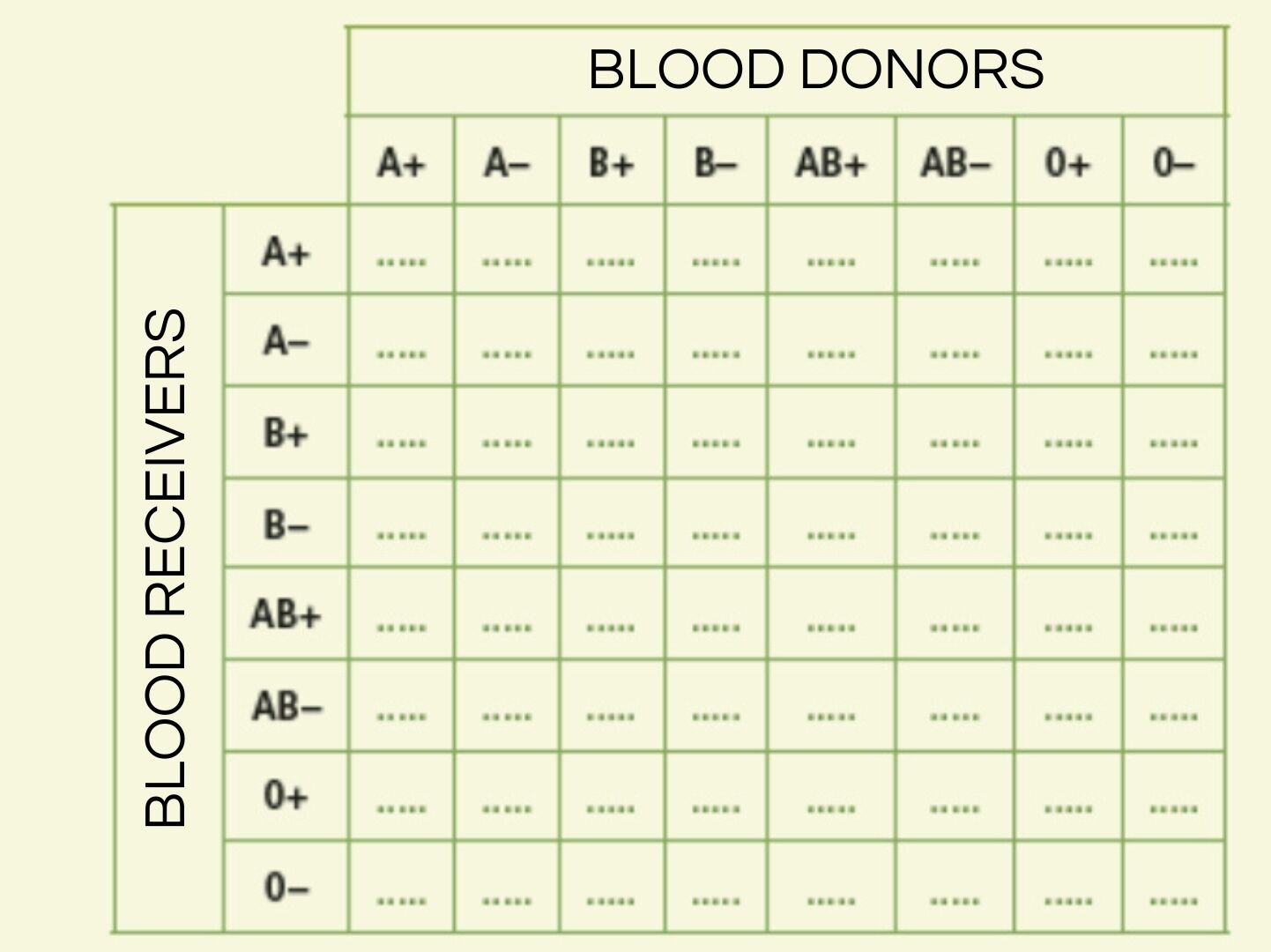
-Platelets or thrombocytes. - 3WHAT ARE THE DIFFERENT BLOOD GROUPS?There are four fundamental letter combinations that classify the blood groups in A, B, AB, 0.
There are four groups ABO: A, B, AB and 0. - 4DIFFERENCE BETWEEN ARTERIES AND VEINSBlood arrives with high pressure to the arteries because it is the blood that has arrived oxygenated to the heart and that the heart has sent to the whole body.
However, veins are the conducts that carry the blood that contains waste, and that has already released the oxygen and nutrients to arrive to the right atrium, in order to get to the right ventricle, where it is sent to the lungs.
Arteries are elastic whereas veins aren’t. - 5LAYERS OF THE HEARTEndocardium: It is the innermost layer. It forms the inner lining of the atria.
Myocardium: It is a thick wall of muscle tissue, in charge of boosting blood through the body by contracting.
Pericardium: It is a doble membrane full of liquid that avoids the myocardium and the pericardium from touching when the former contracts. It also protects the myocardium. - 6STAGES OF THE CARDIAC CYCLEAtrial Systole: The atria contract and blood is boosted to the ventricles through the tricuspid and bicuspid valves.
Ventricular Systole: The ventricles contract. The left ventricle sends the blood to the lungs through the pulmonary artery and the right one contracts vigorously to send the blood to the remaining parts of the body through the aorta artery.
Diastole: It is a short period in which the heart rests as the blood arrives to the left and right atria. - 7WHAT IS THE JOURNEY OF BLOOD THROUGH THE BODY LIKE?The blood comes through the vena cava, it reaches the left atrium that contracts so that it passes to the right ventricle, where the tricuspid valve is located that prevents the blood from going back. The right ventricle contracts so that the venous blood reaches the lungs through the pulmonary artery. The blood returns from the lungs to the left atrium, through the pulmonary veins, that contracts to go through the left ventricle that also contracts so that the blood gets to the rest of the body trough the aorta artery.
- 8TICK IN WHICH CASE A BLOOD DONATION IS POSSIBLE
- 9WHAT IS THE LYMPH?The lymph is a transparent liquid formed by lymphocytes and the interstitial fluid collected from the different tissues.
- 10FUNCTIONS OF THE LYMPHATIC SYSTEM-Maintains the balance of the internal medium.
-Takes part in the defense of the organism as it produces lymphocytes.
-Collects the product of the fat digestion thanks to a special type of lymphatic vessels. - 11STAGES OF URINE FORMATION-Glomerular filtration: The blood goes through the glomerulus where it is filtered between the capillary cells passing through the Bowman’s capsule. Cells and proteins cannot go through the capillaries, however, water, mineral salts and waste substances can.
-Tubular reabsorption: The filtered liquid goes through the convoluted tubes and the loop of Henle. During this voyage, useful substances such as water, glucose, some amino acids and vitamins or the ones that go through the capillaries surrounding the tubules are reabsorbed and pass into the renal vein. The body filters each day in total 180 liters, of which 178 are reabsorbed and 2 go to the urinary bladder. - 12WHY ARE THE LUNGS ALSO CONSIDERED AN EXCRETORY ORGAN?Because when you breathe the lungs both absorb oxygen and expel carbon dioxide, which is a waste substance.
- 13WHY IS THE LIVER ALSO CONSIDERED AN EXCRETORY ORGAN?Because it produces and ELIMINATES red blood cells, purifies drugs and other toxic substances that are found inside blood and purifies bilirubin.
- 14WHY ARE SWEAT GLANDS ALSO CONSIDERED AN EXCRETORY ORGAN?Because these are normally found where a hair is, and hairs can also be found in the liver, a glomerulus that little by little filters the blood until a drop can be seen oozing.
- 15WHAT DIFFERENCE IS THERE BETWEEN THE MALE AND FEMALE URINARY SYSTEMS?The difference between the male and female urinary systems is that the male urethra is a bit larger, and that it is, at the same time, an urinary tract.
However, the female urethra is, exclusively, an urinary tract, completely independent from the genitals. - 16IS A KIDNEY STONE THE SAME THING AS A GALLSTONE? Explain your answer.No, a kidney stone is solid piece of material that is formed in the kidney due to substances in urine and gallstones are pieces of hard material, similar to stones, composed of cholesterol or bilirubin, both formed in the gallbladder.
- 17HEMATOLOGIC DISEASES (Blood)Anaemia: A reduction in the number of red blood cells or a reduction in the amount of hemoglobin present in the body.
-Leukemia: An abnormal increase in the number of white blood cells, a decrease in the amount of normal blood cells.
-Thrombosis: Formation of a blood clot inside a blood vessel. - 18DISEASES THAT AFFECT THE HEART-Myocardial infarction: The blood flow decreases in the myocardium due to an obstruction of a coronary artery.
-Angina pectoris: Not enough oxygen gets to the heart as a result of excessive exercise. - 19DISEASES THAT AFFECT THE BLOOD VESSELS-High blood pressure: Blood pressure that surpasses the average values. This may lead to the breakage of small blood vessels, a heart failure.
-Arterioesclerosis: The arteries harden and lose elasticity, the blood pressure elevates leading to hypertension.
-Atherosclerosis: Cholesterol plaque builds up in the internal walls of the arteries.
-Aneurysm: Abnormal dilation generally caused in an important artery, that, if broken, can cause a fatal internal bleeding. - 20HEALTHY HABITS OF THE CARDIOVASCULAR APPARATUSDo not smoke: Tobacco increases the risk of arterioesclerosis, especially in big arteries.
Avoid becoming overweight: Obesity is associated to high cholesterol and high blood pressure.
Avoid salty foods: Too much salt can cause fluid retention, making your heart work too hard.
Avoid stress: It can affect your blood pressure.
Exercise regularly: It improves cardiovascular fitness. - 21DISEASES THAT AFFECT THE KIDNEYSRenal failure: Insufficient filtration in the glomeruli. This leads to a lower urine production. It causes nausea and vomiting. This is due to renal injuries or to a deficient blood pressure in the kidneys.
- 22DISEASES THAT AFFECT THE URINARY TRACTSColic: Intense pain in the urinary tract or in the kidneys due to an obstruction caused by a kidney stone. It forms when there is a high salt concentration in urine.
- 23HEALTHY HABITS OF THE EXCRETORY SYSTEMDrinks lots of water: This helps to prevent high salt concentrations.
Avoid salty foods: Too much salts contributes to the formation of kidney stones.
Avoid toxic substances: This includes alcohol and unnecessary medicaments, as both the kidneys and the liver are the organs that eliminate these. You put them through too much work, which can lead to serious diseases.
Information
- Description
- Flashcards on ., created by Carmen Lomas Ruiz on 06/02/2025.
- Created by
- Carmen Lomas Ruiz
- Views
- 4
- Rating