
Flashcards
Giant covalent structures
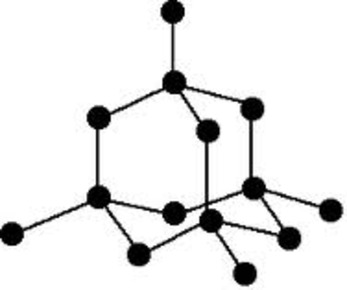
Cards in this deck (6)
- 1—Diamond is a form of carbon in which each carbon atom is joined to four other carbon atoms, forming a giant covalent structure. As a result, diamond is very hard and has a high melting point. It does not conduct electricity.
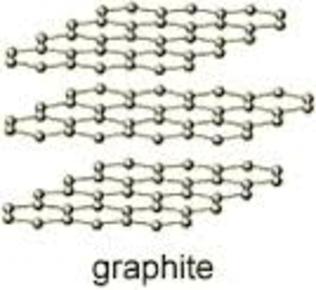
- 2—Graphite is a form of carbon in which the carbon atoms form layers. These layers can slide over each other, so graphite is much softer than diamond. It has weak intermolecular bonds between layers. It is used in pencils, and as a lubricant. Each carbon atom in a layer is joined to only three other carbon atoms. Graphite conducts electricity.
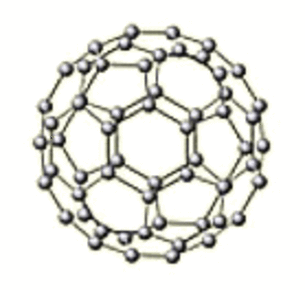
- 3—Buckminsterfullerene is yet another allotrope of carbon. It is actually not a giant covalent structure, but a giant molecule in which the carbon atoms form pentagons and hexagons - in a similar way to a leather football. It is used in lubricants.
- 4—Silica, which is found in sand, has a similar structure to diamond. It is also hard and has a high melting point, but contains silicon and oxygen atoms, instead of carbon atoms.
The fact that it is a semi-conductor makes it immensely useful in the electronics industry: most transistors are made of silica.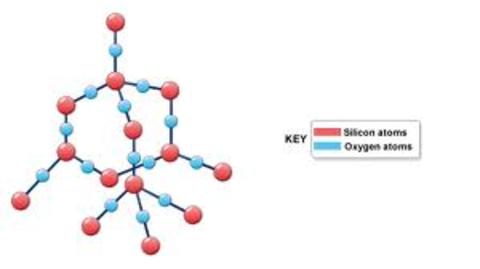
- 5What is a giant covalent structure?Giant covalent structures contain a lot of non-metal atoms, each joined to adjacent atoms by covalent bonds. The atoms are usually arranged into giant regular lattices - extremely strong structures because of the many bonds involved. The graphic shows the molecular structure of diamond and graphite: two allotropes of carbon, and of silica (silicon dioxide).
- 6What properties to giant covalent structures have?Very high melting points - Substances with giant covalent structures have very high melting points, because a lot of strong covalent bonds must be broken. Graphite, for example, has a melting point of more than 3,600ºC.
Variable conductivity - Diamond does not conduct electricity. Graphite contains free electrons, so it does conduct electricity. Silicon is semi-conductive - that is, midway between non-conductive and conductive.
Information
- Description
- Chemistry Flashcards on Giant covalent structures, created by cookiemunchkincat on 15/04/2013.
- Created by
- cookiemunchkincat
- Views
- 304
- Tags
- Rating