
Mind map
Treatments for Depression
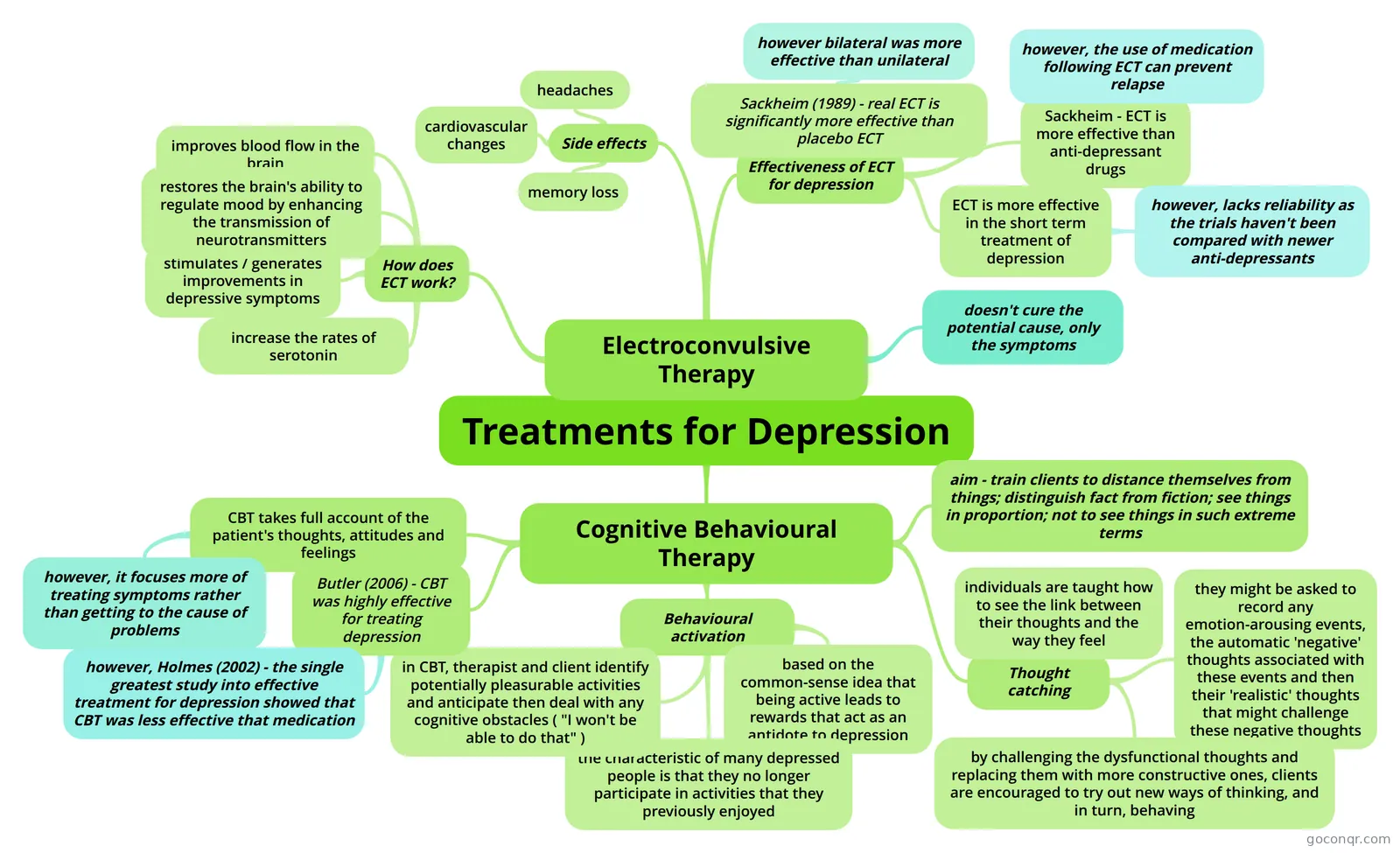
Mind map: Treatments for depression
Map content
Treatments for Depression
Electroconvulsive Therapy
- How does ECT work?
- increase the rates of serotonin
- stimulates / generates improvements in depressive symptoms
- improves blood flow in the brain
- restores the brain's ability to regulate mood by enhancing the transmission of neurotransmitters
- Side effects
- memory loss
- cardiovascular changes
- headaches
- Effectiveness of ECT for depression
- Sackheim (1989) - real ECT is significantly more effective than placebo ECT
- however bilateral was more effective than unilateral
- Sackheim - ECT is more effective than anti-depressant drugs
- however, the use of medication following ECT can prevent relapse
- ECT is more effective in the short term treatment of depression
- however, lacks reliability as the trials haven't been compared with newer anti-depressants
- Sackheim (1989) - real ECT is significantly more effective than placebo ECT
- doesn't cure the potential cause, only the symptoms
- How does ECT work?
Cognitive Behavioural Therapy
- aim - train clients to distance themselves from things; distinguish fact from fiction; see things in proportion; not to see things in such extreme terms
- Thought catching
- individuals are taught how to see the link between their thoughts and the way they feel
- they might be asked to record any emotion-arousing events, the automatic 'negative' thoughts associated with these events and then their 'realistic' thoughts that might challenge these negative thoughts
- by challenging the dysfunctional thoughts and replacing them with more constructive ones, clients are encouraged to try out new ways of thinking, and in turn, behaving
- Behavioural activation
- based on the common-sense idea that being active leads to rewards that act as an antidote to depression
- the characteristic of many depressed people is that they no longer participate in activities that they previously enjoyed
- in CBT, therapist and client identify potentially pleasurable activities and anticipate then deal with any cognitive obstacles ( "I won't be able to do that" )
- Butler (2006) - CBT was highly effective for treating depression
- however, Holmes (2002) - the single greatest study into effective treatment for depression showed that CBT was less effective that medication
- CBT takes full account of the patient's thoughts, attitudes and feelings
- however, it focuses more of treating symptoms rather than getting to the cause of problems
Information
- Description
- A-Levels PY4 (Abnormal Psychology) Mind Map on Treatments for Depression, created by Hayd23 on 15/06/2013.
- Created by
- Hayd23
- Views
- 199
- Tags
- Rating