
Mind map
OS Function + Structure
Map content
OS Function + Structure
OS Services
- User interface
- Command-line, GUI, Batch
- Program Execution
- Load, run, and end program normally and abnormally (indicating error)
- I/O Operations
- Input/Output with files or I/O devices
- File-System Manipulation
- Programs need to read/write files and directories, create/delete, search, permission management
- Communications
- e.g. between computers on a network, via shared memory or message passing (packets)
- Error Detection
- OS must be aware of errors in CPU and memory hardware, I/O devices etc.
- OS must be able to handle errors
- Debugging
- Resource allocation
- Multiple users + jobs can run concurrently
- Scheduling algorithms considering speed of CPU
- Accouting
- Track which users use which kind of resources + how much
- Protection and Security
- Protect against unauthorised access to resources
- Security to protect system from outsiders
- User interface
Interrupts
- Signal from hardware indicating need for attention/event in software needing change in execution
- Processor saves its state, and executes interrupt handler
- Signal from hardware indicating need for attention/event in software needing change in execution
Dual-Mode Operation
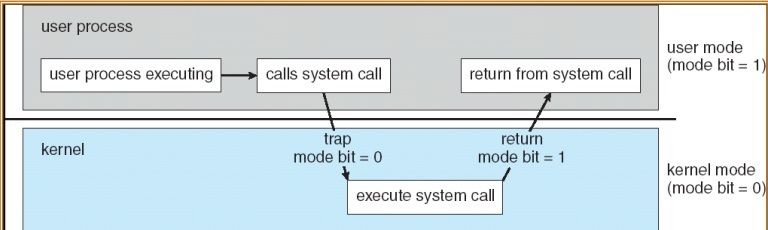
- Allows OS to protect itself and other system components
- Modes
- User Mode
- a.k.a supervisor mode
- Kernel Mode
- a.k.a privileged mode
- User Mode
- Mode bit
- kernel(0)
- user(1)
- Provided by hardware
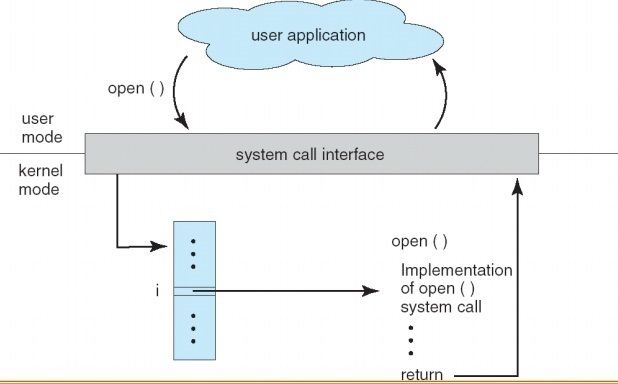
- System Calls
- Programming interface to services provided by OS
- C/C++
- Accessed via Application Program Interface (API)
- Types
- Process control
- File Management
- Includes creating, deleting, naming file etc. requiring memory space so must be done by OS
- Device management
- Information maintenance
- Error detection
- Errors can occur at hardware layers which the kernel at hardware level can only check
- Error detection
- Communications
- Message passing - User programs might not coordinate access to the network device
System Programs
- Provide convenient environment for program development + execution
- File Manipulation
- Status information
- File modification
- Programming language support
- Program loading + execution
- Communications
Operating Systems Structure
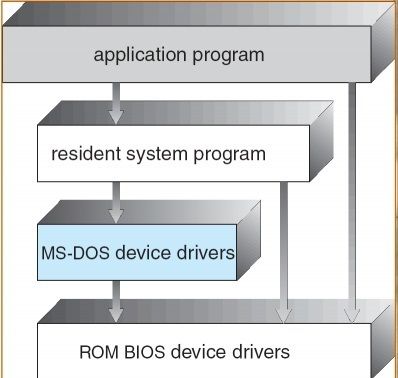
- Simple Structure (MS-DOS)
- Most Functionality + Least space
- Not divided into modules
- Vulnerable to errant/malicious programs
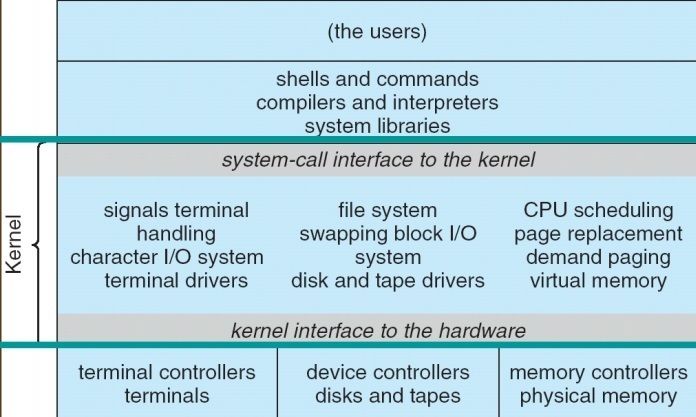
- UNIX OS
- Systems Programs
- Kernel
- Everything BELOW system-call interface and ABOVE physical hardware
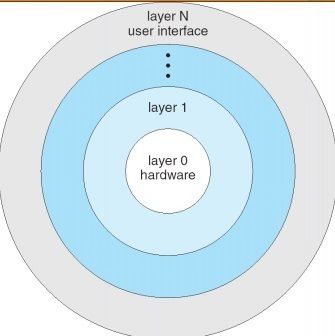
- Layered Structure
- Layer 0 = Hardware
- Highest layer = User Interface
- Each layer uses functions of ONLY lower layers
- Easier debugging/maintenance
- Example: "THE" System
- Layer 0: Hardware
- Layer 1: CPU scheduling
- Layer 3: Device drivers
- Layer 4: Buffering for I/O
- Layer 5: User programs
- Layer 0 = Hardware
- Microkernel
- Small core OS
- Built up via independent user-level processes
- Communication between user modules = message passing
- Benefits
- Easy to extend
- Easy to port OS
- Reliable
- Secure
- Detriments
- Performance overhead
- Benefits
- Communication between user modules = message passing
- Built up via independent user-level processes
- Small core OS
- Modular
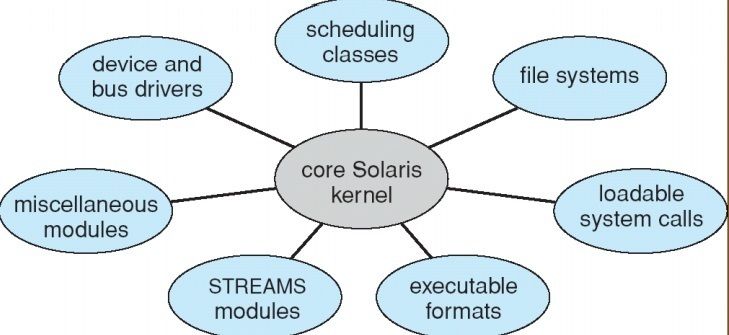
- Modern OS
- Object-oriented approach
- Interfaces for communication
- Loaded when needed in kernel
- Modern OS
- Simple Structure (MS-DOS)
Images and files in the map
Information
- Description
- Computer Science Mind Map on OS Function + Structure, created by Alex Bernini on 04/05/2019.
- Created by
- Alex Bernini · May 2019
- Updated
- May 8, 2019
- Views
- 0
- Rating