
Mind map
Viruses
Map content
Viruses
ANTIVIRAL DRUGS
- Key characteristics
- ability to enter the cells infected with virus
- interfere with viral nucleic acid synthesis/regulation
- interfere with ability of virus to bind to cells
- stimulate body’s immune system
- Classification
- type of infection they target
- HIV infection
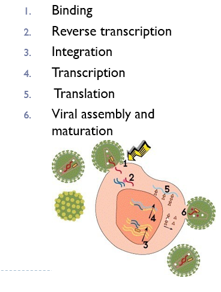
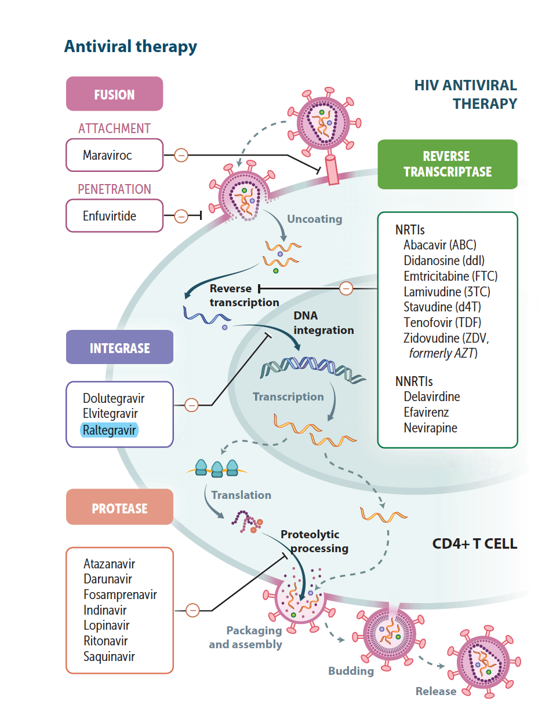
- HIV life cycle
- HAART
- highly active antiretroviral therapy
- multidrug regimen to suppress replication of HIV and restore the number of CD4+ cells and immunocompetence to the host
- highly active antiretroviral therapy
- Classification of antiretroviral drugs
- Entry/ fusion inhibitors
- Enfuvirtide
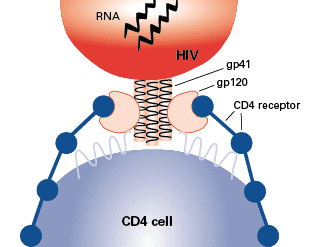
- Enfuvirtide binds to gp 41, prevents its conformational change, and inhibits fusion of HIV-1 to CD4+ cells
- Fu - Fusion
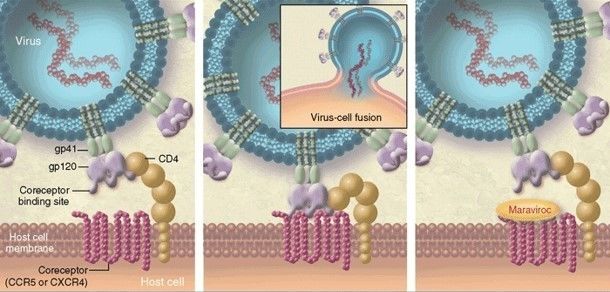
- Maraviroc
- blocks CCR5 co-receptor on T-cell surface to prevent viral entry
- against HIV that uses the CCR5 co-receptor exclusively
- metabolized in the liver by CYP450 enzymes.
- blocks CCR5 co-receptor on T-cell surface to prevent viral entry
- Enfuvirtide
- Reverse transcriptase inhibitors
- Nucleoside reverse transcriptase inhibitors (NRTI’s)
- Zidovudine
- pyrimidine analog, 3'-azido- 3'-deoxythymidine (AZT).
- used in children and adults
- to prevent prenatal infection in pregnancy.
- orally
- Penetration across BBB is excellent
- with food total amount absorbed is not affected
- toxicity
- myelosuppression
- Headaches
- abacavir
- guanosine analog
- well absorbed orally
- metabolized by non-CYP450-dependent reactions (alcohol dehydrogenase and glucuronyl transferase)
- renal excretion
- metabolized by non-CYP450-dependent reactions (alcohol dehydrogenase and glucuronyl transferase)
- AE
- fatigue
- GI distrubtion
- fever
- fatal skin rash
- Lamivudine
- Cytidine analogue
- Inhibits both HIV and Hepatitis B virus
- Stavudine
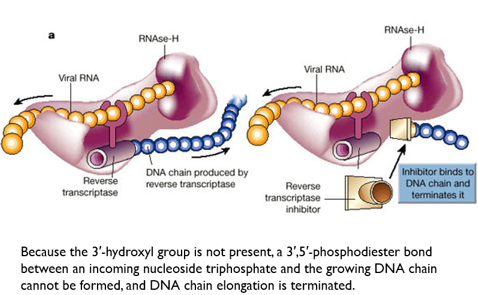
- analogs of native ribosides (nucleosides or nucleotides), which all lack a 3′-hydroxyl group.
- Once they enter cells, they are phosphorylated by cellular enzymes to the corresponding triphosphate analog, which is preferentially incorporated into the viral DNA by reverse transcriptase (RT).
- Affinities of the drugs host cell DNA polymerases are low, although mitochondrial DNA polymerase γ appears to be susceptible at therapeutic concentrations. (cause myelosuppression)
- Once they enter cells, they are phosphorylated by cellular enzymes to the corresponding triphosphate analog, which is preferentially incorporated into the viral DNA by reverse transcriptase (RT).
- AE
- Lactic acidosis
- Hepatosteatosis
- lipodystrophy
- resistance
- mutation at viral codon 184 (common)
- cross-resistance and antagonism occur between agents of the same analog class
- zidovudine plus stavudine- both are thymidine analogs
- Drug interactions
- Due to the renal excretion of the NRTls, there are not many drug interactions encountered with these agents
- Zidovudine
- Nonnucleoside reverse transcriptase inhibitors (NNRTI’s)
- First generation
- Nevirapine
- well absorbed orally
- Due to its lipophilicity, it passes into the fetus and mother's milk and CNS
- pregnancy category B
- Due to its lipophilicity, it passes into the fetus and mother's milk and CNS
- severe hepatotoxicity
- well absorbed orally
- Efavirenz
- potent inducer of CYP450 enzymes and, therefore, may reduce the concentrations of drugs that are substrates of the CYP450
- AE
- Effects on CNS: dizziness, headache
- Rash
- should be avoided in pregnancy
- Nevirapine
- Second generation
- Etavirine
- adv on 1st generation: do not have CNS adverse effects that occur with efavirenz.
- potent inducer of CYP450
- oral administration
- well distributed
- bioavailability is enhanced when taken with a high-fat meal
- extensively metabolized to inactive products
- well distributed
- HIV treatment-experienced, multidrug-resistant adult patients who have evidence of ongoing viral replication
- AE
- Rash
- Etavirine
- They do not require activation by cellular enzymes
- Inhibit reverse transcriptase at a site different from the one NRTIs bind to. They cause conformational change that results in enzyme inhibition.
- Additive or synergistic if used in combination with NRTIs and / or protease inhibitors
- major advantage is lacking the effect on blood cells and no cross-resistance with NRTls
- First generation
- Nucleoside reverse transcriptase inhibitors (NRTI’s)
- Integrase inhibitors
- Raltegravir
- It inhibits the final step in integration of strand transfer of the viral DNA into the own host cell DNA
- NO drug interactions with CYP450 inducers, inhibitors, or substrates
- AE
- elevated CK with muscle pain
- rhabdomyolysis
- possible depression with suicidal ideation
- Raltegravir
- protease inhibitors
- most effective drugs available
- All inhibit cytochrome P450 – dosage is a challenge
- Resistance problem
- mutations of the protease gene.
- Never used alone – always with 2 other drugs (NNRTI or NRTI)
- Saquinavir
- Indinavir
- Nelfinavir
- Ritonavir
- is no longer used as a single protease inhibitor but, instead, is used as a pharmacokinetic enhancer or "booster" of other protease inhibitors
- potent inhibitor of CYP3A
- administration (at low doses) increases the bioavailability of the second protease inhibitor, often allowing for longer dosing intervals
- helps to prevent the development of resistance
- is no longer used as a single protease inhibitor but, instead, is used as a pharmacokinetic enhancer or "booster" of other protease inhibitors
- reversible inhibition of the HIV aspartyl protease, which is the viral enzyme responsible for cleavage of the viral polyprotein into a number of essential enzymes and several structural proteins
- This prevents viral maturation and results in the production of noninfectious virions.
- poor oral bioavailability.
- extensively metabolized by the CYP3A4 isozyme of CYP450
- substrates for the P-gp multidrug efflux pump (affects their CNS distribution)
- extensively metabolized by the CYP3A4 isozyme of CYP450
- AE
- Paresthesias
- Diarrhea
- Nausea and vomiting
- fat redistribution
- Hypertriglyceridemia
- Hyperglycemia
- Hypercholesterolemia
- Entry/ fusion inhibitors
- HIV Prophylaxis
- Needle stick injury
- Tenofovir (NRTI)–emtricitabine (NRTI)-raltegravir (integrase inhibitor) initiated within 1 to 2 hours of exposure for not least than 4 weeks.
- pregnanc
- The preferred NRTI backbone combinations
- Tenofovir /emtricitabine
- Tenofovir /emtricitabine
- The preferred NRTI backbone combinations
- infants
- born to HIV infected mothers should also receive zidovudine (± several doses of nevirapine) prophylaxis for 4 to 6 weeks after birth
- Needle stick injury
- respiratory viral infections
- herpes virus and cytomegalovirus infections
- hepatic viral infections
- HIV infection
- type of infection they target
- Key characteristics
Type of genome
- DNA
- SS
- Parovirus
- DS
- envelopped
- naked
- papillo
- adeno
- polyoma
- SS
- RNA
- SS
- DS
- reovirus
- naked
- picorna
- calici
- envelopped
- positive sense
- retrovirus
- togavi rus
- flavivirus
- coronavirus
- (hepevi rus
- calicivirus
- picornavirus
- negative sense
- DNA
HIV
- HIV- 1
- M-tropic
- CCR5
- T-tropic
- CXCR5
- M-tropic
- HIV-2
- mode of transmission
- body fluids
- blood
- semin and vaginal fluid
- saliva
- unprotected sex
- injecting drugs
- mother to child
- blood transfusions
- working in health care
- body fluids
- life cycle
- HIV- 1
Images and files in the map
Information
- Description
- Mind Map on Viruses, created by Raghad Abbas on 03/11/2019.
- Created by
- Raghad Abbas
- Views
- 2
- Rating