
Mind map
Math Block Test 1
Map content
Math Block Test 1
Factors
- What is a factor?
- A factor is a number which divides exactly into another number is called a factor of that number.
- Step 1: Can 20 be divided in 1 exactly?
- 20÷1=20
- Yes
- 1 and 20 are factors of 20
- Step 2: Can 20 be divided in 2 exactly?
- 20÷2=10
- Yes
- 2 and 10 are factors of 20
- Step 3: Can 20 be divided in 3 exactly?
- 20÷3=6.666
- No
- 3 is not a factor of 20
- Step 4: Can 20 be divided in 4 exactly?
- 20÷4=5
- Yes
- 4 and 5 are factors of 20
- Step 5: Can 20 be divided into 5 exactly?
- 20÷5=4
- Yes
- But we already have 4 and 5 down as factors so that means we have listed all the factors.
- The factors of 20 are 1, 2, 4, 5, 10, 20
- The factors of 16 are 1, 2, 4, 8, 20
- The factors of 36 are 1, 2, 3, 4, 6, 9, 12, 18, 36
- The factors of 100 are 1, 2, 4, 5, 10, 20, 25, 50, 100
- The factors of 36 are 1, 2, 3, 4, 6, 9, 12, 18, 36
- The factors of 16 are 1, 2, 4, 8, 20
- The factors of 20 are 1, 2, 4, 5, 10, 20
- But we already have 4 and 5 down as factors so that means we have listed all the factors.
- Yes
- 20÷5=4
- Step 5: Can 20 be divided into 5 exactly?
- 4 and 5 are factors of 20
- Yes
- 20÷4=5
- Step 4: Can 20 be divided in 4 exactly?
- 3 is not a factor of 20
- No
- 20÷3=6.666
- Step 3: Can 20 be divided in 3 exactly?
- 2 and 10 are factors of 20
- Yes
- 20÷2=10
- Step 2: Can 20 be divided in 2 exactly?
- 1 and 20 are factors of 20
- Yes
- 20÷1=20
- Step 1: Can 20 be divided in 1 exactly?
- A factor is a number which divides exactly into another number is called a factor of that number.
- What is a factor?
Highest and Lowest Common Factors
- The highest or the lowest number that both supplied numbers have as factors.
- HCF of 18 and 30
- Step 1: List factors of 18
- 1, 2, 3, 6, 9, 18
- Step 2: List factor of 30
- 1, 2, 3, 5, 6, 10, 15, 30
- Step 3: Identify the common factors
- 1, 2, 3, 6
- Step 4: Identify the highest or the lowest of them
- 6
- The HCF of 18 and 30 is 6
- The LCF of 18 and 30 is 1
- The LCF will always be 1
- The LCF of 18 and 30 is 1
- The HCF of 18 and 30 is 6
- 6
- Step 4: Identify the highest or the lowest of them
- 1, 2, 3, 6
- Step 3: Identify the common factors
- 1, 2, 3, 5, 6, 10, 15, 30
- Step 2: List factor of 30
- 1, 2, 3, 6, 9, 18
- Step 1: List factors of 18
- HCF of 18 and 30
- The highest or the lowest number that both supplied numbers have as factors.
Prime Numbers
- Numbers that can only divide into themselves and 1
- To find if it is prime fast
- Step 1: Is it a multiple of 2, 3, 5, 7?
- If not it is prime.
- Step 1: Is it a multiple of 2, 3, 5, 7?
- To find if it is prime fast
- Numbers that can only divide into themselves and 1
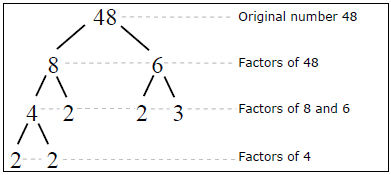
Factor Trees
- hellopeople
- The numbers at the end are prime numbers
- Collect like terms
- The numbers at the end are prime numbers
- hellopeople
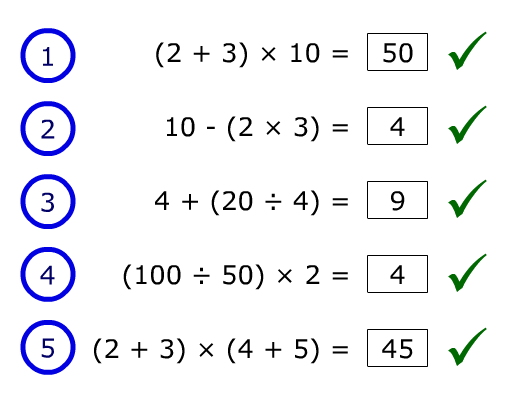
BEDMAS
- Brackets, Exponents, Division, Multiplication, Addition, Subtraction
- If just Multiplication and Division then work left to right
- If just Addition and Subtraction then work left to right
- If combination then work in BEDMAS
- Step 1: Work out the brackets
- (2²x5+20)x2²
- Step 2: Work out the exponents within the brackets
- (4x5+20)x2²
- Step 3: Work out the multiplication within the brackets
- (20+20)x2²
- Step 4: Work out the addition within the brackets
- (40)x2²
- Step 5: Remove unnessasary brackets
- 40x2²
- Step 6: Work out exponents
- 40x4
- Step 7: Work out multiplication
- 160
- 160
- Step 7: Work out multiplication
- 40x4
- Step 6: Work out exponents
- 40x2²
- Step 5: Remove unnessasary brackets
- (40)x2²
- Step 4: Work out the addition within the brackets
- (20+20)x2²
- Step 3: Work out the multiplication within the brackets
- (4x5+20)x2²
- Step 2: Work out the exponents within the brackets
- (2²x5+20)x2²
- Step 1: Work out the brackets
- If combination then work in BEDMAS
- If just Addition and Subtraction then work left to right
- If just Multiplication and Division then work left to right
- Brackets, Exponents, Division, Multiplication, Addition, Subtraction
Multiples
- Multiples of a number are the numbers divisible by that number
- Eg. multiples of 3 is 6, 9, 12, 15 etc because 6 is divisible by 3 and so are all the rest of the numbers
- Multiples of a number are the numbers divisible by that number
Lowest Common Multiple
- The smallest number that both the supplied numbers have as multiples
- LCM of 8 and 12
- Step 1: List the first 5 multiples of 8
- 8, 16, 24, 32, 40, 48
- Step 2: List the first 5 multiples of 12
- 12, 24, 36, 48, 60, 72
- Step 3: Identify the common numbers
- 24, 48
- Step 4: If there are none list the next 5 multiples
- Step 5: Take the lowest common number
- That is your LCM
- Step 5: Take the lowest common number
- Step 4: If there are none list the next 5 multiples
- 24, 48
- Step 3: Identify the common numbers
- 12, 24, 36, 48, 60, 72
- Step 2: List the first 5 multiples of 12
- 8, 16, 24, 32, 40, 48
- Step 1: List the first 5 multiples of 8
- LCM of 8 and 12
- The smallest number that both the supplied numbers have as multiples
Rounding Decimal Places
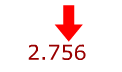
- Step 1: Look at where you want to round the number to
- ₂.₇5₆
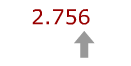
- Step 2: Look at the number to the right to decide wheather to round up or down.
- In this case it is a 6 so we round up
- 5 AND ABOVE: ROUND UP
- 4 AND BELOW: ROUND DOWN (DON'T DO ANYHING)
- Step 3: Round up or down to the specified amount of d.p.
- Step 4: Make sure you have specified how many places you have rounded it to
- Step 3: Round up or down to the specified amount of d.p.
- 4 AND BELOW: ROUND DOWN (DON'T DO ANYHING)
- 5 AND ABOVE: ROUND UP
- In this case it is a 6 so we round up
- Step 2: Look at the number to the right to decide wheather to round up or down.
- ₂.₇5₆
- Step 1: Look at where you want to round the number to
Rounding significant figures
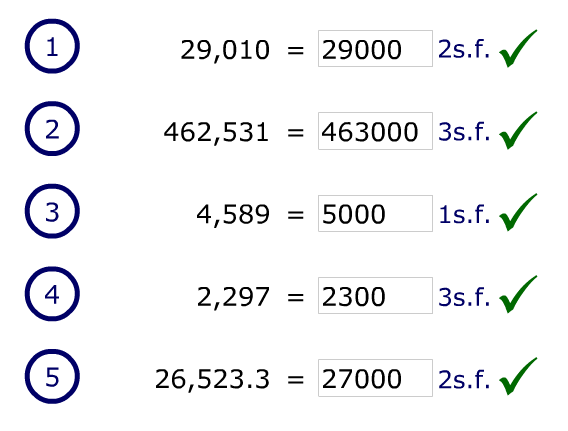
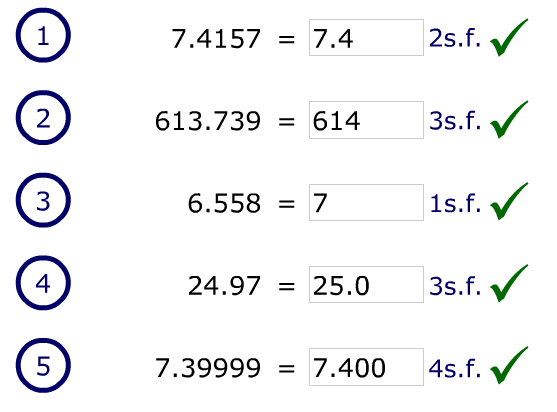
- Step 1: Decide on the most significant figure (1s.f.)
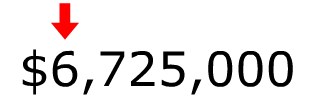
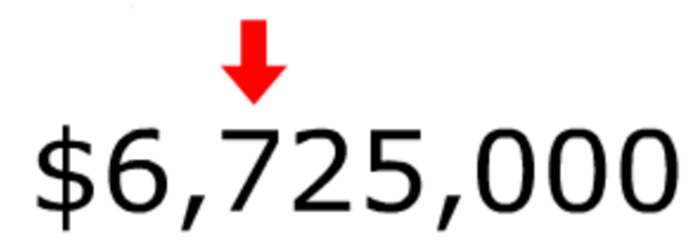
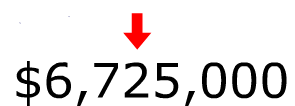
- Step 2: Decide if the number is closest to 6,000,000 or 7,000,000 for 1s.f. (in this case)
- $7,000,000 (1s.f.)
- or
- Step 1: Decide on the second most signifigant figure (2 s.f.)
- Step 2: Decide if the number is closest to 6,700,000 or 6,800,000 for 2s.f (in this case)
- $6,700,000 (2s.f.)
- or
- Step 1: Decide of the third most significant figure (3 s.f.)
- Step 2: Decide if the number is closest to 6,720,000 or 6,730,000 (3s.f.)
- $6,730,000
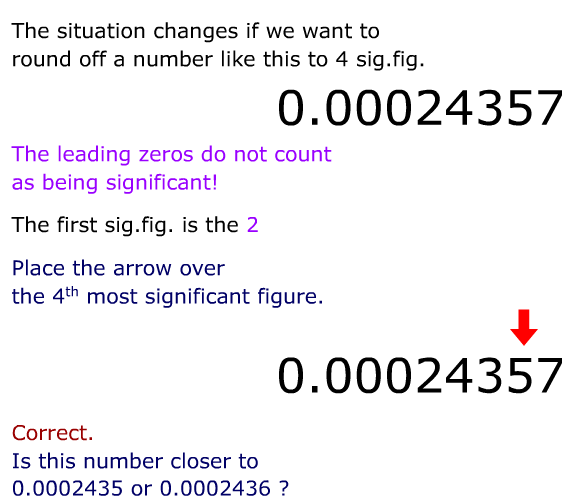
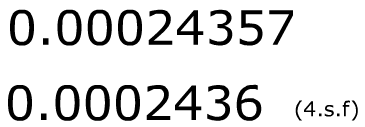
- Same with decimals
- but
- but
- Same with decimals
- $6,730,000
- Step 2: Decide if the number is closest to 6,720,000 or 6,730,000 (3s.f.)
- Step 1: Decide of the third most significant figure (3 s.f.)
- or
- $6,700,000 (2s.f.)
- Step 2: Decide if the number is closest to 6,700,000 or 6,800,000 for 2s.f (in this case)
- Step 1: Decide on the second most signifigant figure (2 s.f.)
- or
- $7,000,000 (1s.f.)
- Step 2: Decide if the number is closest to 6,000,000 or 7,000,000 for 1s.f. (in this case)
- Step 1: Decide on the most significant figure (1s.f.)
Algebra Attached
Indices
- Simplifing indices
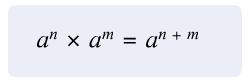
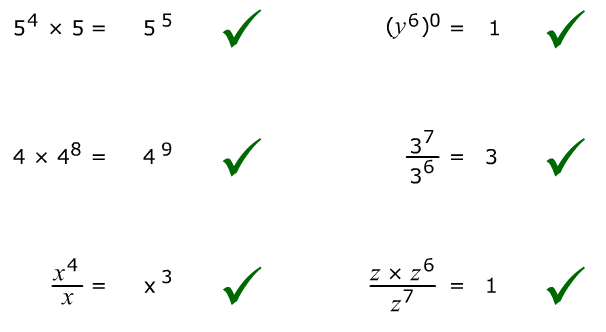
- To multiply numbers, which have the same base, add the powers
- 2⁵x2⁶=2¹¹ not 2048
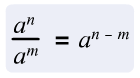
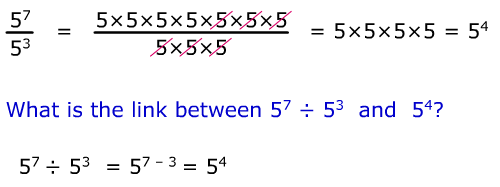
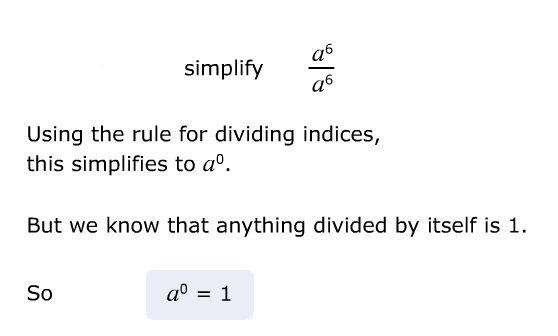
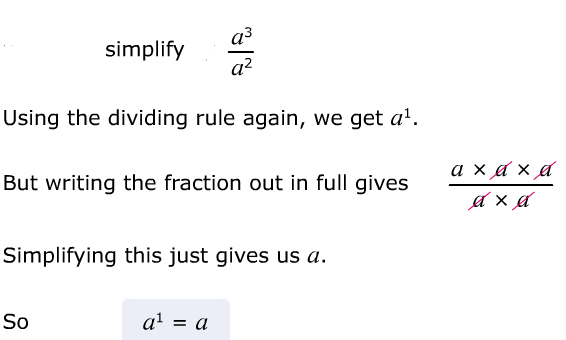
- To divide which have the same base, subtract the powers
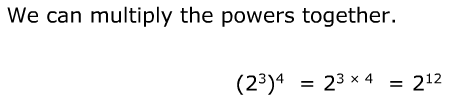
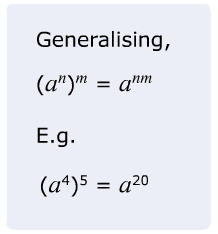
- Brackets with powers
- Special things you need to watch out for
- eg
- eg
- Special things you need to watch out for
- Brackets with powers
- To divide which have the same base, subtract the powers
- 2⁵x2⁶=2¹¹ not 2048
- To multiply numbers, which have the same base, add the powers
- Simplifing indices
Squares and Cubes
- Squares are essentially the number times itself
- 3²=3x3=9
- Square roots
- The opposite of squaring
- Step 1: Work out what you would have orgionally squared to get this number you see before your eyes
- ?x?=81
- 9x9=81
- Step 2: Congratulate yourself, you have found the square root of the number
- Cubes
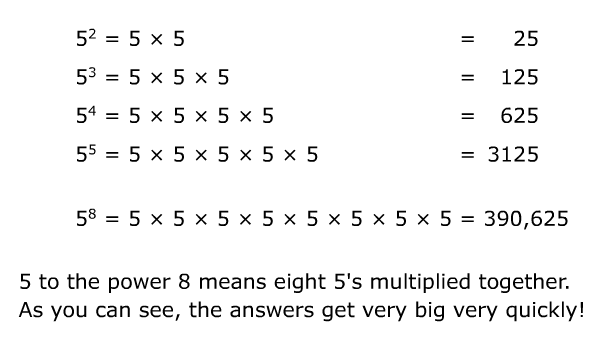
- Cubes of a number is pretty much the number times itself, times the orgional number
- 5³=5x5x5=125
- Cube Roots
- The same as square roots, cube roots are pretty much the opposite of a cube
- Step 1: Work out what would you time 3 time to get that number
- ?x?x?=216
- 6x66=216
- Cube root is 16
- 6x66=216
- ?x?x?=216
- Step 1: Work out what would you time 3 time to get that number
- The same as square roots, cube roots are pretty much the opposite of a cube
- Cube Roots
- 5³=5x5x5=125
- Cubes of a number is pretty much the number times itself, times the orgional number
- Cubes
- Step 2: Congratulate yourself, you have found the square root of the number
- 9x9=81
- ?x?=81
- Step 1: Work out what you would have orgionally squared to get this number you see before your eyes
- The opposite of squaring
- Square roots
- 3²=3x3=9
- Squares are essentially the number times itself
Simplifying
- Adding and Subracting
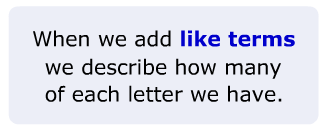
- a+a=2a
- c+c+d+d+b+c+a+d=a+b+3c+3d
- 2a+7b-5+a-2b=3a+5b-5
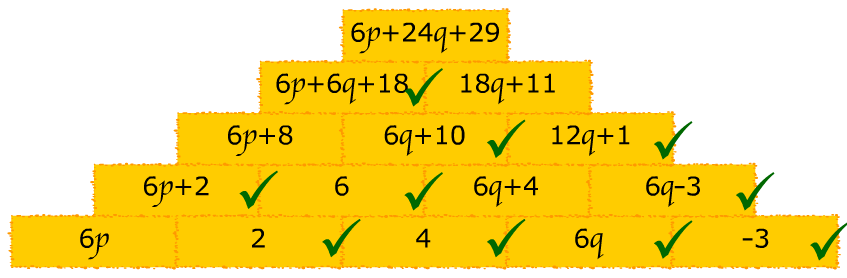
- Simplifying Pyramid
- Multiplication and Division
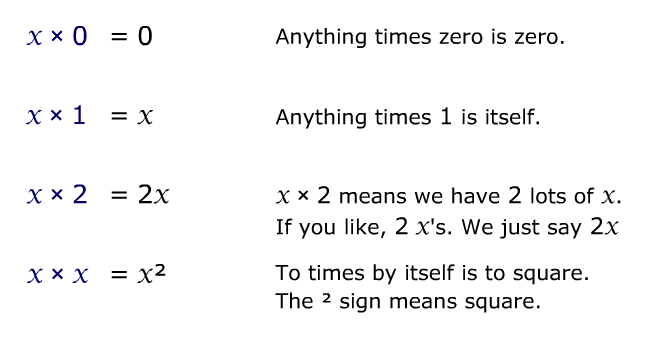
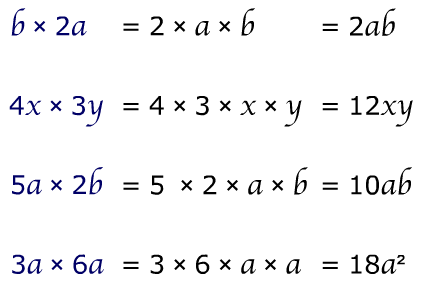
- Multiplication
- Step 1: Write it out in separately with numbers and then letters
- 7b x 3a=7 x 3 x a x b
- Step 2: Do the multiplication of the numbers
- 21 x a x b
- Step 3: Remove all "x" signs
- 21ab
- Step 3: Remove all "x" signs
- 21 x a x b
- Step 2: Do the multiplication of the numbers
- 7b x 3a=7 x 3 x a x b
- Step 1: Write it out in separately with numbers and then letters
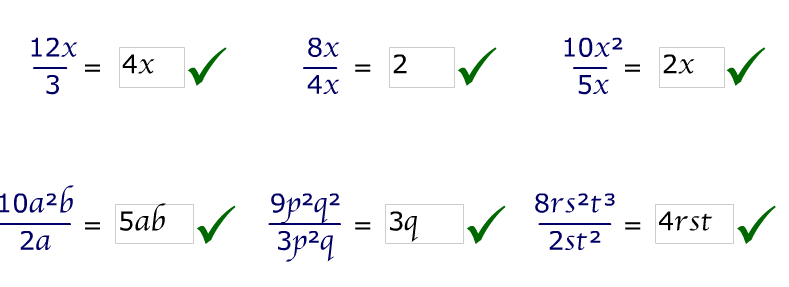
- Division
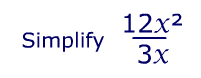
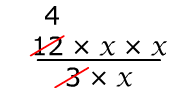
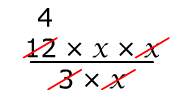
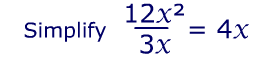
- Step 1: Divide the numbers.
- 12÷3=4
- Step 2: Cancel out the letters
- And yo got the answer
- more examples
- more examples
- And yo got the answer
- Step 2: Cancel out the letters
- 12÷3=4
- Step 1: Divide the numbers.
- Multiplication
- Multiplication and Division
- Simplifying Pyramid
- 2a+7b-5+a-2b=3a+5b-5
- Same for subraction
- c+c+d+d+b+c+a+d=a+b+3c+3d
- a+a=2a
- Adding and Subracting
Standard Form
- 1.65x10⁵=1650000
- The first number must always be a value between 0 and 9 inclusive
- The power number (the 5 in the example) is the number of spaces the decimal point moves
- Positive and the decimal point moves to the right, adding more zeros in if there are no more digits there
- Negitve and it moves to the left, again adding more zeros into the number if there are no more digits there
- Positive and the decimal point moves to the right, adding more zeros in if there are no more digits there
- The power number (the 5 in the example) is the number of spaces the decimal point moves
- The first number must always be a value between 0 and 9 inclusive
- 1.65x10⁵=1650000
Images and files in the map


Information
- Description
- NCEA Level 1 Math Mind Map on Math Block Test 1, created by Sally Stroobant on 07/03/2016.
- Created by
- Sally Stroobant
- Views
- 68
- Tags
- Rating