
Mind map
Unit 5 Folk Literature
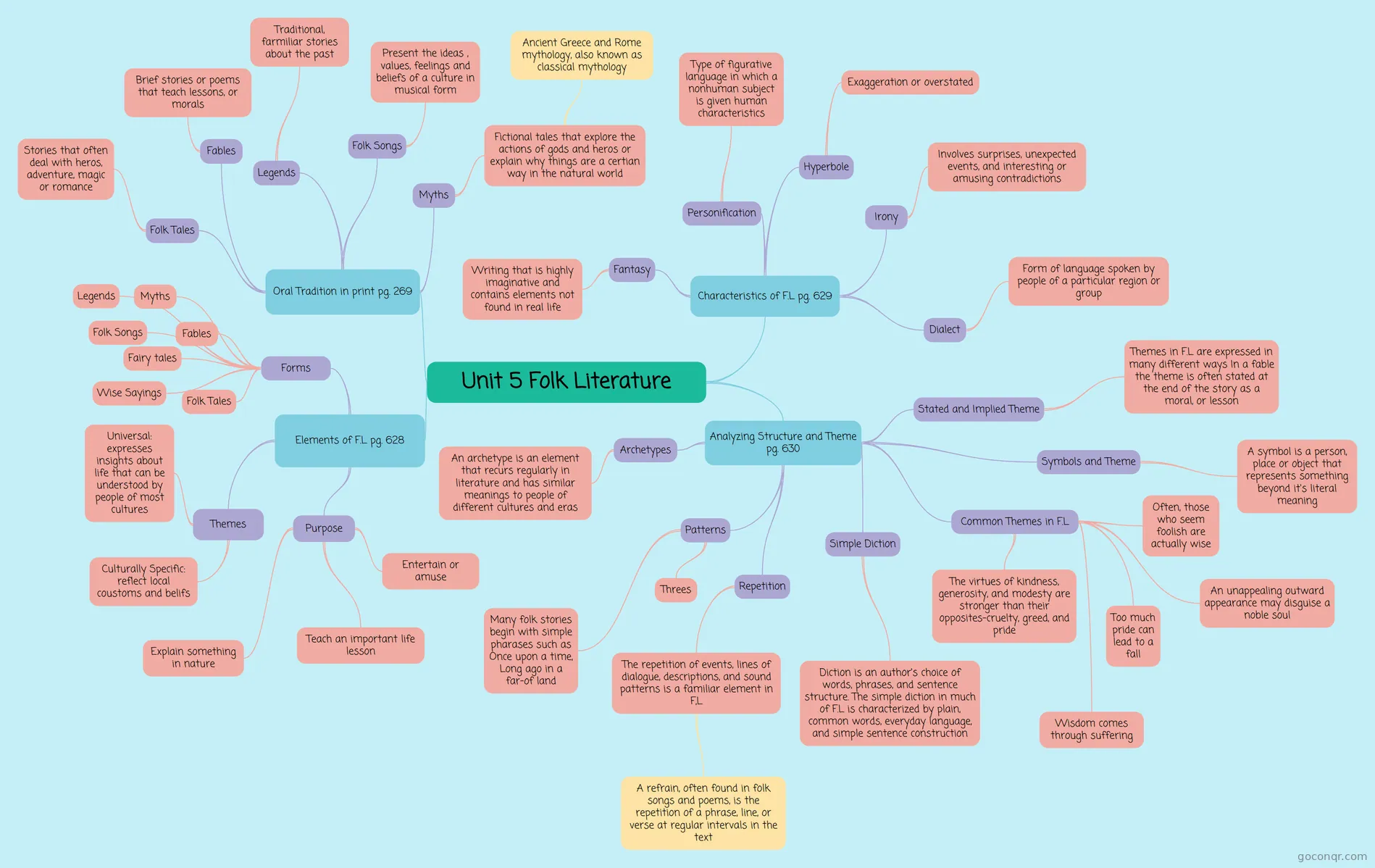
Mind map: Folk literature
Map content
Unit 5 Folk Literature
Oral Tradition in print pg. 269
- Myths
- Fictional tales that explore the actions of gods and heros or explain why things are a certian way in the natural world
- Ancient Greece and Rome mythology, also known as classical mythology
- Fictional tales that explore the actions of gods and heros or explain why things are a certian way in the natural world
- Folk Songs
- Present the ideas , values, feelings and beliefs of a culture in musical form
- Folk Tales
- Stories that often deal with heros, adventure, magic or romance
- Legends
- Traditional, farmiliar stories about the past
- Fables
- Brief stories or poems that teach lessons, or morals
- Myths
Elements of F.L pg. 628
- Themes
- Universal: expresses insights about life that can be understood by people of most cultures
- Culturally Specific: reflect local coustoms and belifs
- Purpose
- Teach an important life lesson
- Explain something in nature
- Entertain or amuse
- Forms
- Folk Tales
- Fairy tales
- Fables
- Wise Sayings
- Folk Songs
- Legends
- Myths
- Themes
Analyzing Structure and Theme pg. 630
- Stated and Implied Theme
- Themes in F.L are expressed in many different ways In a fable the theme is often stated at the end of the story as a moral, or lesson
- Common Themes in F.L
- Often, those who seem foolish are actually wise
- Too much pride can lead to a fall
- Wisdom comes through suffering
- The virtues of kindness, generosity, and modesty are stronger than their opposites-cruelty, greed, and pride
- An unappealing outward appearance may disguise a noble soul
- Simple Diction
- Diction is an author's choice of words, phrases, and sentence structure. The simple diction in much of F.L is characterized by plain, common words, everyday language, and simple sentence construction
- Patterns
- Many folk stories begin with simple pharases such as Once upon a time, Long ago in a far-of land
- Threes
- Archetypes
- An archetype is an element that recurs regularly in literature and has similar meanings to people of different cultures and eras
- Repetition
- The repetition of events, lines of dialogue, descriptions, and sound patterns is a familiar element in F,L
- A refrain, often found in folk songs and poems, is the repetition of a phrase, line, or verse at regular intervals in the text
- The repetition of events, lines of dialogue, descriptions, and sound patterns is a familiar element in F,L
- Symbols and Theme
- A symbol is a person, place or object that represents something beyond it's literal meaning
- Stated and Implied Theme
Characteristics of F.L pg. 629
- Fantasy
- Writing that is highly imaginative and contains elements not found in real life
- Personification
- Type of figurative language in which a nonhuman subject is given human characteristics
- Dialect
- Form of language spoken by people of a particular region or group
- Hyperbole
- Exaggeration or overstated
- Irony
- Involves surprises, unexpected events, and interesting or amusing contradictions
- Fantasy