
Mind map
The Nervous System
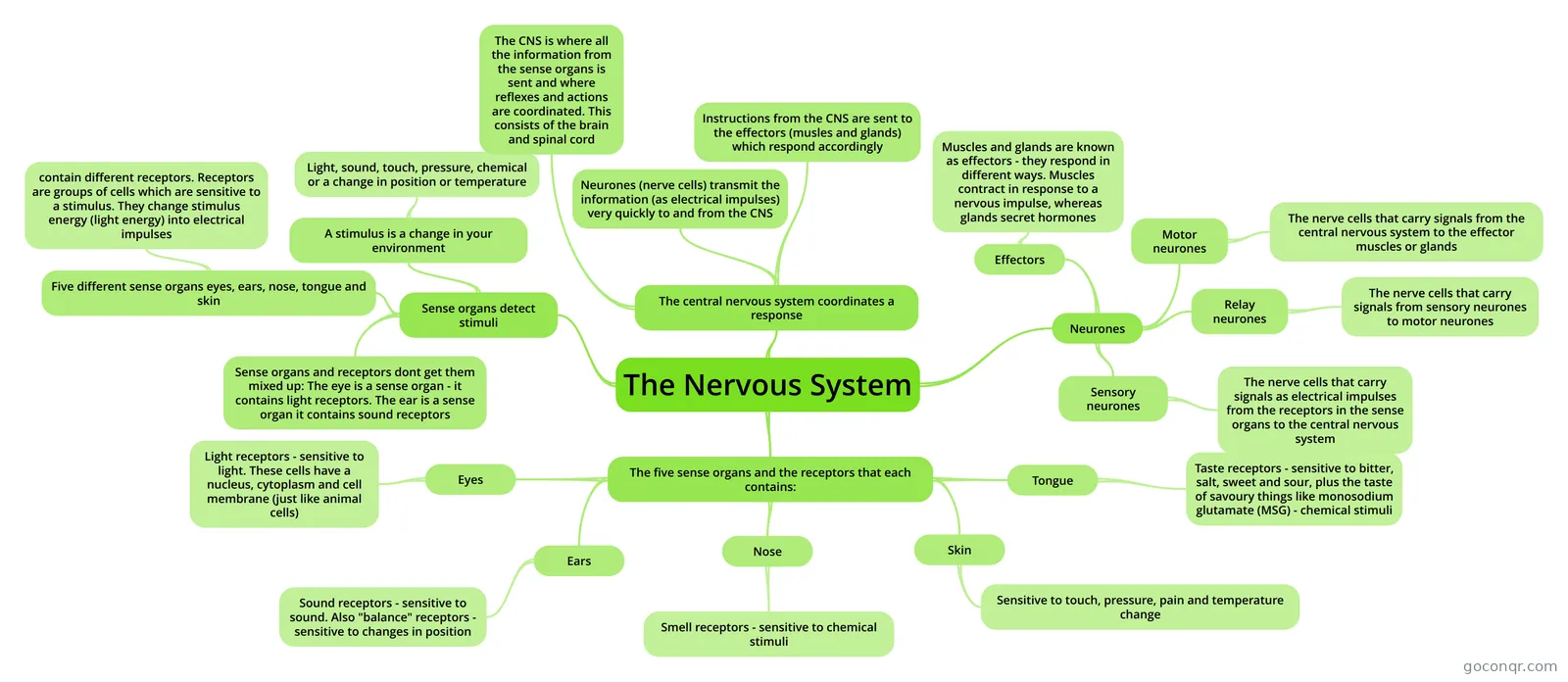
Mind map: The nervous system
Map content
The Nervous System
Sense organs detect stimuli
- A stimulus is a change in your environment
- Light, sound, touch, pressure, chemical or a change in position or temperature
- Five different sense organs eyes, ears, nose, tongue and skin
- contain different receptors. Receptors are groups of cells which are sensitive to a stimulus. They change stimulus energy (light energy) into electrical impulses
- Sense organs and receptors dont get them mixed up: The eye is a sense organ - it contains light receptors. The ear is a sense organ it contains sound receptors
- A stimulus is a change in your environment
The five sense organs and the receptors that each contains:
- Eyes
- Light receptors - sensitive to light. These cells have a nucleus, cytoplasm and cell membrane (just like animal cells)
- Ears
- Sound receptors - sensitive to sound. Also "balance" receptors - sensitive to changes in position
- Nose
- Smell receptors - sensitive to chemical stimuli
- Tongue
- Taste receptors - sensitive to bitter, salt, sweet and sour, plus the taste of savoury things like monosodium glutamate (MSG) - chemical stimuli
- Skin
- Sensitive to touch, pressure, pain and temperature change
- Eyes
Neurones
- Sensory neurones
- The nerve cells that carry signals as electrical impulses from the receptors in the sense organs to the central nervous system
- Relay neurones
- The nerve cells that carry signals from sensory neurones to motor neurones
- Motor neurones
- The nerve cells that carry signals from the central nervous system to the effector muscles or glands
- Effectors
- Muscles and glands are known as effectors - they respond in different ways. Muscles contract in response to a nervous impulse, whereas glands secret hormones
- Sensory neurones
The central nervous system coordinates a response
- The CNS is where all the information from the sense organs is sent and where reflexes and actions are coordinated. This consists of the brain and spinal cord
- Neurones (nerve cells) transmit the information (as electrical impulses) very quickly to and from the CNS
- Instructions from the CNS are sent to the effectors (musles and glands) which respond accordingly
Information
- Description
- GCSE Science (Biology core) Mind Map on The Nervous System, created by sian.allison on 23/02/2014.
- Created by
- sian.allison
- Views
- 1,382
- Tags
- Rating