
Nervous System, Coordination and the Senses
454 resources created by 387 users
This Nervous System, Coordination and the Senses page on GoConqr gathers community-made quizzes, mind maps, flashcards, notes and flowcharts, from neurones, synapses and the reflex arc to the eye, the ear and hormones. It's built for school students revising a topic and for teachers after ready-made material. There are over 3,800 resources here, including more than 250 quizzes and over 2,200 mind maps, with GCSE, A-level, IGCSE, IB and AP Biology among the exams they mention. Pick a topic, try a quiz to find your gaps, then make your own revision sets.
Top Nervous System, Coordination and the Senses resources
-
25 questions0654 B9 Coordination & Response Quiz The diagram represents a simple reflex arc. What is the sequence of nerve cells through which an impulse pa...
-
Mind map B6: Brain and Mind
-
31 cardsAQA A2 Biology Unit 5 Chapter 11: Muscle Contraction Name three types of muscles and state where they are found:
-
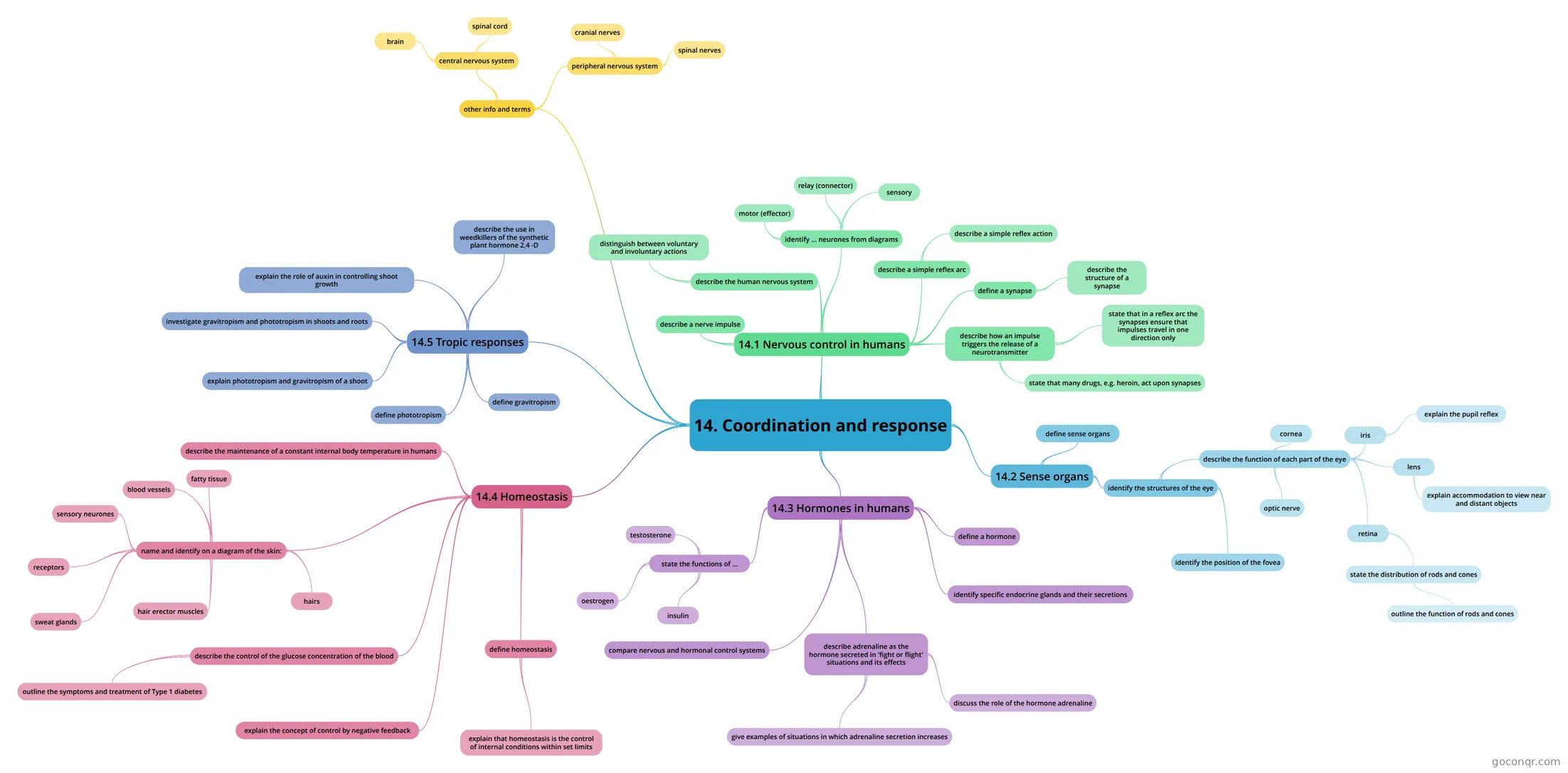 Mind map 14. Coordination and response Syllabus (extended) 2021
-
26 cardsNeurobiology and behaviour - the brain WJEC
-
14 questionsB6 Quiz Label the reflex arc
-
Mind map Biology Unit 4
-
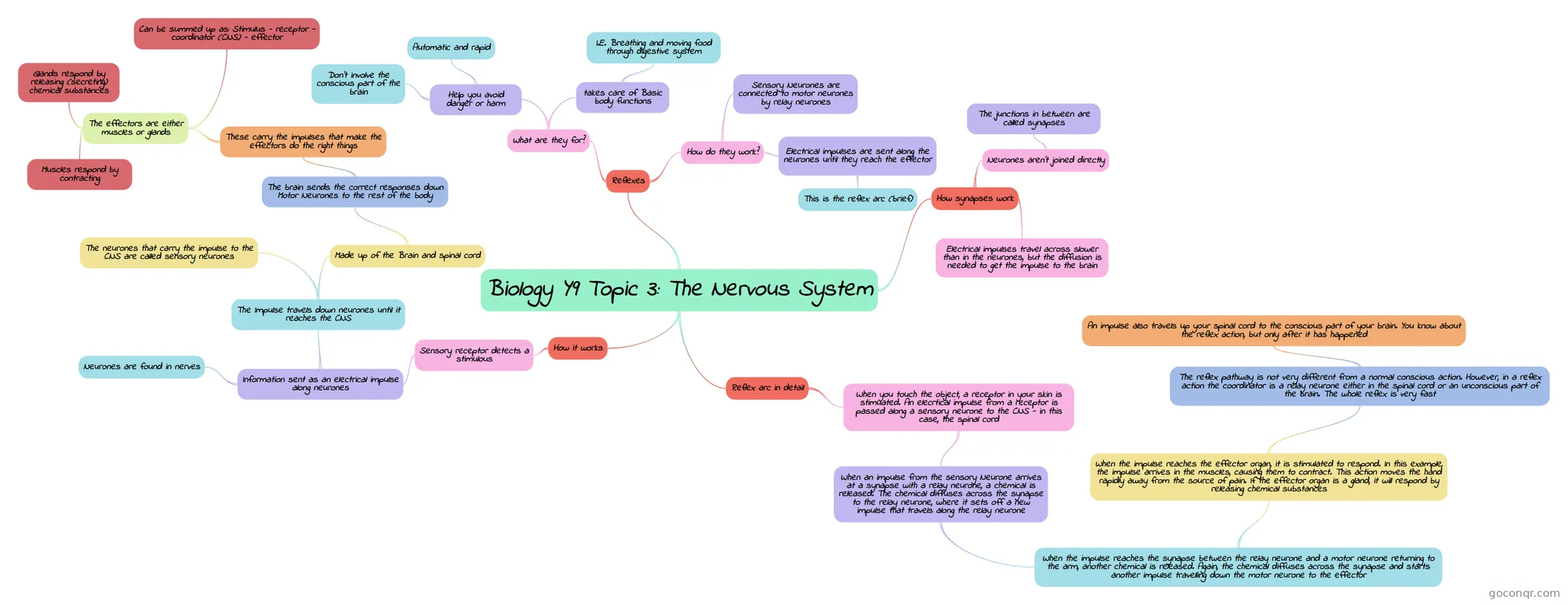 Mind map Biology Y9 Topic 3: The Nervous System
Quizzes
See all 58 quizzes-
25 questions0654 B9 Coordination & Response Quiz The diagram represents a simple reflex arc. What is the sequence of nerve cells through which an impulse pa...
-
14 questionsB6 Quiz Label the reflex arc
-
11 questionsOCR GCSE Biology - the eye Which of the following is the role of the cornea?
-
25 questionsQ3 Review of Our Senses What can you do to protect your eyes from the sun?
-
10 questionsOCR Biology - nervous system Select all the structures that are part of the central nervous system (CNS).
-
10 questionsBrain What is this structure?
-
10 questionsEncephalon Select the correct answer
-
10 questionsFunctions of parts of the eye What does the semi-circular canal do?
Mind maps
See all 198 mind maps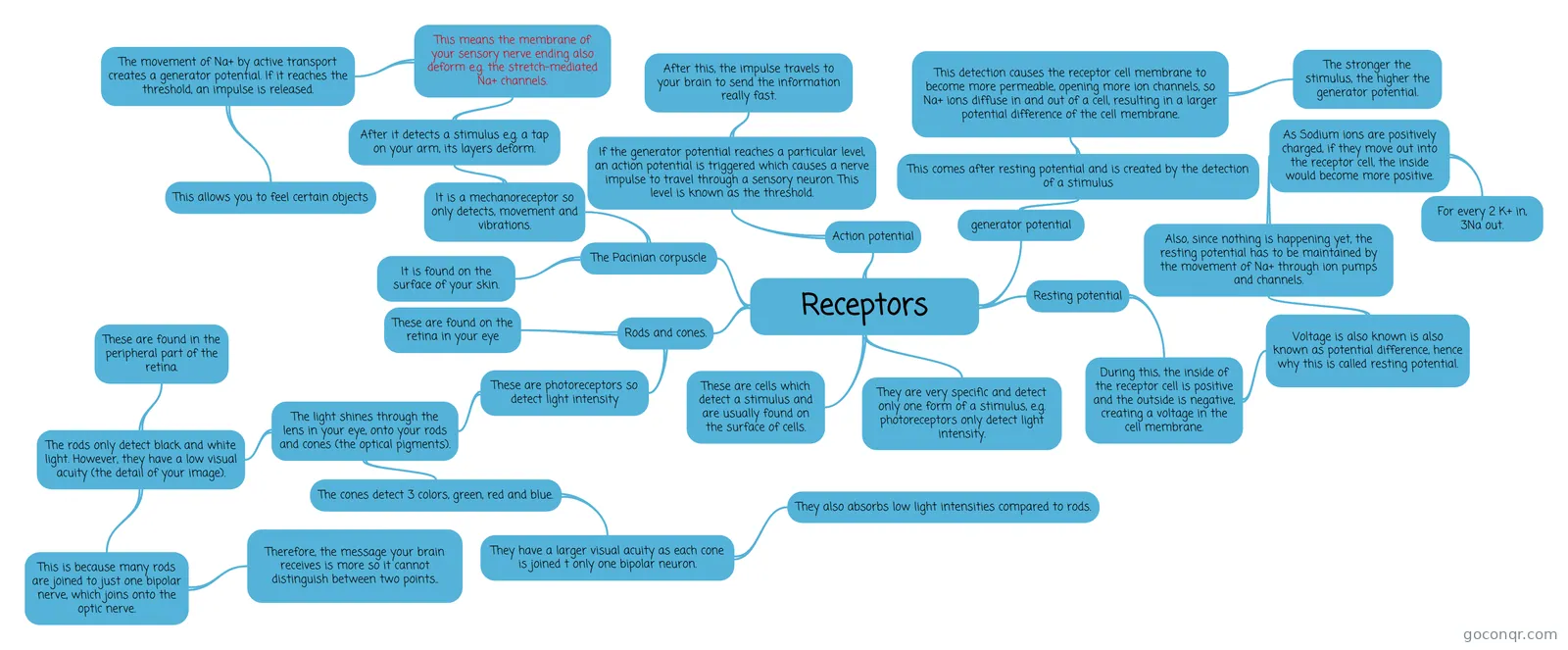
Flashcards
See all 161 flashcards-
31 cardsAQA A2 Biology Unit 5 Chapter 11: Muscle Contraction Name three types of muscles and state where they are found:
-
26 cardsNeurobiology and behaviour - the brain WJEC
-
20 cards7.2:Nervous Control Flashcards What is the nervous system made out of?
-
8 cardsLabeling a Neuron What is letter B pointing to?
-
4 cardsThe brain What is the brain ?
-
365 cardsAnimal Physiology Exam 2 Review What is the integrator of core information (from the respiratory center, forebrain, and body)?
-
82 cardsBiology 3.8 nervous system nervous pathways
-
72 cardsneurones better What is a stimulus
Flowcharts
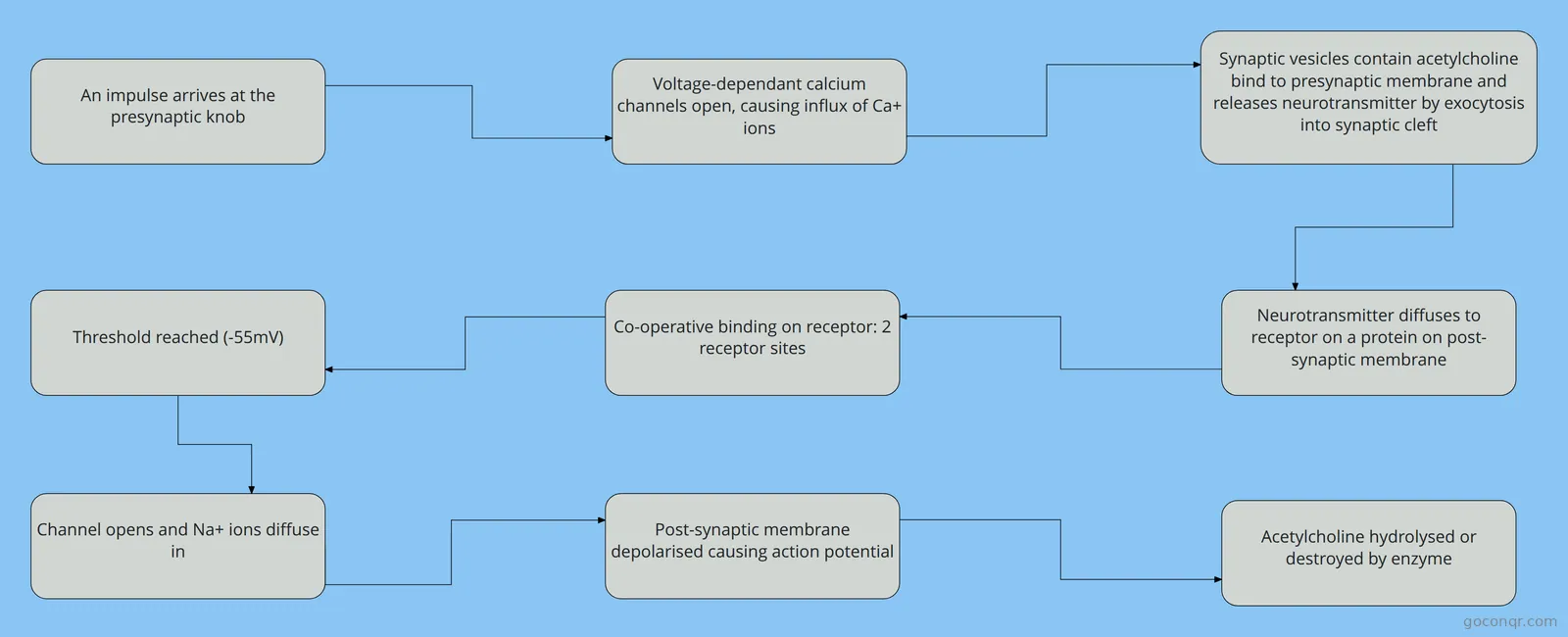
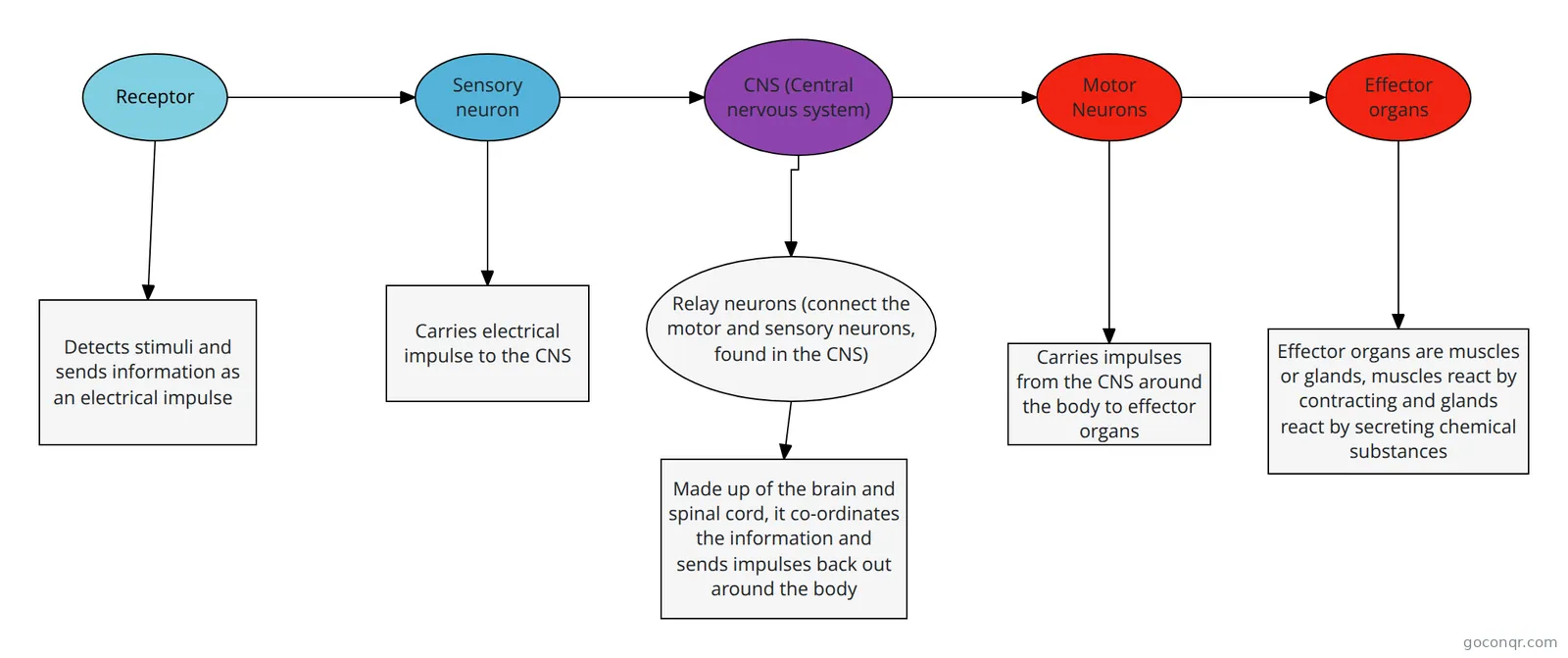
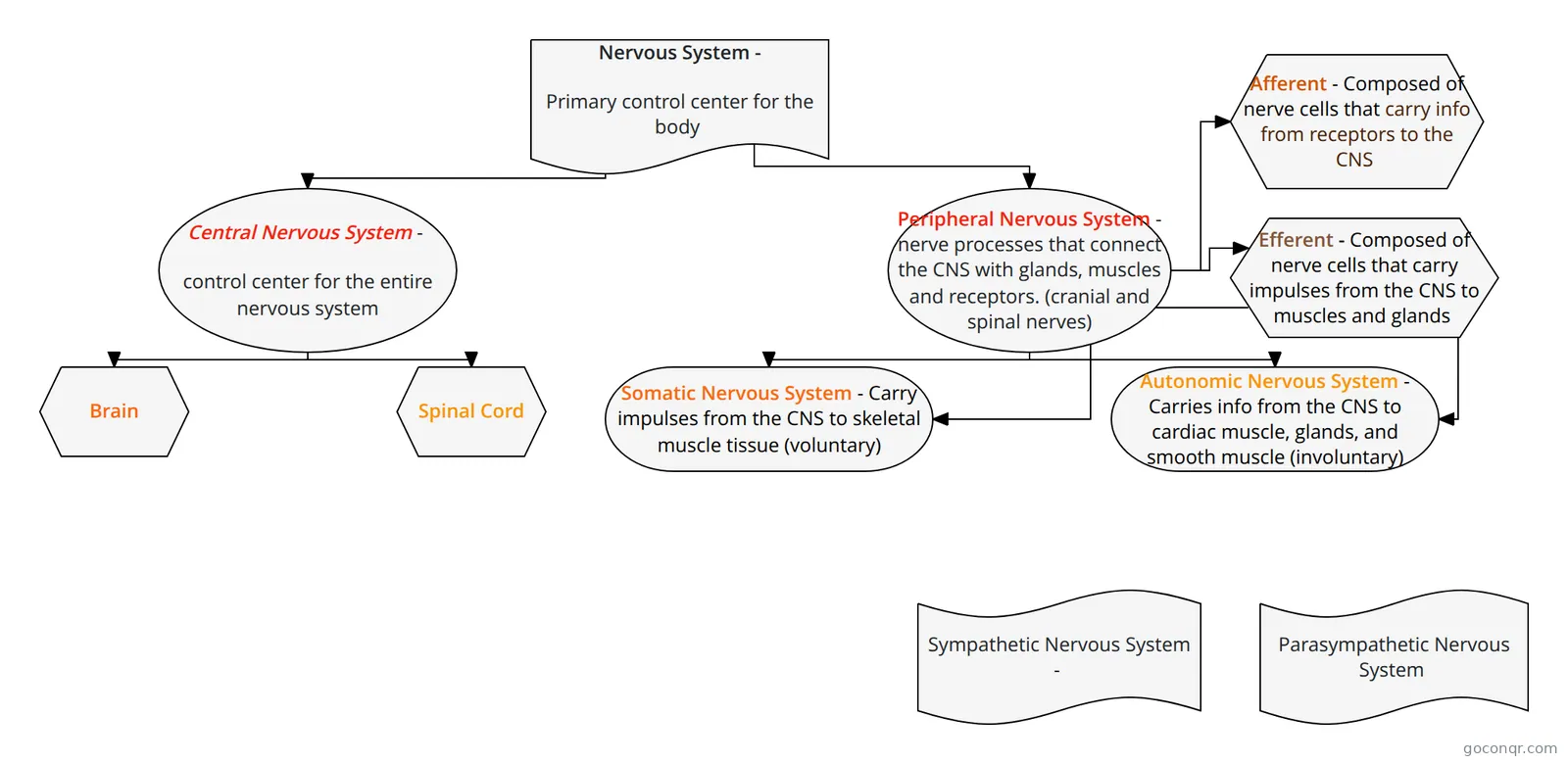
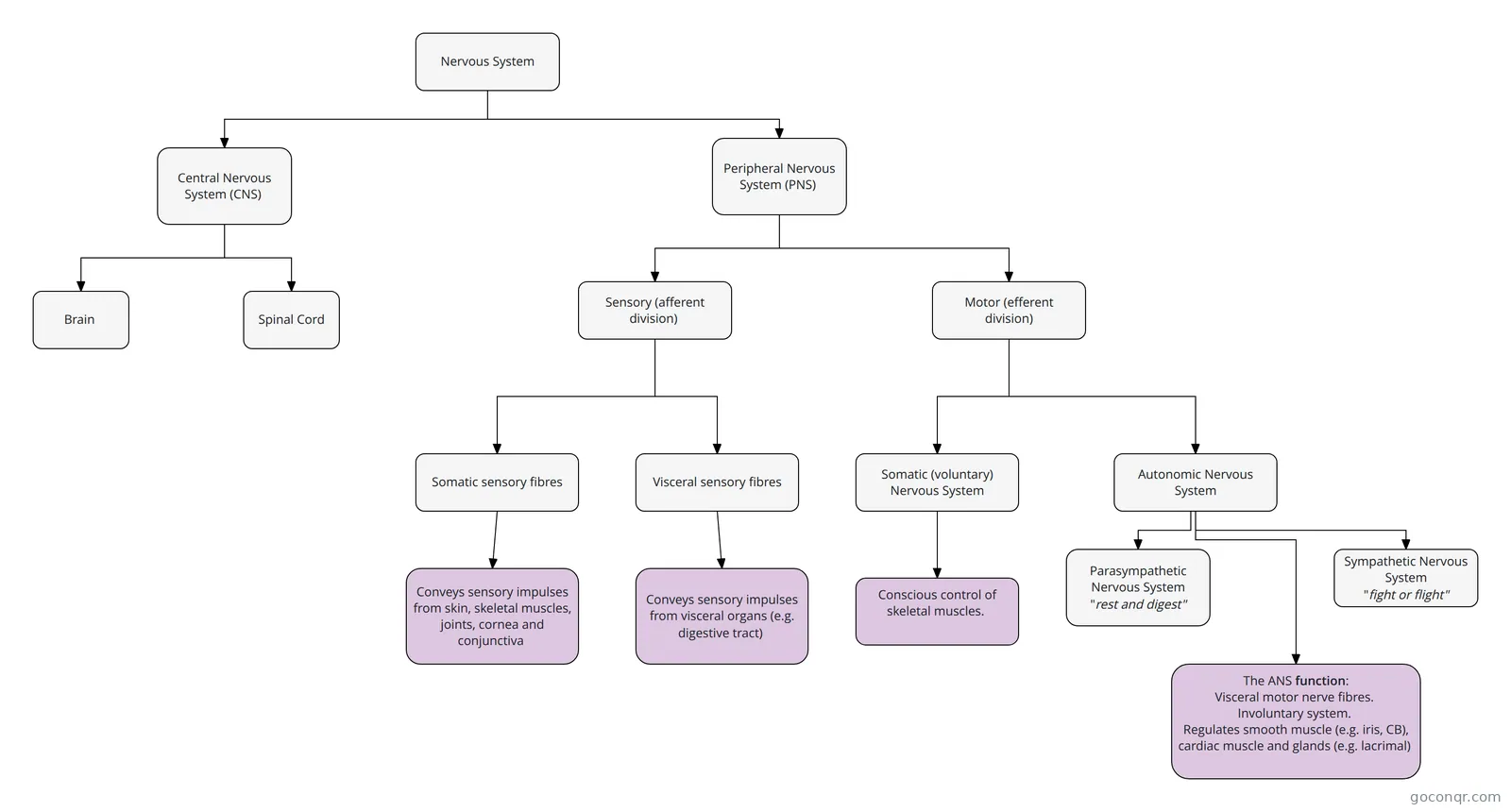
Notes
See all 23 notes-
GCSE Biology Module B6 module B6 The environment around you is constantly changing. A change in the environment of an organism is called a stimulus. Organisms need to respond to stimuli in order to survive. A single cell organism can just r...
-
Sensory Receptors Sensory Receptors • There are 6 types of receptors: - Proprioceptors - Chemoreceptors - Photoreceptors - Mechanoreceptors - Thermoreceptors - Nociceptors • A sense organ is a group of sensory receptors...
-
COORDINATION COORDINATIONAllergen - a normally harmless substance that causes the immune system to produce an immune responseNeurotransmitter - one of a number of chemicals that are involved in communication between adjacent neuro...
-
RESPONSE TO STIMULI SENSORY RECEPTIONStimulus - a detectable change in the internal/external environment of an organism that produces some change in that organismResponse - a change in an organism that results from an internal/external s...
-
Chapter 2: Nerves Human nervous system = central nervous system + peripheral nervous system Nerves and central nervous system are made up of highly specialised cells called neurones. Information is transferred along neurone...
-
Neuronal Communication GlossaryNeurotransmitters- chemicals which are used to pass signals from one neurone to the next Transducer- something that converts a stimulus into a nerve impulse Depolarised- a change in the potential difference fr...
-
Module 5 Section 1 - The nervous system Animals increase their chances of survival by changing to their environment, this is a stimuli Receptors (e.g. cells) detect stimuli, and are very specific Effectors are cells that respo...
-
Topic 8 Synapses What is a synapse? ROLES: CONTROL AND COORDINATION Synapses are gaps between neurons and neurotransmitters cross the synaptic cleft. Neurotransmitter receptors are linked to ligand-gated channels. ...
Slides
See all 10 slidesMore Biology and natural sciences topics
About Nervous System, Coordination and the Senses
GoConqr OriginalWhat this unit covers
The resources here follow the path of a signal through the body. They start with a stimulus and the receptors that detect it, move along neurones and across synapses, and end with a response. Several resources also cover hormones, the brain and the senses, so you can see how the nervous and endocrine systems fit together.
Where to start
If you want the big picture first, open the notes called GCSE Biology Module B6. They explain that a change in the environment is a stimulus and that organisms must respond to survive. The mind map Coordination and Response in Humans then adds homeostasis and negative feedback. A-level students can try the slide set A-Level Biology: Control in Animals & Plants, which links the nervous and endocrine systems through the hypothalamus.
Build up the detail
- Study The reflex arc mind map, then test yourself with the 0654 B9 Coordination & Response Quiz, which asks for the sequence of nerve cells in a reflex action.
- Move on to the Synaptic Transmission flowchart and the mind maps on nerve impulses and neurotransmitters.
- Learn the senses with The Eye mind map, then the OCR GCSE Biology - the eye quiz, which asks about the role of the cornea.
Using quizzes and maps together
Read a mind map first and cover it up. Then take a quiz on the same topic, such as OCR Biology - nervous system. Wrong answers show which branch of the map to go back to. Flashcard decks such as Labeling a Neuron and Neuronal Communication suit short, repeated practice. Teachers can pick a map, quiz or deck to set as a starter or a recap.
Where it sits
This unit belongs to the Coordination and Control strand of Biology and natural sciences. Everything was made by GoConqr users, so wording and exam focus vary from one resource to the next. Choose one resource today, then try building a map or deck of your own on the part that still feels shaky.
Frequently asked questions
Which resource should I open first?
For a broad overview, try the notes on GCSE Biology Module B6 or the mind map Coordination and Response in Humans. Both set out how organisms detect and respond to change. Once that makes sense, move to the reflex arc mind map and then a quiz to check what stuck.
What do the mind maps cover?
They cover the nervous system, receptors, nerve impulses, synapses, neurotransmitters, reflexes, the brain, the eye and the ear. Others look at hormones and at animal and plant responses. There are over 2,200 mind maps, so you can usually find one at the level you need.
Which exams are these resources linked to?
The listed resources mention GCSE Biology, A-level Biology, IGCSE Biology, IB Biology and AP Biology. They also mention AQA GCSE and A-level Biology, GCSE Combined Science, SQA Higher Human Biology, Alberta Biology 30 Diploma and CBSE. Check each resource title to match your course.
Are the resources free to use?
Yes. Every resource on this page is free to open, study and take, with no account needed. They were made by GoConqr users, not by GoConqr itself. A free account also saves your quiz scores and lets you create your own quizzes, mind maps, flashcards and notes.
Is there anything for the eye and the senses?
Yes. You can use The Eye mind map, the OCR GCSE Biology - the eye quiz, the Functions of parts of the eye quiz and a flashcard deck called The eye. There are also mind maps on eye and ear diagrams, plus notes on sensory receptors and sensory reception.
What if I can't find my exact topic?
Try a nearby search word, such as neurones, synapses, reflex or stimuli, because titles differ between contributors. You can also use a similar resource as a starting point and build your own map, deck or quiz covering the missing part.