
Mind map
Filtration
Map content
Filtration
Membrane filtration
- Benefit
- Can take place while temperatures are low
- Treatment for heat-sensitive matter such as food production
- Low energy cost
- Only use to pump liquids through the membrane
- Can be operated in two process
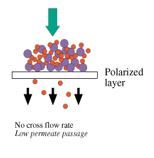
- Conventional - Death end
- Flows perpendicularly towards the filter media
- Easily cause fouling, flux rate decreases rapidly.
- Flows perpendicularly towards the filter media
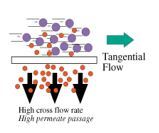
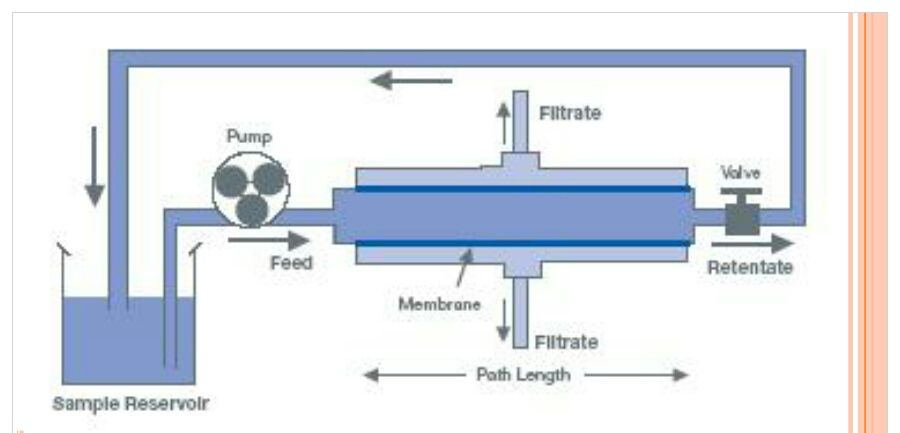
- Cross-flow - (TFF)
- Flows parallel or tangentially to the membrane surface.
- What Can TFF Do?
- Not cause fouling.
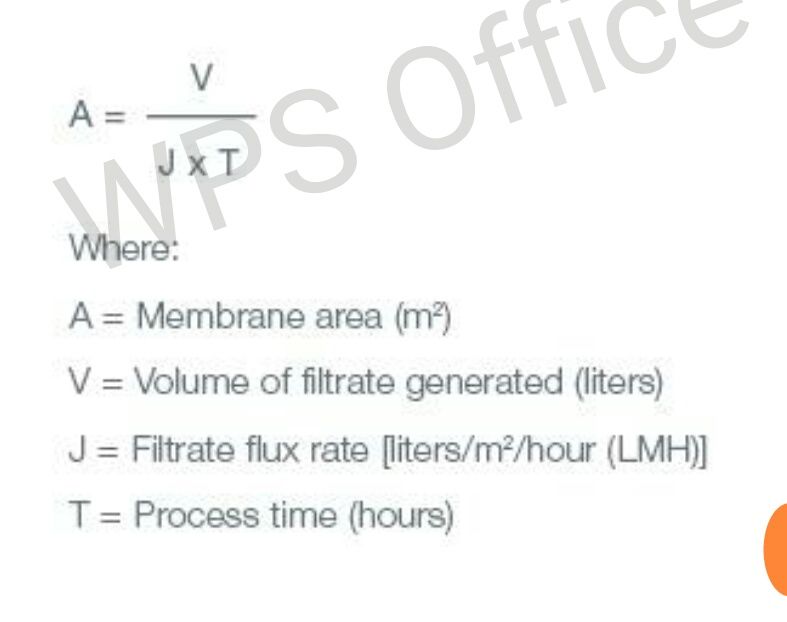
- Process Variable in TFF
- Crossflow Velocity (CF)
- Rate of solution flow the feed channel & across membrane
- sweep aways larger molecules and aggregates retained on membrane surface
- Transmembrane pressure (TMP)
- F drives fluid through membrane, carrying along & across permeable membrane
- Pressure Drop
- regulate the CF and TMP
- Crossflow Velocity (CF)
- How to choose TFF system for application
- Step 1
- Define the purpose of TFF process
- Step 2
- Choose the membrane MWCO
- Step 1
- Flows parallel or tangentially to the membrane surface.
- Can be easily be expanded or scale-up
- Conventional - Death end
- Can take place while temperatures are low
- Concentration
- Remove H2O to retaiin solute
- Choose membrane with lower MWCO than the solute
- 3 to 6 lower
- complete retention
- Choose whether
- Higher flow rate
- maximum recovery
- 3 to 6 lower
- Diafiltration
- Continous
- Volume Constant
- Flow rate constant
- Less filtrate volume
- fast salt removal
- Less filtrate volume
- Flow rate constant
- Volume Constant
- Discontinous
- Sequential Dilution
- Diluted first
- Concentrated then
- Diluted first
- Volume reduction
- Concentrated first
- Diluted then
- Concentrated first
- Sequential Dilution
- Continous
- Benefit
Filter media
- Cake/Surface filtration
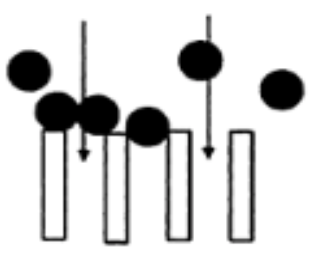
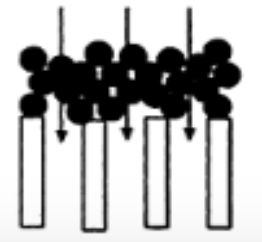
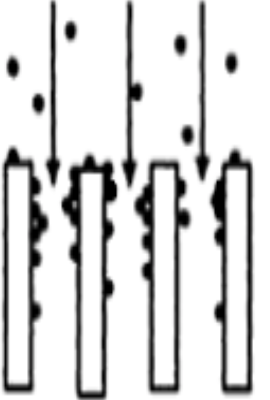
- Bridging filtration
- Complete blocking filtration
- Depth filtration
- Standard blocking filtration
- Cake/Surface filtration
Type of filtration
- Gravity
- Centrifugal
- Pressure
- Hydraulic
- Mechanical
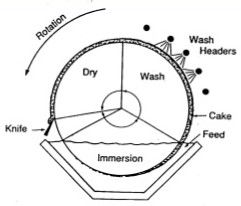
- Vacuum
Filter aids
- Objectives
- Protect basic medium
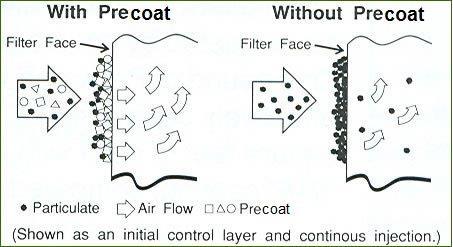
- PRECOAT
- Improve flow rate
- Protect basic medium
- What it is all about?
- Powdered solid
- Improve operation
- Use when filtering
- Bacteria
- Gelatinous suspension
- Forms a porous layer
- KIESELGUHR
- Powdered solid
- How?
- Added directly to feed
- PREMIXING
- Applied to filtration equipment
- PRECOAT
- Added directly to feed
- Objectives
Theory
- Constant flow rate , Q
- dV/dt = (1/y) [(A.P)/µ.L]]
- Q = flow rate of filtration (m3) A = filtration area (m2) L = thickness of filter material (m) P = pressure drop across the cake (N/m2) µ = viscosity of the slurry (Ns/m2) y = cake porosity V = volume of filtrate (L)
- Constant flow rate, Q = incerease in pressure
- Constant Pressure
- t(A/V) = [(yµw)/(2P)] (V/A) + (K2/P)
- Pressure constant = decrease in flow rate , Q
- Constant flow rate , Q
Membrane technology
- Advantage
- Work without addition of chemicals
- Low energy use
- Easy and well arranged process
- Principle
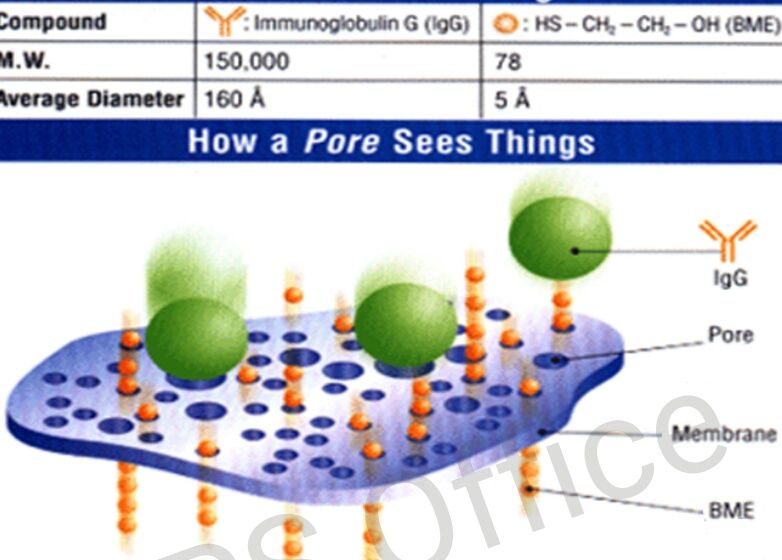
- Semi- permeable membrane
- Acts as specific filter
- Methods to enable substances penetrate
- High pressure
- Maintenance of concentration gradient
- Introduction of electric potential
- Occupy through selective wall
- Alternative for
- Flocculation
- Sediment purification
- Adsorption
- Extraction
- Distillation
- Advantage
Images and files in the map
Information
- Description
- Mind Map on Filtration, created by Zulaikha Zulkifli on 27/09/2017.
- Created by
- Zulaikha Zulkifli
- Views
- 29
- Rating