
Mind map
Tiempos de ingles Mapa mental
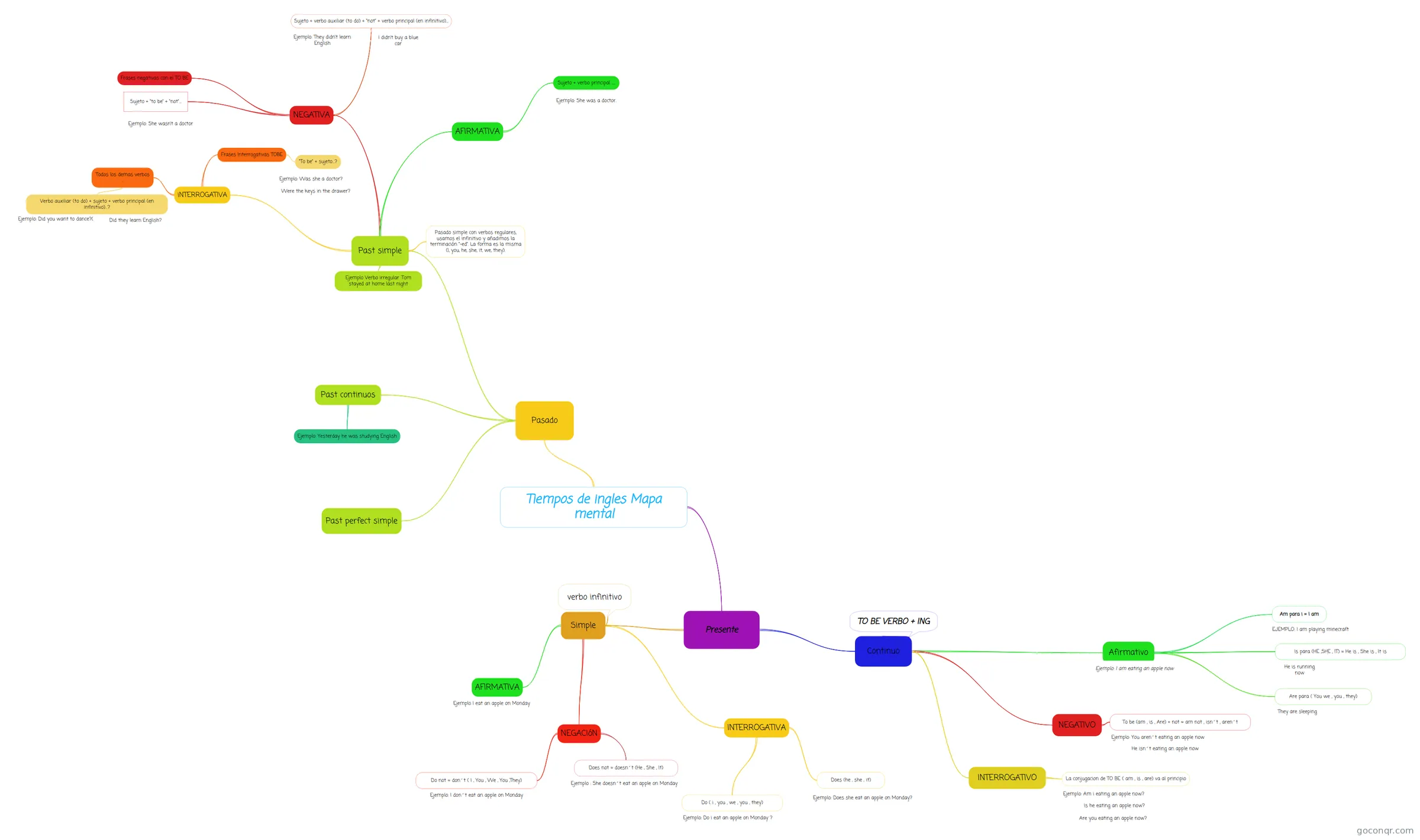
Mapa mental: tiempos de inglés
Map content
Tiempos de ingles Mapa mental
Presente
- Simple
- AFIRMATIVA
- Ejemplo I eat an apple on Monday
- NEGACIóN
- Do not = don´t ( I , You , We , You ,They)
- Ejemplo: I don´t eat an apple on Monday
- Does not = doesn´t (He , She , It)
- Ejemplo : She doesn´t eat an apple on Monday
- Do not = don´t ( I , You , We , You ,They)
- INTERROGATIVA
- Do ( i , you , we , you , they)
- Ejemplo: Do i eat an apple on Monday ?
- Does (he , she , it)
- Ejemplo: Does she eat an apple on Monday?
- Do ( i , you , we , you , they)
- verbo infinitivo
- AFIRMATIVA
- Continuo
- INTERROGATIVO
- La conjugacion de TO BE ( am , is , are) va al principio
- Ejemplo: Am i eating an apple now?
- Is he eating an apple now?
- Are you eating an apple now?
- Is he eating an apple now?
- Ejemplo: Am i eating an apple now?
- La conjugacion de TO BE ( am , is , are) va al principio
- NEGATIVO
- To be (am , is , Are) + not = am not , isn´t , aren´t
- Ejemplo: You aren´t eating an apple now
- He isn´t eating an apple now
- Ejemplo: You aren´t eating an apple now
- To be (am , is , Are) + not = am not , isn´t , aren´t
- Afirmativo
- Am para i = I am
- EJEMPLO: I am playing minecraft
- Is para (HE ,SHE , IT) = He is , She is , It is
- He is running now
- Are para ( You we , you , they)
- They are sleeping
- Am para i = I am
- TO BE VERBO + ING
- Ejemplo: I am eating an apple now
- INTERROGATIVO
- Simple
Pasado
- Past continuos
- describe acciones que estaban siendo realizadas en un momento del pasado al que se hace referencia y que luego continuaron,
- se construye con el verbo auxiliar “to be” en su forma pasada y el verbo principal en infinitivo con la terminación ING
- Ejemplo: Yesterday he was studying English
- Past perfect simple
- Past simple
- El pasado simple se utiliza para hablar de una acción concreta que comenzó y acabó en el pasado
- lo usamos con adverbios de tiempo como “last year”, “yesterday”, “last night”…
- Pasado simple con verbos regulares, usamos el infinitivo y añadimos la terminación “-ed”. La forma es la misma (I, you, he, she, it, we, they).
- AFIRMATIVA
- Sujeto + verbo principal .....
- Ejemplo: She was a doctor.
- Sujeto + verbo principal .....
- NEGATIVA
- Sujeto + “to be” + “not”…
- To be ( was , were )
- Ejemplo: She wasn’t a doctor
- Sujeto + verbo auxiliar (to do) + “not” + verbo principal (en infinitivo)…
- Nota: En frases negativas, el verbo auxiliar va en pasado (“did”) y el verbo principal se queda en el infinitivo.
- Ejemplo: They didn’t learn English
- I didn’t buy a blue car
- Frases negativas con el TO BE
- Sujeto + “to be” + “not”…
- iNTERROGATIVA
- Frases Interrogativas TOBE
- “To be” + sujeto…?
- Ejemplo: Was she a doctor?
- Were the keys in the drawer?
- Ejemplo: Was she a doctor?
- “To be” + sujeto…?
- Todos los demas verbos .
- Verbo auxiliar (to do) + sujeto + verbo principal (en infinitivo)…?
- Nota: Al igual que en las frases negativas, el verbo auxiliar va en pasado (“did”) y el verbo principal se queda en el infinitivo.
- Ejemplo: Did you want to dance?(
- Did they learn English?
- Verbo auxiliar (to do) + sujeto + verbo principal (en infinitivo)…?
- Frases Interrogativas TOBE
- Ejemplo Verbo irregular :Tom stayed at home last night
- Past continuos
Information
- Description
- Es un mapa mental con la informacion necesaria para saber que pasados hay presntes futuros condicionales etc
- Created by
- JOSE FERNANDO LAMAS POZO
- Views
- 26
- Tags
- History
-
- Created by Jorge Herraiz Soler · Nov 29, 2017
- Copied by JOSE FERNANDO LAMAS POZO · Jun 27, 2021
- Rating