
Mind map
Macro environment
Map content
Macro environment
Environments
- Macro = external factors that affect the overall environment that the business operates in
- Industry = external factors affecting the competitiveness of the industry the business operates in
- Internal = org's own internal resources and capabilities
PESTEL analysis
- Can be used to analyse macro environments as part of strategic planning to identify potential opportunities and threats facing the industry
- Political - taxation/gov spending/foreign trade regs
- Economic - economic growth/exchange or interest rates/inflation
- Social/demographic - attitudes, tastes, fashions/population demographics/income distrubtion
- Technological - new products/improved production methods/rate of obselescence
- Ecological - sustainability/pollution/climate change/natural capital impact/'green finance' issues
- Legal - industry regs/competition legislation/employment law
- Ecological - sustainability/pollution/climate change/natural capital impact/'green finance' issues
- Technological - new products/improved production methods/rate of obselescence
- Social/demographic - attitudes, tastes, fashions/population demographics/income distrubtion
- Economic - economic growth/exchange or interest rates/inflation
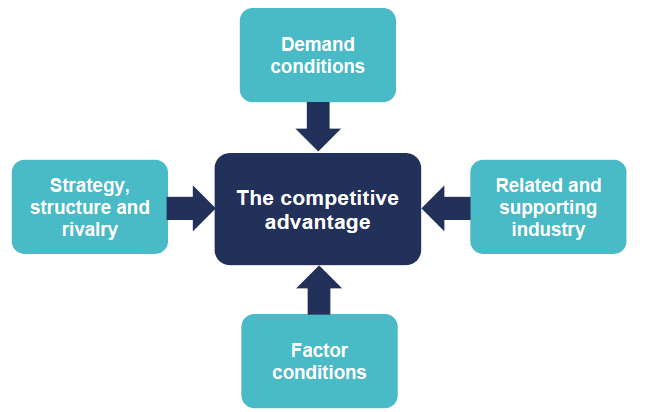
Porter's diamond
- Can be used to explain why some nations have a competitive advantage in certain industries
- Factor conditions - supply side - availability of the factors of production (resources needed to operate) - these include human resources, physical resources, knowledge, capital and infrastructure - e.g french wine industry benefits from being able to grow good grapes
- Demand conditions - demanding local consumers force firms to become more innovative - trend setting local consumers help local producers to anticipate future global trends - e.g german drivers demanded powerful cars from german manufacturers
- Related and supporting industries - proximity of relating and supporting industries leads to easy access to components with reduced lead times and carriage costs, encourages knowledge sharing which increases innovation - e.g finance sector in the UK is aided by large accountancy and legal firms
- Strategy, structure and rivalry - two key possible advantages - strong domestic rivalry forces local firms to become more efficient to survive - strategies or structures that have become prevalent in a particular nation may give advantages in particular industries - e.g flat decentralised org structures are popular in japan and are believed to encourage innovation
- Related and supporting industries - proximity of relating and supporting industries leads to easy access to components with reduced lead times and carriage costs, encourages knowledge sharing which increases innovation - e.g finance sector in the UK is aided by large accountancy and legal firms
- Demand conditions - demanding local consumers force firms to become more innovative - trend setting local consumers help local producers to anticipate future global trends - e.g german drivers demanded powerful cars from german manufacturers
- Factor conditions - supply side - availability of the factors of production (resources needed to operate) - these include human resources, physical resources, knowledge, capital and infrastructure - e.g french wine industry benefits from being able to grow good grapes
- Can be used to explain why some nations have a competitive advantage in certain industries
Images and files in the map
Information
- Description
- Degree Business strategy Mind Map on Macro environment, created by Abbey Wrigley on 16/05/2022.
- Created by
- Abbey Wrigley · May 2022
- Updated
- May 16, 2022
- Views
- 0
- Rating