
Mind map
Research
Map content
Research
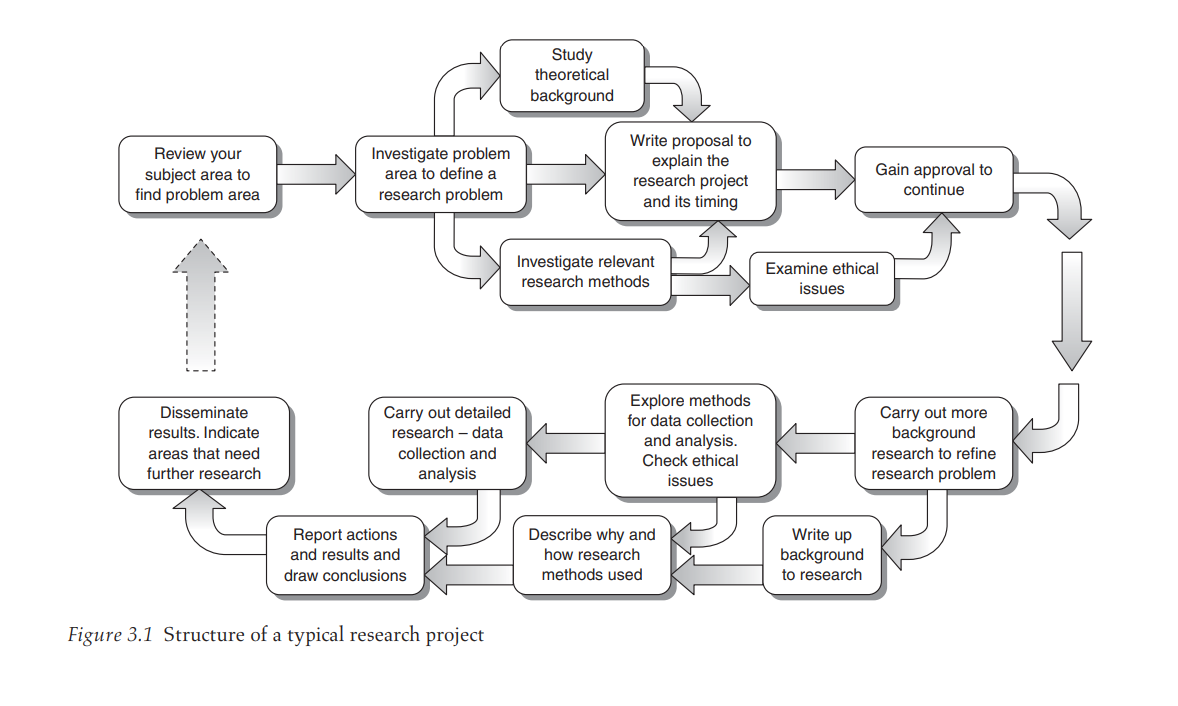
The framework of any research answers the following questions
- What are you going to do? The subject of your research
- Why are you going to do it? The reason for this research being necessary or interesting
- How are you going to do it? The research methods that you will use to carry out the project
- When are you going to do it? The programme of the work.
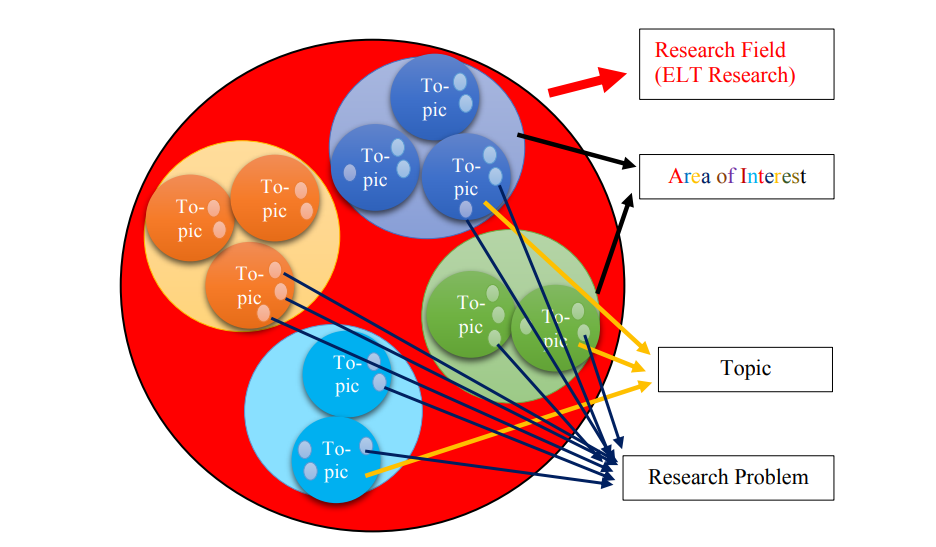
Problem
- Important information
- It is based on a question, an unresolved controversy, a gap in knowledge or an unrequited need within the chosen subject
- Firstly, define one ptoblem area from the whole knowledge. e.g. school truancy, energy saving in buildings, homecare for the elderly etc
- Secondly, examine the different aspects of the problem area and focus on one aspect
- Characteristics for a researchable problem
- Stated clearly and concisely
- Significant i.e. not trivial or a repeat of previous work
- Delineated, in order to limit its scope to practical investigation
- Possible to obtain the information required to explore the problem
- Possible to draw conclusions related to the problem, as the point of research is to find some answers
- Forms to state a research
- (Abstract) question(s)
- Split up into
- Split it down into different aspects that can be investigated separately, e.g. political, economic, cultural, technical
- Explore different personal or group perspectives, e.g. employers, employees.
- Investigate different concepts used, e.g. health, wealth, confidence, sustainability
- Consider the question at different scales, e.g. the individual, group, organization
- Compare the outcomes of different aspects from the above ways of splitting down
- Split up into
- Hypotheses
- This is a statement based on reasonable guesses or theories
- Characteristics
- Testable: The hypothesis can be subjected to testing and verification.
- Specific: It focuses on the interaction of certain factors or variables
- Method-oriented: It suggests appropriate methods for data collection, analysis, and interpretation.
- Empirically verifiable: The hypothesis can be confirmed or rejected through empirical or experimental testing.
- Knowledge-generating: The testing of the hypothesis provides a clear indication of the extent of knowledge gained.
- To make a hypothesis testable, it needs to be operationalized by converting it from a conceptual to an operational level.
- To operationalize sub-hypotheses, break down the main hypothesis into smaller parts. Then, define concepts, indicators, variables, and values in a progression from abstract to concrete expressions.
- Propositions
- Statements or claims that are derived from theories, existing knowledge, or observations. They are statements that suggest relationships or connections between variables or concepts and serve as the foundation for research investigations.
- (Abstract) question(s)
- Important information
Argumentation
- To convince the reader that you have collected relevant information and based your answers and conclusions on accurate analysis, you need to use logical arguments.
- Actions
- Identify a problem
- Analyze the problem
- Collect evidence
- Review evidence
- Justify
- Stages
- Premises They serve as the starting point for reasoning and support the logical progression of an argument or investigation.
- They can be recognized in a text for these words: since x because x if x assuming that x given that, etc.
- The conclusion is the proposition that expresses the logical inference drawn from these premises.
- They can be recognized in a text for these words: therefore x this proves that x then x consequently x thus, etc.
- Premises They serve as the starting point for reasoning and support the logical progression of an argument or investigation.
- The hypothetico-deductive method, or scientific method, is based on the idea that we can never be entirely certain about premises or conclusions. However, we can have varying levels of confidence in them.
- Inductive reasoning: From specific to general and inductive reasoning: From general to specific
Images and files in the map
Information
- Description
- Education RESEARCH AND EMERGING TRENDS Mind Map on Research, created by Alejandra Mercado on 22/06/2023.
- Created by
- Alejandra Mercado
- Views
- 0
- Rating