
Mind map
4. CONFIDENCE INTERVALS
Map content
4. CONFIDENCE INTERVALS
DOES NOT equals probability
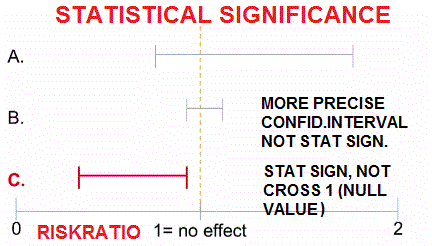
- statistical significance: with large sample, clinical relevance studies can also be good too
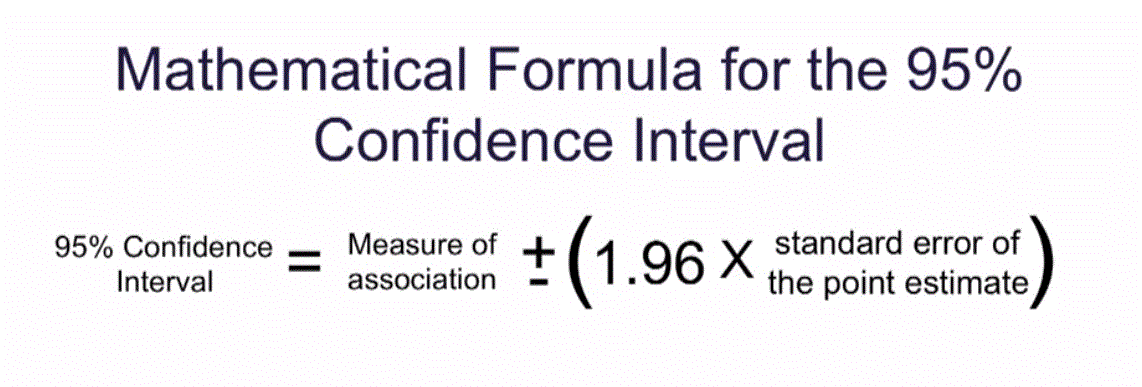
FOR 95% =1.96 for 99%=2.575 for 90%=1.645
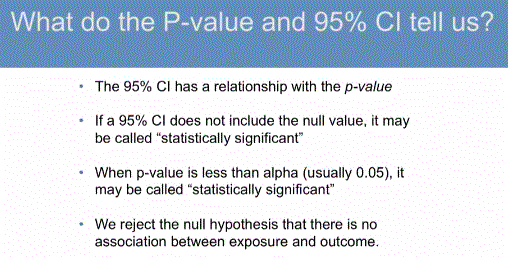
- P-VALUE: probability that tells you whether the study results are consistent with being due to chance. BUT: *does not tell if the study result was due to chance. *do not clear up about direction-difference or measure between groups
- Note: A null hypothesis is the default position in a study (“there is no association between the exposure and the health outcome.”) A null hypothesis cannot be "accepted" or "proved true.", instead: "reject the null hypothesis" "fail to reject the null hypothesis"
- REMEMBER: RATIO NULL VALUE= 1 DIFFERENCE NULL VALUE= 0
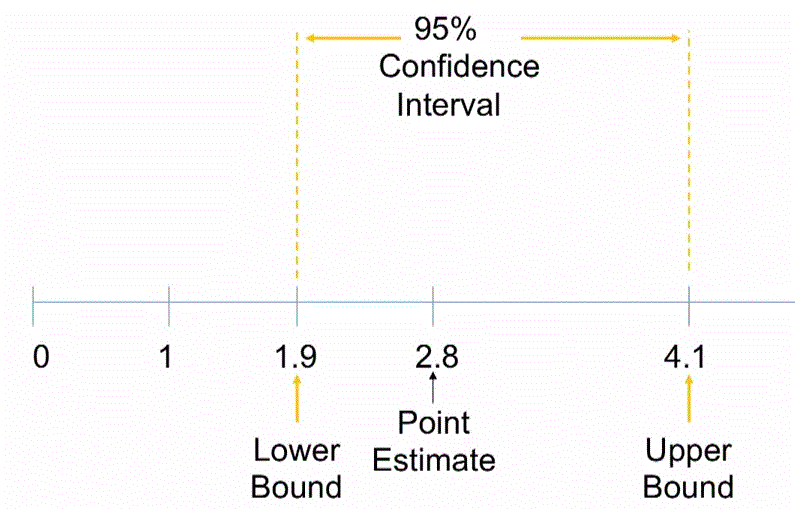
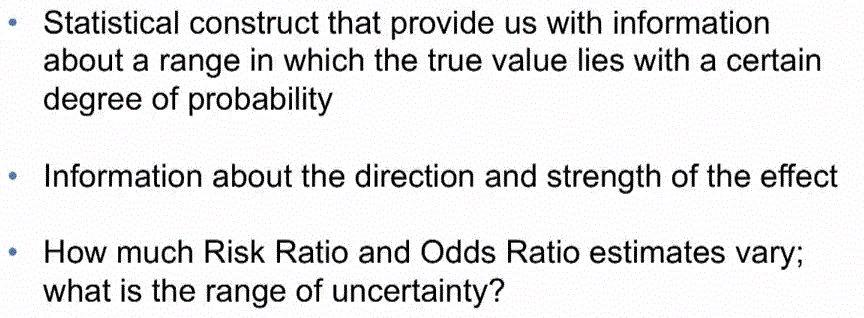
- if you conducted the study 100 times, approximately 95% of those times the true value would be contained between the interval of 1.9 and 4.1.
- P-VALUE: probability that tells you whether the study results are consistent with being due to chance. BUT: *does not tell if the study result was due to chance. *do not clear up about direction-difference or measure between groups
Images and files in the map
Information
- Description
- EPIDEMIOLOGY Mind Map on 4. CONFIDENCE INTERVALS, created by cristian velez on 23/03/2014.
- Created by
- cristian velez
- Views
- 131
- Tags
- Rating