
Notes
Elements and the periodic table
Content of the notes (1)
Page 1
Chemistry is the area of science that deals with what materials are made of, and with the changes materials undergo.
Elements cannot be broken down chemically into simpler substances, compunds can as they consist of two or more elements chemically combined.
Elements are composed of atoms, each with a central nucleus and negatively charged subatomic particles called electrons. The nucleus is composed of protons with a positive charge and neutrons with no charge. The number of protons in an atom of an element is known as the atomic number of the element.
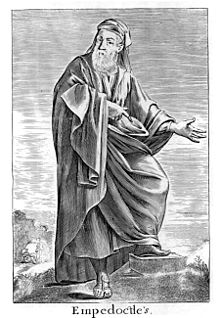
The Ancient Greeks - Empedocles defined the elements as the basic substances from which all other materials are made (fire, earth, water, air)
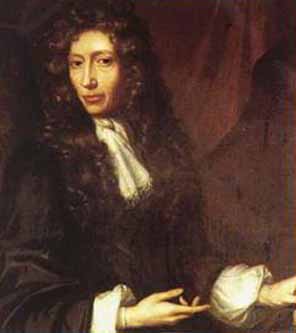
Robert Boyle - defined elements as substances that cannot be broken down into simpler materials ( he regarded compounds as mixtures of elements which could be formed from and broken down into these elements.
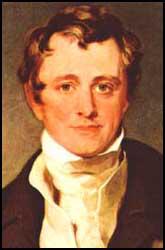
Humphrey Davy - electrolysis
He split compounds into their elements
Group 1 - potassium (from a moist solid sample of potassium hydroxide,
sodium (from a moist solid sample of sodium hyroxide)
Group 2 - Calcium
Magnesium
Barium
Strontium
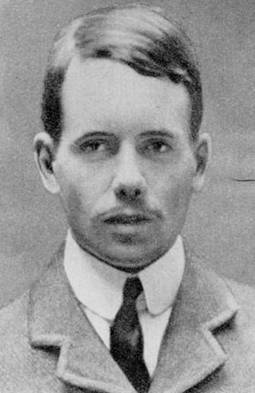
Henry Moseley - the atomic nucleus of an atom has a positive charge which he called the atomic number. This led to a more advanced definition of an element: a substance all of whose atoms have the same atomic number. It also led to the modern periodic table being in order of atomic number rather than mass.
In the periodic table, elements with similar chemical properties are grouped together and in order of increasing atomic number.
Vertical columns - groups
Horizontal columns - periods
The elements between groups II and III are known as the d-block elements. Each vertical group in this region of the table is known as a subgroup e.g. copper silver and gold make up the copper subgroup
Directly above the symbol of each element is the atomic number. The relative atomic mass is underneath the symbol
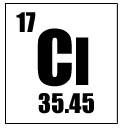
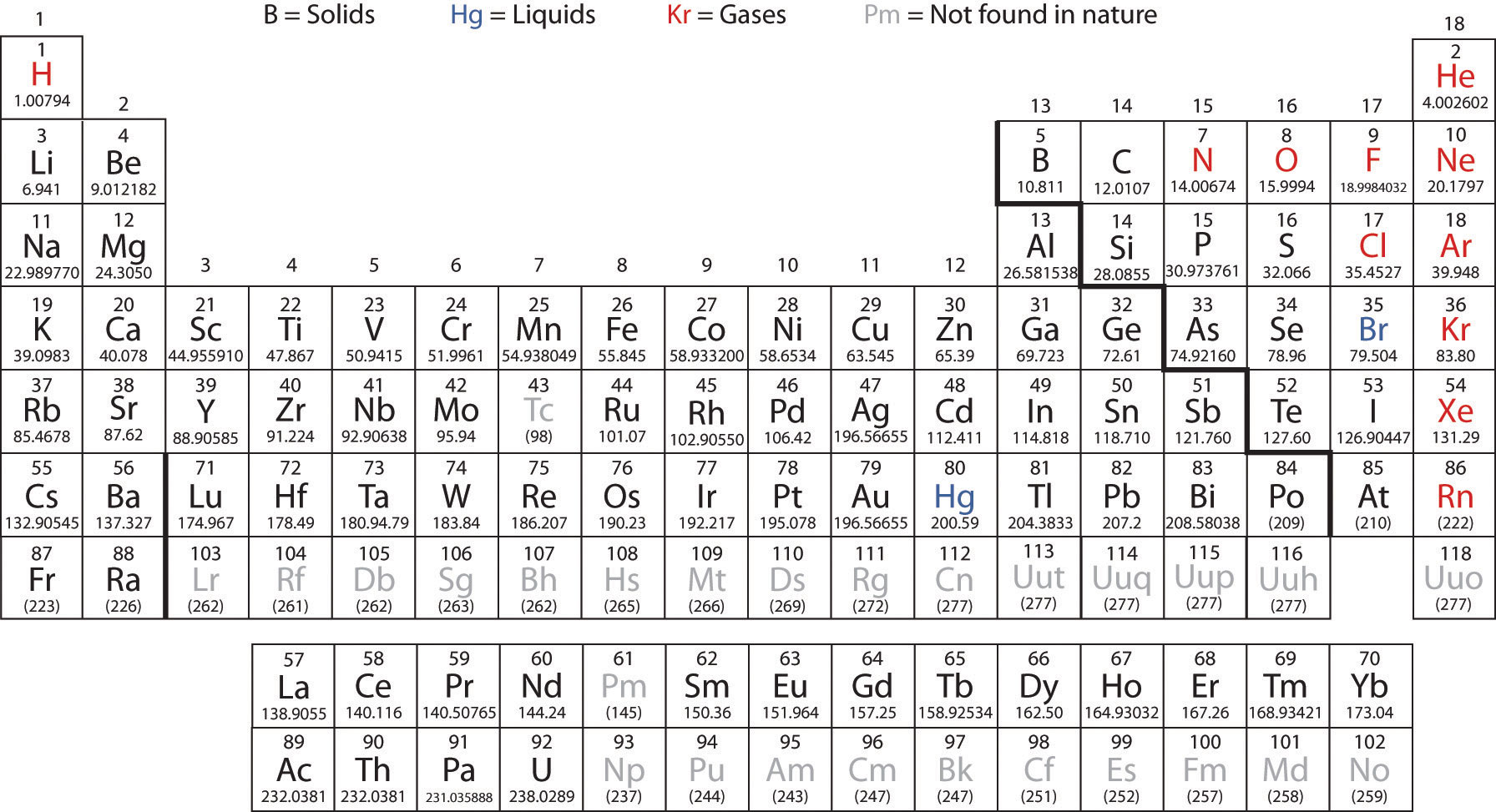
The stepped line divides the metals from the non-metals. The elements on the left (the majority) are metals and on the right are non-metals. Some elements next to the stepped line e.g. silicon and germanium display properties similar to both metals and non-metals.
The elements between groups III and O are the p-block elements.
Johann Döbereiner - Law of Triads
He put elements into groups of three with A) similar chemical properties B) atomic mass/ weight of the middle element was half way between the other two
e.g. Li, Na, K
Ca, Sr, Ba
Cl, Br, I
The observation that the link between elements depended in some way on their atomic weight was very important. (found to be restricted to only a few elements)
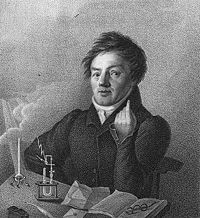
John Newlands - Arranged the elements in order of atomic weight and found that their properties seemed to repeat themselves every eighth element. This did not work for all elements so it his 'Law of Octaves' was not accepted by other scientists.
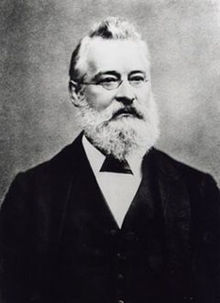
Dmitri Mendeleev - He organised his table according to his 'periodic law' : Elements are arranged in order of atomic weight in such a way that elements with similar chemical properties are in the same group.
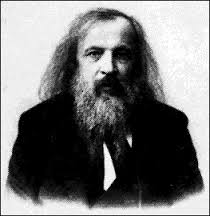
Differences between his table and the modern periodic table
In order of atomic weight rather than number.
No noble gases
Gaps for undiscovered elements.
He put some elements in reverse order e.g. tellerium and iodine so that the elements would be in the correct order.
Group 1 - Alkali Metals PHYSICAL PROPERTIES soft, silver metals - can be cut with a knife, low density e.g. sodium patassium and lithium float on water CHEMICAL PROPERTIES Reactivity increases down the group, react with air forming oxide e.g. sodium oxide, react with water to form hydroxides and hydrogen gas e.g. sodium hydroxide and hydrogen gas. Alkali metals are stored in oil to prevent reactions with water and with atmospheric oxygen.
Group 2 - Alkaline Earth Metals
PHYSICAL PROPERTIES silver metals, harder than alkali metals
CHEMICAL PROPERTIES less reactive than corresponding alkali metals, reactivity increase down the group
Group 7 - Halogens
PHYSICAL PROPERTIES non-metals, low melting and boiling points
CHEMICAL PROPERTIES Very reactive, reactivity decrease down the group, react with hydrogen giving compounds which dissolve in water to form acidic solutions e.g. chlorine reacts with hydrogen giving hydrogen chloride gas, react vigorously with sodium and other alkali metals giving white salts e.g. sodium reacts with chlorine giving sodium chloride.
Group 8 - Noble Gases
PHYSICAL PROPERTIES gases at room temperature, boiling point and density increases down the group
CHEMICAL PROPERTIES least reactive of all the elements - Inert Gases (Chemically unreactive) - their uses come from this e.g. light bulbs
The elements in groups I and II are the s-block elements. They have lower boiling points, lower melting points, lower densities and are more reactive than most other metals.
http://www.youtube.com/watch?v=5kbe57m-tpY (Embed)
http://www.youtube.com/watch?v=d3YR8e_iHlk (Embed)
http://www.youtube.com/watch?v=PejaN0us2ro (Embed)
http://www.youtube.com/watch?v=ecEq3ac7-vI (Embed)
http://www.youtube.com/watch?v=5dc6Ft8FDIg (Embed)
Elements and the periodic table
Links
Information
- Description
- Leaving Certificate Chemistry (Elements and the periodic table) Note on Elements and the periodic table, created by eimearkelly3 on 14/06/2013.
- Created by
- eimearkelly3
- Views
- 904
- Tags
- Rating