
Notes
Science 10: Unit 3 - Biology
Content of the notes (3)
Page 1
Science 10: Unit 3 - Biology
Chapter 7
Abiogenesis Vs. Biogenesis:
Abiogenesis: The belief that all life from Earth initially developed from non-living things(rocks, etc.)
Biogenesis: The belief that life can only come from other living things
The Cell Theory Development:
- Robert Hooke(1635): Looked at bark under a microscope, saw a bunch of tiny boxes. Because they looked like prison cells, he called them "cells".
- Leeuwenhoek(1632): Studied blood cells, the first person to describe single-celled organisms
- Schleiden and Schwann(1810): Discovered that all organisms have cells and that animal and plant cells are different
- Virchow: Discovered that cells come from other cells
The Cell Theory:
- All living things are made of cells
- Cells are the basic unit of life
- Cells are made of preexisting cells
The Development of Microscopes:
Compound Light Microscopes: Uses two or more lenses put together to magnify the image. Uses a focused light to illuminate the image. Use prepared slides to look through. We use these in science class because they are effective and cheap. Allows cells to be viewed
Electron Microscopes: Uses a beam of electrons to illuminate cells, have magnification up to 1.2 million times. Allows cell's internal structures to be viewed
- Transmission Electron Microscope: A beam of electrons is beamed through a specimen to create a 2D image. Can magnify 10,000 x to 100,000 x.
- Scanning Electron Microscope: Sweeps a beam of electrons over a specimen to create a 3D image. Can magnify up to 300,000 x, but works better when 10,000x. Can see the details on cell structures.
Confocal Laser Scanning Microscope: A laser beam scans an image axis by axis, allowing a series of 2D images from different points of view to be created.
Scanning Tunneling Microscope: A metal probe that attracts electrons allows a 3D view of atomic structures, such as DNA.
Stem Cells:
Stem cells are basic, "blank" cells that can be reproduce to create any other kind of specialized cells. It is different from a specialized cell, because a specialized cell can only create identical cells. Stem cells are dormant in children and adults until they are needed for something. For example, a major skin injury will require stem cells to turn into skin cells to help the injury recover. Scientists use stem cells to cure a number of diseases.
Page 2
Science 10: Unit 3 - Biology
Chapter 7
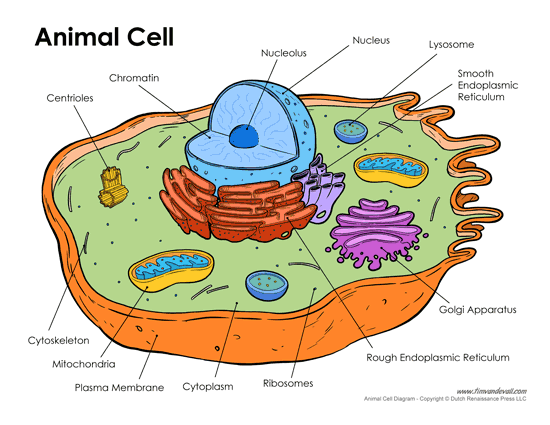
The Cell Structure:
Functions of Cell Organelles:
Cell membrane: Interacts with chemicals from the environment, has a semipermeable membrane that controls what enters and exits a cell
Nucleus: Contains DNA, the instructions that tell the rest of the cell what to do
Lysosome: Break down waste and worn out cell parts
Endoplasmic Reticulum:
- Smooth: Packages large proteins and sends them to other parts of the cell
- Rough: Have ribosomes, packages the proteins made by them for transport
Ribosomes: Create proteins
Golgi Apparatus: Sorts, packages, and transports proteins to where they need to go, like a post office
Mitochondria: Powerhouse of the cell, makes ATP
Vacuoles: Provide storage space for water, food and minerals
Centrioles*: Help move genetic material into equal sections for cell division. *Not in plant cells
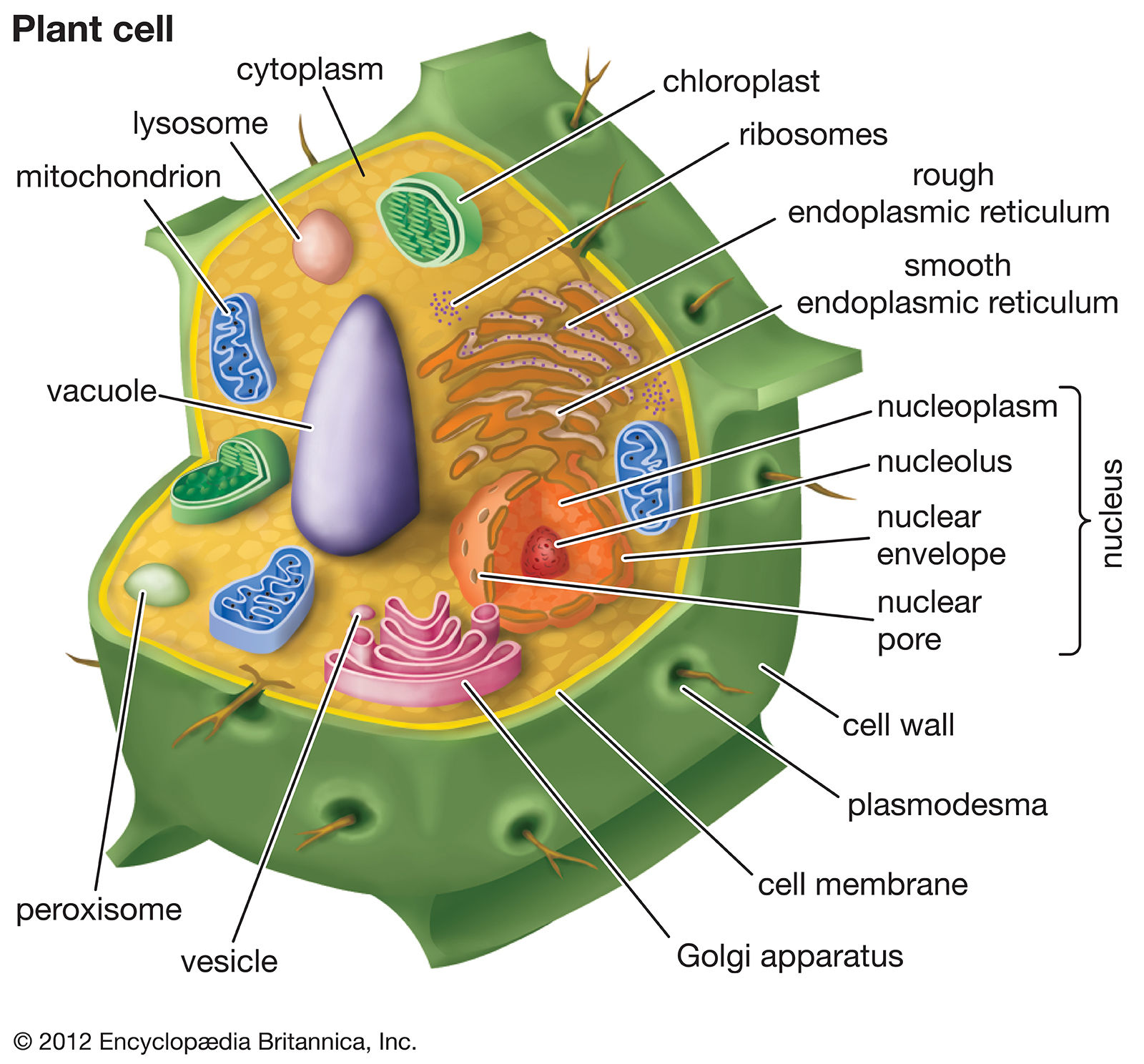
Only in Plant cells:
Chloroplasts: Contains chlorophyll, takes sunlight and converts it into chemical energy
Cell Wall: Made of cellulose, gives the plant cell structure
Differences between Plant and Animal Cells:
- Plants have cell wall and chloroplasts
- Animals have centrioles
- Plants have central vacuole
Page 3
Science 10: Unit 3 - Biology
Chapter 8
The Cell Membrane:
Information
- Description
- Use this to study for the final and unit exam.
- Created by
- Riley Babuik
- Views
- 76
- Tags
- Rating