
Introduction to Biology and Characteristics of Life
630 resources created by 586 users
This Introduction to Biology and Characteristics of Life page on GoConqr gathers community-made quizzes, mind maps, flashcards and notes, from the MRS GREN life processes and living versus non-living things to the scientific method and the levels of organisation in living things. It's built for school students revising a topic and teachers after ready-made material. There are over 3,800 resources here, including more than 380 quizzes and over 2,100 mind maps, mostly pitched at GCSE, IGCSE and similar secondary courses. Pick a quiz to find your gaps, then make your own cards.
Top Introduction to Biology and Characteristics of Life resources
-
196 cardsSACE Stage 2 Biology: Whole Course
-
157 cardsConcepts in Biology Final Exam -Hierarchy of Life
-
200 cardsKerboodle biology key words part one almost all of the biology key words from the kerboodle textbook
-
40 questionsGCSE AQA Biology 1 Quiz Vaccinations involve injecting small amounts of active microorganisms
-
20 questionsGEN BIO 1 - Introduction: Themes in the Study of Life Which of the following is an attribute of living things?
-
39 questionsBiology Exam 1 Which is the correct sequence for levels of biological organization within an organism?
-
30 questionsBiology 5A: Test Your Understanding (1) All the organisms on your campus make up Which of the following is a correct sequence of levels in life’s h...
-
21 cardsBiology Higher essay questions
Quizzes
See all 109 quizzes-
40 questionsGCSE AQA Biology 1 Quiz Vaccinations involve injecting small amounts of active microorganisms
-
20 questionsGEN BIO 1 - Introduction: Themes in the Study of Life Which of the following is an attribute of living things?
-
39 questionsBiology Exam 1 Which is the correct sequence for levels of biological organization within an organism?
-
30 questionsBiology 5A: Test Your Understanding (1) All the organisms on your campus make up Which of the following is a correct sequence of levels in life’s h...
-
21 questionsBio Exam 1 Which of the following is an example of discovery science?
-
25 questionsMultiple Choice (science nº1) Which pair of features is found in plant cells but not in animal cells?
-
22 questionsLiving things (Richmond Primary 5)
-
8 questionsIGCSE B1-B3 Revision Quiz Match each description with the correct characteristic of a living organism: Taking in of nutrients which a...
Mind maps
See all 266 mind maps-
Unit 1: Characteristics and classification of living organisms
-
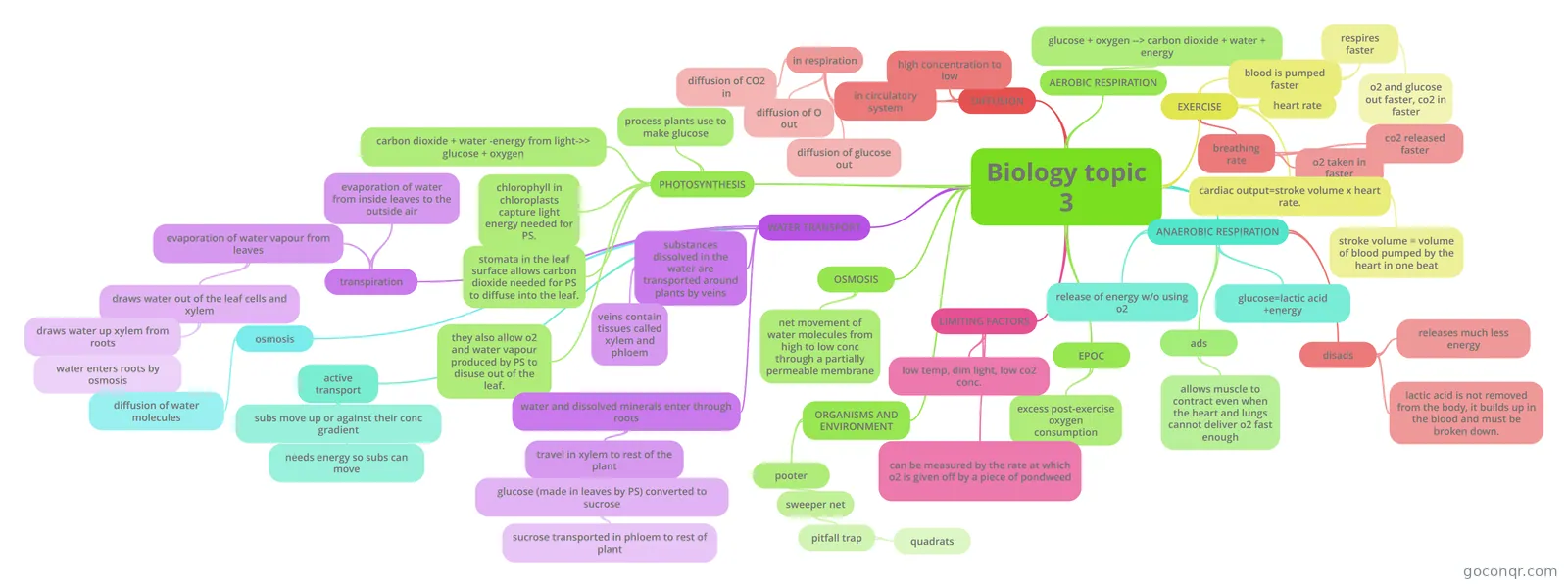 Biology topic 3
-
10. Diseases and immunity Syllabus (extended) 2021
-
 Ch -1 Characteristics of living things to learn and understand the topics
-
 BIOLOGY: The Variety of Life
-
Photosynthesis & Respiration Photosynthesis and Respiration
-
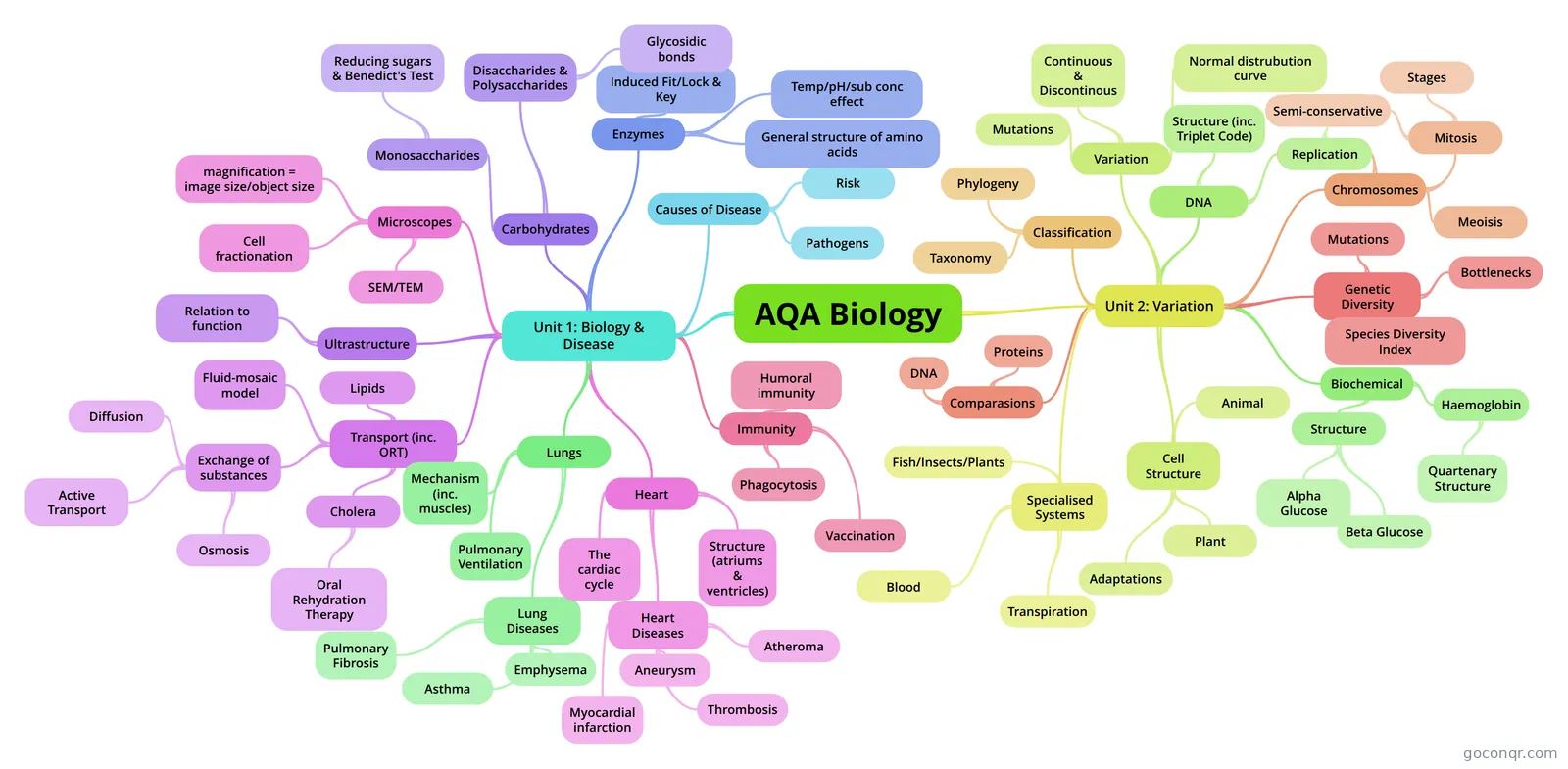 AQA Biology Mindmap of all course (basic notes)
-
 characteristics of life this map explains the characteristics of life
Flashcards
See all 216 flashcards-
196 cardsSACE Stage 2 Biology: Whole Course
-
157 cardsConcepts in Biology Final Exam -Hierarchy of Life
-
200 cardsKerboodle biology key words part one almost all of the biology key words from the kerboodle textbook
-
21 cardsBiology Higher essay questions
-
28 cardsKS3 Science Biology Revision Cards How is a leaf adapted to carry out photosynthesis?
-
53 cardsBIOLOGY 160- CHAPTER 1: THE SCIENTIFIC STUDY OF LIFE Information from: Biology- Concepts and Investigations; Fifth Edition
-
61 cardsHuman Bio Exam 1
-
40 cardsBiology Defintions IGCSE Biology Defintions IGCSE flashcards
Flowcharts
-
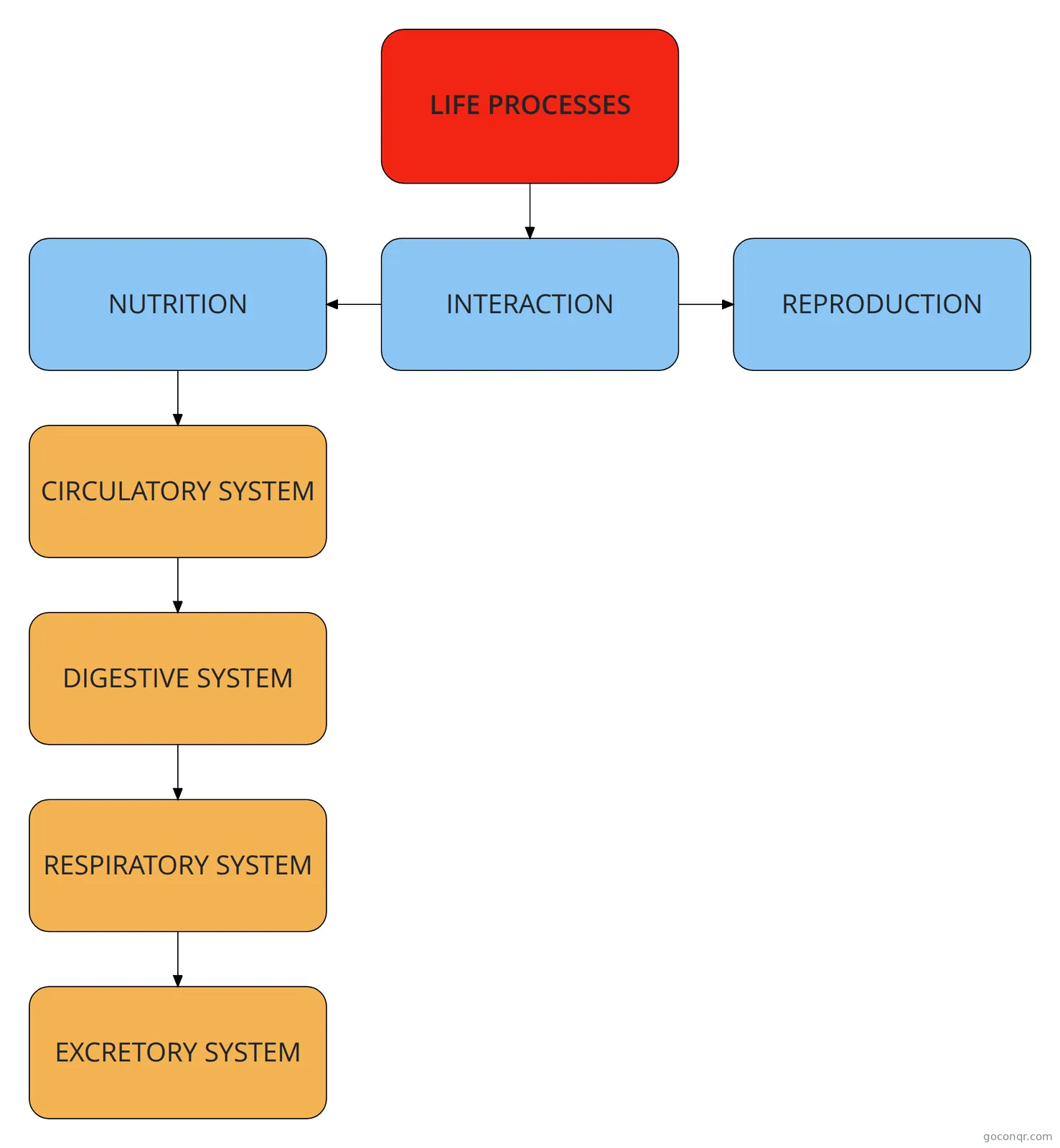 LIFE PROCESSES LIFE PROCESSES: NUTRITION, INTERACTION AND REPRODUCTION
-
Characteristics of human beings Finished organizer
-
Plants in their enviroment The three main functions of living thing and also plants: Nutritrion, interaction and reproduction
-
Characteristics of living organisms
-
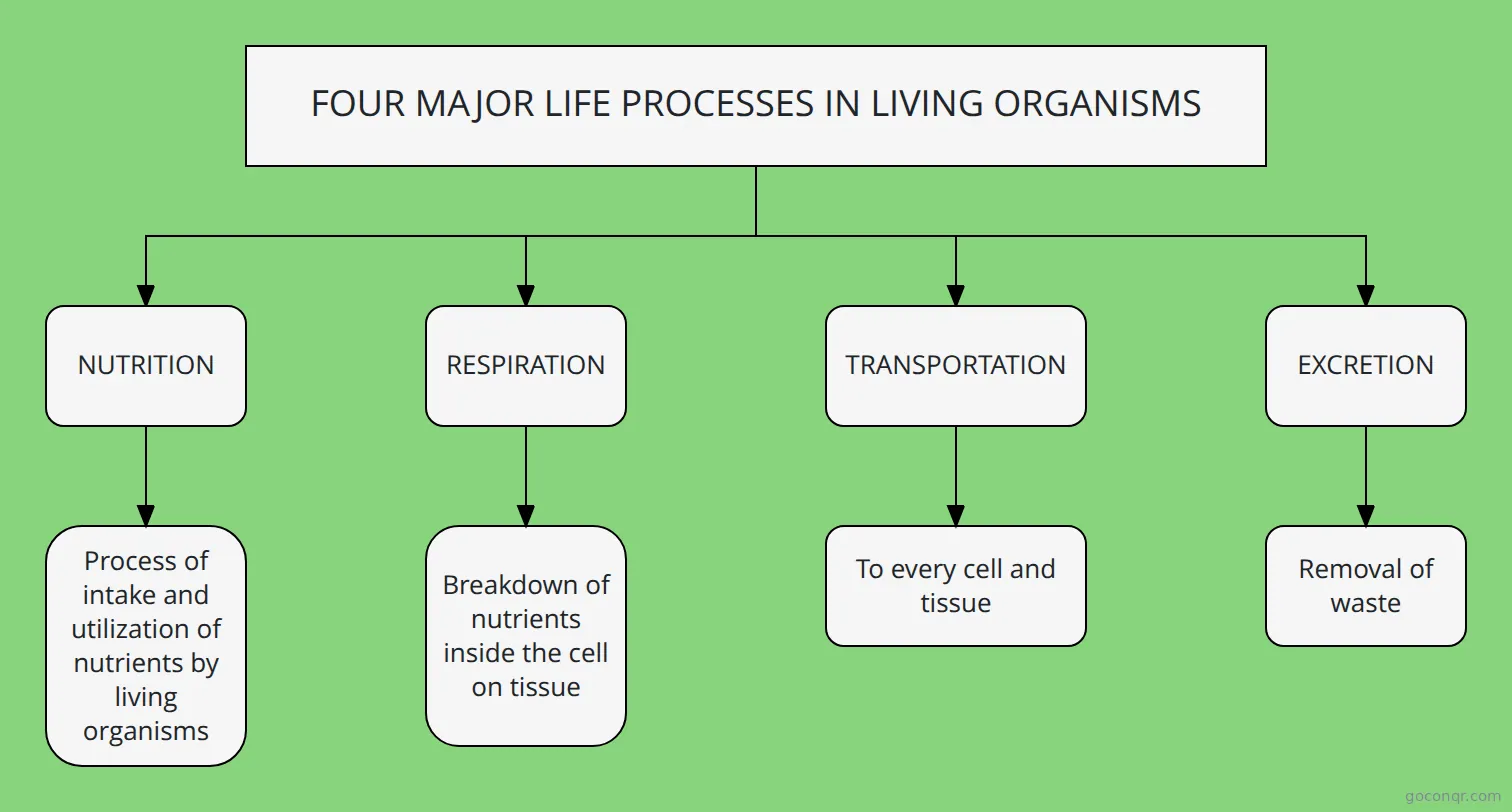 Four Major Processes in Living Organisms four parts of life processes
-
Organization of life Flow chart of how biological life is organized and related
-
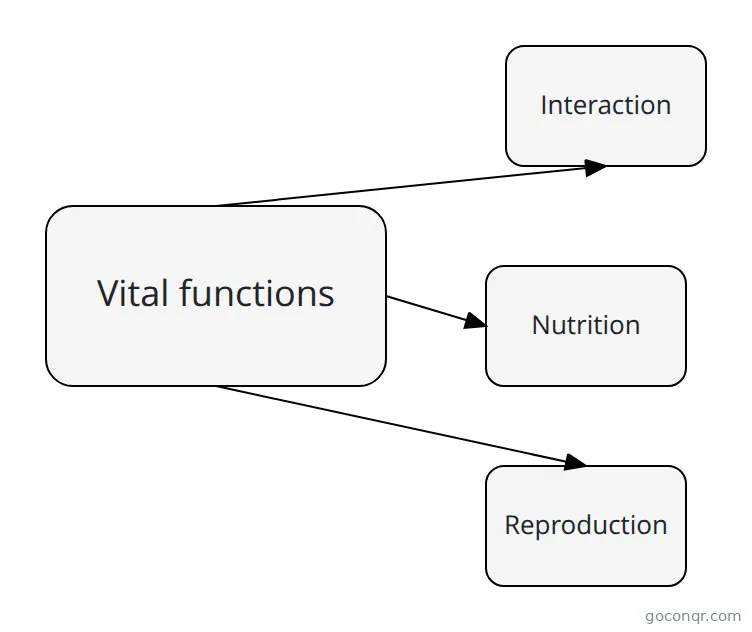 Unit 1 the organisation of living things Lesson 2 What do living things do? Lesson 2 What do living things do?
-
LIVING THINGS ESQUEMA DE LOS GRUPOS DE ANIMALES Y SUS CARACTERÍSTICAS
Notes
See all 25 notes-
AQA GCSE Combined Science: Trilogy Biology Topics Biology Topics B1 - Cell structure and transport B1.1 - The world of the microscope B1.2 - Animal and plant cells B1.3 - Eukaryotic and prokaryotic cells B1.4 - Specialisation in animal cells B1.5 - Specialisation in ...
-
5TH GRADE SCIENCE LIFE PROCESS LIFE PROCESS How do we know if something is alive? feeds, moves, grows, breaths and reproduce
-
Mammals As Consumers Enzymes And Enzyme Activity (Also Bile) Where you may find them Optimum Temperatures and pH levels How and what they digest Type of enzyme MAMMALS AS CONSUMERSGeneral Overview EXTRA Things To Remember-The Lymph System...
-
Biology Exam Notes Living Things: organisms exist in a variety of shapes and sizes and can be found just about everywhere Each type of organism has special structures that allow it to survive; these are called adaptations Differen...
-
B4 - Process of Life questions Use the lock and key method to explain how enzymes function. Describe how different factors can affect the rate of reaction. (use the words = Enzyme, Catalyst, Rate of Reaction, Protein, Factor, pH, Temperature, Denat...
-
Chapter 1 - The Science of Biology NOTES Section 1.1 - What is science? Science is an organized way of gathering and analyzing evidence about the natural world. One goal of science is to provide natural explanations for events in the natu...
-
Inter-relationships Antiseptics and antibiotics Bacteria can become resistant to antibiotic due to bacteria mutating. If you have an infection some of the bacteria is resistant to antibiotic so only the non-resistant strains of ba...
-
Biology Revision notes Key concepts in biology Cells Organisms can be Eukaryotic or Prokaryotic All living things are made up of cells. Cells can either be eukaryotic or prokaryotic. Eukaryotic cells are complex and include all anima...
Slides
More Biology and natural sciences topics
About Introduction to Biology and Characteristics of Life
GoConqr OriginalWhat this page covers
This unit collects material on what makes something alive. Many resources use the MRS GREN checklist: movement, respiration, sensitivity, growth, reproduction, excretion and nutrition. You will find it in mind maps such as Mrs Gren and Characteristics of Life, and in flashcard decks such as MRS GREN and Life Processes - Mrs Gren.
Other resources go wider. Biology Prefixes and Suffixes helps with scientific vocabulary. Scientific Method appears as both a quiz and a flashcard deck. Concepts in Biology Final Exam covers the hierarchy of life, emergent properties and natural selection.
Where to start
- Open a short mind map such as Characteristics of Living Organisms to see the full list of life processes on one screen.
- Run through the Mrs Gren flashcards until the terms feel familiar.
- Take the Characteristics of Living Things Quiz to check what stuck.
- Move on to exam-style practice, such as the GCSE Biology Quiz or the Living Environment Regents Practice Questions.
Using quizzes and maps together
Read a map first, then quiz yourself. If a question catches you out, go back to the matching branch of the map and reread it. The 0654 Characteristics of Living Things Quiz is a good example: it asks you to name the characteristic shown when worms come to the soil surface after heavy rain, so you must apply the idea, not just recall it.
Teachers can use the slide sets and notes, including the Living Systems slideshow, as a starting point for a lesson, then set a quiz to close it.
Where it sits
This unit belongs to the Foundations of Biology strand within Biology and natural sciences. It is the place to build the base ideas before cells, diseases, photosynthesis and respiration, which appear in some of the listed maps such as Photosynthesis & Respiration.
Most resources suit secondary courses, with some for younger pupils and some for university students. Choose one resource, work through it, and see what you still need to review.
Frequently asked questions
Which resource should I open first?
Start with a mind map such as Characteristics of Living Organisms or The characteristics of life to see the main ideas in one place. Then try the Characteristics of Living Things Quiz. If you prefer cards, the Mrs Gren flashcards are a quick way to learn the terms.
What do the mind maps on this page cover?
Many cover the life processes and the MRS GREN checklist, including Life Processes, 7 life processes and LIVING AND NON-LIVING THINGS. Others stretch to kingdoms, adaptation, excretion, energy in the cell and photosynthesis and respiration, so you can link the basics to later topics.
Are these resources free to use?
Yes. Every resource listed here is free to open, study and take, with no account needed. They were made by GoConqr users rather than by GoConqr itself, so styles and depth vary from one resource to the next.
Which exams do the resources suit?
The listed resources mention GCSE Biology, IGCSE Biology, A-level Biology, KS3 Biology, IB Biology, AP Biology and Junior Certificate Science, among others. Check the title or contents of a resource to see whether it matches your course before you start.
What if I can't find what I need?
Try a nearby title, such as Life Processes instead of MRS GREN, or look at the flashcard decks and notes as well as the quizzes. A free account also lets you make your own quizzes, mind maps, flashcards and notes to fill any gap.